Best Pots for Tomato Plants: How to Choose the Right Container
The best pots for tomato plants are large, stable containers with plenty of drainage holes and enough room to hold a steady supply of water and nutrients.
For most standard tomato plants, a container holding at least 20 to 30 litres of potting mix is a practical minimum. Larger cordon or indeterminate tomatoes are easier to manage in 30 to 40 litres or more, especially in hot, dry, or windy conditions. Compact patio and dwarf varieties can use smaller pots, but very small containers dry out quickly and leave little room for error.
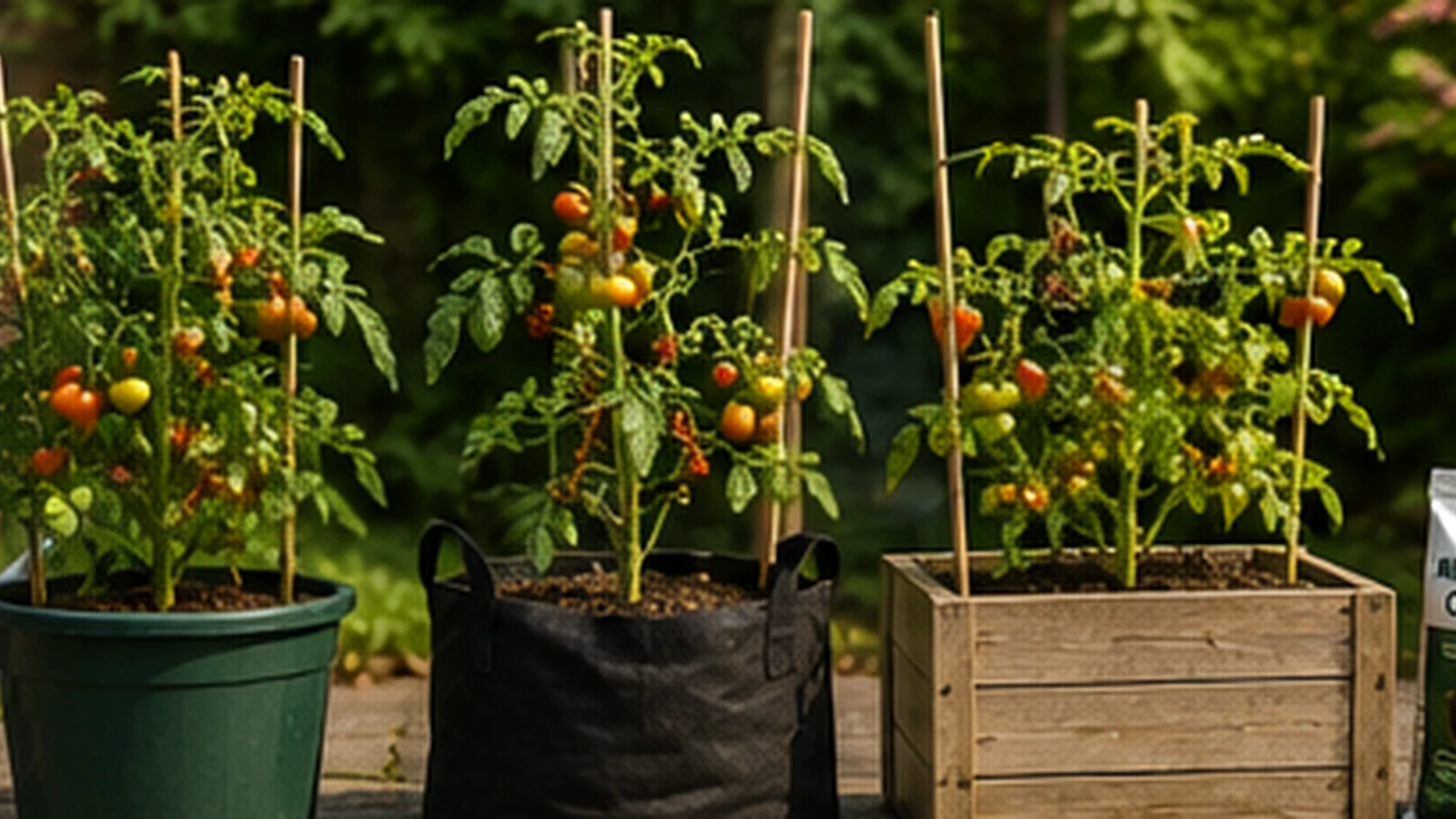
Pot material matters too. Plastic and resin retain moisture well, fabric grow bags provide excellent aeration but dry faster, terracotta looks attractive but needs frequent watering, and self-watering containers can help keep moisture more consistent.
The best choice depends on your tomato variety, available space, climate, and how often you can water. This guide compares the main options, explains which containers work well, and identifies the pot types most likely to cause problems.
Contents
- Quick Answer: What Is the Best Pot for Tomatoes?
- Why the Right Pot Matters
- What Size Pot Does a Tomato Plant Need?
- Do Tomato Pots Need to Be Deep or Wide?
- Why Drainage Holes Are Essential
- Best Pot Materials for Tomatoes
- Are Self-Watering Pots Good for Tomatoes?
- Best Pots for Balconies, Patios and Small Gardens
- Best Pots for Hot, Dry or Windy Gardens
- Which Pots Are Bad for Tomato Plants?
- Can You Grow Tomatoes in Buckets or Recycled Containers?
- How Pot Shape and Stability Affect the Plant
- Match the Tomato Variety to the Pot
- Quick Pot Comparison Table
- How to Prepare a Tomato Pot before Planting
- Common Tomato Pot Mistakes
- Frequently Asked Questions
- The Best Tomato Pot for Most Gardeners
- Sources and Further Reading
Quick Answer: What Is the Best Pot for Tomatoes?
For most gardeners, the best all-round choice is:
One tomato plant in a stable 30 to 40-litre plastic, resin, fabric, wooden, or self-watering container with several open drainage holes.
A compact bush tomato can often grow successfully in a 20-litre pot. A large cordon, beefsteak, or vigorous cherry tomato will usually be easier to keep healthy in 30 to 40 litres or more.
The ideal container should be:
- Large enough for the mature variety
- At least about 30 cm deep for most full-sized plants
- Wide enough to remain stable
- Fitted with unobstructed drainage holes
- Strong enough to hold wet compost, a support, and a fruiting plant
- Suitable for the amount of sun and wind in its location
- Easy enough for you to water consistently
Plastic or resin is often the simplest choice because it is affordable, lightweight, and slower to dry than terracotta or fabric. A well-designed self-watering container is especially useful when regular watering is difficult.
For the complete planting, support, feeding, and care process, see our guide to growing tomatoes in pots.
Why the Right Pot Matters
A tomato grown in the ground can send its roots into a large volume of soil. A potted tomato must find all its water, oxygen, and nutrients inside one restricted container.
That makes the pot part of the plant’s growing system rather than a decorative afterthought.
A suitable pot provides:
- Enough growing medium to support the root system
- A reserve of moisture between waterings
- Space for air to reach the roots
- Drainage for excess water
- Weight and width to support a top-heavy plant
- Room for a stake, cage, or trellis
- Protection from rapid temperature changes
When a container is too small, the compost can change from wet to dry within a few hours. Nutrients are used or washed out more quickly, roots become crowded, and the plant may wilt repeatedly.
When a pot has poor drainage, the opposite problem develops. Water fills the air spaces in the compost, leaving roots short of oxygen and increasing the risk of root damage.
Choosing the right container does not eliminate the need for watering and feeding, but it makes both jobs much easier.
What Size Pot Does a Tomato Plant Need?
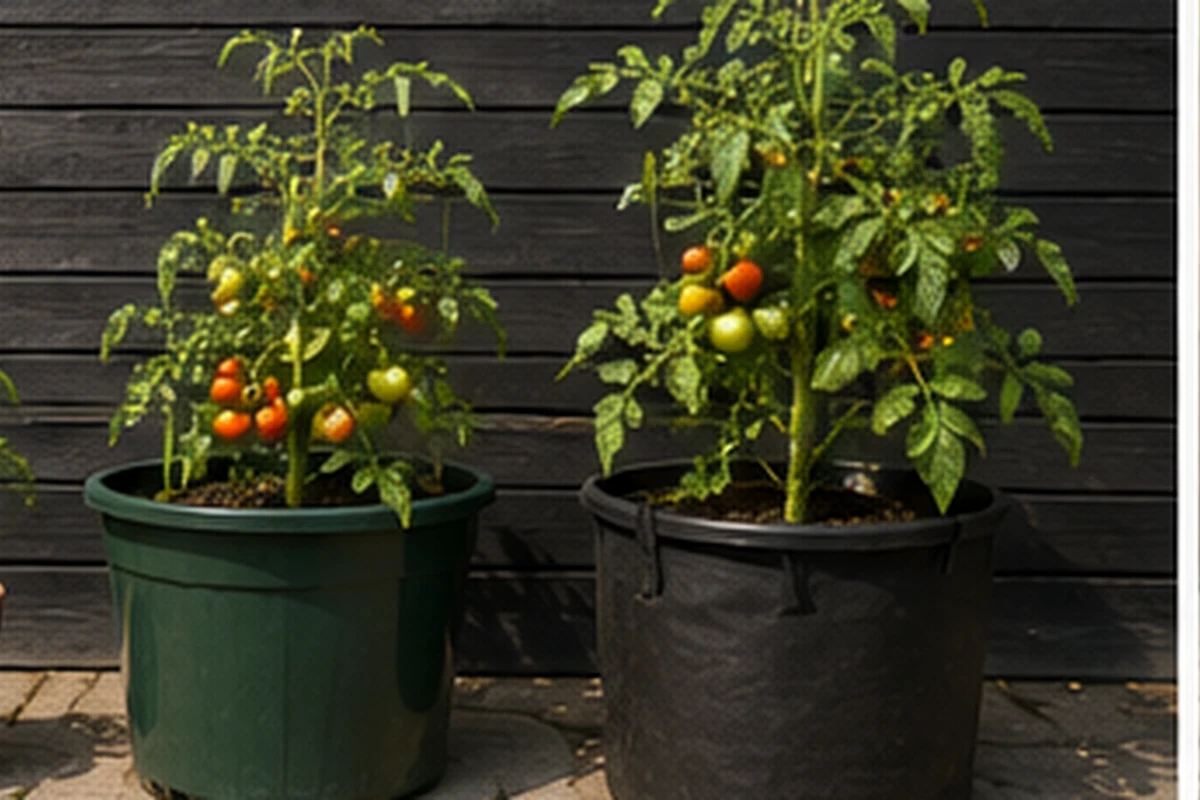
Match the container size to the mature tomato variety, not the size of the young seedling.
There is no single pot size that suits every tomato. A micro-dwarf plant grown on a windowsill has very different needs from a vigorous indeterminate tomato trained up a two-metre support.
The following sizes are practical starting points. Bigger containers provide a useful buffer, especially outdoors in summer.
Micro-Dwarf and Very Compact Tomatoes
Approximate container size:
- 5 to 10 litres
- Approximately 20 to 25 cm wide
- One plant per pot
This category is only for genuinely tiny varieties bred to remain very compact. These plants may mature at 20 to 45 cm tall and have a smaller root system than ordinary bush tomatoes.
Do not assume that every cherry tomato is a micro-dwarf. Many cherry varieties are vigorous indeterminate plants that grow taller than large-fruited tomatoes.
Small pots are convenient, but they have little moisture reserve. Check them frequently during warm weather.
Dwarf, Patio and Compact Bush Tomatoes
Approximate container size:
- 15 to 25 litres
- Approximately 30 cm or more across
- One plant per pot
Compact bush varieties are designed for containers, patios, balconies, and small gardens. A 20-litre pot is a useful starting point, while 25 litres gives more protection against drying.
Trailing varieties can also grow in deep hanging baskets or elevated planters, but the container must hold enough compost and be strong enough to support the wet weight.
Standard Bush and Cherry Tomatoes
Approximate container size:
- 20 to 30 litres
- Approximately 30 to 40 cm wide
- One plant per pot
Many standard bush tomatoes become broader and heavier than their compact labels suggest. A larger pot gives them more stable moisture and reduces how often they need watering.
Cherry describes fruit size, not plant size. Always check whether the variety is bush, dwarf, trailing, or indeterminate before choosing the pot.
Cordon and Indeterminate Tomatoes
Approximate container size:
- 30 to 40 litres as a practical minimum
- 40 to 60 litres for vigorous or large-fruited varieties
- One plant per pot
Cordon tomatoes keep growing until cold weather or pruning stops them. They can become tall, top-heavy, and heavily laden with fruit.
A generous container makes it easier to:
- Maintain even moisture
- Supply enough nutrients
- Anchor a tall support
- Prevent the plant blowing over
- Keep roots cooler during hot weather
A 20-litre container can keep some indeterminate tomatoes alive, but it leaves much less room for watering mistakes. A larger pot usually produces a less stressful growing experience.
Why a Larger Pot Is Usually Easier
A larger volume of potting mix changes temperature and moisture more slowly than a small volume.
This means:
- The root ball does not dry as rapidly
- Fertiliser concentration changes less abruptly
- Roots have more room to spread
- The plant is less likely to wilt during one hot afternoon
- Tall plants have a heavier, more stable base
The disadvantage is weight. Forty litres of wet compost, together with the container, plant, cage, and water, can be extremely heavy.
Position large containers before filling them, or place them on a strong plant caddy rated for the expected weight.
To avoid overcrowding, read our guide explaining how many tomato plants to grow in each pot.
Do Tomato Pots Need to Be Deep or Wide?
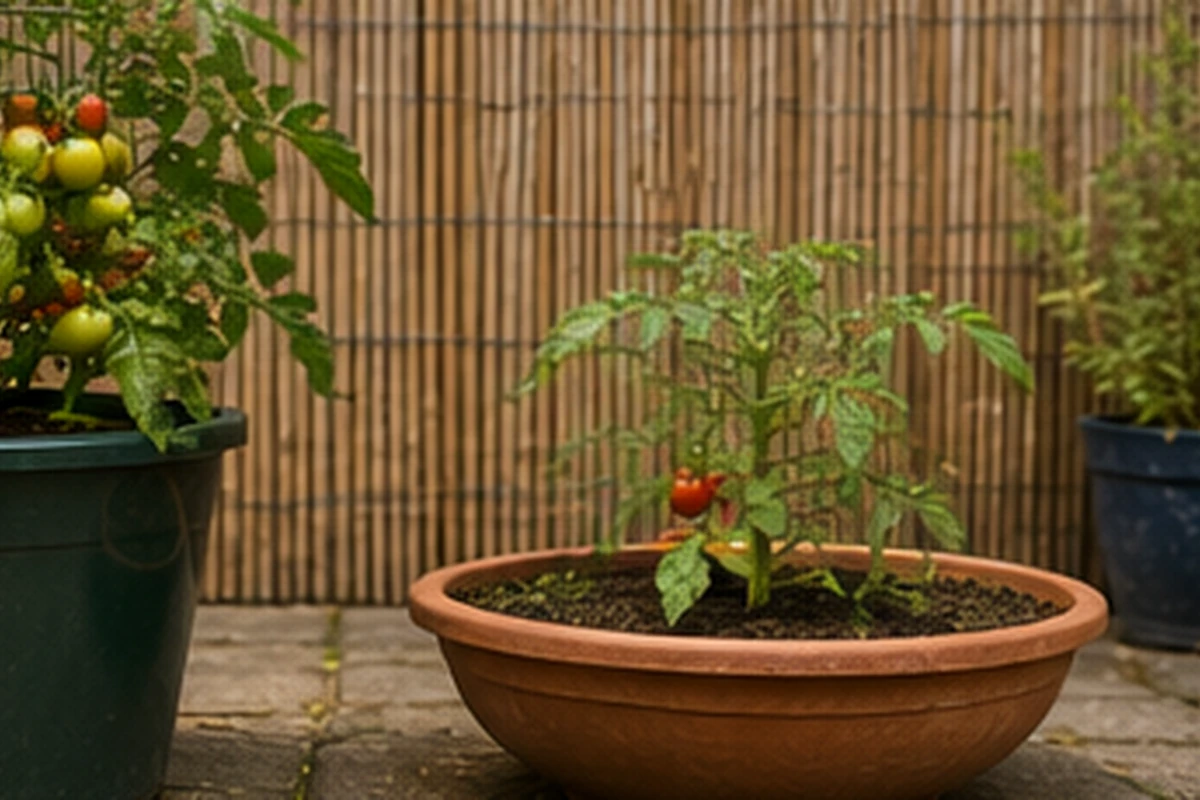
Tomatoes need enough depth for roots and enough width to keep the plant stable.
Tomatoes benefit from both depth and width.
For most full-sized varieties, choose a pot at least 30 cm deep. A depth of 35 to 45 cm is even better for a large plant.
Depth provides room for:
- Deep planting of the seedling
- Additional roots along the buried stem
- A cooler, moister lower root zone
- Secure placement of a stake or cage
Width is equally important. A broad container holds more compost and is less likely to tip when the plant catches the wind.
A tall, narrow decorative pot may look large but contain surprisingly little useful growing medium. It can also become unstable once a tomato reaches full height.
For exposed patios and balconies, choose a cylindrical, square, or broad-based pot rather than a narrow pot that tapers sharply towards the bottom.
Why Drainage Holes Are Essential
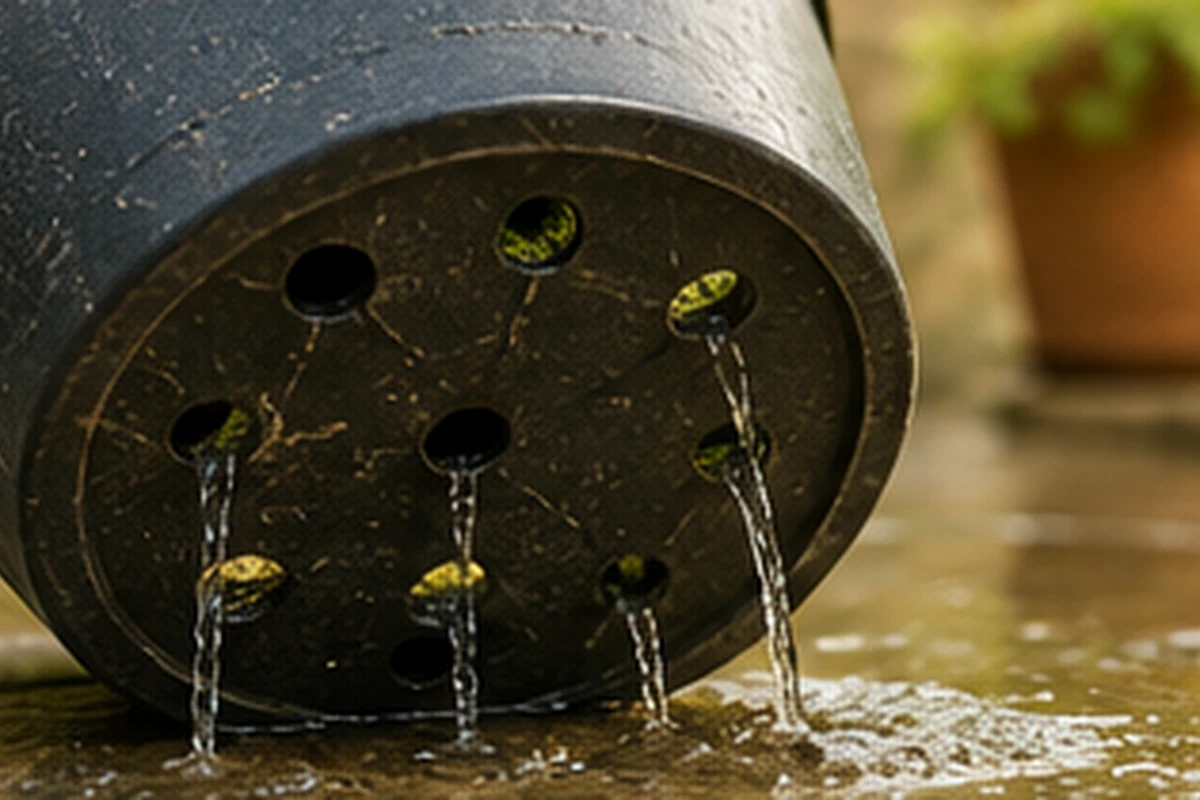
Several open drainage holes allow excess water to escape and help protect tomato roots.
Ordinary tomato pots must allow excess water to escape.
Roots need oxygen as well as water. When compost remains saturated, water occupies the spaces that should contain air. Prolonged waterlogging can damage roots and encourage root rot.
Check every container before filling it. Some decorative pots have only a marked circle where a hole can be drilled, while others have one small opening that may become blocked.
Self-watering containers are different. They normally have a reservoir, a wicking section, and an overflow hole rather than ordinary holes across the base.
How Many Drainage Holes Does a Pot Need?
There is no universal number because holes vary in size and containers vary in shape.
The goal is free drainage across the base. A large tomato pot should normally have:
- Several holes distributed across the bottom, or
- A combination of bottom holes and low side openings
- Openings large enough not to block immediately
- A base that does not sit tightly against the ground
If water remains on the compost surface for a long time, drainage holes may be blocked or the potting mix may have become compacted.
Do not make a few tiny pinholes and assume the job is finished. Test the empty pot by pouring water into it before planting.
Should You Put Gravel in the Bottom?
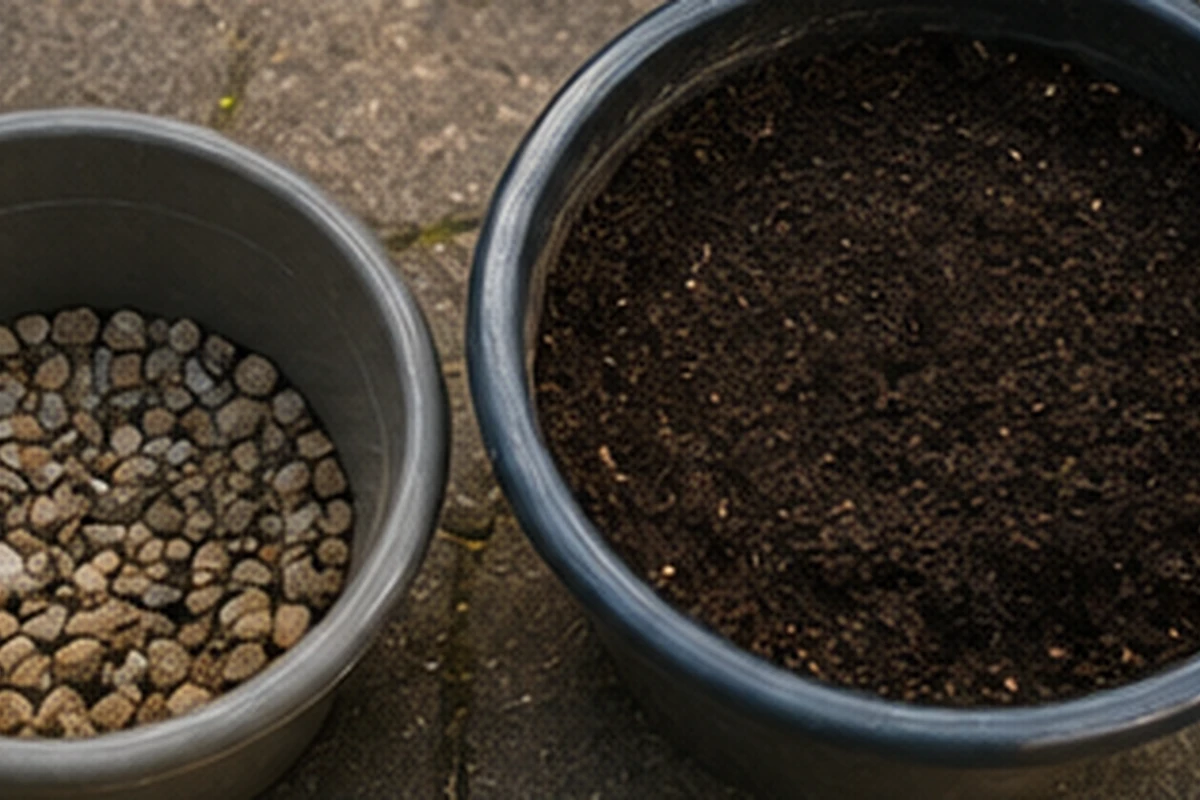
Open drainage holes matter; a thick layer of gravel only reduces the space available for roots.
No. A layer of stones, gravel, or broken crockery does not improve drainage inside an ordinary container.
Water does not move freely from a fine potting mix into a coarse gravel layer until the compost above becomes heavily saturated. This can leave a wetter zone above the gravel while also reducing the depth available for roots.
Fill the pot with suitable potting mix from top to bottom.
When a drainage hole is unusually large, place a small piece of mesh over it to reduce compost loss without sealing the hole. Do not create a thick drainage layer.
Should Tomato Pots Be Raised Off the Ground?
Raising a pot slightly can help when it stands on a flat, solid surface.
Pot feet, sturdy blocks, or a suitable caddy can:
- Prevent drainage holes being pressed against paving
- Allow water to escape more freely
- Improve airflow beneath the container
- Reduce staining or water pooling on the patio
Make sure the support is level and strong. A heavy tomato pot balanced on unstable bricks can become more dangerous than a pot standing directly on the ground.
Best Pot Materials for Tomatoes
Pot material affects moisture loss, root temperature, weight, cost, and durability. No material is perfect in every garden.
The best option is the one whose disadvantages you can manage consistently.
Plastic and Resin Pots
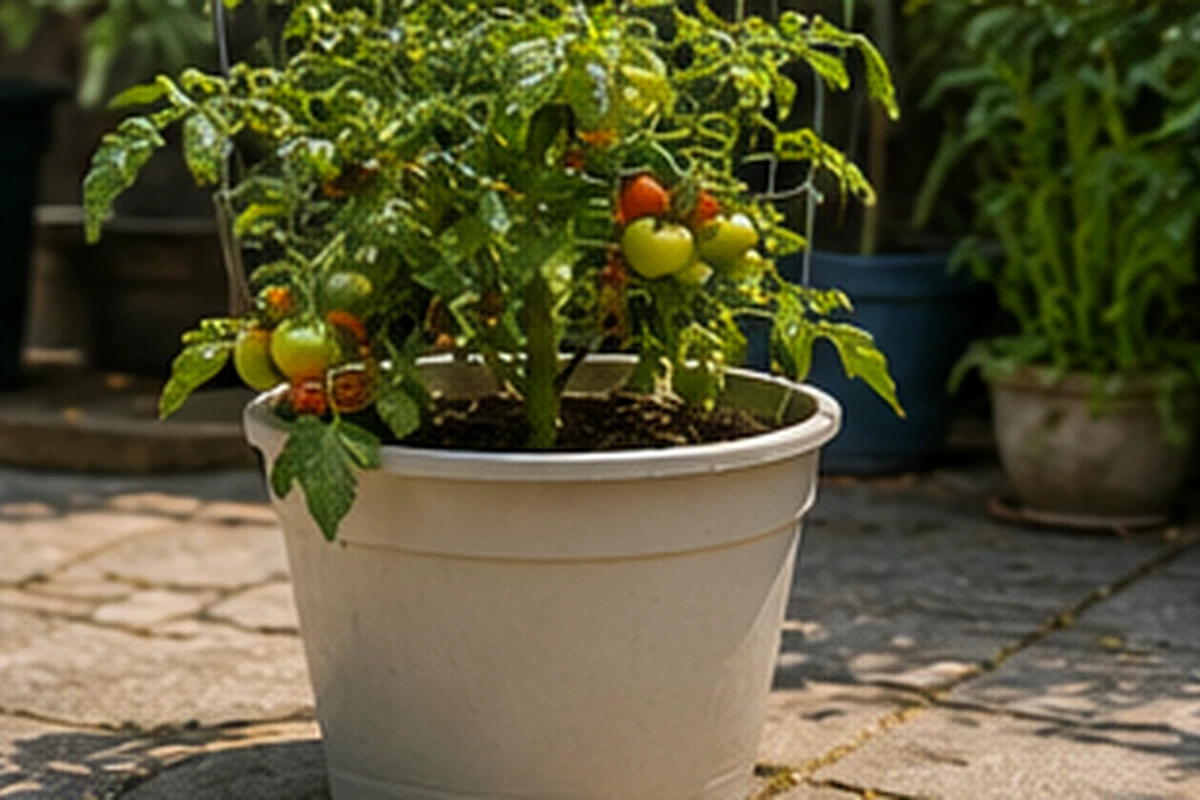
Plastic and resin pots are affordable, lightweight, and slower to dry than porous containers.
Best all-round choice for most gardeners
Plastic and resin pots are popular because they are affordable, widely available, and slow to lose water through their sides.
Advantages
- Retain moisture better than porous clay or fabric
- Lightweight before filling
- Easy to drill when more drainage holes are needed
- Available in many sizes
- Usually inexpensive
- Reusable for several seasons
- Less likely to crack in frost than terracotta
Disadvantages
- Lightweight pots can blow over
- Thin plastic may split or become brittle
- Dark colours can become hot in strong sun
- Cheap pots may flex under the weight of wet compost
- Appearance may be less attractive than clay or wood
Choose thick, UV-resistant plastic when possible. Light or medium colours are useful on very sunny patios because they absorb less heat than black containers.
A large nursery pot or food-safe bucket can be highly effective even if it is not decorative. Place it inside a larger decorative outer pot only when the inner container can drain freely and is never left standing in trapped water.
Fabric Grow Bags
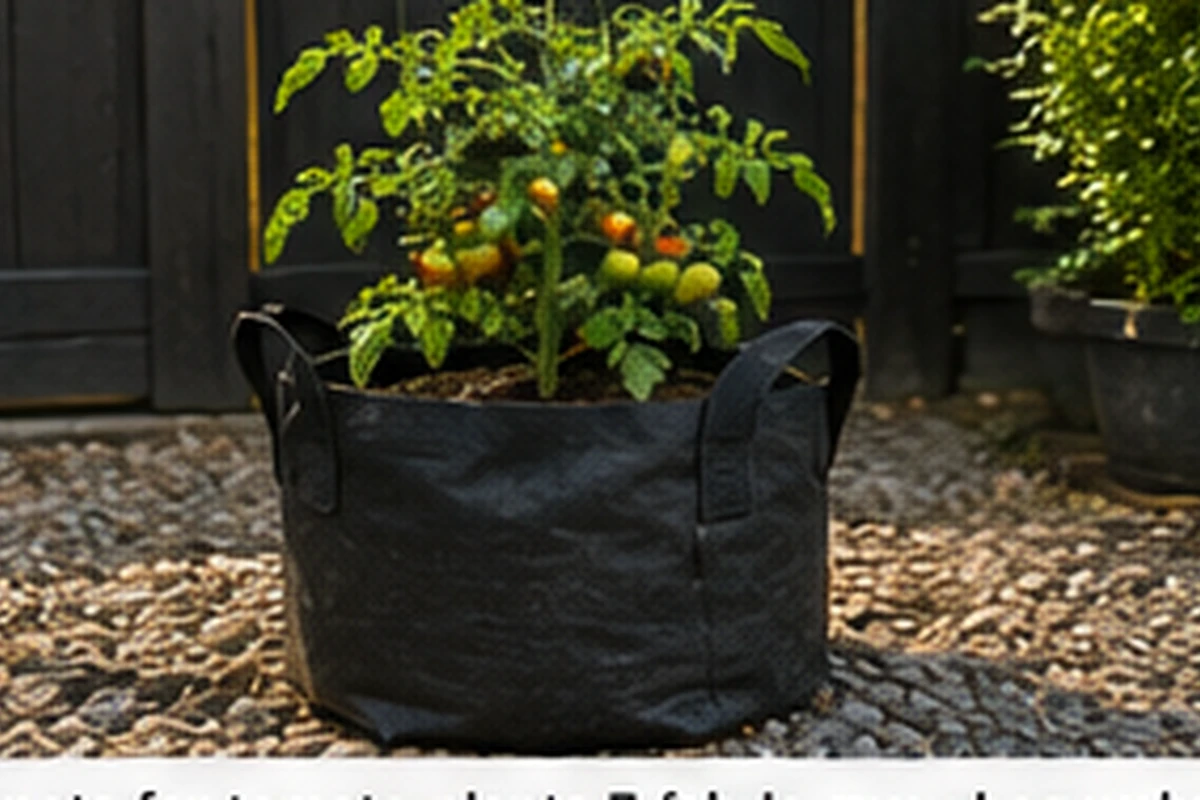
Fabric grow bags provide excellent aeration but usually dry more quickly than plastic pots.
Good for aeration, storage, and portability
Fabric grow bags allow air and moisture to pass through their sides. Roots that reach the edge are exposed to air, which can encourage branching rather than continuous circling.
Advantages
- Excellent aeration
- Difficult for excess water to remain trapped when the bag drains freely
- Lightweight and easy to store
- Often supplied with carrying handles
- Available in large volumes at reasonable prices
- Less likely to develop circling roots than a smooth-sided pot
Disadvantages
- Dry out faster than plastic
- Can require frequent watering in hot or windy weather
- Handles may tear when a full bag is lifted
- Soft sides provide less support for stakes
- The base may remain wet when placed directly on damp ground
- Appearance and durability vary greatly
Fabric bags work well when you can check moisture often. A drip line, irrigation spike, mulch layer, or self-watering base can make them easier to manage.
Do not move a full grow bag by its handles unless the manufacturer confirms they are designed for that weight.
Terracotta and Unglazed Clay
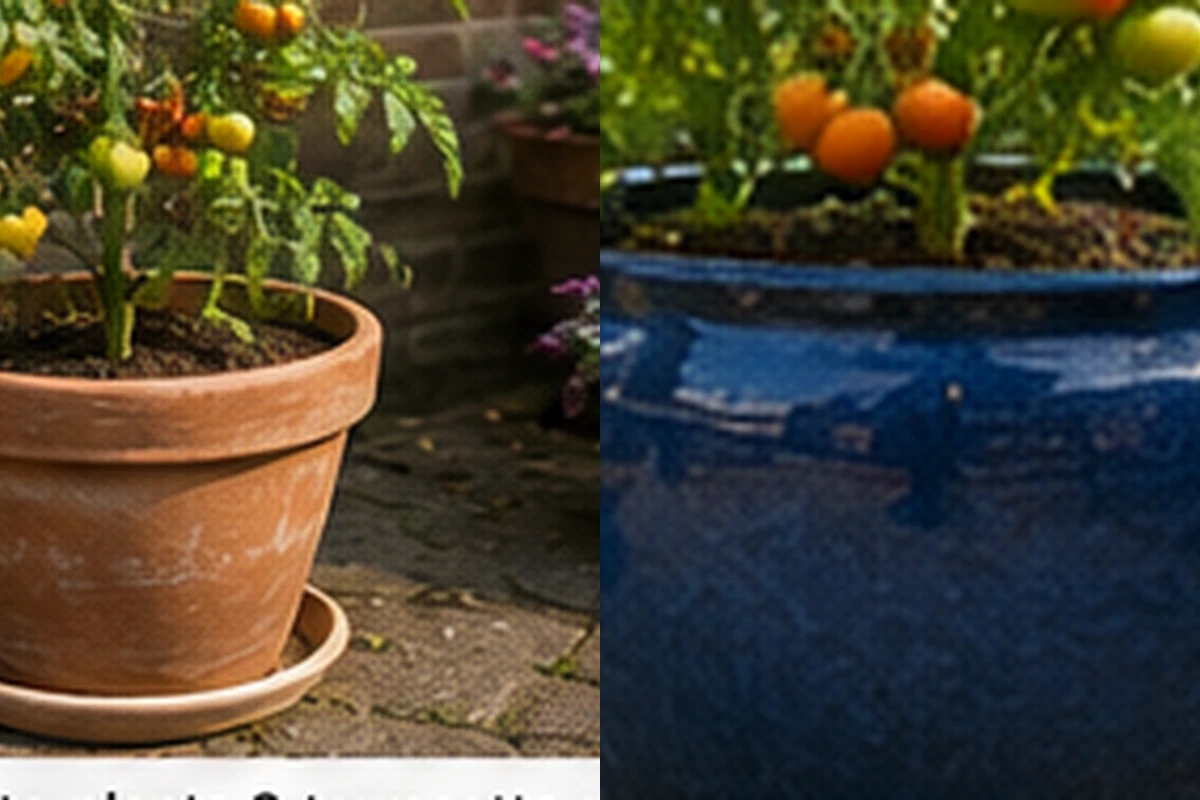
Terracotta dries quickly, while glazed ceramic usually retains moisture for longer.
Attractive and stable, but quick to dry
Terracotta is porous. Water moves through the pot wall and evaporates, helping air reach the root zone but also drying the compost.
Advantages
- Traditional appearance
- Heavier and more stable than thin plastic
- Porous walls allow evaporation
- The pot can help prevent prolonged wetness in cool conditions
Disadvantages
- Compost dries more quickly
- Large pots are heavy and expensive
- Clay can crack if saturated and exposed to freezing temperatures
- Pots may become difficult to move
- Mineral deposits can form on the outside
- Frequent watering may be necessary in hot weather
Terracotta can grow excellent tomatoes, but it suits gardeners who enjoy checking plants regularly. Choose the largest practical size and use mulch to slow moisture loss.
A glazed interior or an inner plastic pot can reduce evaporation, although the inner pot still needs unobstructed drainage.
Glazed Ceramic Pots
Decorative and moisture-retentive, but heavy
Glazing reduces water loss through the pot wall. This makes glazed ceramic behave more like plastic than unglazed terracotta.
Advantages
- Attractive finish
- Better moisture retention than unglazed clay
- Heavy enough to provide stability
- Durable when well made
Disadvantages
- Expensive in large sizes
- Very heavy after filling
- Can crack during freezing weather
- Some decorative designs have inadequate drainage
- Narrow-necked shapes are difficult to empty
Check that the pot is frost-resistant when it will remain outdoors year-round. Avoid urns with a narrow opening because a mature root ball may be impossible to remove without breaking the pot.
Wooden Planters
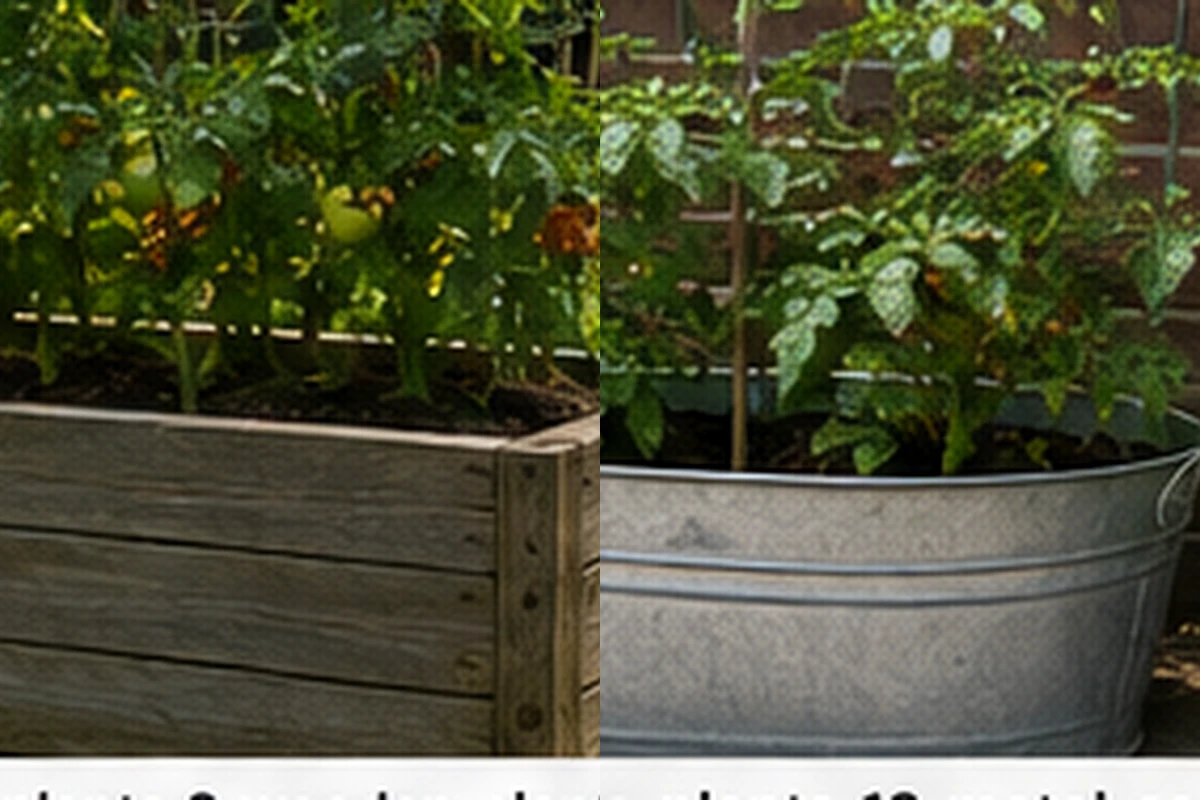
Wood provides insulation and stability, while metal containers need careful positioning in strong sun.
Excellent for large, stable containers
Wood provides some insulation from rapid temperature changes and can be used to build wide, deep planters.
Advantages
- Good insulation
- Stable in windy locations
- Suitable for large custom sizes
- Attractive in natural gardens
- Easier to attach trellises or supports
- Can hold several dwarf plants when correctly spaced
Disadvantages
- Heavy and difficult to move
- Wood eventually decays
- Poorly built planters can bow under wet compost
- Liners may reduce drainage if installed incorrectly
- The safety of old or treated timber may be unknown
Use naturally durable timber or products sold as suitable for edible gardening. Avoid old railway sleepers, creosote-treated wood, and timber with an unknown chemical history.
If using a liner, create drainage openings and do not seal the bottom into a waterproof box.
Metal Containers
Durable but potentially hot
Galvanised tubs, metal troughs, and decorative steel planters can make strong containers. However, metal conducts heat quickly.
Advantages
- Strong and durable
- Resistant to impact
- Available in useful trough shapes
- Often stable when filled
- Does not rot
Disadvantages
- Can become hot in direct sunlight
- Root temperatures may change rapidly
- Metal edges may be sharp
- Drainage holes can be difficult to add
- Some containers may rust
- Large metal planters are heavy
Metal is not automatically bad for tomatoes. It works best in mild conditions, partial afternoon shade, or when the inner wall is protected from extreme heat.
Use a light-coloured outer surface, leave an air gap around an inner pot, or add a suitable liner that does not block drainage. Avoid placing a small dark metal container against a heat-reflecting south-facing wall.
Concrete, Stone and Fibreglass Pots
Concrete and stone containers are stable and durable, but extremely heavy. They are useful in permanent, windy locations where tipping is a concern.
Some unsealed concrete products are porous and may dry more quickly than plastic. New concrete can also be alkaline, so containers intended for planting are preferable to improvised construction products.
Fibreglass pots imitate stone or ceramic while weighing much less. Quality varies, but a strong outdoor-rated fibreglass container with good drainage can be an excellent option.
Always judge the individual pot by its volume, drainage, stability, and outdoor durability rather than the material name alone.
Are Self-Watering Pots Good for Tomatoes?
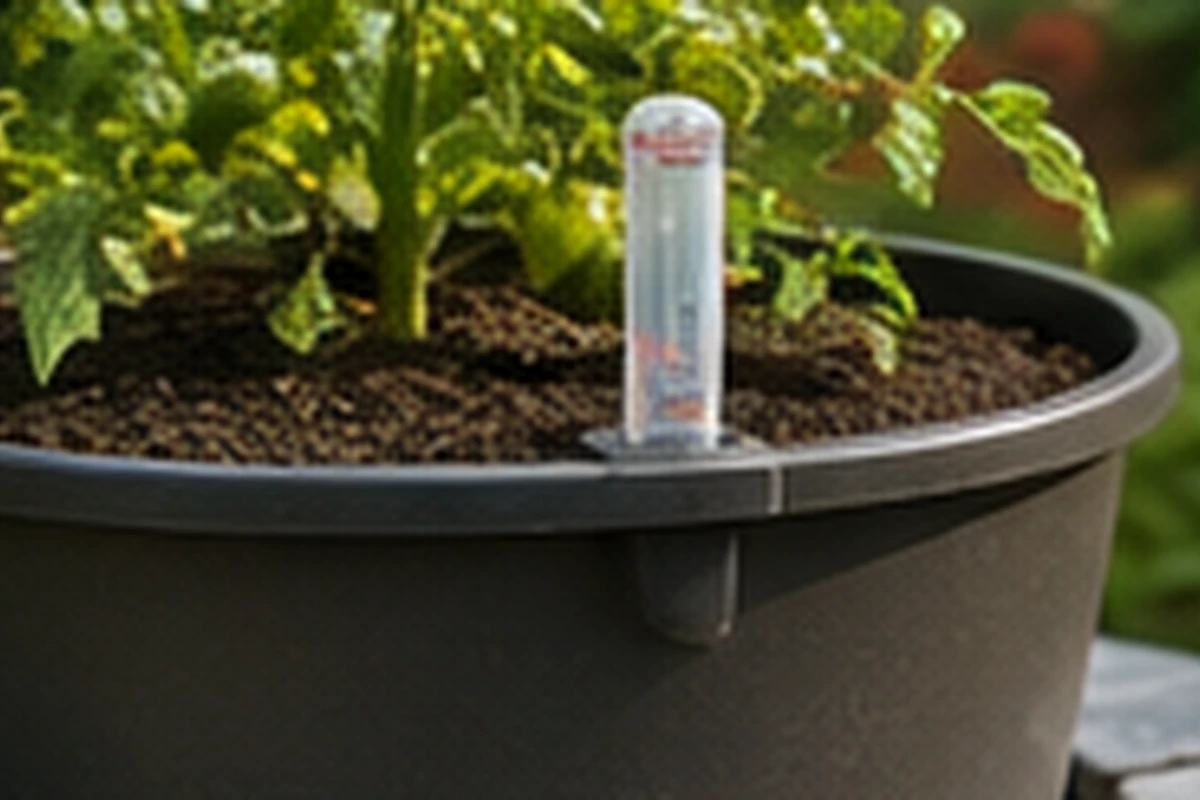
A proper self-watering planter uses a reservoir, wicking area, and overflow hole to provide steadier moisture.
A well-designed self-watering container can be one of the best choices for tomatoes.
These systems contain:
- A water reservoir at the bottom
- A platform separating most of the compost from the reservoir
- A wicking area that draws water upwards
- A filling tube or opening
- An overflow hole that prevents the reservoir becoming too deep
Tomatoes benefit from a steady water supply. Consistent moisture can reduce repeated wilting and lower the risk of fruit splitting and blossom end rot associated with large moisture swings.
Self-watering pots are especially useful for:
- Busy gardeners
- Hot patios
- Balconies where ordinary pots dry quickly
- Gardeners who cannot lift watering cans frequently
- Large, thirsty tomato plants
However, “self-watering” does not mean maintenance-free.
You still need to:
- Refill the reservoir
- Check it more often during hot weather
- Use a suitable lightweight potting mix
- Keep the overflow hole open
- Water from the top while a young plant establishes, when recommended
- Prevent rain from leaving the system permanently flooded
Do not confuse a proper reservoir planter with a decorative pot that simply has no drainage hole. A sealed pot filled with wet compost is not a self-watering system.
Best Pots for Balconies, Patios and Small Gardens
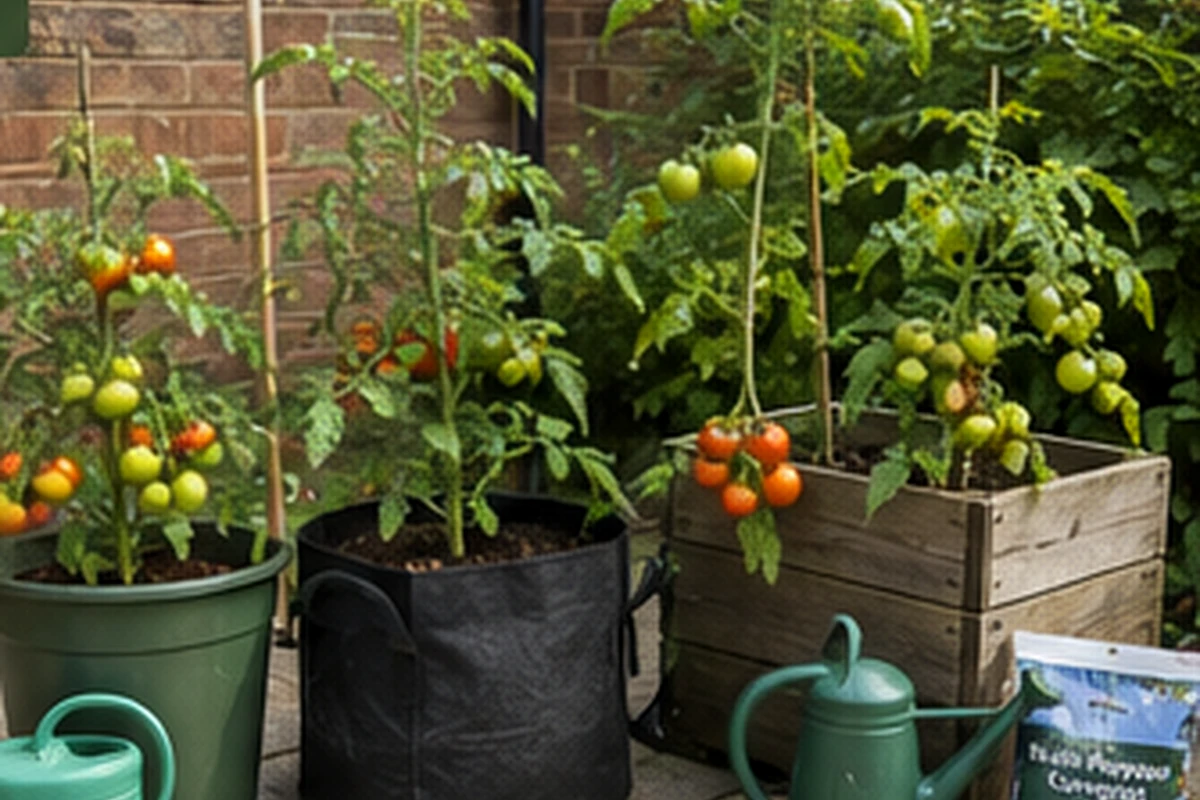
Balcony tomatoes need stable pots, enough root space, and careful attention to weight and wind.
In a small space, the best container must fit the location without creating a safety problem.
For balconies
Choose:
- Lightweight plastic, resin, or fabric before filling
- A broad, stable base
- A compact or dwarf tomato variety
- A container that cannot roll or tip
- A secure saucer only where necessary
- A position where draining water will not fall onto neighbours
Confirm that the balcony can carry the combined weight of containers, wet compost, plants, water, and furniture. Several large tomato pots can become surprisingly heavy.
Avoid placing tall cordon tomatoes where wind funnels between buildings. Compact bush varieties are often easier and safer.
For patios
Plastic, resin, glazed ceramic, wood, fabric, and self-watering pots can all work.
A plant caddy is useful when you need to move the pot for cleaning or shelter. Make sure its wheels lock and its weight rating is adequate.
For very small gardens
Use vertical space carefully. A tall cordon tomato in one large, stable container may use less floor area than a broad bush tomato, but it requires a secure support.
The pot should still be large enough to keep the plant watered. Saving floor space by using a tiny pot usually creates more work rather than less.
Best Pots for Hot, Dry or Windy Gardens
The same tomato variety can behave very differently depending on the container and location.
Hot and dry conditions
Choose:
- Larger containers
- Light-coloured plastic or resin
- Self-watering pots
- Thick wooden planters
- Mulched compost
- Pots protected from reflected afternoon heat
Avoid small terracotta, fabric, or dark metal containers unless you can water very frequently.
Cool or rainy conditions
Choose:
- Containers with excellent drainage
- Pot feet on solid surfaces
- A free-draining potting mix
- Terracotta or fabric when moisture retention is excessive
- A sheltered position with strong sunlight
Do not let saucers remain full of rainwater.
Windy conditions
Choose:
- Wide, cylindrical, or square containers
- Heavy plastic, wood, concrete, or ceramic
- A low centre of gravity
- Compact tomato varieties
- Supports fixed independently to a wall or strong frame when possible
A tall stake pushed into a small pot does not make the system stable. The pot, plant, and support must work together.
Which Pots Are Bad for Tomato Plants?
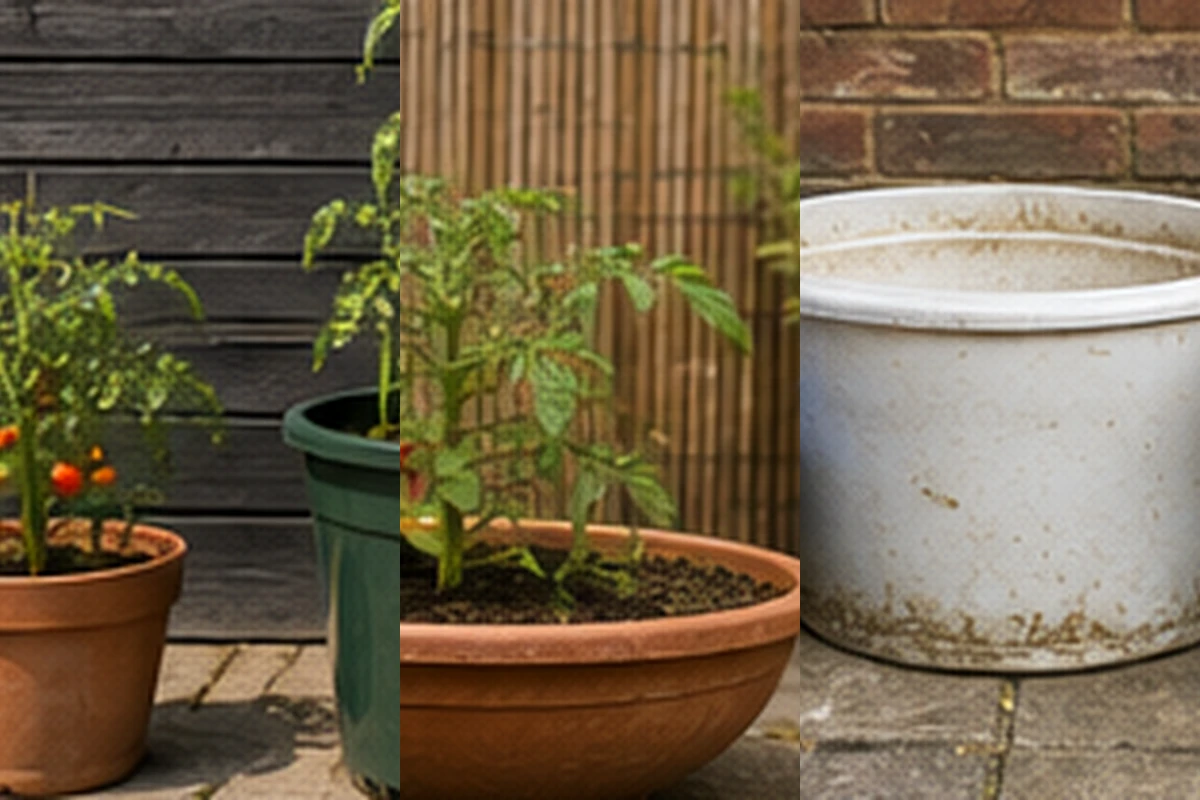
Pots that are too small, unstable, or poorly drained create unnecessary problems for tomato plants.
Some containers are difficult rather than completely impossible. A skilled gardener may still grow a tomato in them, but they create unnecessary risk for beginners.
Pots That Are Too Small
A small container has little space for roots, water, and nutrients.
Warning signs include:
- Wilting soon after watering
- Water running straight through dry compost
- Roots circling densely inside the pot
- Stunted growth
- Frequent nutrient deficiencies
- Fruit splitting after irregular watering
- The plant falling over in wind
Do not choose a pot based only on the size of the seedling. Choose for the mature plant.
Containers without Drainage
A sealed decorative pot is a poor direct planting container.
Water can accumulate invisibly at the bottom even when the surface looks dry. The root zone then becomes waterlogged.
Drill suitable holes or use the pot as an outer cover around a separate draining nursery pot. Remove the inner pot to water and empty any water trapped in the outer container.
Narrow or Unstable Pots
A tomato plant becomes top-heavy as its stems lengthen and fruit develops.
Avoid:
- Very narrow bases
- Tall pots with little volume
- Lightweight pots in exposed positions
- Rounded bases that rock
- Weak planters that bend under wet compost
- Wheeled stands without brakes
A wide base is particularly important for cordon tomatoes and plants supported by cages.
Decorative Pots Used Incorrectly
Decorative pots are not bad when they have enough volume and drainage. Problems arise when appearance hides an unsuitable design.
Common issues include:
- No drainage hole
- A narrow neck
- Very shallow internal depth
- Thin material that overheats
- An inner shelf that traps water
- A shape that cannot accept a cage
- Insufficient strength for wet compost
Measure the usable internal volume rather than relying on the outside appearance.
Dark Metal Pots in Strong Sun
Small, dark metal pots can heat rapidly on sunny patios. Roots near the container wall may experience more heat and faster moisture loss.
Use metal with caution when:
- The pot receives intense afternoon sun
- It stands against a reflective wall
- The climate is hot
- The container is small
- The outer surface is black or dark
- Watering is infrequent
A large metal trough in a mild UK garden may work perfectly well. The risk depends on size, colour, sun exposure, and local conditions.
Unknown or Contaminated Recycled Containers
Do not grow food in containers that previously held:
- Paint
- Solvents
- Fuel or oil
- Pesticides
- Strong cleaning chemicals
- Industrial products
- Unknown substances
Washing does not guarantee that absorbed residues are removed.
Choose containers made for food, gardening, or a known safe purpose. A recycling symbol identifies the plastic type but does not reveal what the container previously held.
Very Shallow Hanging Baskets
Standard shallow baskets hold little compost and dry quickly. A full-sized tomato plant can also become dangerously heavy.
Use hanging baskets only for compact trailing varieties and choose the largest, deepest basket that the support can safely hold.
Check wall brackets, chains, hooks, and fixings. Wet compost weighs much more than dry compost.
Can You Grow Tomatoes in Buckets or Recycled Containers?
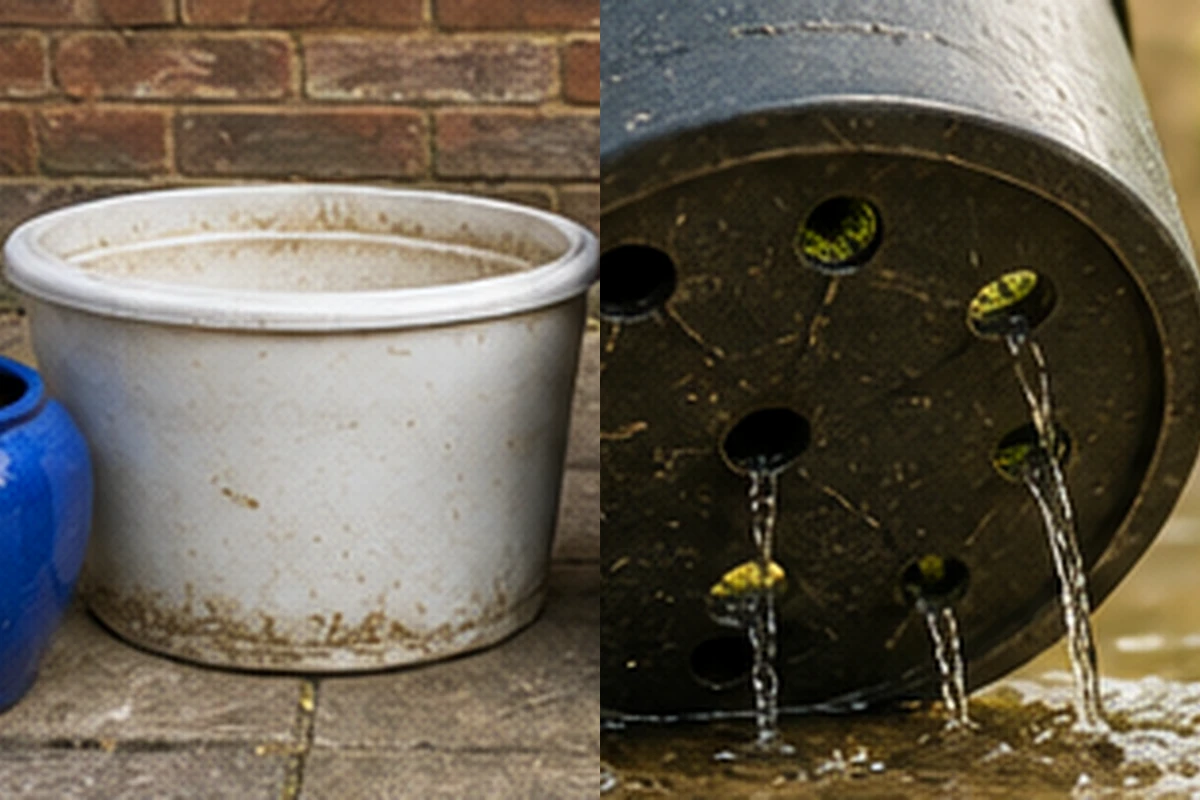
A clean, safe bucket can make an effective tomato pot when it has enough drainage holes.
Yes. A strong bucket can make an inexpensive and productive tomato pot.
A typical 20-litre or five-US-gallon bucket is suitable as a minimum container for one compact or standard tomato. A larger container is easier for vigorous cordon varieties.
Before using a bucket:
- Confirm that it previously held food or another safe material.
- Clean it thoroughly.
- Drill several drainage holes across the base or low on the sides.
- Smooth sharp plastic edges.
- Test the drainage.
- Place it where it will remain stable.
- Add support at planting time.
Other useful recycled options include:
- Large nursery pots
- Food-grade storage tubs
- Half barrels
- Strong wooden crates with suitable liners
- Large troughs
- Purpose-made recycling containers sold for gardening
Avoid thin household storage boxes that become brittle outdoors or bow under the weight of wet compost.
How Pot Shape and Stability Affect the Plant
A pot can hold enough litres and still be poorly shaped for a tall tomato.
Stable shapes include:
- Straight-sided cylinders
- Square planters
- Broad tubs
- Low, wide containers
- Rectangular troughs with sufficient depth
Less stable shapes include:
- Narrow-bottomed cones
- Tall urns
- Round-bottomed pots
- Lightweight decorative planters
- Pots set high on narrow stands
If the plant needs a stake, insert it at planting time. Adding a stake later can damage established roots.
For a very tall tomato, a support fixed to a wall, fence, greenhouse frame, or independent trellis is often safer than relying entirely on the pot.
Do not tie the plant rigidly. Use soft ties and leave room for the stem to thicken.
Match the Tomato Variety to the Pot
The best pot depends on the plant’s growth habit.
Micro-dwarf tomatoes
Best for:
- Small patio pots
- Window ledges
- Tabletop containers
- Sheltered balconies
They still need drainage and regular watering.
Compact bush and patio tomatoes
Best for:
- 15 to 25-litre pots
- Self-watering containers
- Large hanging baskets for trailing types
- Balconies and small patios
These plants usually need less vertical support but can become broad.
Standard bush tomatoes
Best for:
- 20 to 30-litre pots
- Wide tubs
- Stable resin or wooden planters
Branches may need support when carrying fruit.
Cordon or indeterminate tomatoes
Best for:
- 30 to 40 litres or more
- Deep, stable containers
- Self-watering planters
- Large plastic pots
- Strong wooden boxes
- Pots beside permanent supports
These varieties need regular training and strong vertical support.
Do not judge the plant by fruit size. Some cherry tomatoes grow into enormous vines, while some larger-fruited dwarf varieties remain compact.
Quick Pot Comparison Table
| Pot type | Moisture retention | Weight | Main advantage | Main disadvantage | Best use |
|---|---|---|---|---|---|
| Plastic or resin | High | Light | Affordable and easy to manage | Can overheat or become brittle | Best all-round choice |
| Fabric grow bag | Low to medium | Very light | Excellent aeration | Dries quickly | Gardeners who can water often |
| Terracotta | Low | Heavy | Stable and attractive | Rapid moisture loss | Sheltered patios and attentive gardeners |
| Glazed ceramic | Medium to high | Very heavy | Attractive and stable | Expensive and difficult to move | Permanent patio displays |
| Wood | Medium | Heavy | Insulated and easy to customise | Eventually rots | Large permanent planters |
| Metal | Medium | Medium to heavy | Strong and durable | Can heat rapidly | Mild sites or insulated planters |
| Concrete or stone | Medium | Extremely heavy | Very stable | Almost impossible to move | Permanent windy locations |
| Self-watering | High and consistent | Varies | Reduces moisture swings | Reservoir still needs attention | Hot sites and busy gardeners |
How to Prepare a Tomato Pot before Planting
Once you have chosen the container:
- Clean reused pots. Remove old roots, compost, algae, and debris.
- Check the structure. Look for cracks, weak handles, loose joints, or damaged bases.
- Open the drainage holes. Drill additional holes when necessary.
- Position the pot. Put large containers in their final location before filling.
- Add the support. Install the cage, stake, or trellis before roots spread.
- Use proper potting mix. Do not fill the container with dense garden soil.
- Moisten the mix. Slightly damp compost fills more evenly than bone-dry material.
- Plant deeply. Bury part of the tomato stem, leaving the upper healthy leaves above the compost.
- Leave a watering gap. Keep a few centimetres between the compost and pot rim.
- Water thoroughly. Continue until water begins to drain from the bottom.
The container and growing medium work together. Our guide to the best soil for tomatoes in pots explains how to create a mix that holds moisture without becoming waterlogged.
Common Tomato Pot Mistakes
Choosing for Appearance Instead of Volume
A beautiful pot that holds too little compost will make watering difficult throughout the season.
Planting More Than One Tomato in a Standard Pot
Two plants do not usually produce twice the harvest. They compete for root space, water, light, and nutrients.
Forgetting the Mature Plant Size
A seedling may be 15 cm tall at planting time but finish the season taller than the gardener.
Adding Gravel Instead of Improving Drainage
Use open holes and a suitable potting mix rather than filling valuable root space with stones.
Using a Tiny Pot for a Vigorous Cherry Tomato
Cherry refers to the fruit. Many cherry plants are tall, vigorous vines.
Moving a Full Pot by Weak Handles
Lift from underneath or use a suitable caddy. Wet compost can tear handles and crack containers.
Installing Support Too Late
Pushing a stake through an established root ball damages roots and may still fail to stabilise the plant.
Allowing a Saucer to Stay Full
A saucer can protect paving, but roots should not remain in stagnant water unless the planter is a properly designed reservoir system.
Putting a Dark Pot against a Hot Wall
The combination of sun, reflected heat, and a small volume of compost can overheat and dry roots quickly.
Reusing a Container with an Unknown History
Do not risk growing food in a tub that may have contained hazardous chemicals.
Frequently Asked Questions
Is a 20-Litre Pot Big Enough for a Tomato Plant?
A 20-litre pot is a practical minimum for one compact bush or moderate-sized tomato plant.
It can also grow some cordon tomatoes, but you will need to water and feed more carefully. A 30 to 40-litre container is easier for vigorous indeterminate varieties.
Is a Five-Gallon Bucket Big Enough?
A five-US-gallon bucket holds approximately 19 litres. It can grow one compact or standard tomato when it has adequate drainage.
It is a budget-friendly minimum rather than the ideal size for every variety. Large cordon and beefsteak tomatoes benefit from more volume.
Are Tomatoes Better in Plastic or Terracotta Pots?
Plastic is easier for most gardeners because it retains moisture longer and weighs less.
Terracotta provides stability and an attractive appearance but dries faster. Neither material is automatically healthier; your watering habits and local conditions determine which works better.
Can Two Tomato Plants Share One Pot?
One standard tomato per pot is the safest rule.
Two very small dwarf plants may share a genuinely large trough when spaced appropriately, but ordinary tomatoes will compete heavily in a normal container.
Are Black Pots Bad for Tomatoes?
Black pots are not always bad. They can become hotter in strong sunlight, particularly when small or placed against a heat-reflecting wall.
In a mild or partly shaded location, a black plastic pot may perform perfectly well. Use a larger container, shade the pot wall, or place it inside a lighter outer container when overheating is a concern.
Do Tomato Pots Need Saucers?
Saucers are useful for protecting balconies, decks, and indoor surfaces, but they should not keep the pot standing in water.
Empty the saucer after watering or rain. A self-watering planter is the exception because its reservoir and overflow are intentionally designed to manage stored water.
Can I Move a Tomato Pot after Planting?
Yes, but moving becomes difficult once the plant is tall and tied to supports.
Use a strong wheeled caddy before filling the pot, or choose the final position at planting time. Never drag a heavy pot by the tomato stem, stake, or fabric handles.
The Best Tomato Pot for Most Gardeners
For most home gardeners, the simplest reliable setup is:
- One tomato plant
- A 30 to 40-litre plastic, resin, or self-watering pot
- A depth of at least about 30 cm
- A wide, stable base
- Several open drainage holes
- Quality potting mix
- A support installed at planting time
- A sunny, sheltered location
- Mulch to slow moisture loss
Choose a 20 to 25-litre pot for a compact bush variety when space is limited. Choose 40 litres or more for a vigorous cordon tomato, a hot patio, or a gardener who cannot water several times a day.
There is no need to buy an expensive specialist tomato pot. A strong bucket, nursery container, fabric bag, or wooden box can work extremely well when it provides enough root space, drainage, and stability.
The worst tomato pot is not a particular material. It is a container that is too small, poorly drained, unstable, unsafe, or difficult for you to keep watered.
Match the pot to the mature plant and your growing conditions, and container tomatoes become far easier to manage.
Sources and Further Reading
- Royal Horticultural Society: Plant a Container with Tomatoes
- Royal Horticultural Society: How to Grow Tomatoes
- University of Maryland Extension: Types of Containers for Growing Vegetables
- University of Maryland Extension: Self-Watering Containers
- University of Maryland Extension: Growing Vegetables in Containers and Salad Tables
- University of New Hampshire Extension: Growing Tomatoes in Containers
- Illinois Extension: Container Size
- Illinois Extension: Container Material Choices
- Illinois Extension: Container Drainage Options