Best Soil for Tomatoes in Pots: A Simple Beginner's Guide
The best soil for tomatoes in pots is a light, moisture-retentive potting mix that also drains freely and leaves plenty of air around the roots.
In the UK, this is usually sold as multi-purpose potting compost, vegetable compost, container compost, or tomato compost. In other countries, the same type of product is commonly called potting mix or potting soil.
Tomatoes grown in the ground can spread their roots through a large area in search of water and nutrients. A tomato in a container depends entirely on the limited amount of growing medium inside that pot. If the mix becomes compacted, waterlogged, dry, or exhausted, the plant has nowhere else to send its roots.
Fortunately, you do not need a complicated blend or a long list of unusual ingredients. Start with a good-quality potting mix, improve it only when necessary, and keep the moisture level reasonably consistent.
This guide explains exactly what to look for, what to avoid, and how to make a simple tomato potting mix at home.
Contents
- Quick Answer: What Is the Best Soil for Tomatoes in Pots?
- Why Potting Mix Matters So Much
- Why You Should Not Fill Pots with Garden Soil
- What a Good Tomato Potting Mix Should Contain
- Peat-Based or Peat-Free Compost
- The Best Soil pH for Tomatoes in Pots
- How to Choose a Shop-Bought Potting Mix
- A Simple Homemade Soil Mix for Potted Tomatoes
- Should You Add Compost, Manure, Perlite or Fertiliser?
- How Soil and Watering Affect Blossom End Rot
- How to Keep Potting Mix Moist but Not Soggy
- Can You Reuse Tomato Potting Soil?
- Common Soil Mistakes to Avoid
- Filling the Pot with Garden Soil
- Using Seed Compost for the Entire Season
- Adding Too Much Compost or Manure
- Compacting the Mix Firmly
- Adding Several Fertilisers at Planting
- Letting the Pot Dry Out Completely
- Using a Pot without Drainage Holes
- Putting Gravel in the Bottom
- Reusing Diseased Soil
- Treating Every Yellow Leaf as a Soil Deficiency
- Frequently Asked Questions
- The Best Soil Setup for Most Gardeners
- Sources and Further Reading
Quick Answer: What Is the Best Soil for Tomatoes in Pots?
For most gardeners, the easiest and most reliable choice is:
A fresh, good-quality peat-free or peat-based multi-purpose potting compost made for containers, with an open texture, good drainage, and enough moisture retention to stop the pot drying out too quickly.
A strong basic mix can be made from:
- Two parts quality potting mix or multi-purpose compost
- One part mature, screened compost
- An optional half part perlite if the original mix feels dense or drains slowly
This is a flexible recipe, not a strict formula. Some commercial potting mixes already contain composted bark, coir, perlite, fertiliser, and lime. In that case, they may work perfectly well without anything being added.
The important qualities are more useful than any particular brand name. The finished mix should:
- Hold moisture without becoming swampy
- Drain excess water through the bottom of the pot
- Remain loose enough for air to reach the roots
- Contain some nutrients without being excessively rich
- Have a slightly acidic pH
- Stay structurally stable for the whole growing season
For the rest of the container setup, see our complete guide on how to grow tomatoes in pots.
Why Potting Mix Matters So Much
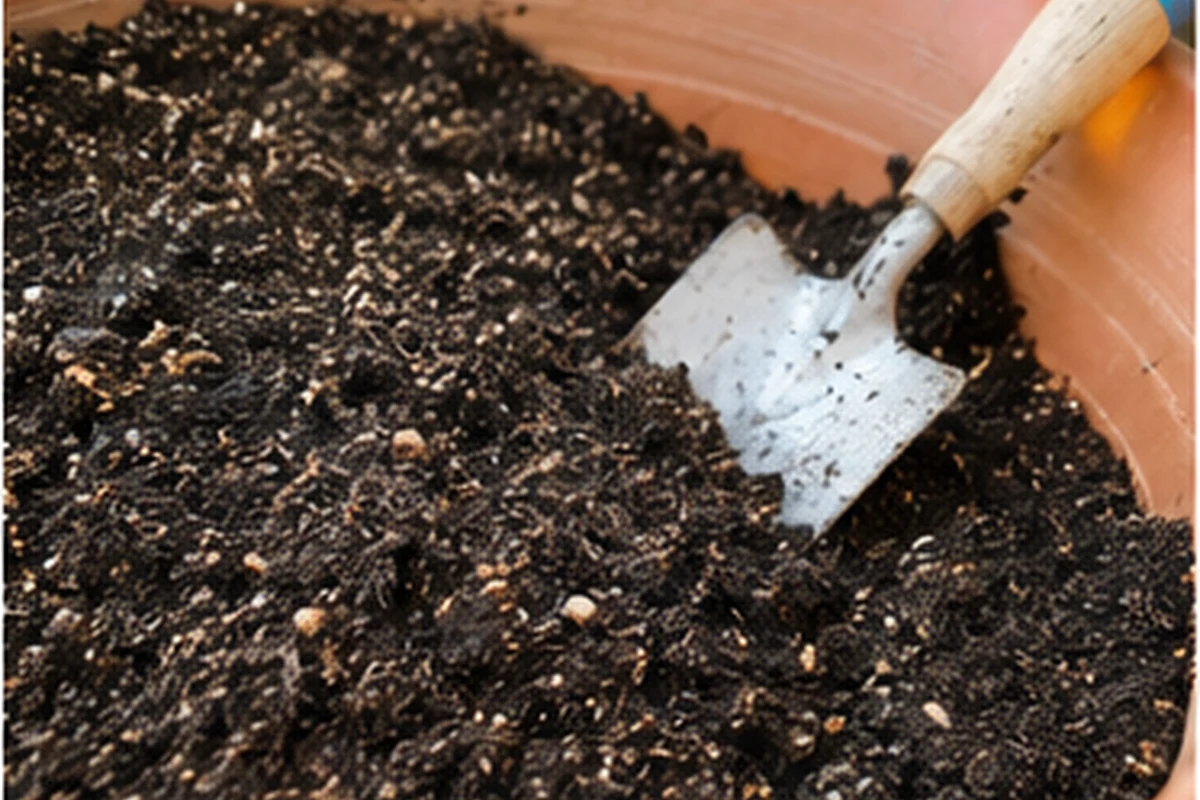
Light, open potting mix supports healthier roots than dense, compacted soil.
Tomato roots need both water and oxygen. A good growing medium must provide both at the same time.
If the mix is too coarse and dry, water passes through before the roots can absorb enough. If it is too fine or compacted, the spaces that should contain air fill with water. The roots then struggle to breathe, growth slows, and root problems become more likely.
Pots also contain a limited supply of nutrients. Every time you water thoroughly, some soluble nutrients may leave through the drainage holes. This is one reason container tomatoes usually need more attention to feeding than tomatoes planted in open ground.
A suitable potting mix makes these problems easier to manage. It stores enough water for the plant, allows excess water to escape, and gives the roots a stable structure to grow through.
Why You Should Not Fill Pots with Garden Soil
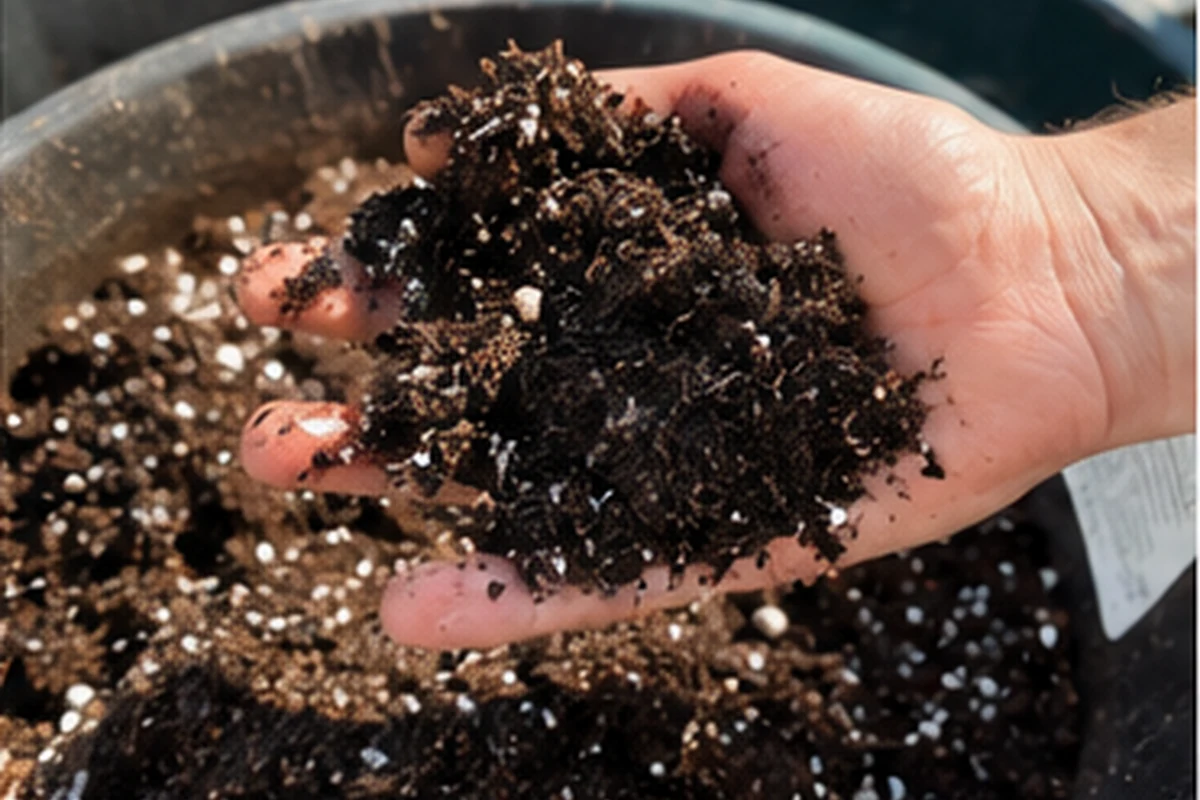
Ordinary garden soil usually becomes too dense and heavy when confined inside a pot.
Ordinary soil dug from the garden is rarely suitable as the main growing medium in a tomato pot.
In the ground, natural soil is supported by a large soil ecosystem and an almost unlimited depth and width. In a container, the same soil can settle into a dense mass. This reduces air around the roots and can make drainage slow and uneven.
Garden soil may also contain:
- Weed seeds
- Insect eggs or larvae
- Disease-causing organisms
- Large amounts of clay or fine silt
- Stones and compacted clumps
It is also heavy. A large container filled with wet garden soil can become extremely difficult to move.
This does not mean every product containing loam is unsuitable. Commercial loam-based potting composts, including John Innes-style mixes, are specially formulated for use in containers. They are very different from filling a pot with soil dug directly from a border.
As a practical rule, do not use ordinary garden soil as the main ingredient. In a very large planter, a small amount of clean topsoil may sometimes be included for weight, but it is unnecessary for most tomato pots.
What a Good Tomato Potting Mix Should Contain
A balanced tomato mix combines moisture-retaining materials with ingredients that create air spaces and drainage.
The ingredients on compost bags can look confusing, but most quality container mixes are built around the same four jobs: holding moisture, creating air spaces, supplying organic matter, and supporting plant nutrition.
A Moisture-Retaining Base
Tomatoes are thirsty plants, especially once they are carrying fruit. The potting mix must hold enough water to prevent the roots from drying out soon after watering.
Common moisture-retaining ingredients include:
- Coconut coir
- Peat
- Composted bark
- Wood fibre
- Fine, mature compost
Coir can hold a useful amount of moisture while maintaining a relatively open structure. Peat also retains water well but may become difficult to re-wet if it is allowed to dry completely. Peat-free mixes often use several materials together rather than depending on one ingredient.
A mix that contains only coarse bark may dry too quickly, while one containing too much fine compost may remain wet for too long. A blend usually gives the most balanced result.
Air Spaces and Drainage
A potting mix must contain spaces where oxygen can reach the roots. Ingredients with a coarse or springy structure prevent the mix from collapsing into a solid mass.
Common aeration ingredients include:
- Perlite
- Composted bark
- Wood fibre
- Coarse coir
- Horticultural grit
- Vermiculite
Perlite is lightweight and helps increase pore space. It can be useful when a bagged compost feels dense or slow-draining.
Vermiculite also improves structure, but it holds more water than perlite. It is particularly useful in mixes that dry too rapidly. For a tomato pot that already stays wet, adding more vermiculite is unlikely to solve the problem.
Good drainage also depends on the container. Even the best soil will become waterlogged if the pot has no open drainage holes.
Organic Matter
Mature compost can improve moisture retention, nutrient supply, and the biological activity of a potting mix. However, more compost is not always better.
A container filled entirely with dense homemade compost may:
- Hold too much water
- Shrink as it continues to decompose
- Contain an unpredictable nutrient level
- Become compacted
- Carry weed seeds if it was not made properly
For a simple blend, compost can make up roughly one-quarter to one-third of the finished mix. The exact amount depends on how fine, rich, and moisture-retentive the compost is.
Use only mature compost with an earthy smell and a crumbly texture. Avoid material that is hot, slimy, sour-smelling, or still contains large amounts of recognisable food and garden waste.
A Sensible Nutrient Supply
Tomatoes need nitrogen, phosphorus, potassium, calcium, magnesium, and a range of trace nutrients. However, heavily fertilised soil is not automatically better.
Too much fertiliser can damage roots, create excessive leafy growth, and cause a build-up of soluble salts in the pot. A balanced starting supply is safer than adding several strong products at once.
Many commercial potting composts already contain enough fertiliser for the first few weeks. Check the bag before adding anything else. Once the plant is established and flowering, begin feeding according to the instructions on a suitable tomato fertiliser.
Peat-Based or Peat-Free Compost
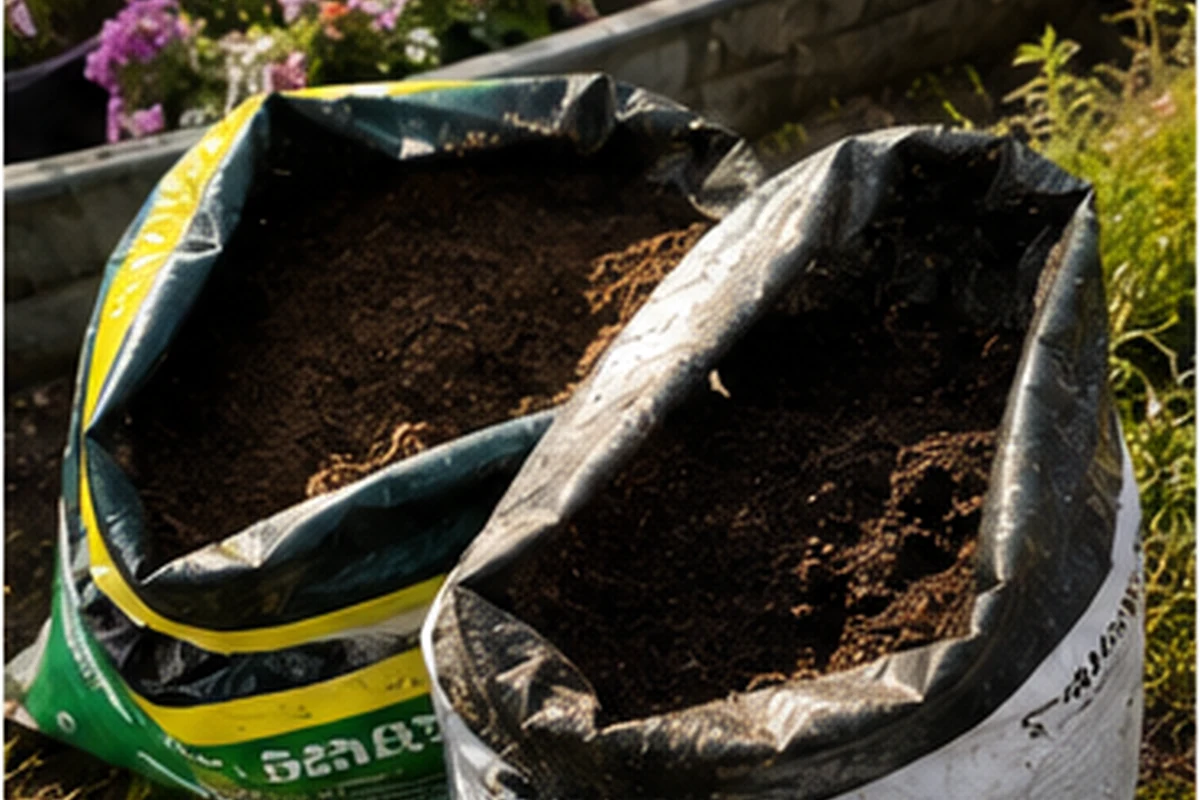
A quality peat-free container compost can provide an excellent balance of moisture retention and drainage.
Both peat-based and peat-free potting mixes can grow healthy tomatoes. The more important question is whether the particular product has the right balance of moisture retention, drainage, and nutrients.
Peat-based compost has traditionally been popular because it is lightweight, consistent, and holds water well. However, peat extraction damages important peatland habitats and releases stored carbon.
Modern peat-free mixes may contain combinations of:
- Coconut coir
- Composted bark
- Wood fibre
- Green-waste compost
- Loam
- Sand or grit
- Perlite or vermiculite
A quality peat-free compost is an excellent choice for tomato pots. Different products behave differently, so follow the watering and feeding guidance on the packaging.
Some peat-free mixes dry more quickly at the surface while remaining moist underneath. Others retain a great deal of water. Check the compost with your finger rather than watering only because the top looks dry.
Choose a product labelled for containers, vegetables, mature plants, or multi-purpose use. Do not use seed compost as the final growing medium for a full-sized tomato plant because it is normally designed to be fine-textured and low in nutrients.
The Best Soil pH for Tomatoes in Pots
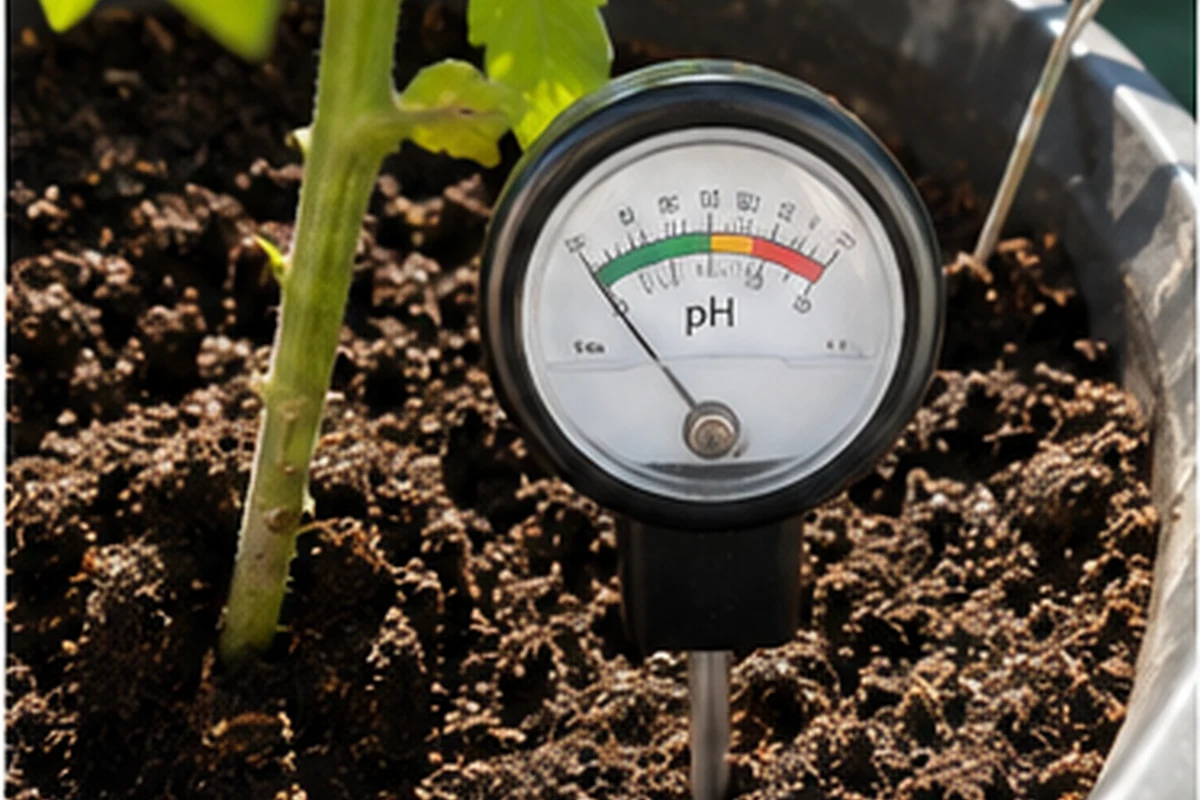
Tomatoes generally grow best in slightly acidic potting mix with a pH of about 6.0 to 6.8.
Tomatoes grow best in a slightly acidic potting mix, generally around pH 6.0 to 6.8. A pH close to 6.5 is a useful target.
The pH affects how easily roots can absorb nutrients. When the mix becomes too acidic or too alkaline, some nutrients may be present but less available to the plant.
Most fresh commercial potting mixes are already adjusted to a suitable pH. Peat-based products often contain lime to reduce the natural acidity of peat.
You usually do not need to test the pH of a new, reputable potting mix. Testing becomes more useful when:
- You are making your own mix from several ingredients
- You are reusing old potting soil
- Your water is strongly alkaline
- Plants repeatedly develop unexplained nutrient symptoms
- You have already added lime, ash, or other pH-changing materials
Avoid adding lime or sulphur without knowing the existing pH. Containers contain a small volume of growing medium, so it is easy to make a large change by accident.
How to Choose a Shop-Bought Potting Mix
You do not need to buy a product with a tomato picture on the bag. A good multi-purpose or vegetable container compost is often all that is required.
What to Look For
Good potting mix should feel springy, hold together briefly, and then crumble easily.
Choose a product that:
- Is labelled for containers, vegetables, or mature plants
- Feels light and springy rather than dense and muddy
- Contains a mixture of ingredients rather than one fine material
- Holds together slightly when squeezed but breaks apart easily
- Does not smell sour, rotten, or strongly of ammonia
- Provides clear watering and feeding instructions
- States whether fertiliser has already been added
- Is fresh enough to retain its original structure
A mix containing coir or peat for moisture, together with bark, wood fibre, perlite, or grit for structure, is usually a good starting point.
For large tomato plants, choose a medium that has enough body to support the roots and stake. Very light mixes may allow a top-heavy plant to move in the wind, although the stability of the pot itself is even more important.
What to Avoid
Avoid using these as the sole growing medium:
- Garden soil
- Cheap topsoil
- Seed-starting compost
- Fresh manure
- Unfinished homemade compost
- Pure coir with no nutrients or structural additions
- Very fine compost that becomes muddy when wet
- Old bags that have decomposed into dense, dusty material
Also avoid buying a bag only because it says “organic” or “natural.” Those words do not tell you whether the mix is peat-free, suitable for vegetables, or structurally appropriate for a large container.
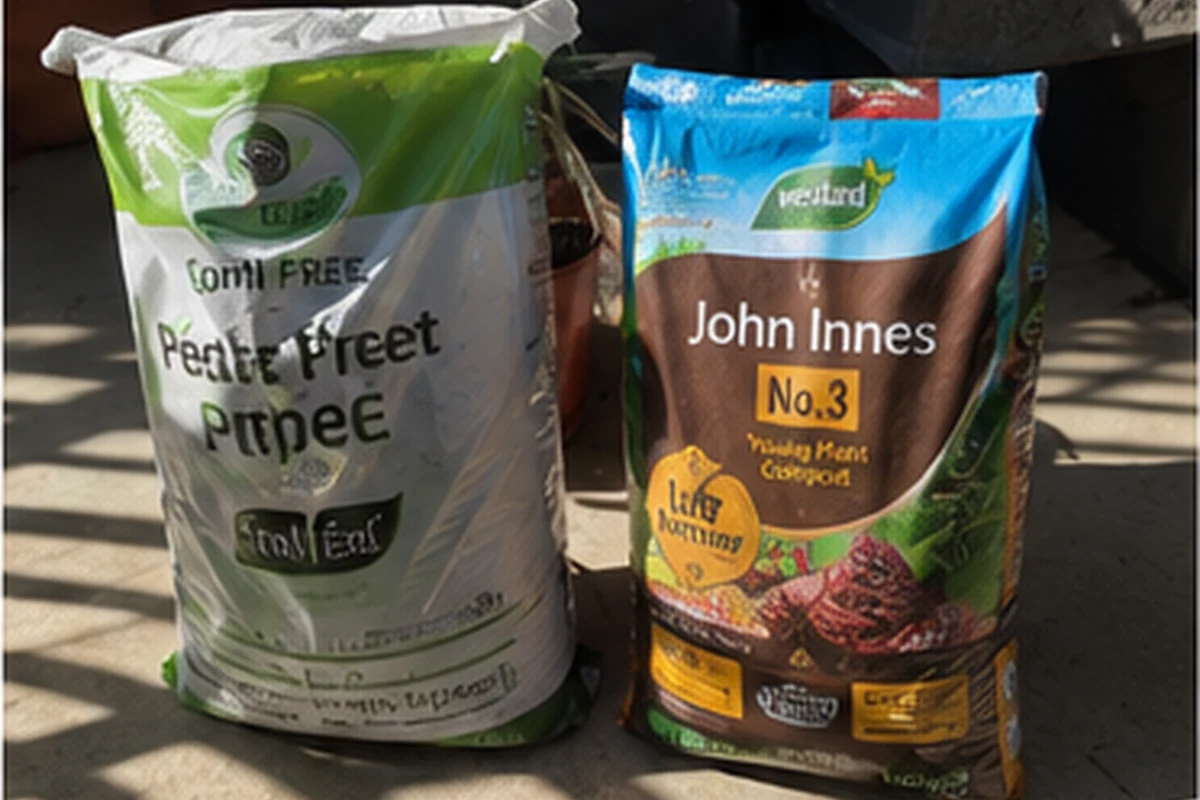
Can You Use John Innes Compost?
Yes. A loam-based John Innes potting compost can work well for tomatoes, particularly in large pots that need more weight and stability.
John Innes No. 2 or No. 3 is richer and heavier than a typical soilless multi-purpose compost. It can provide a stable root environment, but a large container filled entirely with it may be difficult to move.
You can use it on its own in a strong, permanent pot or blend it with a lighter peat-free multi-purpose compost. Check the bag carefully, because products sold under the John Innes name can vary and are not always peat-free.
A Simple Homemade Soil Mix for Potted Tomatoes
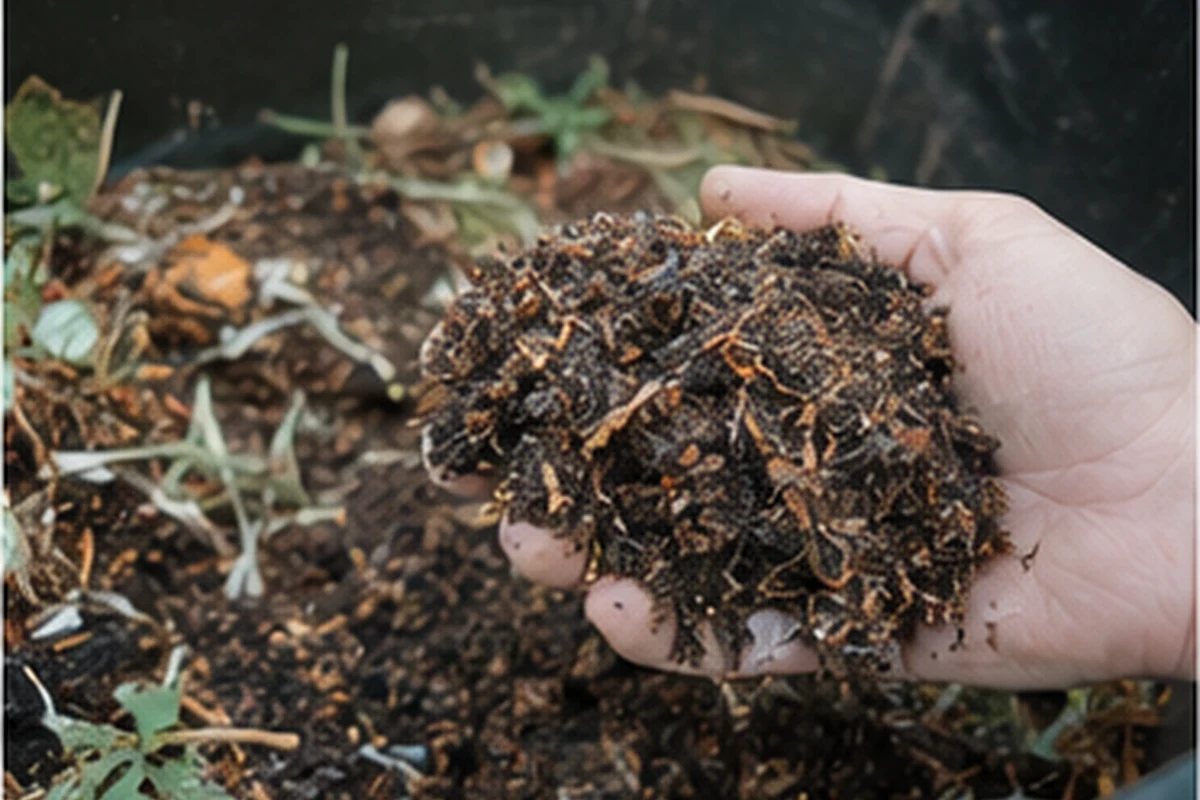
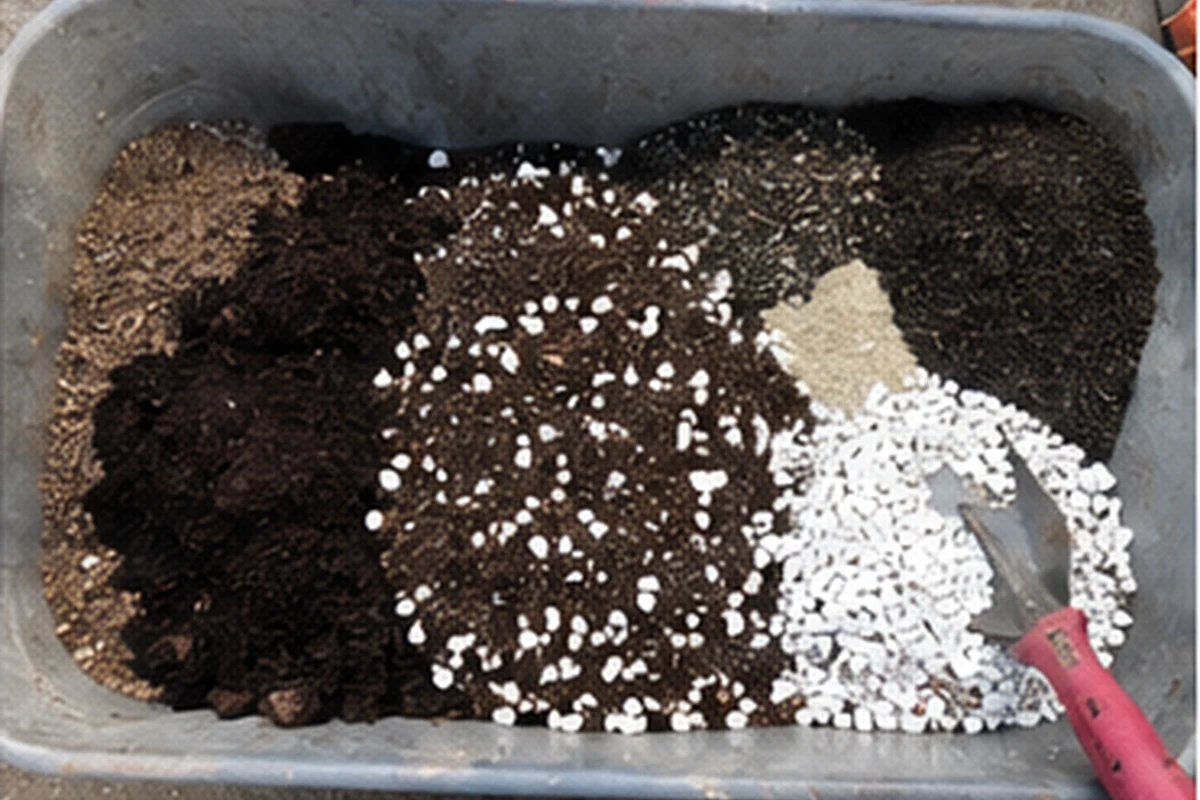
A simple homemade mix starts with quality potting compost, mature compost, and optional perlite.
Making your own mix can be useful when you have several large containers to fill. It also allows you to adjust the drainage to suit your climate, pot type, and watering habits.
Easy Beginner Recipe
For a straightforward tomato potting mix, combine:
- Two parts good-quality multi-purpose potting compost
- One part mature, screened garden compost
- Up to half a part perlite if the mixture feels heavy
For example:
- 20 litres of potting compost
- 10 litres of mature compost
- Up to 5 litres of perlite, if needed
This recipe works because the commercial potting compost supplies the basic structure, the mature compost adds organic matter, and the optional perlite improves air movement.
Do not automatically add perlite if the original compost is already loose and fast-draining. A mix can drain too quickly as well as too slowly.
How to Mix It
- Tip the ingredients onto a clean sheet, in a wheelbarrow, or into a large tub.
- Break up any compressed lumps with your hands.
- Mix thoroughly so there are no pockets of pure compost or perlite.
- Add a little water and mix again. The medium should feel evenly damp, not wet.
- Squeeze a handful. It should briefly hold its shape and then crumble when touched.
- Fill the pot without pressing the mix down firmly.
- Tap the sides of the container to settle it naturally.
- Leave a small gap below the rim so water does not spill over immediately.
Do not stamp, ram, or heavily compress the compost. Watering will settle it further after planting.
Before filling the pot, make sure it is large enough for the variety. Our guide to how many tomato plants to grow in each pot explains the space each plant needs.
Should You Add Compost, Manure, Perlite or Fertiliser?
Soil additives can improve a poor mix, but they can also upset a good one. Add an ingredient only when you understand the problem it is solving.
Compost
Mature garden compost can add organic matter and nutrients. It is particularly useful when the original potting mix is very light and contains little composted material.
Use it in moderation. Around one-quarter to one-third of the total volume is a sensible starting point for most homemade blends.
Do not confuse garden compost with potting compost:
- Garden compost is decomposed plant material used as a soil improver.
- Potting compost is a formulated growing medium designed for containers.
The two products have different jobs.
Well-Rotted Manure
A small amount of thoroughly composted manure can be included, but it is not essential.
Fresh or partly rotted manure may contain excessive salts, release ammonia, remain too rich, or damage young roots. It can also make the growing medium heavy and moisture-retentive.
When using bagged manure, follow the manufacturer’s container instructions. Do not fill the pot with manure or assume that more will produce more tomatoes.
Perlite
Perlite is useful when a potting mix:
- Feels dense
- Becomes waterlogged easily
- Collapses after watering
- Contains very little coarse material
Mixing in roughly 10 to 20 percent by volume is usually enough to produce a noticeable change. Wear a mask or dampen it lightly while mixing because dry perlite can be dusty.
Perlite does not provide meaningful nutrition. Its main job is to increase pore space and improve aeration.
Vermiculite
Vermiculite retains both moisture and some nutrients. It can help a very free-draining mix remain moist for longer.
Use it cautiously for tomatoes in cool or wet conditions. If the compost already stays soggy, vermiculite may increase the problem rather than solve it.
Perlite is generally the more useful addition when the main goal is drainage. Vermiculite is more useful when the mix dries out too quickly.
Fertiliser
Check the compost bag before adding fertiliser. Many products contain a starter feed that lasts for several weeks.
If the mix is already fertilised, adding another full dose at planting can overfeed the plant. Begin additional feeding when the label recommends it or when the plant has become established and is approaching flowering.
A tomato fertiliser normally contains a balance designed for flowering and fruiting. Apply it according to the product instructions. More is not better.
Frequent watering can gradually wash soluble nutrients from containers, so regular light feeding is often safer than occasional excessive feeding.
Lime, Gypsum and Calcium
Do not routinely add lime, gypsum, or calcium supplements to every tomato pot.
Fresh potting compost usually contains enough calcium. Lime may already have been added to adjust the pH, particularly in peat-based mixes. Adding more without testing could push the pH too high.
Gypsum provides calcium without raising pH as strongly as lime, but it is still unnecessary unless there is a reason to believe the growing medium lacks calcium.
The most effective prevention for blossom end rot is usually a sufficiently large pot and a steady water supply, not adding random calcium products.
Eggshells and Bone Meal
Crushed eggshells break down slowly. They can contribute calcium over a long period, but they are not a reliable treatment for blossom end rot during the current growing season.
Bone meal also releases nutrients slowly and should not be added automatically. Many potting mixes and fertilisers already contain sufficient phosphorus. Unnecessary additions can create an unbalanced growing medium.
Use these materials as part of a considered soil-management plan rather than as a guaranteed tomato cure.
How Soil and Watering Affect Blossom End Rot
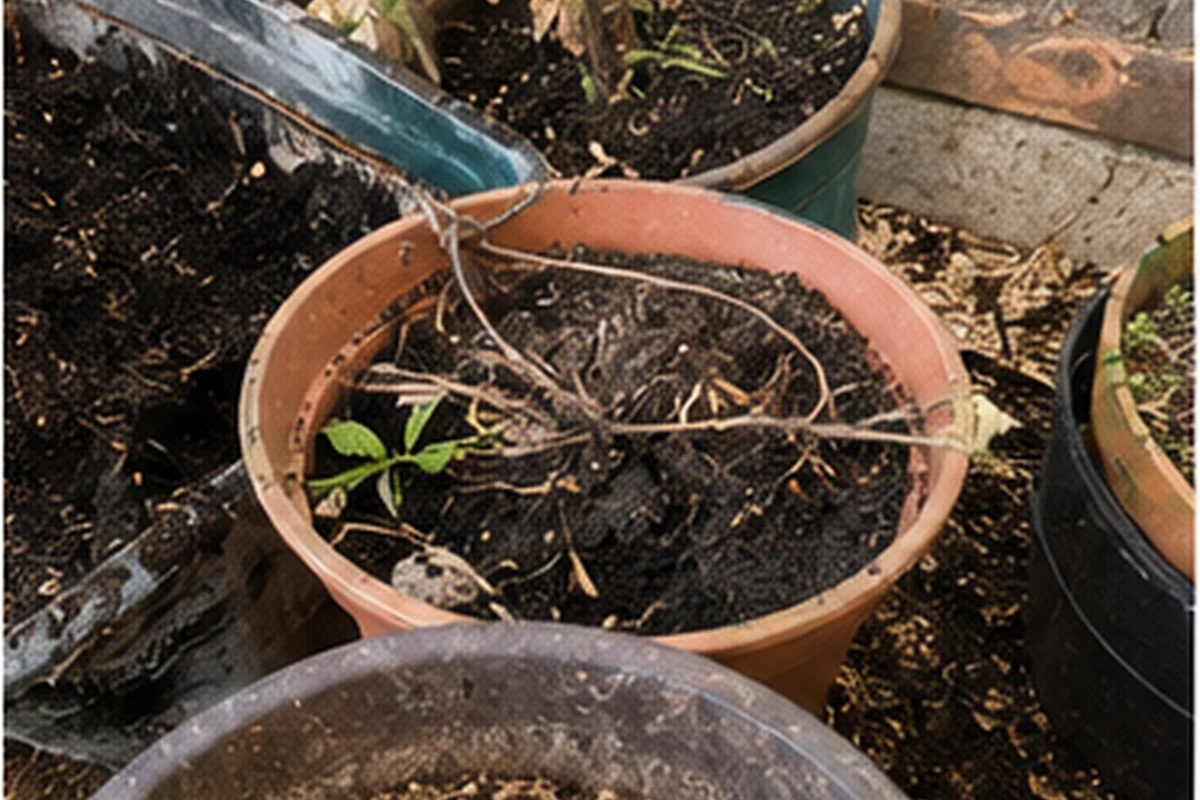
Blossom end rot is often connected to irregular moisture that prevents calcium reaching the fruit consistently.
Blossom end rot appears as a dark, sunken patch at the end of a tomato opposite the stem. It develops when the growing fruit does not receive enough calcium.
However, the potting mix itself is rarely completely lacking in calcium. The more common problem is that the plant cannot move calcium consistently to the fruit because its water supply keeps changing.
Container tomatoes are particularly vulnerable because a limited volume of compost can change from moist to dry very quickly.
Reduce the risk by:
- Using a large enough container
- Choosing a potting mix that holds moisture without becoming soggy
- Watering before the root ball becomes completely dry
- Watering thoroughly rather than only wetting the surface
- Mulching the top of the pot
- Avoiding excessive fertiliser
- Keeping drainage holes open
- Not allowing the pot to stand in collected water
Adding eggshells will not correct irregular watering. Once a fruit is affected, it will not repair itself, but improving moisture consistency can protect later fruit. For identification and treatment advice, read our full guide to blossom end rot on tomatoes.
How to Keep Potting Mix Moist but Not Soggy
The best potting mix cannot compensate for unsuitable watering.
Check the moisture below the surface by pushing a finger approximately 3 to 5 cm into the compost. Water when it feels dry at that depth, but avoid allowing the entire root ball to become bone-dry.
When watering:
- Apply water slowly at the base
- Continue until some water drains from the bottom
- Let the container drain freely
- Empty deep saucers if water remains in them
- Check more frequently during hot or windy weather
A 2 to 5 cm layer of organic mulch can reduce evaporation. Suitable materials include clean straw, shredded leaves, or fine bark. Leave a small clear space around the stem.
Do not follow a rigid schedule such as “one litre every morning.” The plant’s water use changes with temperature, wind, pot size, plant size, and the material of the container.
Can You Reuse Tomato Potting Soil?
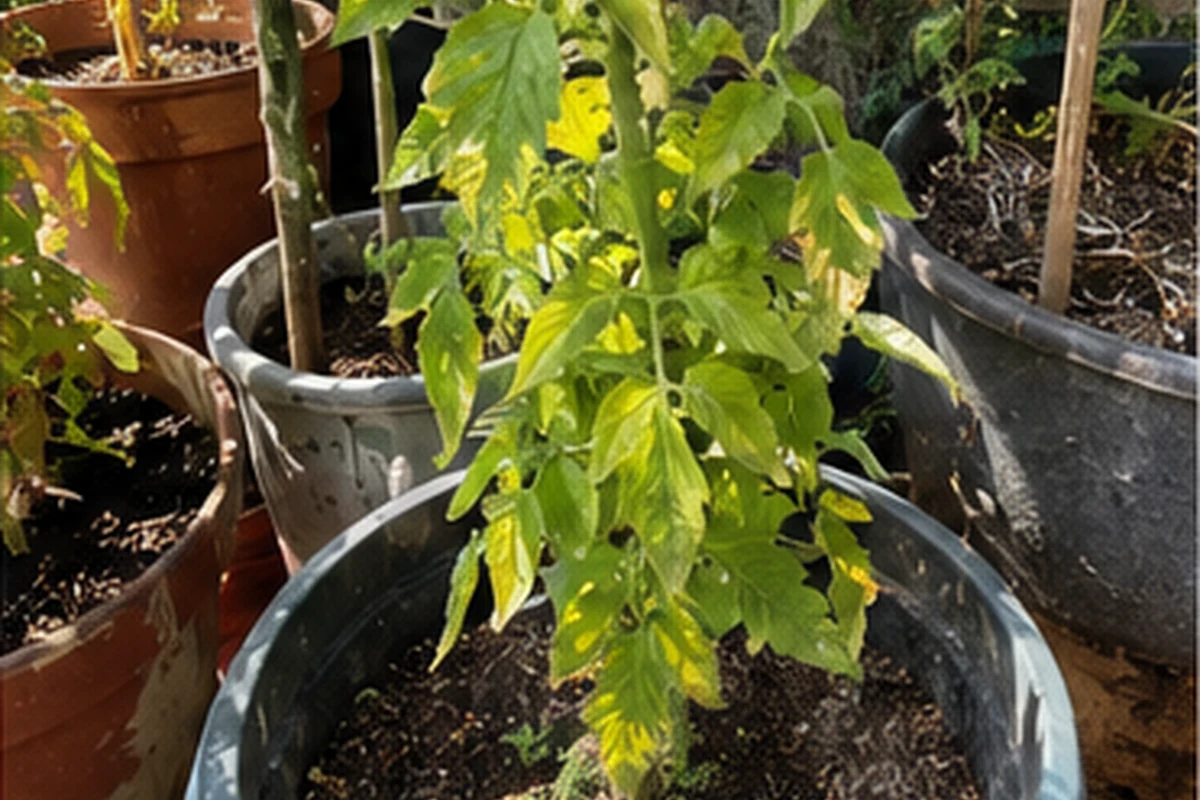
Healthy potting mix can often be reused after old roots are removed and fresh material is mixed in.
Yes, healthy potting mix can often be reused, but it should be refreshed first.
At the end of the season:
- Remove the old plant and as much of the root system as possible.
- Check for vine-weevil grubs, root disease, unpleasant smells, or poor drainage.
- Break up compacted areas.
- Replace roughly one-quarter to one-half of the old mix with fresh potting compost or mature compost.
- Add fertiliser only according to the new product’s instructions.
- Make sure the container’s drainage holes are clear.
Do not reuse the mix for tomatoes, peppers, aubergines, or potatoes if the previous plant suffered from a serious soil-borne disease or root problem.
Old, healthy potting mix can also be used to bulk out large planters, improve beds, or grow less demanding crops. Fresh mix is still preferable around the main root ball of a new tomato plant.
Crop rotation is helpful where practical, but container gardeners do not always have enough pots to rotate perfectly. Plant health and the condition of the mix are more important than following a rigid rule.
Common Soil Mistakes to Avoid
Filling the Pot with Garden Soil
Garden soil is usually too dense and heavy for containers. Use a formulated potting mix instead.
Using Seed Compost for the Entire Season
Seed compost is intended for germination and young seedlings. It is normally too low in nutrients for a mature, fruiting tomato plant.
Adding Too Much Compost or Manure
Large amounts can make the mix dense, wet, or excessively rich. A balanced mixture is safer.
Compacting the Mix Firmly
Pressing the compost down removes valuable air spaces. Let watering settle it naturally.
Adding Several Fertilisers at Planting
Potting compost, manure, slow-release fertiliser, bone meal, and liquid feed used together can create an excessive nutrient level.
Letting the Pot Dry Out Completely
Dry compost can pull away from the sides of the container and become difficult to re-wet evenly. Large swings in moisture also increase fruit problems.
Using a Pot without Drainage Holes
No soil recipe can prevent waterlogging when excess water has nowhere to escape.
Putting Gravel in the Bottom
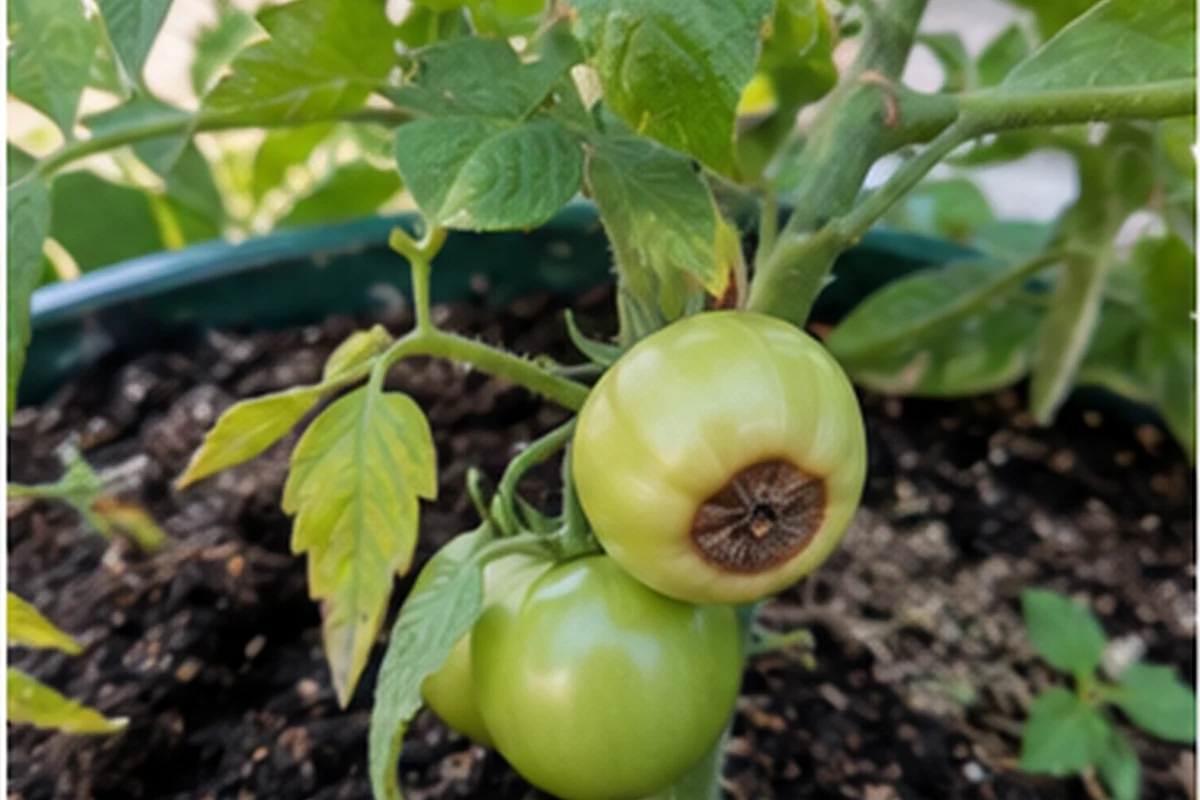
Gravel reduces the depth of usable compost and does not replace proper drainage holes.
A layer of stones does not improve drainage inside an individual pot. It reduces the depth of usable compost and can leave saturated soil sitting above the gravel. Use a container with open drainage holes and fill it with potting mix.
Reusing Diseased Soil
A fresh plant can be infected by disease organisms that remain in old roots and growing medium. Discard or repurpose suspect mix away from tomatoes and related crops.
Treating Every Yellow Leaf as a Soil Deficiency
Yellow leaves can be caused by nutrient shortage, overwatering, underwatering, root damage, disease, ageing, or lack of light. Diagnose the full pattern before adding fertiliser.
Frequently Asked Questions
Can I Use Multi-Purpose Compost for Tomatoes?
Yes. A good-quality multi-purpose potting compost is suitable for tomatoes in containers.
Choose one designed for mature plants or vegetables rather than seed sowing. If the compost is very fine and holds too much water, mix in a modest amount of perlite or another coarse aeration material.
Follow the feeding instructions on the bag because different products contain different amounts of starter fertiliser.
Can I Use Topsoil in Tomato Pots?
Do not use topsoil as the main growing medium in an ordinary tomato pot. It is usually too heavy and compacts too easily.
A small amount may be used in a very large planter when extra weight is needed, but a commercial potting mix is a better option for the main root zone.
Can Tomatoes Grow in Compost Alone?
Tomatoes may grow in mature compost alone, but it is not always the most reliable choice. Homemade compost varies greatly in texture, drainage, maturity, and nutrient content.
Blending it with a formulated potting mix provides a more predictable balance of air, moisture, and structure.
Should I Put Stones in the Bottom of the Pot?
No. Stones or gravel inside the bottom of an individual pot do not create better drainage.
Use a pot with several open drainage holes. A small piece of mesh or a broken piece of pot can be placed loosely over a large hole to stop compost escaping, but it should not block the flow of water.
How Much Soil Does One Tomato Plant Need?
Most standard tomato plants perform better with at least 20 litres of potting mix, and larger indeterminate varieties are easier to manage in containers holding approximately 30 to 40 litres or more.
A larger volume dries out more slowly and gives the roots access to more water and nutrients. Compact dwarf varieties can grow in smaller pots, but small containers require much more frequent watering.
Plant one standard tomato per pot unless the variety and container are specifically suited to closer planting.
Do I Need to Replace the Soil Every Year?
You do not necessarily need to throw away all the potting mix every year.
If the plant remained healthy, refresh the old medium with fresh potting compost or mature compost and remove old roots. Replace it completely when it has become badly compacted, smells sour, drains poorly, or may carry disease.
Is Expensive Potting Mix Always Better?
Not always. Price can reflect higher-quality ingredients, but the label and the physical condition of the product matter more.
Look for a mix intended for containers, check whether it is peat-free, read the feeding instructions, and feel the bag. Avoid compost that is waterlogged, heavily compacted, extremely dusty, or broken down.
Trying one or two bags before buying enough for many containers can prevent an expensive mistake.
The Best Soil Setup for Most Gardeners
For a simple and dependable setup:
- Choose a container with generous drainage holes.
- Fill it with a fresh, high-quality multi-purpose or vegetable potting compost.
- Add mature compost only if the mix needs more organic matter.
- Add perlite only if the compost feels dense or drains slowly.
- Do not add extra fertiliser when the bag already contains starter feed.
- Keep the mix evenly moist rather than alternating between drought and saturation.
- Begin feeding with a suitable tomato fertiliser when the initial nutrients are being used up.
- Mulch the surface to slow evaporation.
- Refresh healthy potting mix before reusing it.
The goal is not to create the richest soil possible. It is to create a root environment that remains moist, airy, stable, and moderately fertile throughout the season.
Get those four things right, and your potted tomato plants will have a strong foundation for healthy growth and a productive harvest.
Sources and Further Reading
- Royal Horticultural Society: How to Grow Tomatoes
- Royal Horticultural Society: Peat-Free Compost Choices
- Royal Horticultural Society: John Innes Potting Compost
- Royal Horticultural Society: Blossom End Rot
- University of Maryland Extension: Growing Vegetables in Containers and Salad Tables
- University of Maryland Extension: Growing Media for Containers
- University of Minnesota Extension: Fertilising and Watering Container Plants
- Colorado State University Extension: Container Gardens
- Illinois Extension: Container Drainage Options