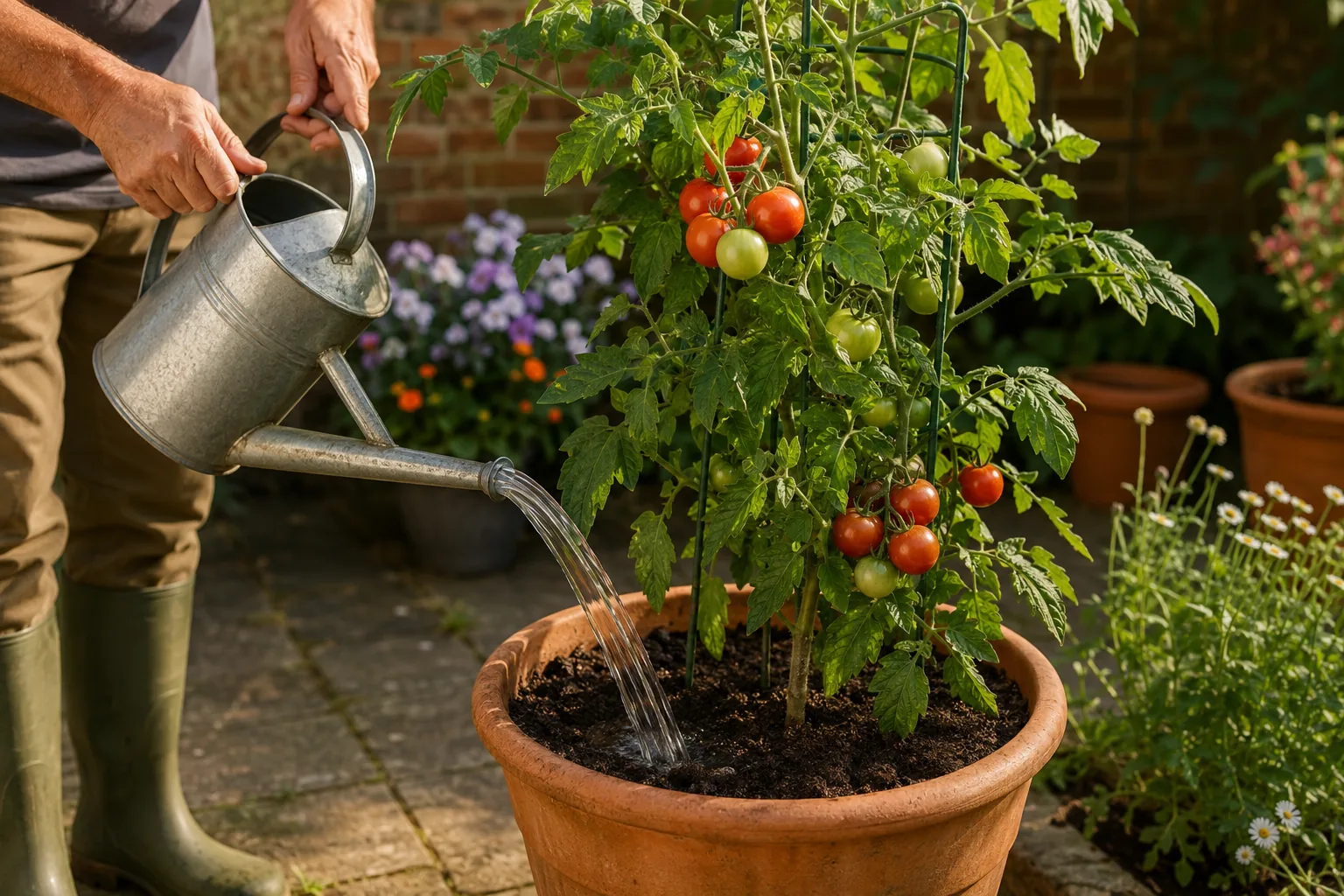
How Often to Water Tomatoes in Pots: A Simple Guide
Watering tomatoes in pots can feel confusing at first. Should you water every day? Is twice a day too much? What happens if the compost still feels damp?
The reassuring answer is that you do not need a complicated schedule. You simply need to check the compost regularly and learn how quickly your particular pot dries out.
Quick answer: Tomatoes in pots often need watering once a day during warm summer weather. In very hot, sunny, or windy conditions, they may need water twice a day. During cooler or cloudy weather, they may only need watering every two or three days. Check the top 2–3 cm (about 1 inch) of compost and water when it feels dry.
Consistency matters more than following a rigid timetable. A tomato plant prefers compost that stays evenly moist—not bone-dry one day and waterlogged the next.
This guide explains exactly how often to water tomatoes in pots, how much water to use, and how to adjust your routine as the weather and the plant change.
How Often Should You Water Tomato Plants in Pots?
For most potted tomato plants, the following is a useful starting point:
| Growing conditions | How often to check | Likely watering frequency |
|---|---|---|
| Newly planted tomato | Every day | Whenever the top 2–3 cm feels dry |
| Cool or cloudy weather | Once a day | Every two or three days, if needed |
| Mild spring or early summer weather | Once a day | Every one or two days |
| Warm summer weather | Morning and late afternoon | Usually once a day |
| Very hot, sunny, or windy weather | Morning and late afternoon | Once or sometimes twice a day |
| Large plant carrying lots of fruit | Morning and late afternoon | Often daily; possibly twice daily in extreme heat |
These are guidelines rather than fixed rules. Your tomato may need water sooner or later depending on the pot, compost, weather, and size of the plant.
The best habit is to check daily but only water when the plant needs it. Checking every day does not necessarily mean watering every day.
If you are growing tomatoes in containers for the first time, our complete guide to growing tomatoes in pots covers pot size, compost, planting, feeding, support, and harvesting.
Why Potted Tomatoes Need Frequent Watering
Tomatoes growing in the ground can send their roots deep and wide in search of moisture. A tomato in a pot can only use the water held inside that container.
Pots also lose moisture from both the compost surface and the drainage holes. Some containers lose additional moisture through their sides. Sun and wind speed up this process, especially on exposed balconies and patios.
As the plant grows, its root system fills more of the pot. A mature tomato covered in leaves and developing fruit can use water surprisingly quickly. The same pot that stayed moist for several days in spring may dry out in less than a day during midsummer.
This is why a schedule that worked in May may not work in July. Your watering routine needs to grow with the plant.
Use the Finger Test Before Watering
The easiest way to tell whether a potted tomato needs water is to feel the compost.
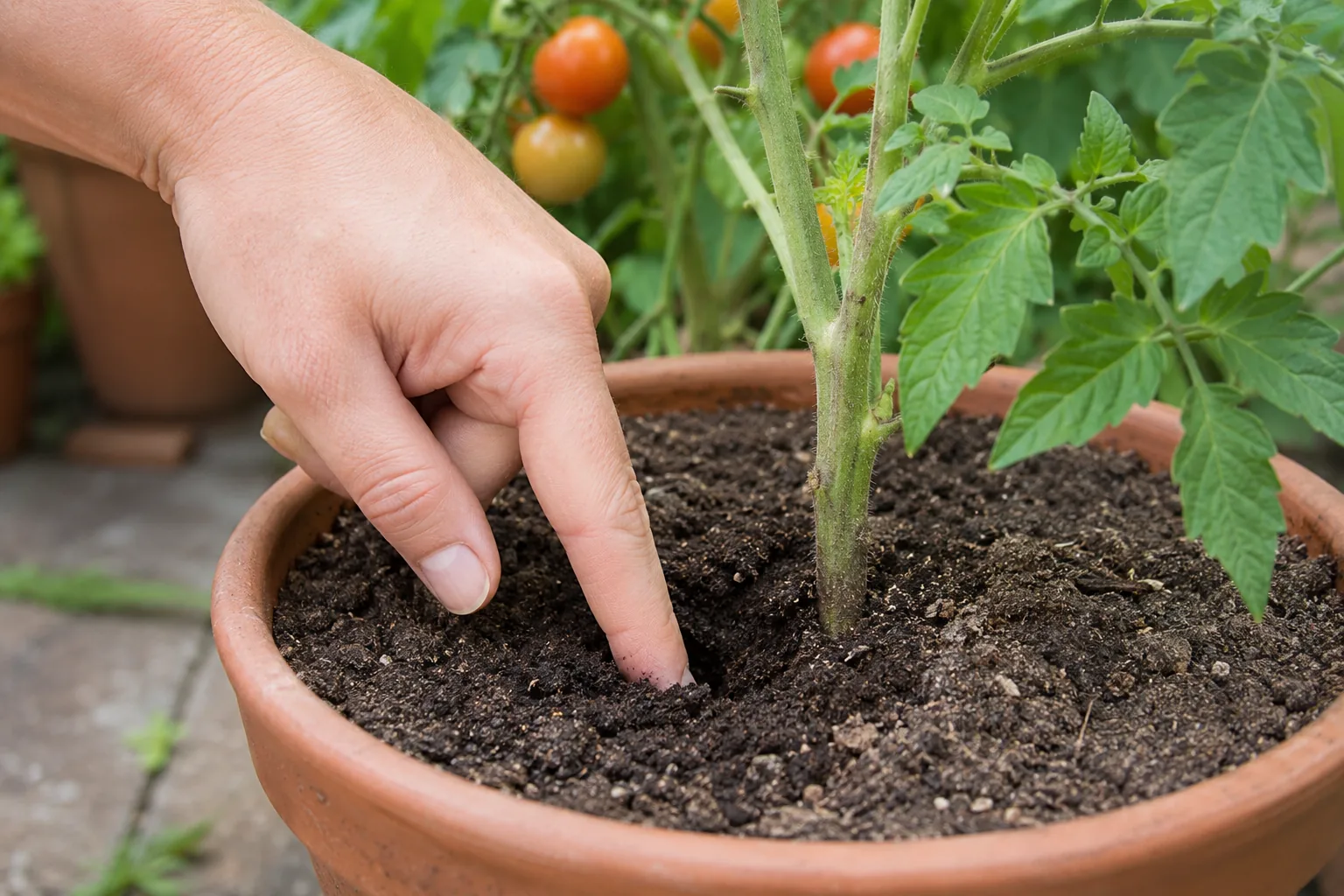
Push your finger about 2–3 cm into the compost to check whether the root zone needs water.
Push your finger about 2–3 cm (roughly 1 inch) below the surface:
- If the compost feels dry at that depth, water the plant.
- If it feels slightly cool and moist, check it again later.
- If it feels wet or soggy, do not add more water.
Do not judge the pot by looking at the surface alone. The top can appear dry while the compost around the roots is still moist.
You can also learn to judge moisture by the pot’s weight. Lift smaller containers just after watering and notice how heavy they feel. As the compost dries, the pot becomes noticeably lighter. This method becomes surprisingly useful once you know what a well-watered pot feels like.
For large, heavy containers, a wooden skewer can help. Push it several centimetres into the compost and leave it for a moment. If it comes out clean and dry, the plant probably needs water. If damp compost sticks to it, wait and check again later.
How Much Water Does a Potted Tomato Plant Need?
There is no single number of litres that suits every tomato plant. A young plant in a 20-litre pot will use far less water than a mature vine in a 40-litre container on a hot, windy day.
Instead of measuring an exact amount, water slowly and thoroughly until a little begins to drain from the holes at the bottom of the pot. This shows that moisture has reached the whole root ball rather than only wetting the surface.
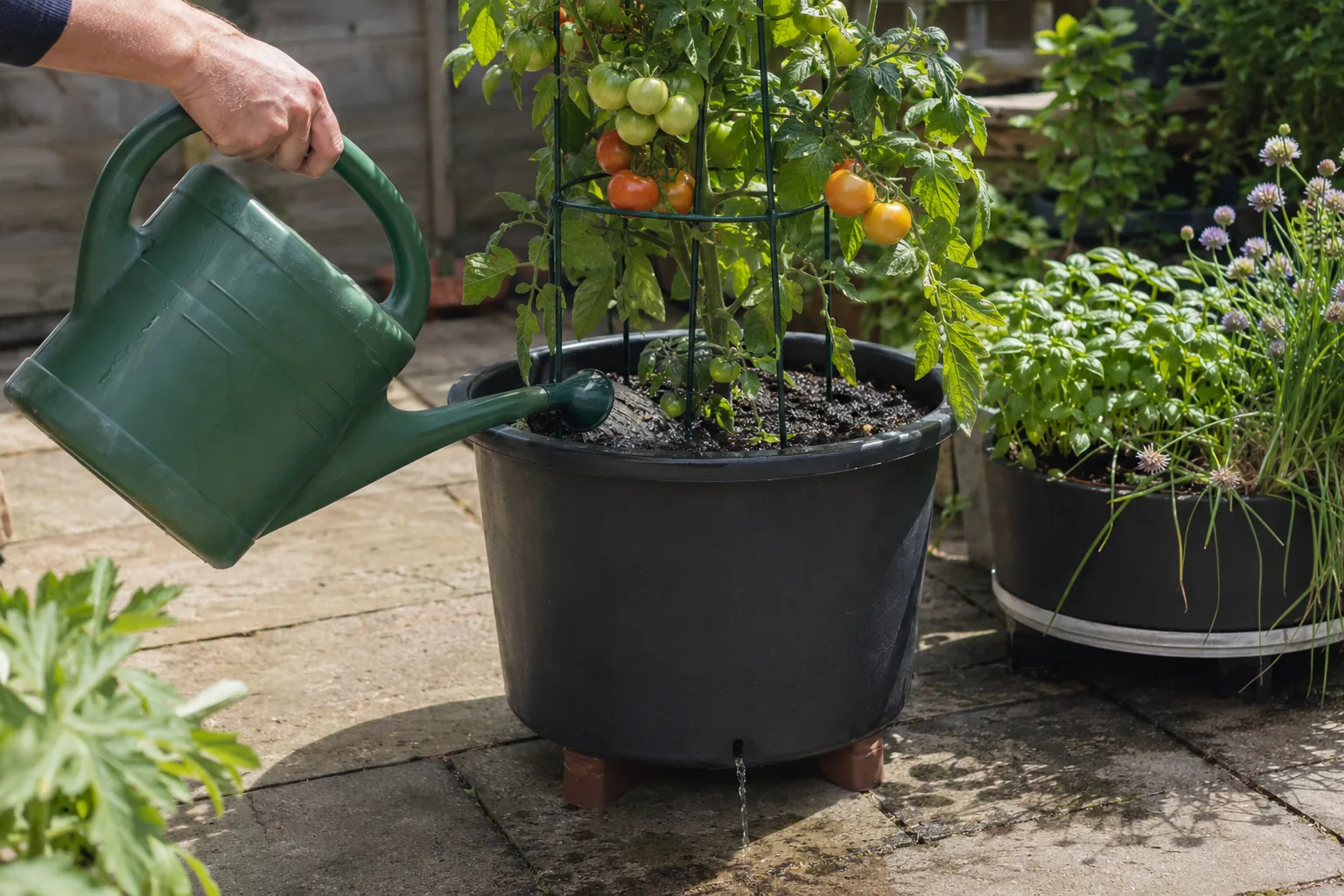
Water slowly until a small amount begins to drain from the bottom of the container.
Stop once you have achieved a small amount of drainage. There is no benefit in continually flushing large quantities of water through the pot, as this can wash nutrients out of the compost.
Never leave an ordinary pot standing in a saucer full of water for long periods. Tomato roots need oxygen as well as moisture, and permanently saturated compost can cause root problems. Empty the saucer after the excess has drained unless you are using a properly designed self-watering container.
How to Water Tomatoes in Pots Properly
A good watering routine is simple:
- Check the compost first. Water when the top 2–3 cm feels dry.
- Aim at the base of the plant. Pour water onto the compost rather than over the leaves.
- Water slowly. Give the compost time to absorb the moisture.
- Cover the whole surface. Do not always pour into the same small spot.
- Continue until a little water drains from the bottom. This encourages a deeper, stronger root system.
- Check again later in extreme heat. A large fruiting plant may use that water before the day is over.
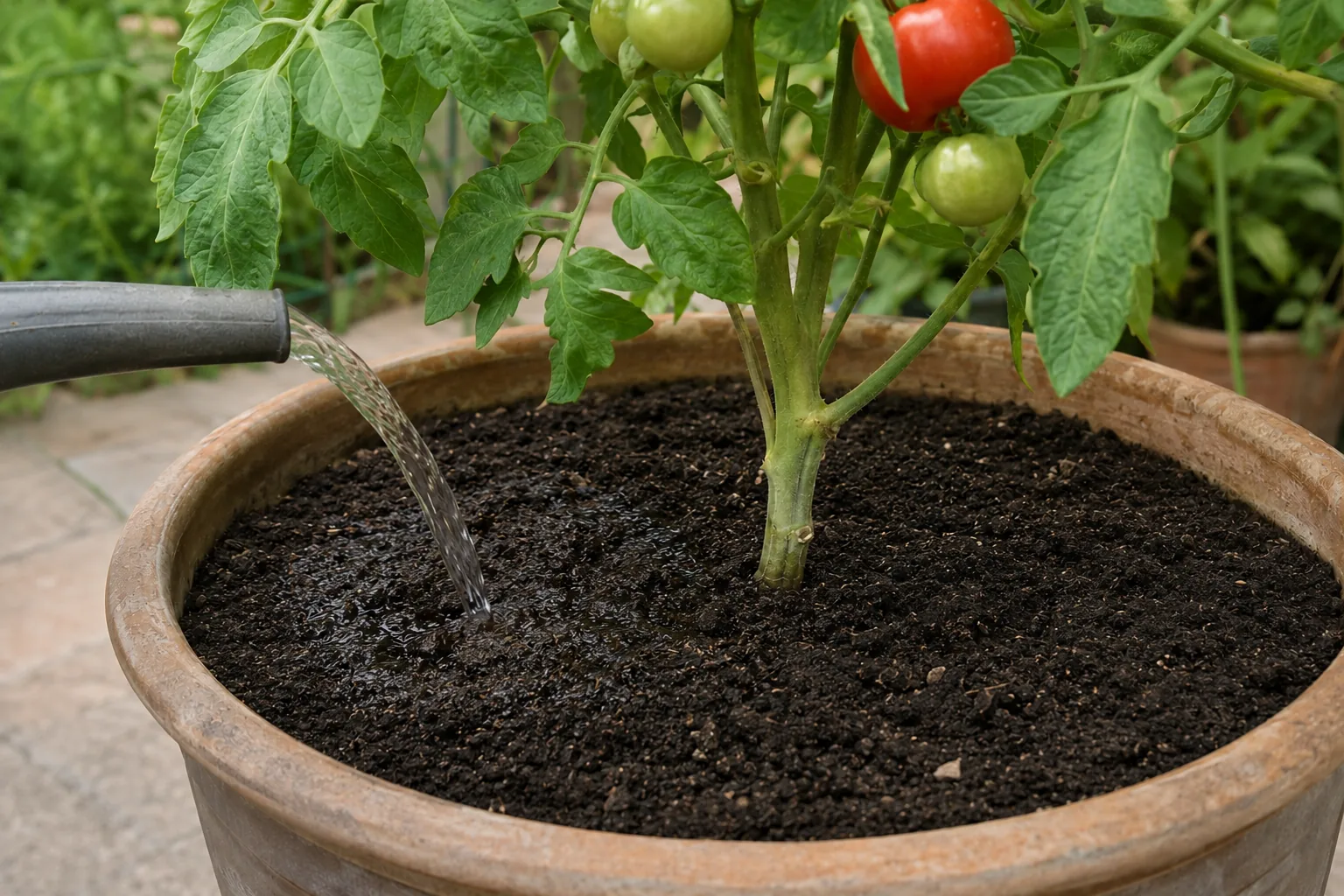
Direct water onto the compost around the root zone while keeping the tomato leaves dry.
Avoid giving frequent little splashes that only moisten the top layer. Shallow watering encourages roots to remain close to the surface, where the compost heats up and dries out fastest.
What If Water Runs Straight Through the Pot?
Very dry potting compost can shrink away from the sides of the container. When this happens, water may rush through the gap and out of the bottom without soaking the root ball.
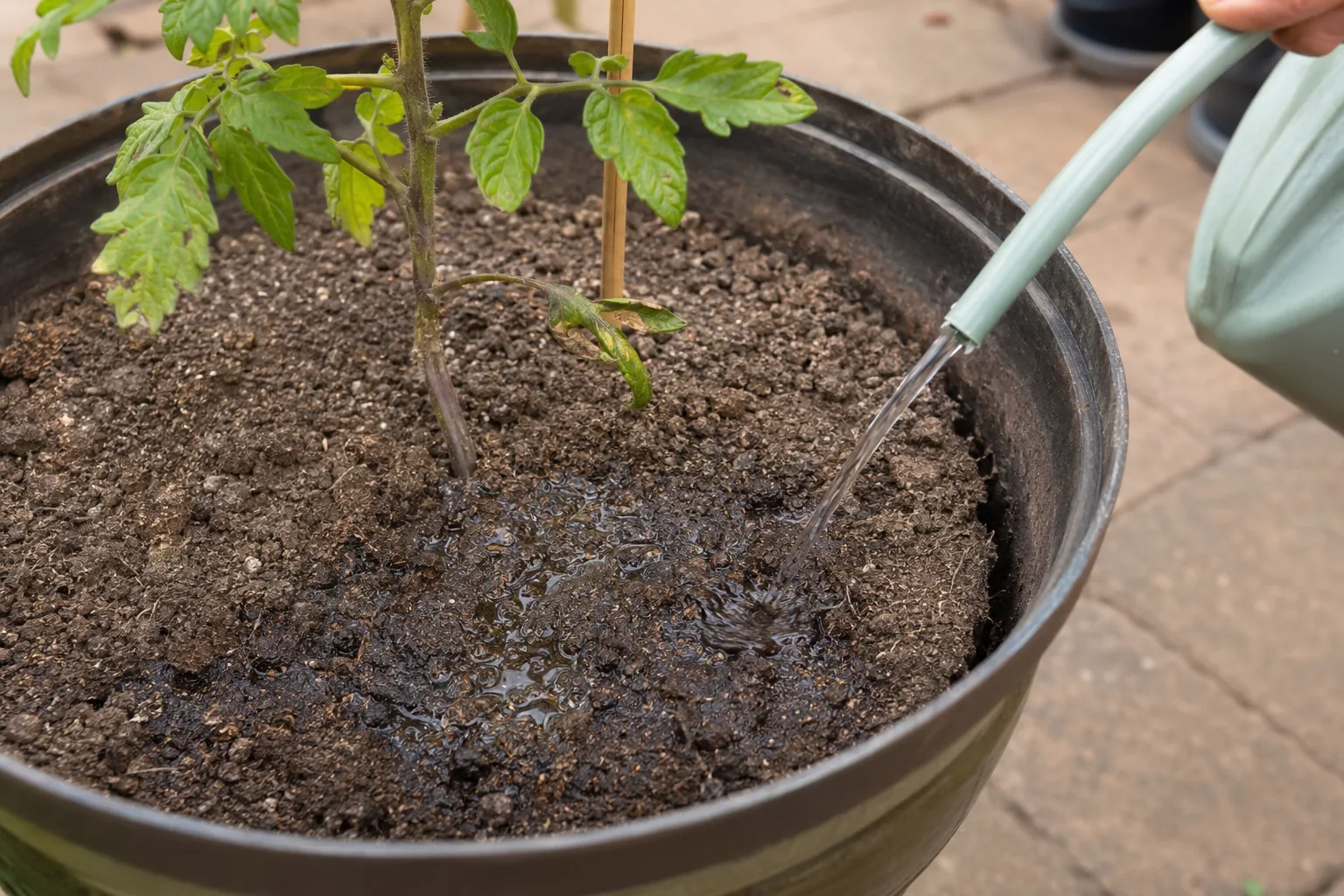
Rehydrate very dry compost in several slow passes so the water reaches the roots instead of escaping down the sides.
If water runs through unusually quickly:
- Apply a small amount of water slowly.
- Wait a few minutes for the compost to begin absorbing it.
- Water again in two or three gentle passes.
- Check beneath the surface to make sure the root zone is becoming moist.
For a manageable pot, standing it briefly in a shallow tray of water can help rehydrate severely dried compost from below. Remove it once the compost has absorbed moisture and allow it to drain fully.
Try not to let the pot become this dry regularly. Repeatedly moving between extremely dry and very wet compost stresses the plant and increases the risk of damaged fruit.
The Best Time to Water Tomatoes in Pots
Early morning is the best time to water potted tomatoes. The plant can take up moisture before the hottest part of the day, and less water is lost to evaporation.
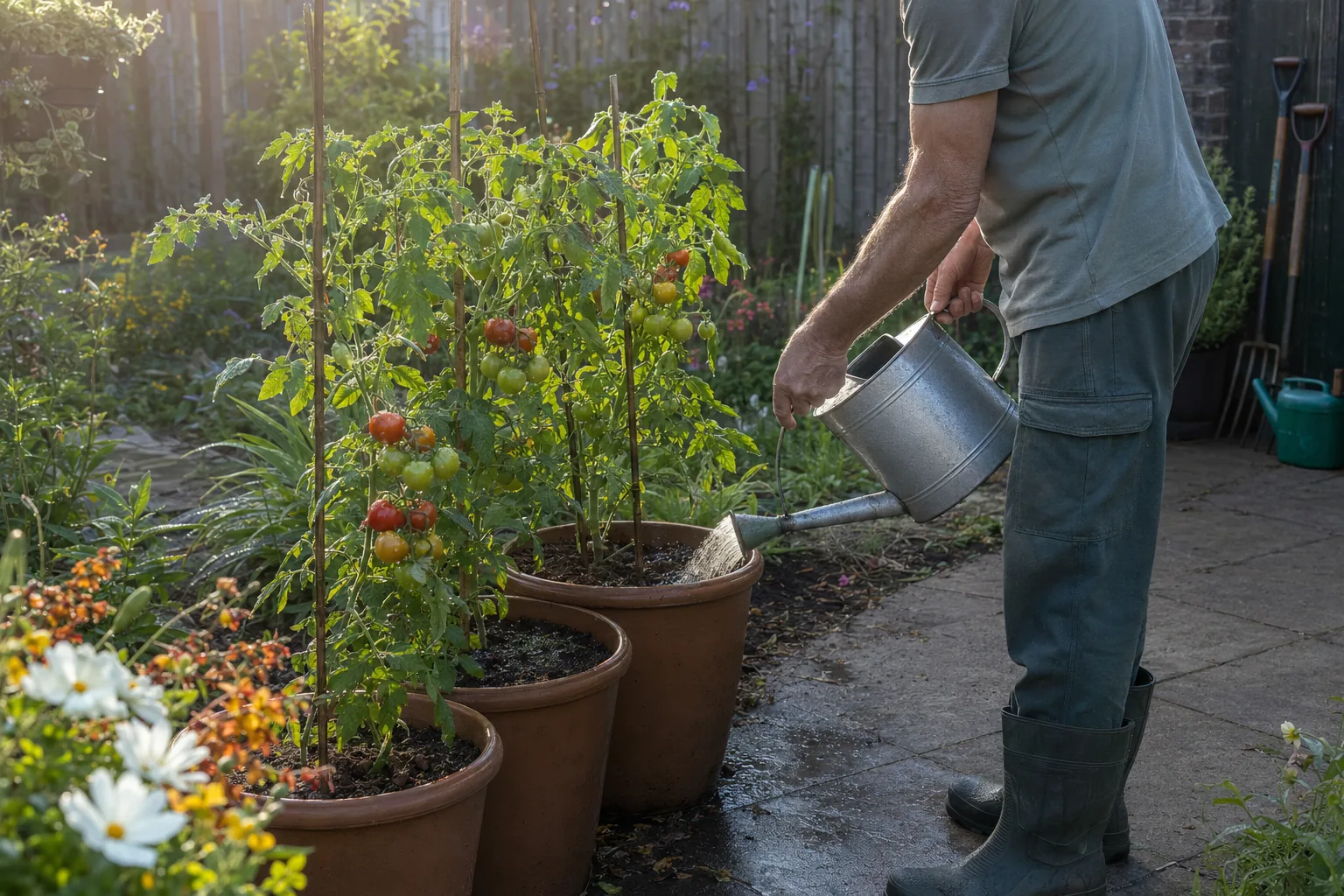
Morning watering prepares potted tomato plants for the warmer part of the day.
Morning watering also gives any accidentally wet leaves time to dry. Keeping the foliage dry helps reduce the conditions in which fungal diseases can spread.
If a tomato plant genuinely needs water in the afternoon or evening, do not leave it thirsty just because morning is considered ideal. Water the compost at the base of the plant and avoid soaking the leaves.
During very hot weather, you may need to water once in the morning and check again in the late afternoon. The second watering is only necessary if the compost has dried—not simply because the clock says it is time.
What Affects How Often Potted Tomatoes Need Water?
Two identical tomato plants can have completely different watering needs. The following factors make the biggest difference.
Pot size
Small pots contain less compost, so they hold less water and dry out quickly. They also leave less room for healthy root growth.
Use a container of at least 20 litres for one tomato plant, and choose a larger pot for vigorous indeterminate varieties when possible. A bigger container provides a more stable moisture reserve and makes consistent watering easier.
Pot material
Unglazed terracotta and fabric containers lose moisture through their sides. Plastic and glazed pots usually retain water for longer.
Dark containers can also become hot in direct sunshine. If the pot feels very warm, shade the container itself while keeping the tomato’s leaves in the sun.
Weather
Heat, strong sunshine, low humidity, and wind all increase water loss. A breezy balcony can dry a pot faster than a sheltered garden, even when the temperature is the same.
Cool, cloudy, or humid conditions slow evaporation and reduce the amount of water the plant uses.
Plant size
A young transplant has a small root system and fewer leaves. A mature tomato plant loses much more water through its foliage and needs extra moisture to support flowers and fruit.
Growth stage
Tomatoes need reliable moisture throughout the season, but demand rises sharply as the plant becomes larger and begins carrying fruit.
Potting mix
A good peat-free potting mix should hold moisture while allowing excess water to drain. A very free-draining mix dries faster, while old, compacted, or poorly drained compost may remain wet for too long.
Mulch
A layer of mulch slows evaporation and protects the compost surface from direct sun. It can make a noticeable difference during warm weather.
Watering Tomatoes at Different Growth Stages
A tomato plant’s watering needs change throughout the season. Adjusting your routine at each stage is more useful than following one schedule from planting to harvest.
Seedlings
Tomato seedlings need consistently moist compost, but their small roots are easily damaged by waterlogging.
Check seed trays and small pots daily. Water gently when the surface begins to dry, preferably from below or with a fine rose on a watering can. Do not leave seedling pots permanently sitting in water.
Newly planted tomatoes
Water thoroughly immediately after moving a tomato into its final pot. This settles the compost around the roots and removes large air pockets.
Check the plant every day while it establishes, but do not automatically drench it daily. Water again when the upper layer of compost starts to feel dry.
Established plants
Once established, encourage roots to explore the whole container by watering thoroughly rather than giving small surface splashes. In mild weather, the pot may stay moist for a day or two between waterings.
Flowering and fruiting plants
Watering becomes especially important when flowers appear and tomatoes begin to develop. A large plant carrying fruit often needs water every day in warm conditions.
Keep the moisture level as even as possible. Allowing the pot to dry completely and then flooding it can contribute to blossom end rot and splitting fruit.
Ripening tomatoes
Continue watering consistently while the fruit ripens. Deliberately withholding water in an attempt to make tomatoes sweeter can stress a container-grown plant and may lead to cracked fruit when it is watered again.
How Often to Water Tomatoes in Pots During Hot Weather
During a heatwave, check potted tomatoes at least twice a day: once early in the morning and again in the late afternoon.
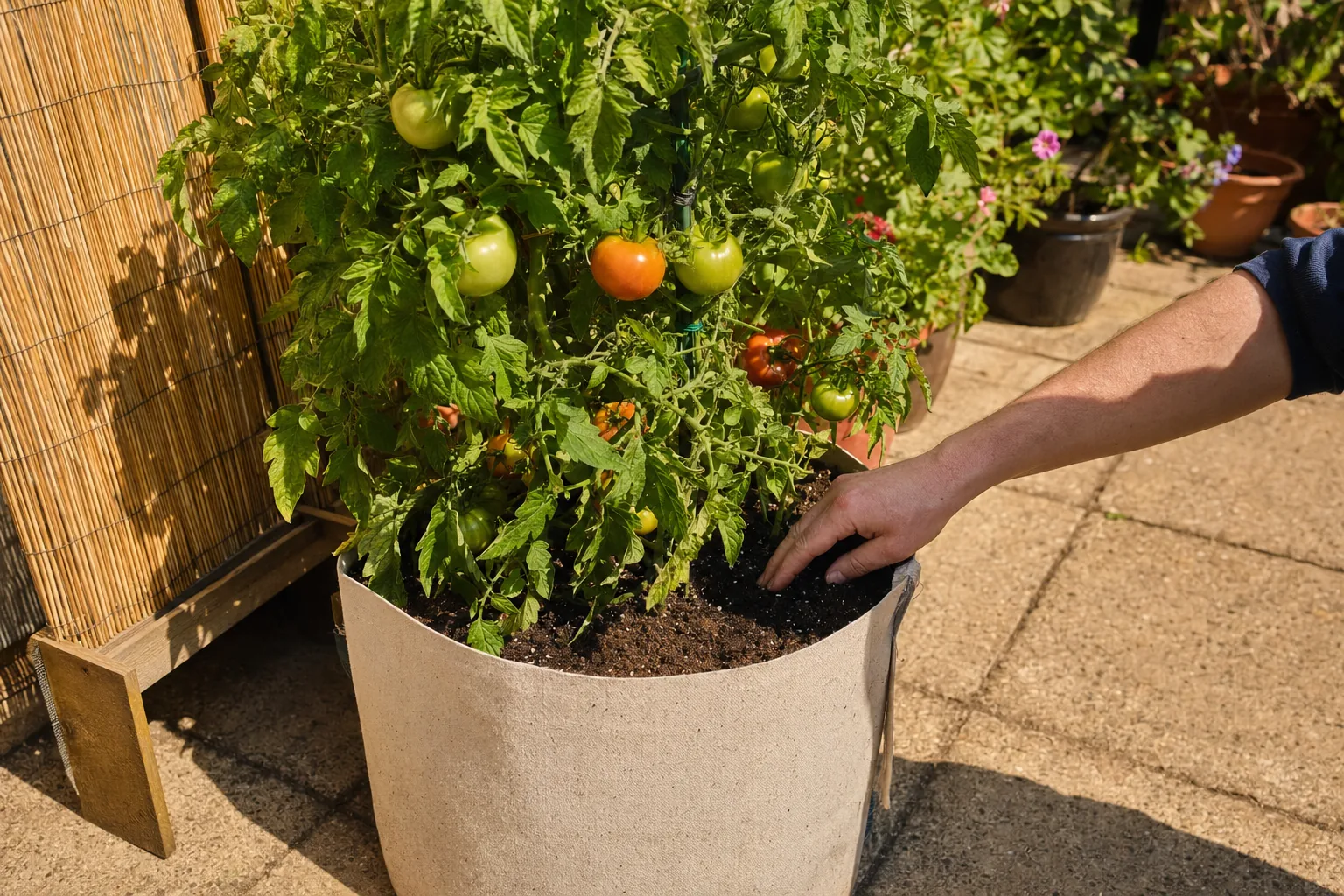
In hot weather, check the compost before automatically giving the plant more water.
Water deeply in the morning if the compost is dry. If it has dried again by late afternoon, give the plant a second watering at soil level.
Do not assume that every drooping plant needs more water. Tomatoes sometimes wilt temporarily during the hottest part of the day because they are losing moisture faster than their roots can absorb it. Check the compost before watering. If it is still moist, adding more water may do more harm than good.
A plant that remains wilted in the cool of the morning needs attention. Check whether the compost is extremely dry, water slowly, and make sure the drainage holes are not blocked.
You can make hot-weather watering easier by:
- Moving the pot away from heat-reflecting walls or paving
- Shading the container while leaving the foliage in sunlight
- Adding a 5 cm (2 inch) layer of mulch
- Grouping pots so they shelter one another from drying wind
- Installing drip irrigation or a reliable automatic watering system
- Using a larger container that holds more compost
Do Tomatoes in Pots Need Watering After Rain?
Do not assume that rain has watered a container properly. The leaves of a large tomato plant can act like an umbrella, directing rain away from the compost. A brief shower may only wet the surface.
Check the compost after rain just as you normally would. If it is dry below the surface, water the pot. If it is already moist, wait.
Prolonged rain creates the opposite problem. Make sure excess water can escape freely, remove full saucers, and check that drainage holes have not become blocked.
How Often to Water Tomatoes in Grow Bags
Fabric grow bags are breathable and drain extremely well, but this also means they can dry out faster than many solid pots. Check them every day and twice daily in hot or windy weather.
Water slowly over the compost surface. If the water pours from the sides immediately, apply it in several smaller rounds so the centre of the root ball becomes evenly moist.
Our beginner-friendly guide to growing tomatoes in grow bags explains bag size, potting mix, planting, feeding, and support in more detail.
Signs That a Potted Tomato Needs Water
Common signs of underwatering include:
- Dry compost below the surface
- A pot that feels unusually light
- Limp or drooping leaves, particularly in the morning
- Leaves curling inward during prolonged heat or drought stress
- Dry, crisp leaf edges
- Flowers dropping before fruit develops
- Slow growth or small fruit
Wilting alone is not proof that the plant is dry. Root damage and overwatering can also cause wilting, so always inspect the compost before reaching for the watering can.
Signs of Overwatering a Tomato Plant in a Pot
Possible signs of too much water include:
- Compost that remains wet for several days
- A sour or unpleasant smell from the pot
- Yellowing lower leaves
- Soft, dark, or rotting roots
- Fungus gnats around the compost
- Slow or stunted growth
- Wilting even though the compost is wet
If the pot is waterlogged, stop watering until the upper compost begins to dry. Empty any saucer, clear blocked drainage holes, and make sure the pot is not sitting where rainwater collects.
Yellow leaves can have several causes, including watering problems, nutrient deficiencies, and disease. Use our guide to yellow leaves on tomato plants to narrow down the cause before changing your routine.
Underwatering vs Overwatering: How to Tell the Difference
Because both problems can cause yellowing and wilting, check the compost and the weight of the pot before diagnosing the plant.
| Sign | More likely underwatered | More likely overwatered |
|---|---|---|
| Compost | Dry and pulling from the sides | Wet, heavy, or soggy |
| Pot weight | Unusually light | Remains heavy for days |
| Leaves | Limp, dry, or crisp | Yellow, soft, or limp |
| Recovery | Often improves after thorough watering | Does not improve after more water |
| Roots | Dry or pale | Brown, soft, and possibly smelly |
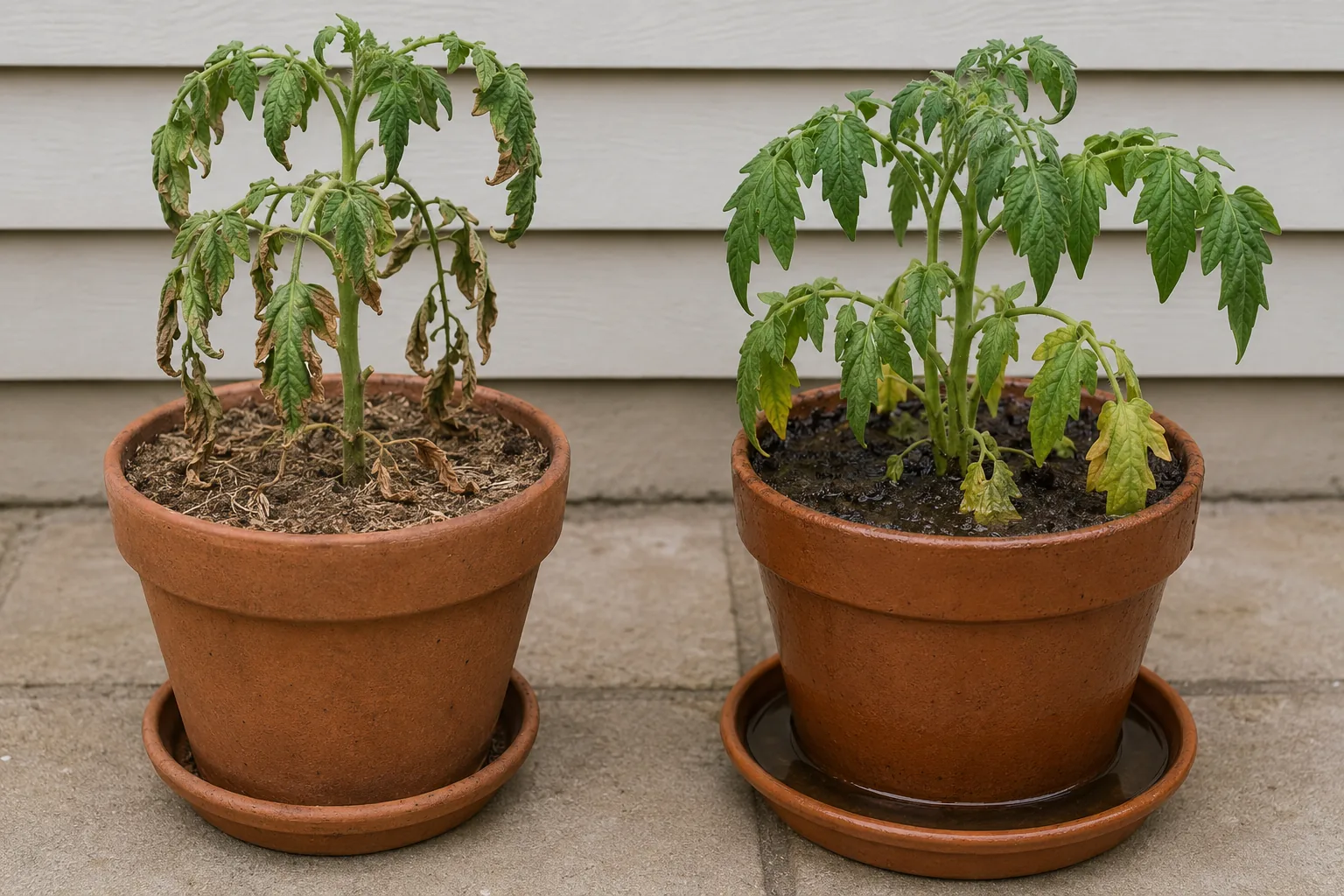
Dry compost and crisp leaves suggest underwatering, while soggy compost and soft yellow leaves point towards overwatering.
The safest response is to investigate before adding water. Giving an already saturated plant another drink will make the problem worse.
Why Consistent Watering Matters
Uneven watering does more than make a tomato plant wilt. It can affect nutrient movement and the way fruit develops.
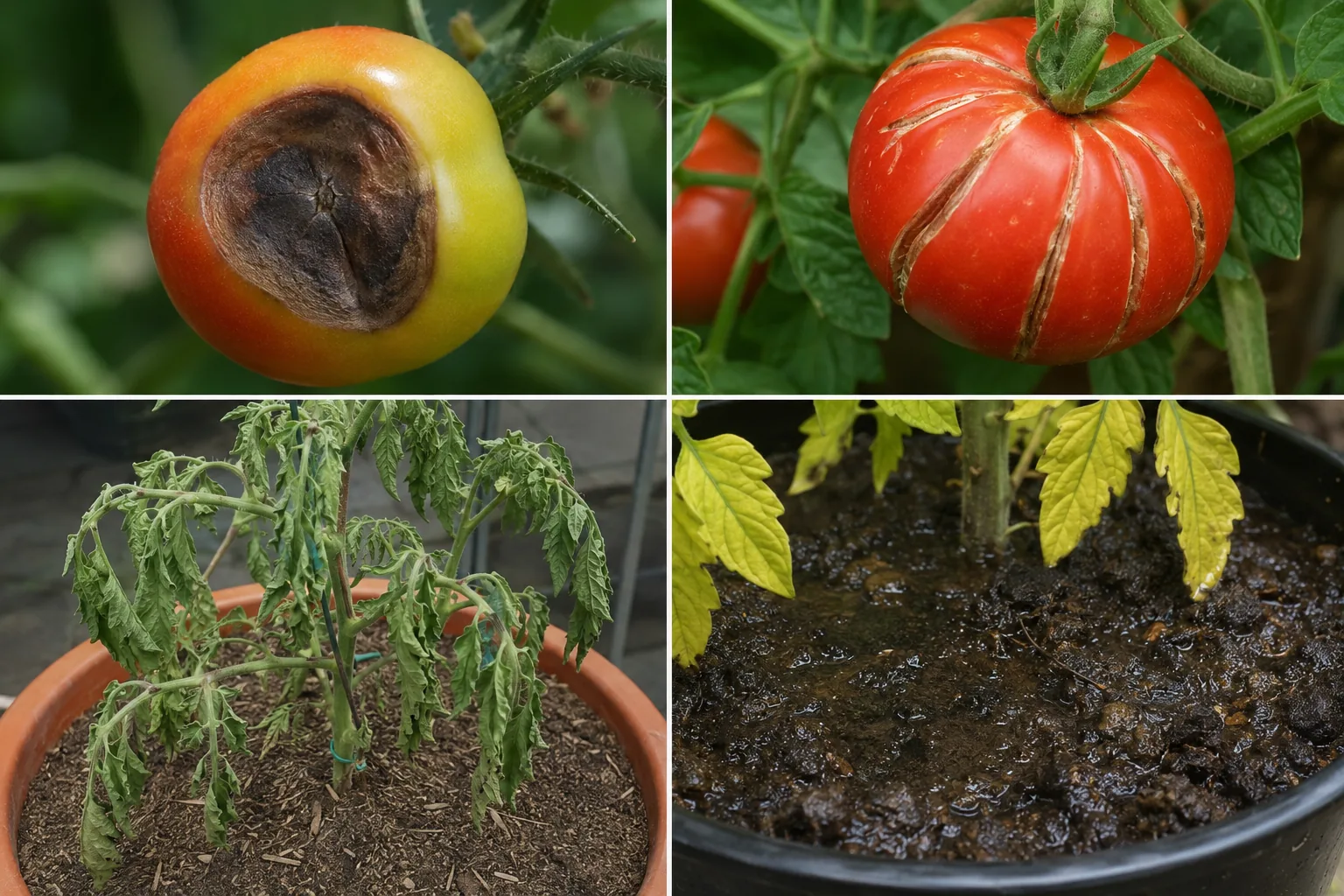
Inconsistent moisture can contribute to blossom end rot, split fruit, wilting, and waterlogged compost.
Blossom End Rot
Blossom end rot appears as a dark, sunken patch on the bottom of a tomato. It develops when the fruit does not receive enough calcium as it forms. The soil may contain plenty of calcium, but dry or badly fluctuating compost can prevent the plant from moving it effectively to the fruit.
Steady watering helps reduce the risk. Root damage, excessive feeding, and other growing conditions can also contribute, so adding calcium is not always the answer.
Cracked or Split Tomatoes
Fruit can split when a dry plant suddenly absorbs a large amount of water. The inside expands faster than the skin can stretch.
Keeping the compost evenly moist is the best prevention. If heavy rain is forecast and tomatoes are already beginning to colour, you can harvest them and allow them to finish ripening indoors.
Flower Drop and Reduced Harvests
Severe water stress can cause flowers to fall before they set fruit. Consistent moisture helps the plant maintain healthy growth and support a better harvest.
Mulching Potted Tomato Plants
Mulch is not only useful in garden beds. A 5 cm (2 inch) layer on top of a container can slow evaporation, keep the root zone cooler, and reduce soil splashing onto the leaves.
Suitable mulches include:
- Weed-free straw
- Shredded bark
- Herbicide-free grass clippings applied in thin layers
- Pine needles
- Well-rotted compost
Leave a small gap around the main stem rather than piling damp mulch directly against it. Check beneath the mulch when testing moisture, as the surface may remain damp longer than expected.
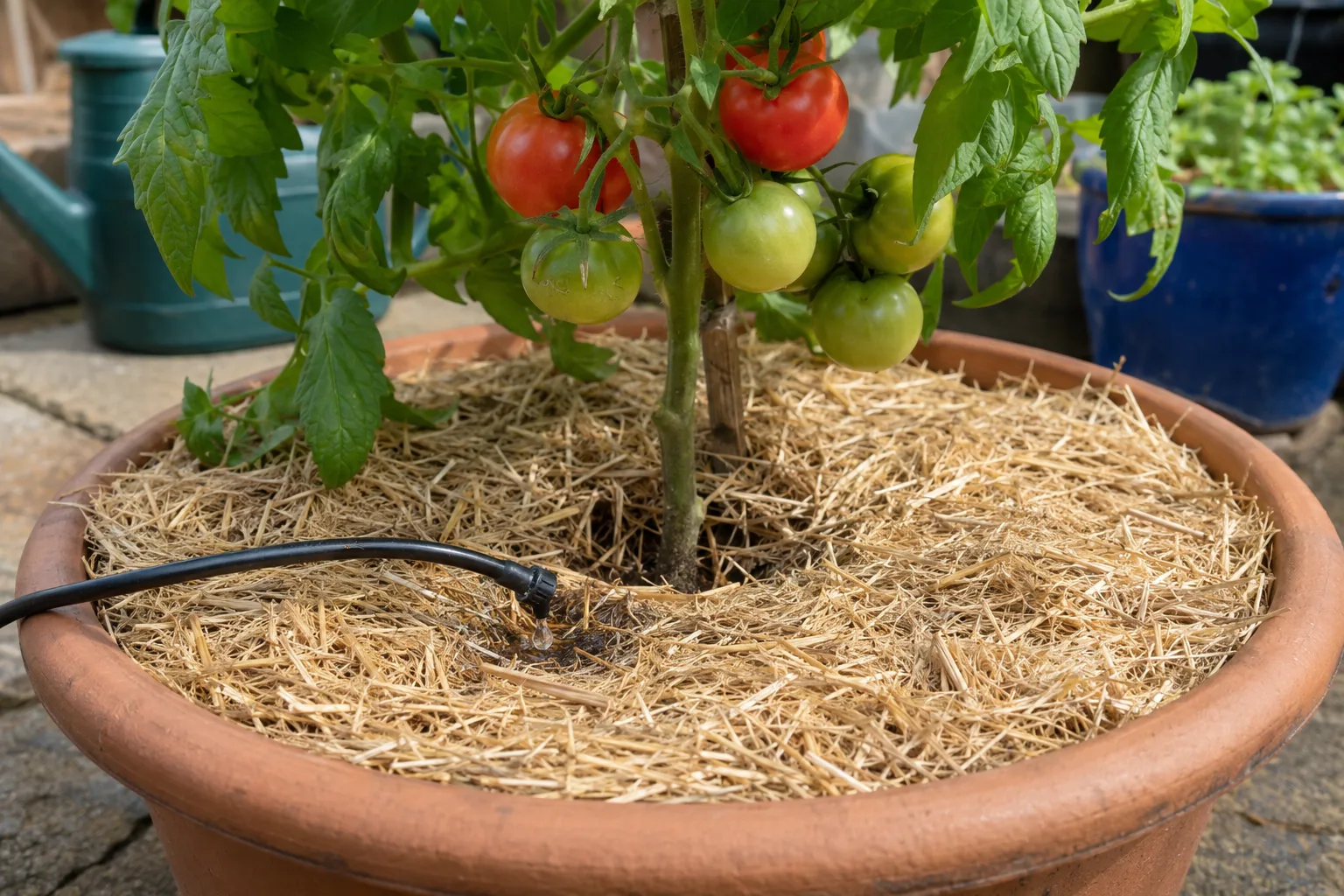
Mulch slows evaporation, while a drip line delivers water gradually to the tomato’s root zone.
Drip Irrigation and Self-Watering Pots
Drip irrigation can be extremely helpful if you have several potted tomato plants. It delivers water slowly to the root zone and reduces splashing onto the foliage.
A timer makes the system more reliable, but it should not replace observation. Check the pots regularly because emitters can block, pipes can disconnect, and the required watering time changes with the weather.
Self-watering pots use a reservoir beneath the compost. They can maintain steadier moisture and are particularly useful during hot weather. Follow the manufacturer’s instructions, keep the reservoir filled as needed, and make sure the design still allows air to reach the roots.
How to Water Tomatoes While You Are Away
Container tomatoes can dry out quickly, so make arrangements before leaving them during summer.
Good options include:
- Asking someone to check the pots daily
- Installing a timed drip-irrigation system
- Using a self-watering container or reservoir system
- Moving pots into a slightly more sheltered position
- Mulching the compost before you leave
- Grouping containers to reduce exposure to wind
Test any automatic system for several days before your trip. This gives you time to adjust the flow and confirm that water is reaching every pot.
Do not place tomatoes in deep trays of water for an extended holiday. Permanently soaked compost can deprive the roots of oxygen and cause serious damage.
Common Tomato-Watering Mistakes
Avoiding a few common mistakes will make caring for potted tomatoes much easier.
Following the Same Schedule All Season
Water use changes with the plant’s size and the weather. Check the compost rather than watering on fixed days.
Giving Small Amounts Too Often
Light surface watering encourages shallow roots. Water the whole root ball slowly and thoroughly.
Letting the Pot Dry Out Completely
Repeated drought stress can lead to blossom drop, blossom end rot, and cracked fruit.
Watering Already-Wet Compost
Daily checking is useful; automatic daily watering is not always necessary. If the compost is still wet, wait.
Wetting the Leaves Every Time
Tomatoes absorb water through their roots. Directing water onto the compost is more efficient and helps keep the foliage dry.
Using a Pot Without Drainage Holes
Drainage is essential. Without it, water collects at the bottom and pushes oxygen out of the root zone.
Relying on Rain Without Checking
Dense foliage can stop rain from reaching the pot. Test the compost after a shower.
Frequently Asked Questions
Should I Water Tomatoes in Pots Every Day?
Potted tomatoes often need daily watering in warm summer weather, but not every pot needs water every day. Check the top 2–3 cm of compost and water when it feels dry. In cool weather, the pot may remain moist for two or three days.
Can I Water Potted Tomatoes Twice a Day?
Yes. Large tomato plants may need watering twice a day during exceptionally hot, sunny, or windy weather. Water in the morning, then check the compost again in the late afternoon. Only give the second watering if it has dried.
How Much Water Should I Give a Tomato Plant in a Pot?
Water slowly until a small amount begins draining from the bottom of the container. The exact volume depends on the pot size, plant size, compost, and weather, so thorough coverage is more useful than a fixed number of litres.
Is It Better to Water Tomatoes in the Morning or Evening?
Morning is usually best because the plant is hydrated before the hottest part of the day and accidentally wet leaves have time to dry. If the plant is genuinely dry in the evening, water it at the base rather than leaving it stressed overnight.
Can You Overwater Tomatoes in Pots?
Yes. Constantly saturated compost prevents enough oxygen from reaching the roots and can lead to yellow leaves, poor growth, and root rot. Always use a pot with drainage holes and check the compost before watering.
Should I Water Tomato Leaves?
No. Apply water directly to the compost around the base of the plant. Wet foliage is unnecessary and can encourage disease, especially if it remains damp overnight.
Do Cherry Tomatoes in Pots Need Less Water?
Not necessarily. Cherry tomatoes often produce large clusters of fruit and vigorous foliage, so a mature plant can still use a substantial amount of water. Judge its needs by the compost, weather, and plant size rather than fruit size alone.
Does a Bigger Tomato Pot Need Less Frequent Watering?
Usually, yes. A large pot contains more compost and holds a bigger reserve of moisture, so it dries more slowly than a small container. The plant will still need regular checks, especially when mature and fruiting.
A Simple Watering Checklist
For healthy potted tomato plants:
- Check the compost every day
- Water when the top 2–3 cm feels dry
- Expect to water daily in warm summer weather
- Check twice daily during extreme heat or strong wind
- Water slowly at the base of the plant
- Continue until a little drains from the bottom
- Empty ordinary saucers after drainage
- Keep the compost evenly moist, not constantly soggy
- Add mulch to slow evaporation
- Adjust your routine as the plant and weather change
Final Thoughts
So, how often should you water tomatoes in pots? In warm weather, once a day is a sensible expectation, and large plants may need a second drink during extreme heat. In cooler conditions, every two or three days may be enough.
The most reliable rule is simple: check the compost daily and water when the top 2–3 cm feels dry.
Once you stop relying on a fixed timetable and start paying attention to the pot, watering becomes much easier. Keep the moisture steady, water deeply at the roots, and your tomato plant will be in an excellent position to produce a healthy, delicious harvest.