Blossom End Rot on Tomatoes: Causes, Fixes and How to Stop It
Blossom End Rot on Tomatoes: Causes, Fixes and How to Stop It
Few things are more disappointing than spotting a beautiful tomato on the plant, reaching in to pick it, and then turning it over to find a dark, sunken, leathery patch on the bottom.
It looks awful.
It can make you think your tomato plant has caught a terrible disease.
But here is the good news:
Blossom end rot is not a contagious disease. It does not spread from fruit to fruit like a fungus, and it does not mean your whole tomato plant is doomed.
Blossom end rot is a common tomato problem caused by stress inside the plant, usually connected to uneven watering and poor calcium movement into the developing fruit.
That means you can usually stop it from getting worse.
You cannot repair the tomatoes that already have the black patch, but you can often protect the next tomatoes that form.
In this guide, you will learn what blossom end rot looks like, why it happens, what to do when you find it, which home remedies are worth ignoring, and how to prevent it next time.
What Is Blossom End Rot?
Blossom end rot is a physiological disorder. That simply means it is a growth problem inside the plant, not an infection caused by insects, fungi, bacteria, or viruses.
It happens when the developing tomato fruit does not get enough calcium at the right time.
Calcium helps build strong cell walls inside the fruit. When the fruit is growing quickly and calcium does not reach the blossom end properly, the cells begin to collapse. The result is the familiar dark, sunken patch on the bottom of the tomato.
The “blossom end” is the end of the tomato opposite the stem.
That is why the damage appears on the bottom of the fruit rather than near the top.
What Does Blossom End Rot Look Like?
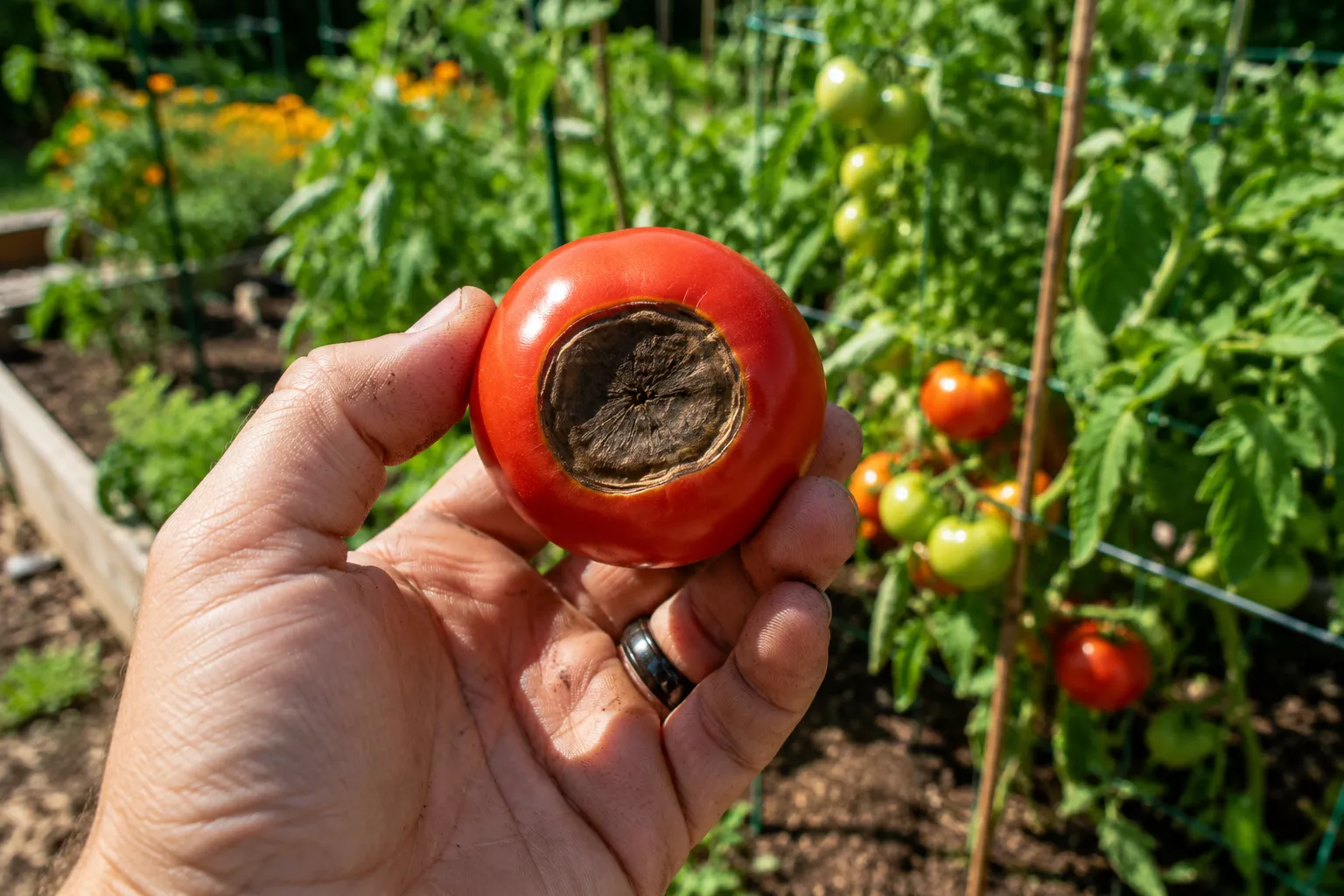
Blossom end rot usually appears as a dark, sunken patch on the bottom of the tomato.
Blossom end rot has a very specific appearance.
The plant itself may look healthy. The leaves may be green. The stems may look strong. The tomatoes may even look perfect from the top.
Then you turn the fruit over and see the problem.
Common signs include:
- A small pale, tan, or water-soaked patch on the bottom of the tomato
- A spot that grows larger as the fruit develops
- A dark brown or black sunken area
- A dry, leathery, flattened patch
- Fruit that ripens earlier than normal
- Secondary mould or soft rot if the damaged area becomes infected later
Blossom end rot often appears when the fruit is still green and about one-third to one-half of its final size.
At first, the patch may look like a small bruise. Later, it becomes darker, firmer, and more obvious.
In severe cases, the damaged area can cover a large part of the tomato.
Can Blossom End Rot Happen Inside the Tomato?
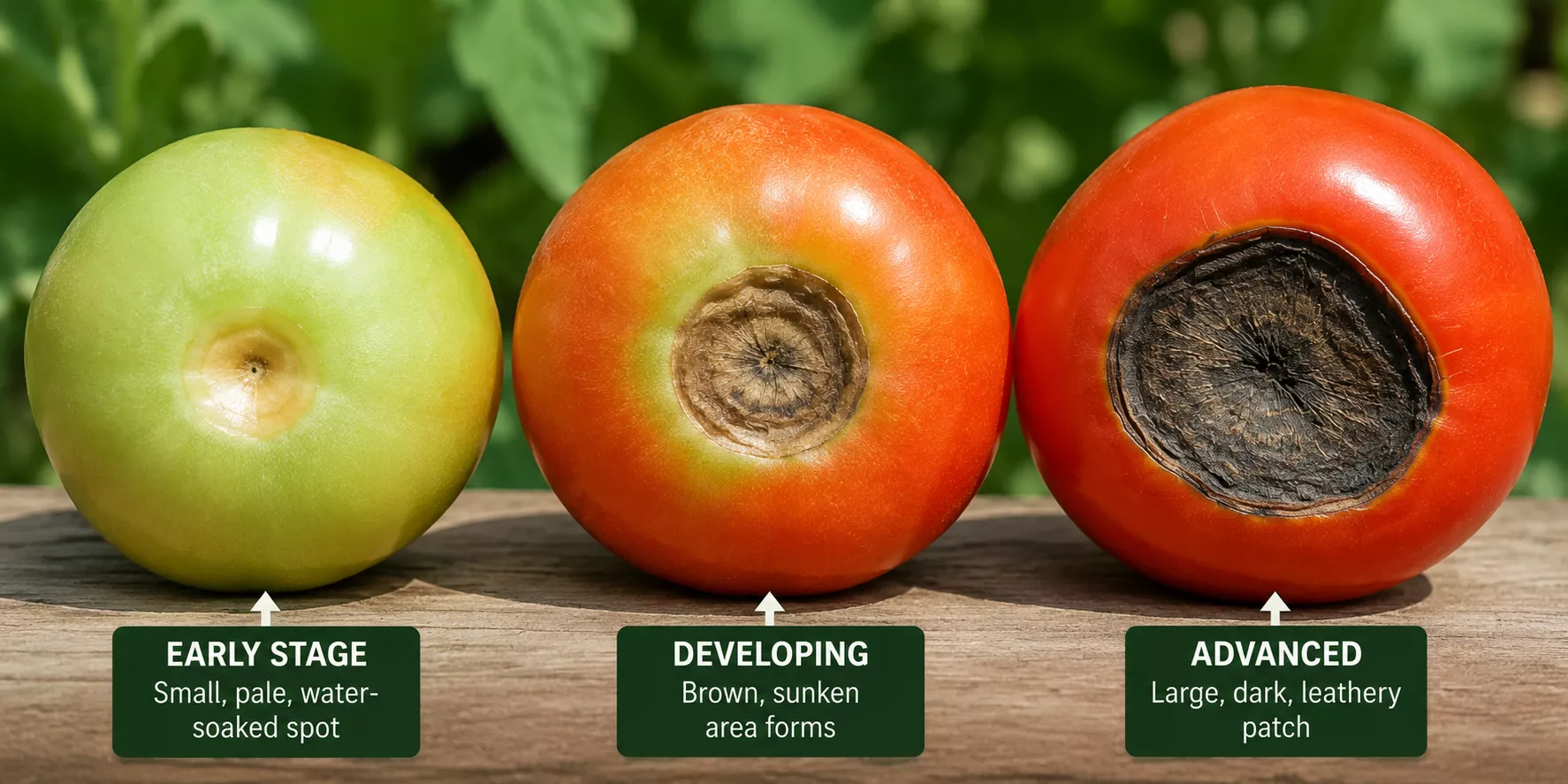
Blossom end rot often starts small, then becomes darker, larger, and leathery as the fruit grows.
Yes, sometimes the damage is internal.
This is called internal blossom end rot.
The outside of the tomato may look fairly normal, but when you cut it open, the inside has dark, hard, shrunken, or damaged tissue.
This is frustrating because you may not notice it until harvest.
External blossom end rot is easier to diagnose because the dark patch is visible on the bottom of the fruit.
Is Blossom End Rot a Disease?
No.
This is one of the most important things to understand.
Blossom end rot is not a disease and it does not spread like blight or mould.
You do not need to spray fungicide for blossom end rot. Fungicides and insecticides will not fix it because there is no fungus or insect causing the original problem.
However, once the tissue is damaged, fungi and bacteria can move into the dead area. That can make the fruit soft, mouldy, wet, or rotten.
So the original problem is not a disease, but damaged fruit can later become infected by other organisms.
Does Blossom End Rot Spread to Other Tomatoes?
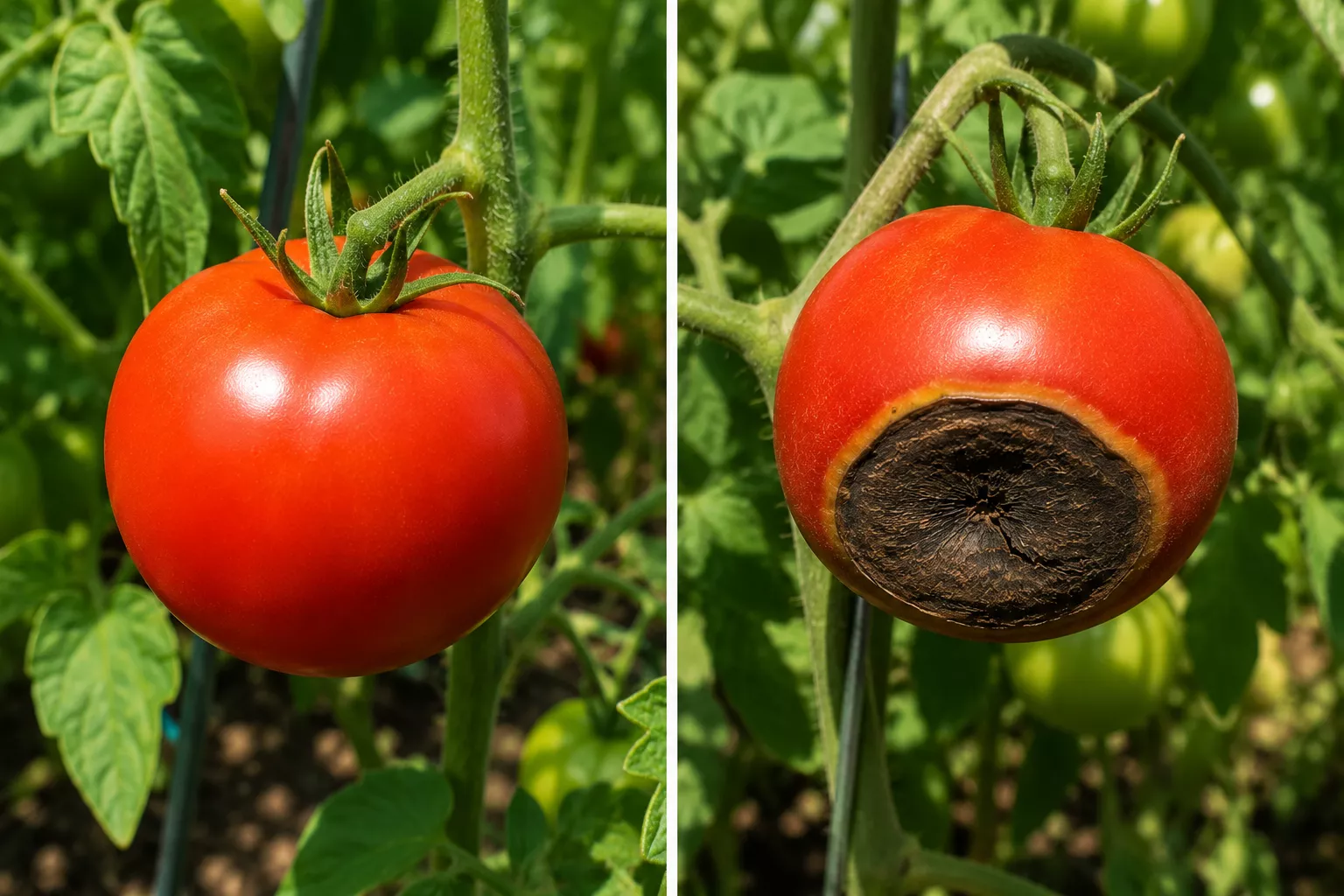
Blossom end rot affects the fruit, but the plant itself may still look healthy.
Blossom end rot does not infect nearby tomatoes.
But several tomatoes on the same plant, or several plants in the same bed, can develop it at the same time because they are all experiencing the same stress.
For example, if the soil dries out badly and then suddenly gets soaked, many fruits may be affected together.
This makes it look like the problem is spreading, but it is really the plant reacting to the same growing conditions.
Why Does Blossom End Rot Happen?
Blossom end rot happens because the developing fruit does not get enough calcium where it needs it.
But this does not always mean your soil lacks calcium.
In many gardens, the soil already has enough calcium.
The real problem is often that the plant cannot move calcium properly from the roots to the fruit.
Calcium moves through the plant with water. If water uptake is uneven, calcium movement becomes uneven too.
That is why blossom end rot is so closely linked to watering.
The Simple Explanation
Here is the simple version:
The tomato plant needs water to move calcium.
If the plant cannot take up water steadily, calcium does not reach the developing fruit properly.
When the fruit grows quickly without enough calcium, the cells at the blossom end break down.
That creates the black, sunken patch.
Why the Bottom of the Tomato Is Affected First
The blossom end of the tomato is the furthest point from the stem.
That makes it one of the hardest places for calcium to reach.
When the plant is under stress, the blossom end is often the first area to suffer.
Leaves also pull a lot of water and nutrients upward because they are constantly losing moisture through transpiration. In hot weather, the plant may prioritise the leaves, while developing fruit receives less calcium than it needs.
This is one reason blossom end rot often becomes worse during hot, dry, stressful weather.
Common Causes of Blossom End Rot
There is usually not just one cause. Blossom end rot is often the result of several stresses happening together.
The most common causes are:
- Inconsistent watering
- Soil drying out too much
- Waterlogged soil
- Fast fruit growth after dry conditions
- Root damage
- Cold soil early in the season
- Excessive heat
- Too much nitrogen fertiliser
- Poor soil pH
- High salt levels in the soil
- Large-fruited or elongated tomato varieties
Let’s go through the main ones.
1. Inconsistent Watering
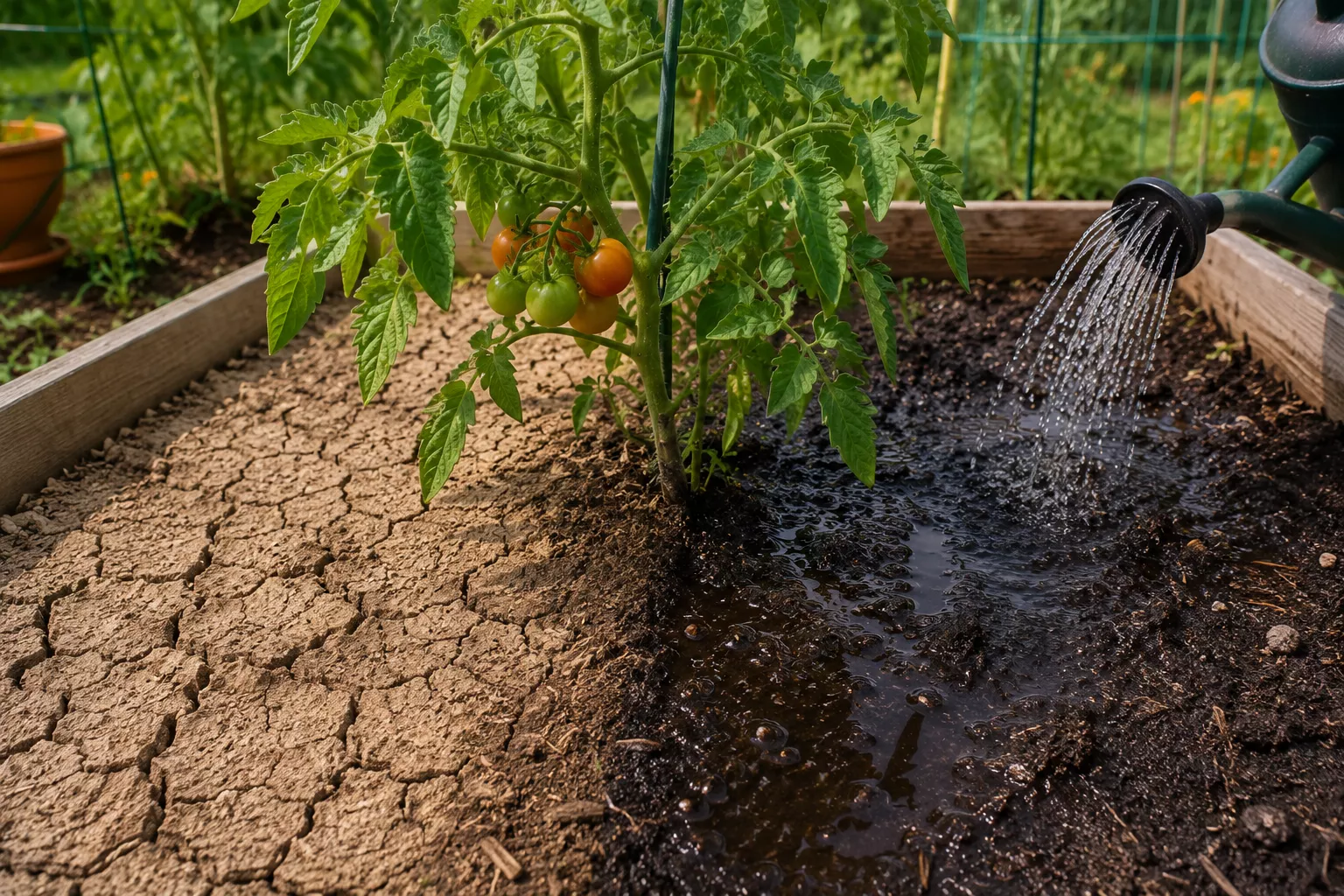
The biggest trigger for blossom end rot is often uneven watering.
This is the number one cause of blossom end rot in home gardens.
Tomatoes like steady moisture.
They do not like drying out completely and then suddenly being soaked.
When the soil becomes too dry, the roots cannot take up enough water. Since calcium moves with water, calcium movement also slows down.
Then, when the plant gets a sudden heavy watering or heavy rain, the fruit may grow quickly, but calcium still may not reach the blossom end fast enough.
That is when blossom end rot often appears.
This is especially common in:
- Pots
- Grow bags
- Raised beds
- Sandy soil
- Hot weather
- Greenhouses
- Plants watered lightly but not deeply
If you are growing in containers, watering is even more important because pots dry out faster than garden soil. You may find this guide useful too: How to Grow Tomatoes in Pots.
2. Waterlogged Soil
Dry soil is a problem, but too much water can also cause blossom end rot.
If soil stays soggy, the roots cannot breathe properly. Roots need oxygen. In waterlogged soil, roots become stressed, weak, or damaged.
When roots are not working well, they cannot take up water and nutrients properly.
So the aim is not “more water all the time.”
The aim is steady, even moisture.
Moist, not bone dry.
Moist, not swampy.
3. Root Damage
Tomato roots are responsible for taking up water and nutrients.
If the roots are damaged, calcium uptake can suffer.
Root damage can happen when:
- You hoe too close to the plant
- You dig around the root zone
- You transplant roughly
- Soil pests damage roots
- Soil diseases affect root health
- Plants are allowed to dry out repeatedly
Once tomatoes are planted, try not to disturb the soil deeply around them.
Use mulch to suppress weeds instead of constantly digging near the plant.
4. Too Much Nitrogen
Too much nitrogen can make tomato plants look impressive at first.
You get lots of lush green leaves and fast growth.
But too much leafy growth can make blossom end rot worse.
The plant puts energy into leaves instead of balanced fruit development. This can also increase the demand for calcium and water.
High-nitrogen feeding, especially early in fruiting, can contribute to the problem.
Avoid overfeeding with lawn fertiliser, fresh manure, or very high-nitrogen plant food.
Once tomatoes begin flowering and fruiting, use a tomato fertiliser or a balanced feeding plan designed for fruiting plants.
5. Soil pH Problems
Soil pH affects how easily plants can take up nutrients.
Tomatoes generally prefer slightly acidic soil, around pH 6.2 to 6.8.
If the soil is too acidic, calcium may become less available to the plant.
A soil test is the best way to know what is really happening.
If your soil pH is too low, lime may be recommended to raise it. But do not guess and add lots of lime without testing, because too much can create other nutrient problems.
6. Cold Soil Early in the Season
Blossom end rot often appears on the first fruits of the season.
One reason is that early tomato plants may be growing in cool soil.
Cold soil slows root growth and reduces nutrient uptake.
The plant begins forming fruit before the root system is strong enough to support steady calcium movement.
Later in the season, as the soil warms and the plant develops stronger roots, the problem may reduce naturally.
7. Hot Weather
Hot weather increases stress on tomato plants.
The leaves lose more water. The soil dries faster. Containers can heat up quickly. Fruit may grow unevenly.
During extreme heat, the plant may struggle to move enough water and calcium to the fruit.
Mulch and consistent watering become especially important in hot weather.
8. Tomato Variety
Some tomato varieties are more prone to blossom end rot than others.
Large-fruited tomatoes, elongated tomatoes, Roma types, plum tomatoes, and paste tomatoes are often more susceptible.
Cherry and grape tomatoes are usually less affected.
This does not mean you should avoid Roma or beefsteak tomatoes completely. It just means they need more careful watering and soil management.
For help choosing easier or more reliable tomato types, read: Best Tomato Varieties for Home Gardens.
Blossom End Rot vs Other Tomato Problems
It is important to identify blossom end rot correctly because some tomato problems need different treatment.
Here are a few problems that can look similar.
Blossom End Rot vs Sunscald
Sunscald usually appears as a pale, white, yellow, or papery patch on the side of the fruit exposed to strong sunlight.
Blossom end rot appears at the bottom of the fruit, opposite the stem, and becomes dark brown or black.
Sunscald is caused by too much direct sun on exposed fruit.
Blossom end rot is caused by poor calcium movement inside the developing fruit.
Blossom End Rot vs Anthracnose
Anthracnose is a fungal disease that often affects ripe tomatoes.
It usually causes small, round, sunken spots on the side of the fruit. These spots may develop darker centres.
Blossom end rot starts at the blossom end and is usually larger, darker, and leathery.
Blossom End Rot vs Catfacing
Catfacing causes distorted, scarred, or misshapen fruit, often at the blossom end.
It is usually linked to cold conditions during flowering.
Blossom end rot is not a shape deformity. It is a dark, dead patch caused by tissue breakdown.
Blossom End Rot vs General Fruit Rot
If a tomato is soft, mouldy, wet, and collapsing all over, it may have secondary decay.
Blossom end rot begins as a dry, leathery patch at the bottom.
Once mould and bacteria invade the damaged area, the fruit can rot further.
What to Do Immediately If You Find Blossom End Rot
Do not panic.
A few affected tomatoes do not mean your entire harvest is ruined.
Here is what to do.
Step 1: Remove Badly Affected Fruit
Pick off tomatoes that have obvious blossom end rot.
They will not heal.
Removing them helps the plant focus energy, water, and nutrients on healthy developing fruit.
If the damaged area is small and the rest of the tomato is firm and clean, you can cut away the bad part and use the rest. But if it is soft, mouldy, wet, or smells bad, discard it.
Step 2: Check Soil Moisture
Do not immediately add random calcium products.
First, check the soil moisture.
Push your finger about 2 inches into the soil.
If it feels dry, water deeply.
If it feels soggy, let it drain and avoid watering again until the soil improves.
Your goal is steady moisture.
Step 3: Water Deeply and Consistently
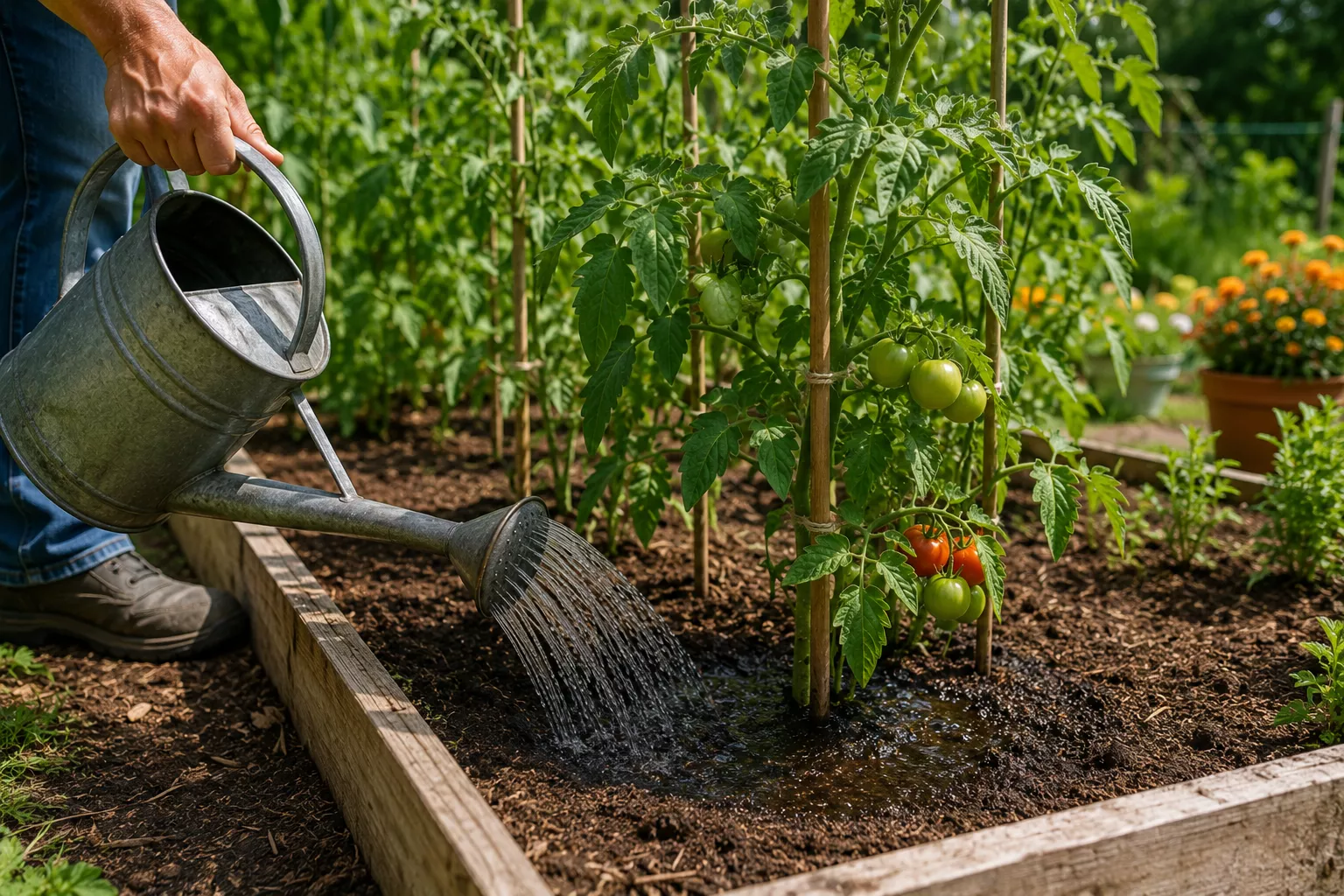
Water deeply at the base of the plant instead of lightly sprinkling the leaves.
Give the plant a proper deep watering rather than a quick sprinkle.
Shallow watering encourages shallow roots. Deep watering encourages deeper roots, which helps the plant cope better with dry spells.
In many gardens, tomatoes need around 1 to 2 inches of water per week, including rain.
In hot weather, containers and raised beds may need more frequent watering.
If you are growing tomatoes in raised beds, this guide may help with soil and watering setup: How to Grow Tomatoes in Raised Beds.
Step 4: Add Mulch
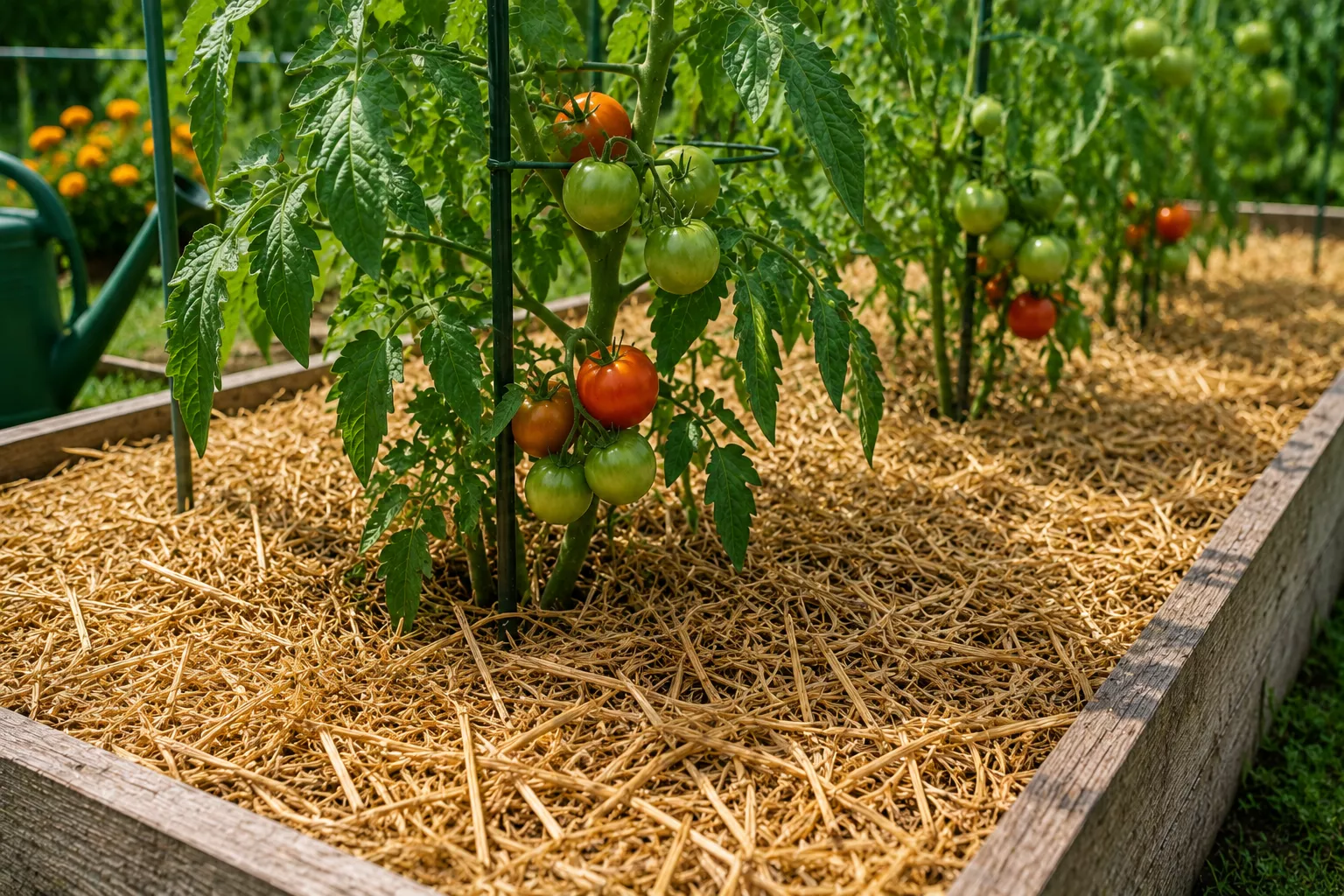
Mulch helps keep soil moisture more stable and protects tomato roots from stress.
Mulch is one of the best practical fixes for blossom end rot prevention.
Add a 2 to 4 inch layer of organic mulch around your tomato plants.
Good mulch options include:
- Straw
- Shredded leaves
- Grass clippings from untreated lawns
- Compost
- Bark chips
- Weed-free hay
Keep mulch slightly away from the main stem to reduce the risk of stem problems.
Mulch helps hold moisture, cool the soil, reduce weeds, and prevent the soil from swinging between dry and wet.
Step 5: Stop Overfeeding
If you have been feeding heavily, especially with high-nitrogen fertiliser, slow down.
Switch to a tomato feed or a fruiting plant fertiliser and follow the label carefully.
More feed is not always better.
The goal is steady, balanced growth.
Step 6: Protect the Next Fruits
You cannot fix the tomatoes already damaged, but you can improve conditions for the next ones.
Once watering becomes consistent and the plant is less stressed, new fruit may develop normally.
This is why blossom end rot often appears early in the season and then improves later.
Should You Use Calcium Spray?
Calcium sprays are often sold as a quick fix for blossom end rot.
They may sound perfect, but they are not always as useful as gardeners hope.
The problem is that calcium does not move easily from sprayed leaves into the fruit. Tomato fruit also does not absorb calcium very efficiently through its skin.
So a spray may not solve the real issue.
The most important fix is usually consistent watering and healthy roots.
A calcium product may be useful in specific cases, especially if a soil test confirms low calcium, but it should not replace good watering, mulching, and soil care.
Should You Use a Soil Drench?
A soil drench with a suitable calcium source may be more logical than a foliar spray because it puts calcium near the roots.
But again, it only helps if calcium is actually lacking or unavailable.
If the soil already has enough calcium, the real solution is improving water movement and reducing stress.
A soil test is the best guide.
Do Eggshells Stop Blossom End Rot?
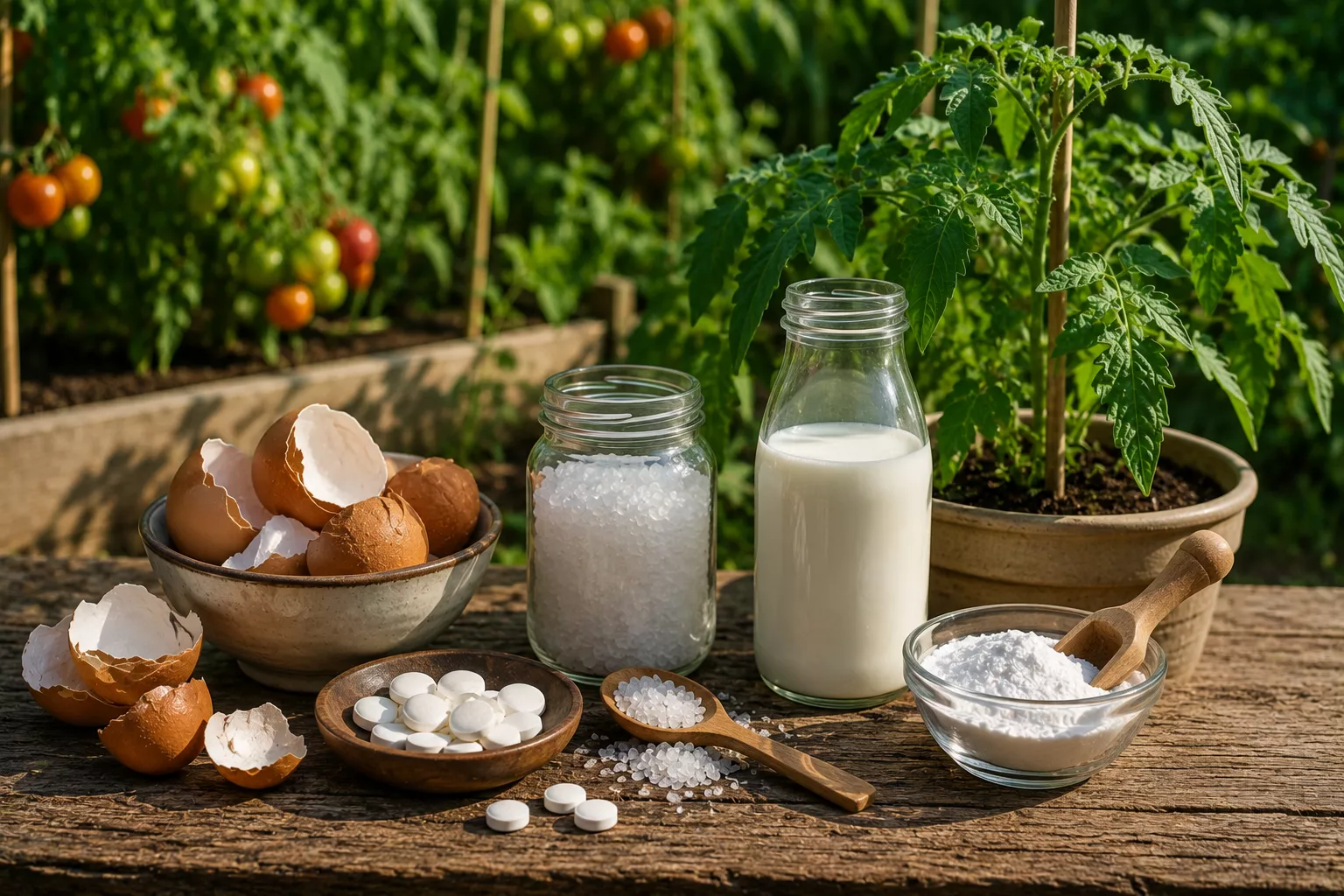
Many popular blossom end rot remedies are not quick fixes. Watering and soil balance matter more.
Eggshells contain calcium, but they break down slowly.
That means they are not a quick fix for a plant already showing blossom end rot.
Crushed eggshells can be added to compost or soil as a long-term amendment, but they will not instantly rescue current tomatoes.
Use eggshells for long-term soil improvement, not emergency treatment.
Do Tums Help Blossom End Rot?
Tums and antacid tablets contain calcium carbonate, so many gardeners put them in the planting hole.
The problem is that blossom end rot is usually not caused by a simple lack of calcium in the soil.
It is usually caused by poor calcium movement through the plant.
Tums will not fix inconsistent watering, root damage, heat stress, or overfeeding.
They are not the best solution.
Does Epsom Salt Fix Blossom End Rot?
No.
Epsom salt is magnesium sulfate. It is not calcium.
Adding Epsom salt when it is not needed can actually make things worse because excess magnesium can compete with calcium uptake.
Do not use Epsom salt for blossom end rot unless a soil test shows your soil specifically needs magnesium.
Does Milk Stop Blossom End Rot?
Milk contains some calcium, but it is not an efficient or reliable treatment for blossom end rot.
You are better off focusing on consistent watering, mulch, correct feeding, and soil testing.
Does Baking Soda Stop Blossom End Rot?
No.
Baking soda does not solve blossom end rot.
It does not fix calcium movement, soil moisture, root stress, or fruit development.
Using too much baking soda can also affect soil chemistry.
How to Prevent Blossom End Rot Before It Starts
Prevention is much easier than cure.
Once a fruit has blossom end rot, it will not repair itself. The best strategy is to create growing conditions that keep calcium moving steadily to the fruit.
1. Keep Soil Evenly Moist
This is the big one.
Do not let tomatoes dry out completely.
Do not flood them either.
Aim for steady moisture through the whole growing season.
Helpful habits include:
- Water deeply
- Check soil before watering
- Water at the base of the plant
- Avoid quick daily sprinkling
- Use drip irrigation or soaker hoses if possible
- Pay extra attention to pots and grow bags
2. Mulch Around Plants
Mulching is simple but powerful.
It helps keep the root zone stable.
A good mulch layer reduces evaporation, protects roots from temperature swings, and helps prevent sudden dry spells.
Apply mulch after the soil has warmed up.
3. Build Better Soil
Healthy soil holds moisture better and supports stronger roots.
Before planting tomatoes, improve the soil with compost or well-rotted organic matter.
This helps with:
- Moisture retention
- Drainage
- Soil structure
- Root development
- Nutrient availability
Soil that dries like dust or stays wet like clay is more likely to stress tomato plants.
4. Test Your Soil
A soil test tells you what your garden actually needs.
It can show:
- pH level
- Calcium level
- Magnesium level
- Potassium level
- General fertility
This prevents guessing.
If the soil pH is too low, lime may be recommended.
If calcium is low but pH is already fine, gypsum may be a better choice because it adds calcium without raising pH as much as lime.
5. Avoid Too Much Nitrogen
Tomatoes need nutrients, but too much nitrogen creates problems.
Avoid heavy feeding with high-nitrogen fertiliser once fruiting begins.
Use a tomato fertiliser and follow the instructions.
Steady growth is better than explosive growth.
6. Do Not Damage Roots
Avoid deep hoeing, digging, or cultivating around tomato plants.
Tomato roots can spread wider than you think.
Use mulch to control weeds and hand-pull weeds carefully when needed.
7. Choose Less Susceptible Varieties
If blossom end rot happens every year, consider growing more cherry or grape tomatoes.
They are usually less prone to the problem than large plum, paste, and beefsteak types.
You can still grow your favourite Roma or beefsteak tomatoes, but give them extra attention with watering and mulch.
8. Do Not Plant Too Early
Plant tomatoes after the soil has warmed and the risk of frost has passed.
Cold soil can slow root growth and make early fruit more vulnerable to blossom end rot.
Healthy roots are one of your best defences.
Are Tomatoes With Blossom End Rot Safe to Eat?
Yes, sometimes.
If the affected area is small, dry, and firm, you can cut it away and eat the healthy part of the tomato.
But use common sense.
Do not eat the tomato if:
- The rot is soft and watery
- There is mould
- The fruit smells bad
- The damage covers most of the tomato
- The inside looks rotten or discoloured
When in doubt, throw it out.
There will be more tomatoes.
Will the Plant Recover?
Yes, often.
Blossom end rot does not usually kill the plant.
If you correct the growing conditions, especially watering and mulch, later fruits may grow normally.
Many gardeners see blossom end rot on the first few tomatoes and then get healthy fruit later in the season.
So do not give up on the plant too early.
FAQ About Blossom End Rot on Tomatoes
Why are my tomatoes black on the bottom?
A black patch on the bottom of a tomato is usually blossom end rot. It happens when the developing fruit does not get enough calcium at the blossom end, often because watering has been inconsistent or the plant is under stress.
Can blossom end rot be reversed?
No. Once a tomato has blossom end rot, that fruit will not heal. Remove badly affected fruit and improve watering, mulching, and feeding to protect the next tomatoes.
Is blossom end rot caused by lack of calcium?
It is caused by a lack of calcium in the developing fruit, but not always by a lack of calcium in the soil. Often, the soil has calcium, but the plant cannot move it properly because of inconsistent watering, root stress, heat, or nutrient imbalance.
Should I add calcium to my tomato plants?
Only add calcium if your soil needs it. A soil test is the best way to know. If your soil already has enough calcium, adding more may not help. Consistent watering is usually more important.
How often should I water tomatoes to prevent blossom end rot?
Water deeply whenever the top few inches of soil begin to dry. In many gardens, tomatoes need around 1 to 2 inches of water per week, but pots, grow bags, greenhouses, and hot weather may require more frequent watering.
Do tomatoes in pots get blossom end rot more often?
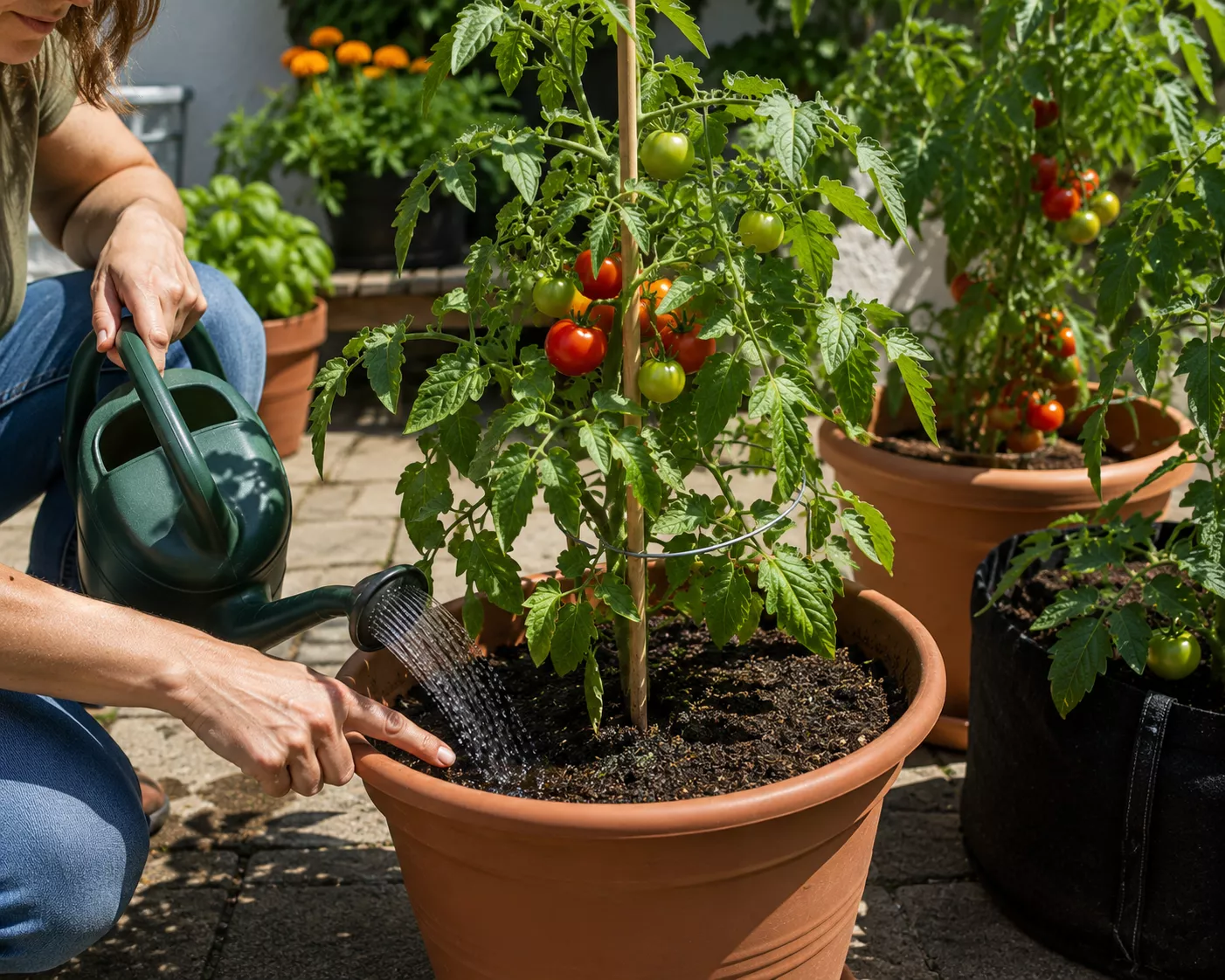
Tomatoes in pots dry out faster, so they need more careful watering.
They can, yes. Pots dry out faster than garden soil, so moisture swings are more common. Use a large enough container, good potting mix, mulch, and regular watering.
Should I remove tomatoes with blossom end rot?
Yes. Remove badly affected fruit because it will not recover. This helps the plant focus on healthy fruit.
Can blossom end rot spread to healthy fruit?
No, not like a disease. But healthy fruit can also develop blossom end rot if the plant continues to experience the same stress.
What is the fastest way to stop blossom end rot?
The fastest practical response is to remove damaged fruit, check soil moisture, water deeply and consistently, add mulch, and stop overfeeding with high-nitrogen fertiliser.
Blossom End Rot Prevention Checklist
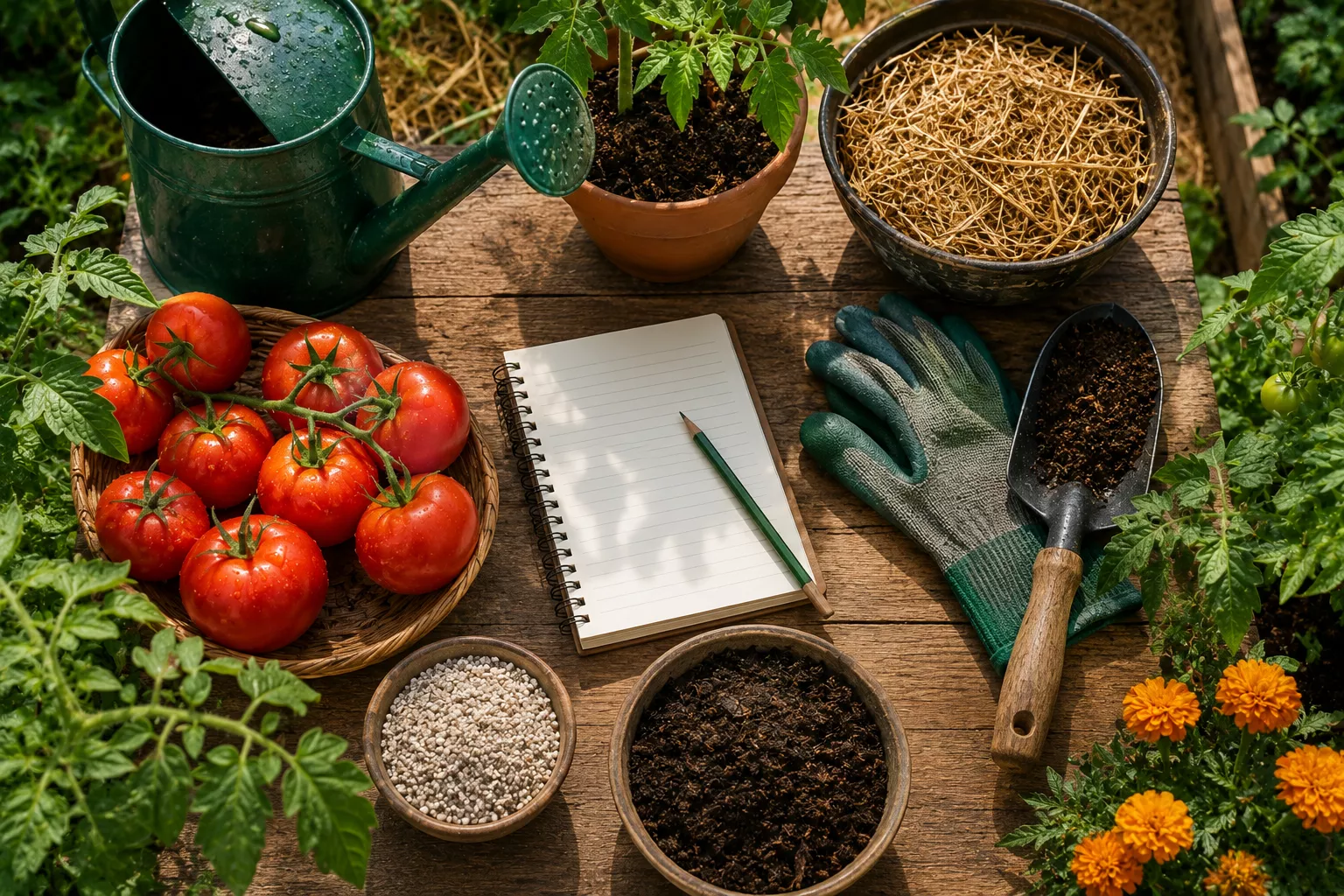
Steady watering, mulch, healthy soil, and balanced feeding are the best prevention tools.
Use this simple checklist to reduce the risk of blossom end rot:
- Grow tomatoes in healthy, well-prepared soil.
- Test soil pH and nutrients before adding lime, gypsum, or extra calcium.
- Plant tomatoes after the soil has warmed.
- Water deeply and consistently.
- Avoid letting soil swing from very dry to very wet.
- Mulch with straw, compost, shredded leaves, or untreated grass clippings.
- Avoid too much nitrogen fertiliser.
- Use tomato feed once plants begin flowering and fruiting.
- Do not dig deeply near tomato roots.
- Grow cherry tomatoes if large tomatoes keep getting blossom end rot.
- Remove affected fruit early.
- Keep caring for the plant because later fruit can still be healthy.
Final Thoughts
Even if blossom end rot appears early, better watering and soil care can help later fruits grow healthy.
Blossom end rot looks dramatic, but it is not the end of your tomato season.
It is your plant telling you that something is out of balance, usually water movement, root health, or nutrient uptake.
The best fix is not a magic tablet, a handful of eggshells, or a random spray.
The best fix is steady care.
Keep the soil evenly moist. Mulch well. Avoid overfeeding. Protect the roots. Test your soil before adding amendments. Choose suitable varieties for your garden.
If a few tomatoes are already damaged, remove them and move on.
With a calmer watering routine and better soil moisture, your next fruits can still be healthy, beautiful, and delicious.