Why Are My Tomato Flowers Falling Off? Causes and How to Stop Blossom Drop
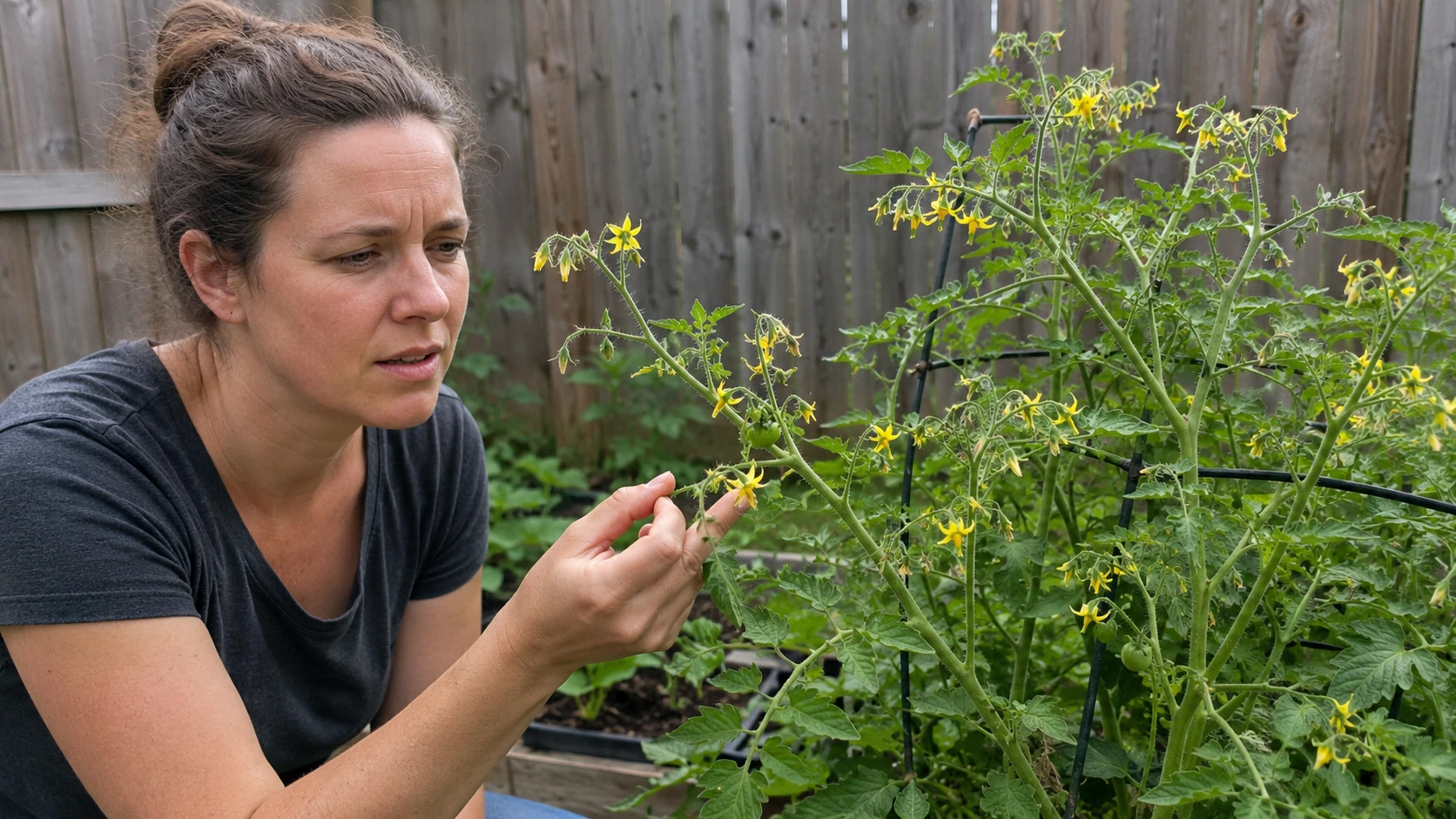
Your tomato plant looks healthy. It is green, growing strongly and covered in yellow flowers. Then, instead of seeing tiny tomatoes begin to form, the flowers dry up and fall to the ground.
This problem is called tomato blossom drop.
The good news is that blossom drop is usually not a disease. It is most often the plant’s response to stressful growing conditions that interfere with pollination or fruit set.
Heat is one of the most common causes, but cold nights, inconsistent watering, poor pollination, excessive nitrogen, low light and other stresses can all make tomato flowers fall off.
Quick answer: Tomato flowers usually fall off because they were not successfully pollinated or because the plant is under stress. The most common triggers are very hot days, warm or cold nights, dry soil, excessive nitrogen, poor airflow, unsuitable humidity and insufficient sunlight. Keep the plant evenly watered, avoid overfeeding, encourage pollination and protect it from temperature extremes where practical.
In this guide
- What is tomato blossom drop?
- How do you know if your tomato flowers are dropping?
- Why are my tomato flowers falling off?
- 1. Hot weather
- 2. Cold nights
- 3. Inconsistent watering
- 4. Poor pollination
- 5. Humidity that is too high or too low
- 6. Too much nitrogen
- 7. Not enough sunlight
- 8. The plant is already carrying a heavy crop
- 9. Pests, disease or other stress
- How to stop tomato flowers from falling off
- Should you manually pollinate tomato flowers?
- How to hand-pollinate tomato flowers
- Do tomato flowers grow back after falling off?
- Are some tomato varieties better at setting fruit in hot weather?
- Frequently asked questions
What is tomato blossom drop?
Blossom drop is when a tomato flower dries up and falls from the plant before a tomato develops.
Tomato flowers contain both male and female reproductive parts, so they are capable of pollinating themselves. Pollen still has to move within the flower and reach the receptive female part for fertilization to take place.
Outdoors, this usually happens with help from wind and vibration. Bumblebees can also be very effective because their vibration shakes pollen loose inside the flower.
When pollination fails, or when the plant is under enough environmental stress, the flower may stop developing. The small stem behind it can turn yellow, and the blossom eventually drops.
Losing an occasional flower is normal. The problem becomes worth investigating when many flowers or entire flower clusters are dropping without producing fruit.
How do you know if your tomato flowers are dropping?
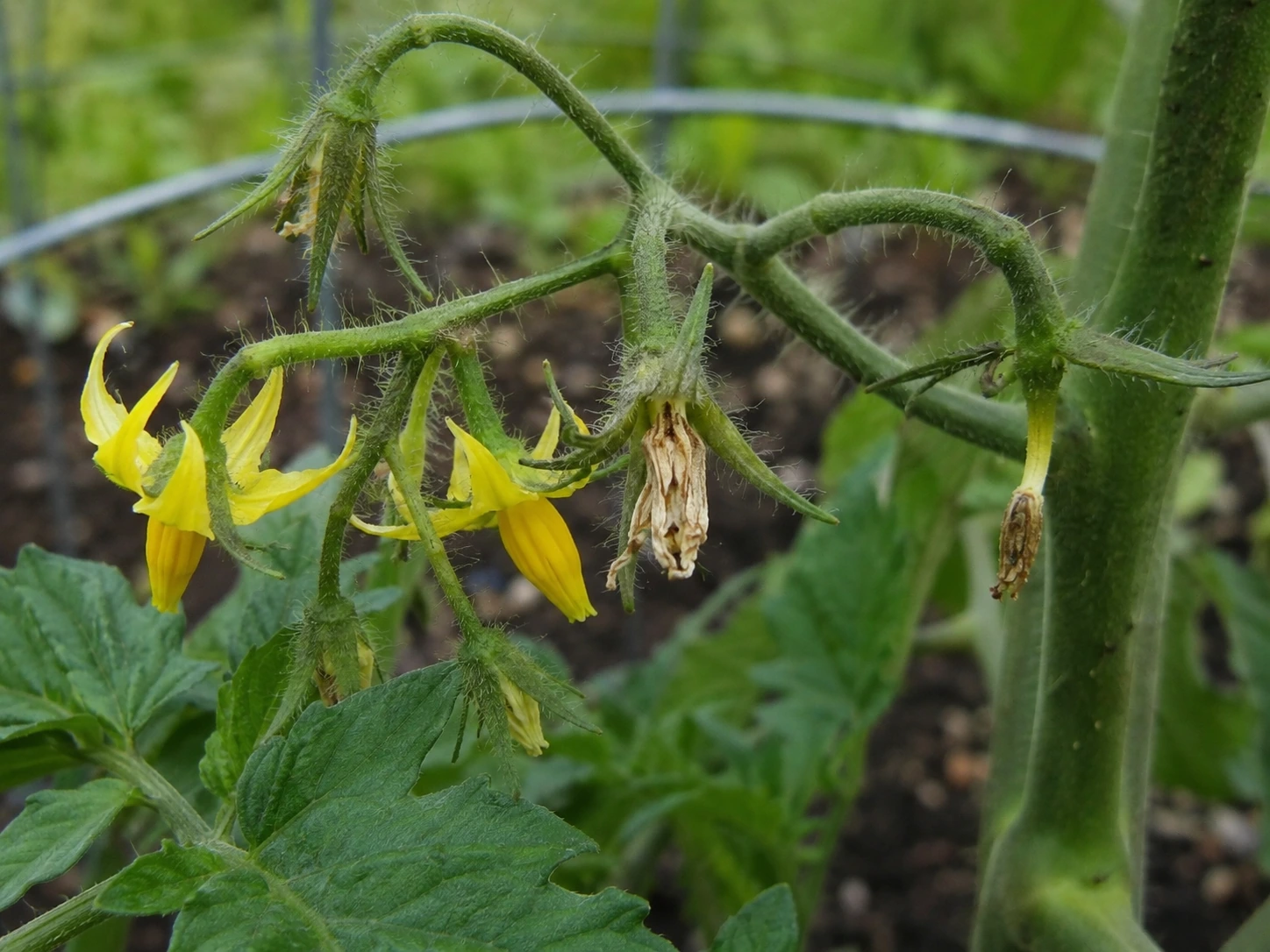
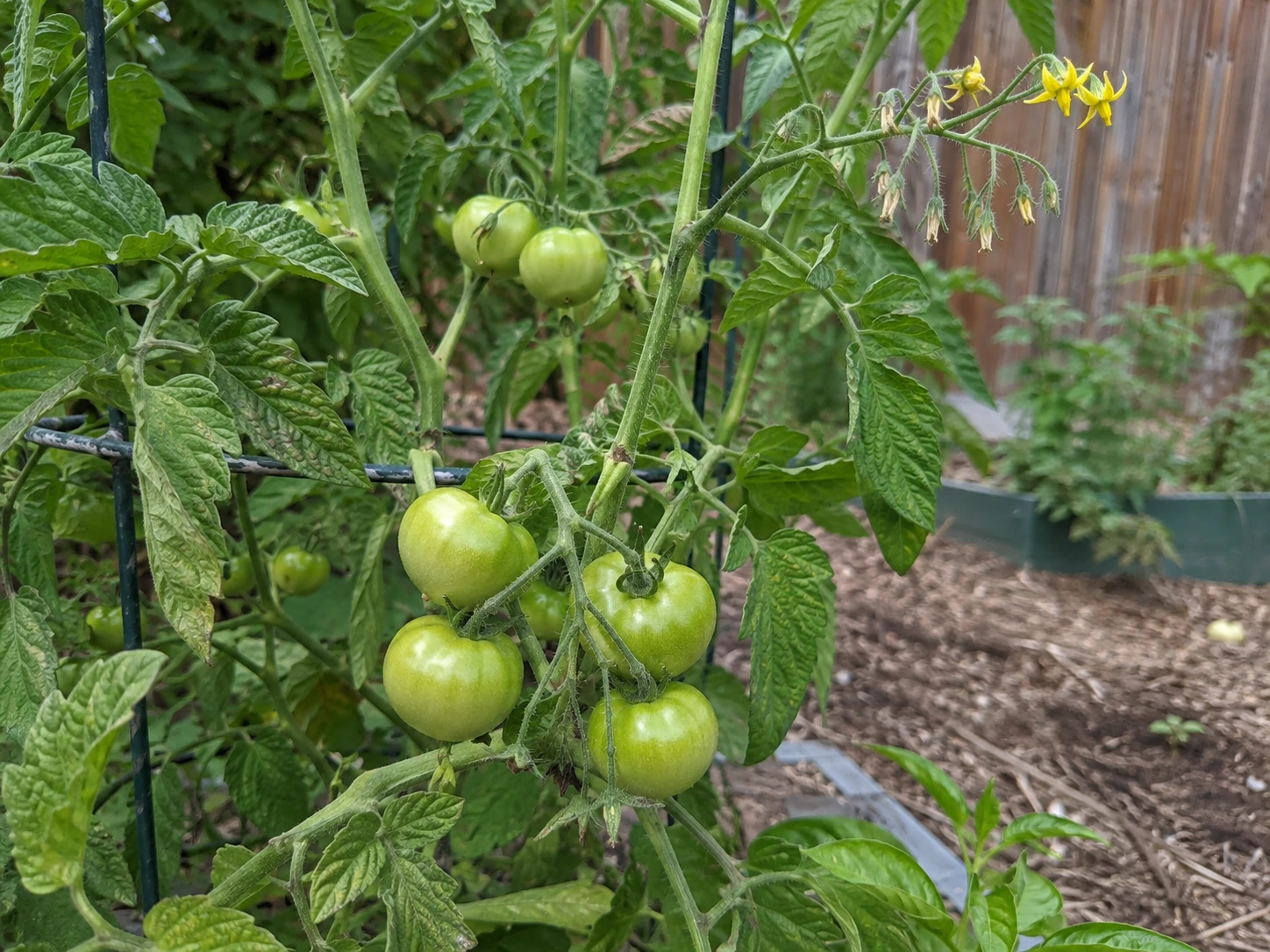
A healthy tomato flower opens bright yellow. If pollination and fertilization are successful, the flower eventually fades while the tiny ovary behind it begins to swell into a tomato.
With blossom drop, you may instead notice:
- Yellow flowers drying or shrivelling without forming fruit
- Flowers turning brown
- The small flower stem turning yellow
- Whole blossoms dropping when touched
- Empty flower clusters with no tiny tomatoes behind them
- Lots of flowers but very little fruit
Do not confuse this with the petals naturally drying after successful pollination. Look closely at the base of the flower. If a tiny green tomato is beginning to enlarge, the flower has done its job.
If the entire flower and its little stem detach without a swelling fruit behind them, you are dealing with blossom drop.
Why are my tomato flowers falling off?
There is rarely one universal cause. Blossom drop is a symptom of failed fruit set, and several different stresses can produce the same result.
The most common causes are:
- Excessive heat
- Cold nights
- Inconsistent watering
- Poor pollination
- Very high or very low humidity
- Too much nitrogen
- Insufficient sunlight
- A heavy existing fruit load
- Pests, disease or general plant stress
The easiest way to solve the problem is to consider what has changed around the plant during the week or two before the flowers began dropping.
1. Hot weather
High temperature is one of the most common causes of tomato blossom drop.
Tomatoes like warm conditions, but their flowers are more temperature-sensitive than the rest of the plant.
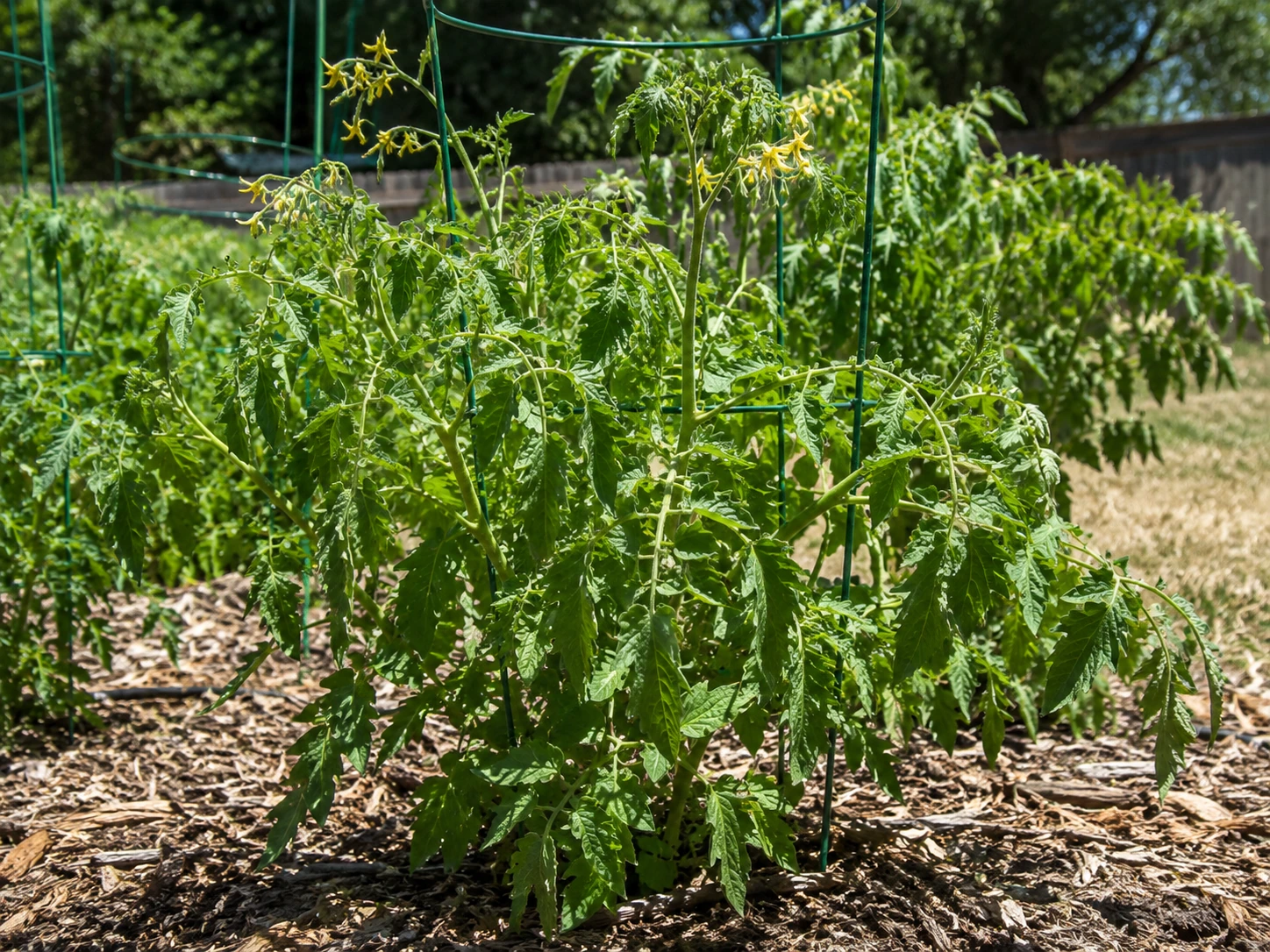
When daytime temperatures repeatedly climb to around 90°F (32°C) or higher, especially when nights also remain warm, pollen can become less viable and pollination may fail.
This explains a frustrating pattern many gardeners see during a heatwave:
- The plant continues growing.
- Plenty of flowers appear.
- The flowers look normal at first.
- Very few are successfully fertilized.
- Several days later, the blossoms dry and fall.
You may therefore see the flower drop after the worst of the hot weather has passed.
What to do during very hot weather
You cannot change the air temperature, but you can reduce the amount of additional stress on the plant.
Keep the root zone evenly moist and apply a layer of mulch around the plant to slow evaporation and moderate soil temperature.
Where intense afternoon sun is a serious problem, temporary shade cloth can help reduce heat stress. Do not completely block the plant from sunlight; the aim is to soften extreme afternoon heat, not put the tomato in permanent shade.
Most importantly, do not panic if a heatwave causes a temporary pause in fruit set. Healthy indeterminate tomato plants will continue producing new flowers, and fruit set often improves once temperatures become more favourable.
2. Cold nights
Hot weather is not the only temperature problem.
Tomato flowers can also struggle when nighttime temperatures fall to around 55°F (13°C) or lower.
This is particularly common:
- Early in spring
- Soon after transplanting
- In exposed gardens
- In cooler climates
- During an unexpected cold spell
Low temperatures can interfere with pollen performance and fertilization even when the tomato plant itself does not look badly damaged.
This is one reason planting tomatoes outdoors too early can be counterproductive. A plant may survive cool conditions but still lose its first clusters of flowers.
What to do
If your plants are still movable, such as tomatoes in pots, move them to a more sheltered position during unusually cold nights.
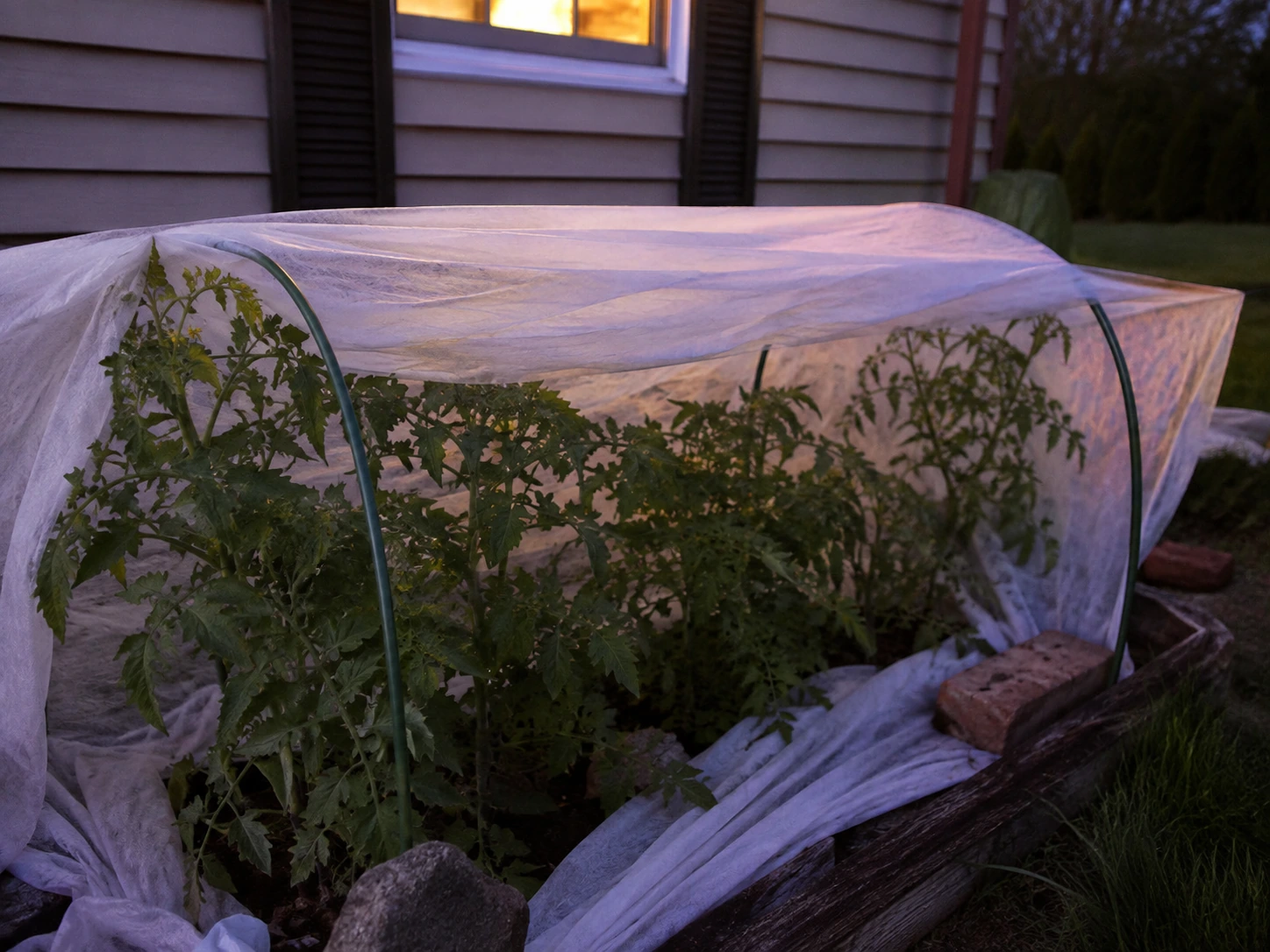
For plants already in the ground, horticultural fleece or another suitable temporary cover can give some protection during a short cold spell. Remove or vent covers when the weather warms so the plants do not overheat.
Often, the simplest solution is time. As nighttime temperatures improve, new flower clusters should have a better chance of setting fruit.
3. Inconsistent watering
Tomatoes perform best when their roots have access to reasonably consistent moisture.
If the soil repeatedly becomes very dry and then suddenly receives a large amount of water, the plant experiences stress. During severe water stress, flowers are one of the things the plant can sacrifice.
Dry conditions are especially likely to cause blossom drop when they happen at the same time as hot weather.
Container-grown tomatoes are particularly vulnerable because pots can dry much faster than garden soil.
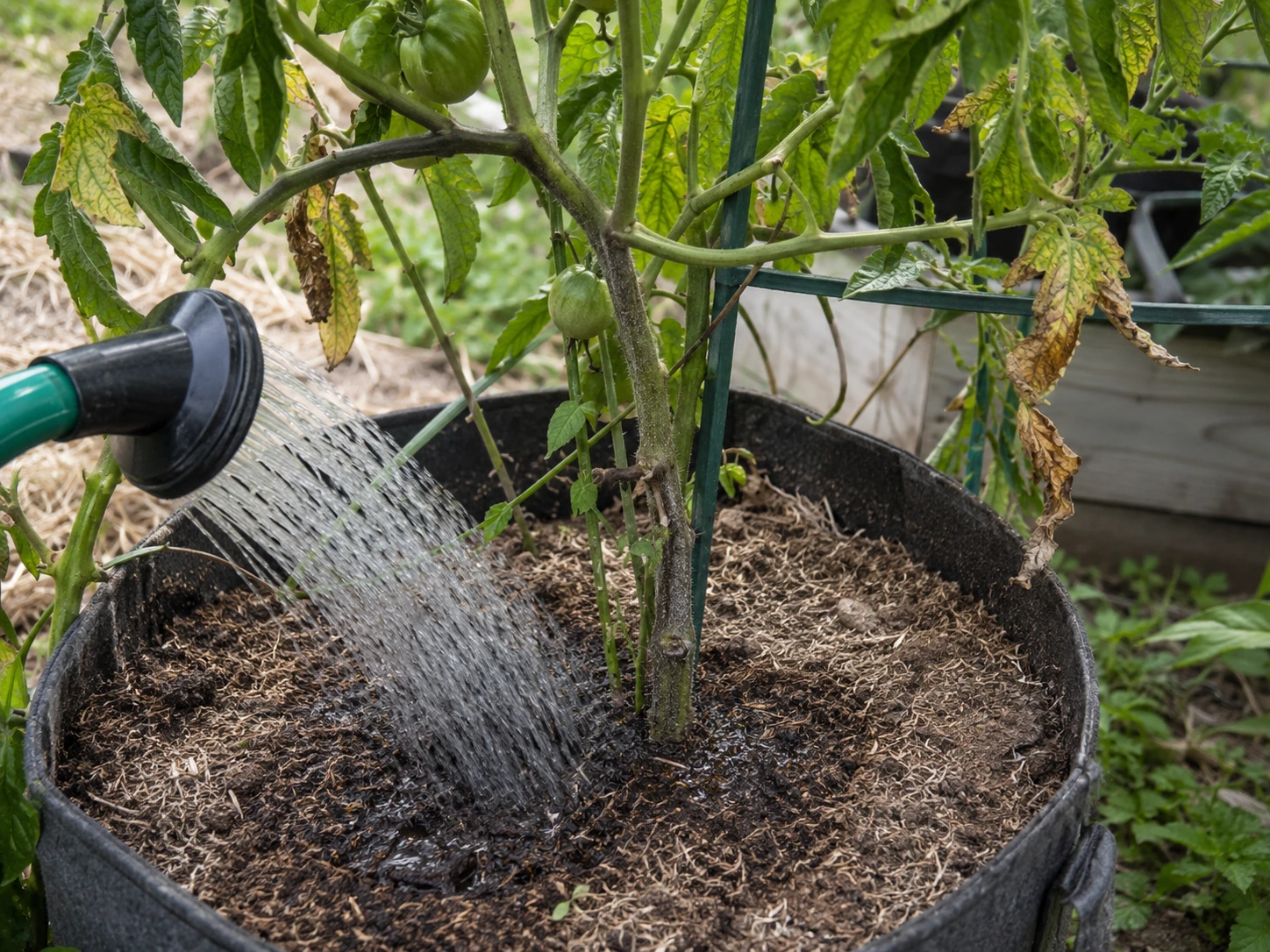
If you are growing in containers, our guide to how often to water tomatoes in pots explains how weather, pot size and plant size change your watering needs.
How to improve watering
Check the soil rather than watering automatically according to a rigid calendar.
Water deeply enough to moisten the root zone, then check it regularly and water again before the plant becomes severely dry and wilted.
Mulch is extremely useful in beds and larger containers because it reduces evaporation and helps prevent rapid swings in soil moisture.
Avoid keeping the soil permanently saturated, however. Tomato roots need oxygen too, and constantly waterlogged soil can damage the roots and stress the plant.
The goal is consistent moisture, not constantly wet soil.
4. Poor pollination
Tomatoes are self-pollinating, but that does not mean pollination always happens automatically.
The flower still needs enough movement to shake pollen loose.
In an outdoor garden, wind often provides that movement. Bumblebees can also vibrate tomato flowers and release pollen very effectively.
Problems are more likely when tomatoes are grown in places with little air movement, such as:
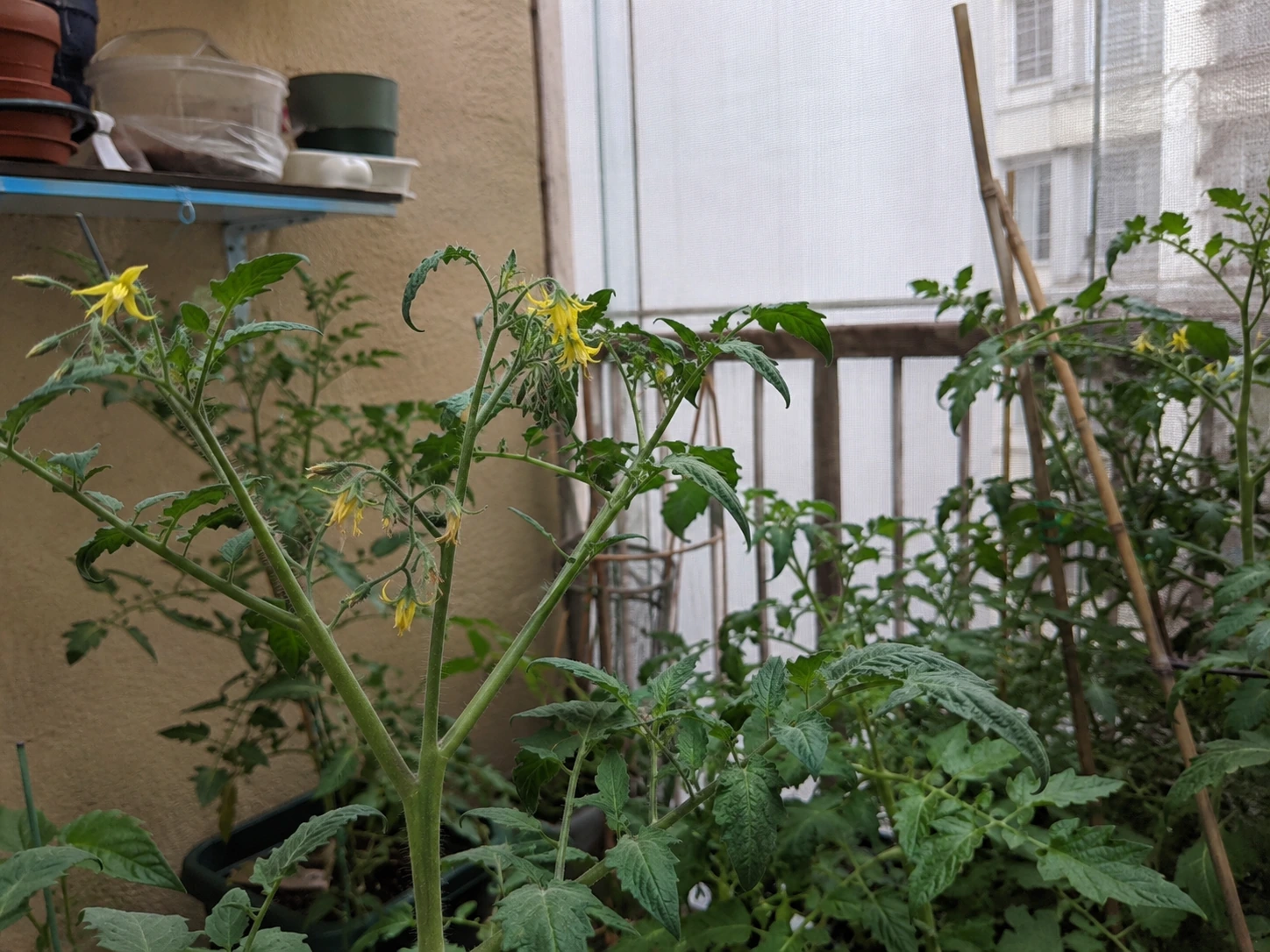
- A sheltered balcony
- A greenhouse
- An enclosed patio
- A conservatory or indoor growing area
- A garden protected by solid walls or fencing
If your plants are flowering heavily, temperatures are reasonable and watering appears good, pollination is worth checking.
Do tomato plants need bees?
No. Tomatoes do not depend on honeybees to produce fruit.
The flowers can self-pollinate with help from movement and vibration.
Bumblebees are particularly useful pollinators because they can vibrate the flower and shake pollen loose, but a tomato plant can still produce a good crop without bee visits if wind or another source of vibration moves the pollen.
5. Humidity that is too high or too low
Humidity affects how easily tomato pollen is released and transferred.
When the air is very humid, pollen can become sticky and may not shed efficiently.
At the opposite extreme, very dry conditions can also reduce successful pollination.
This is often less obvious to home gardeners than heat or watering problems because the plant can look healthy while the pollen is failing inside the flowers.
High humidity combined with high temperature can be particularly troublesome.
What can you do?
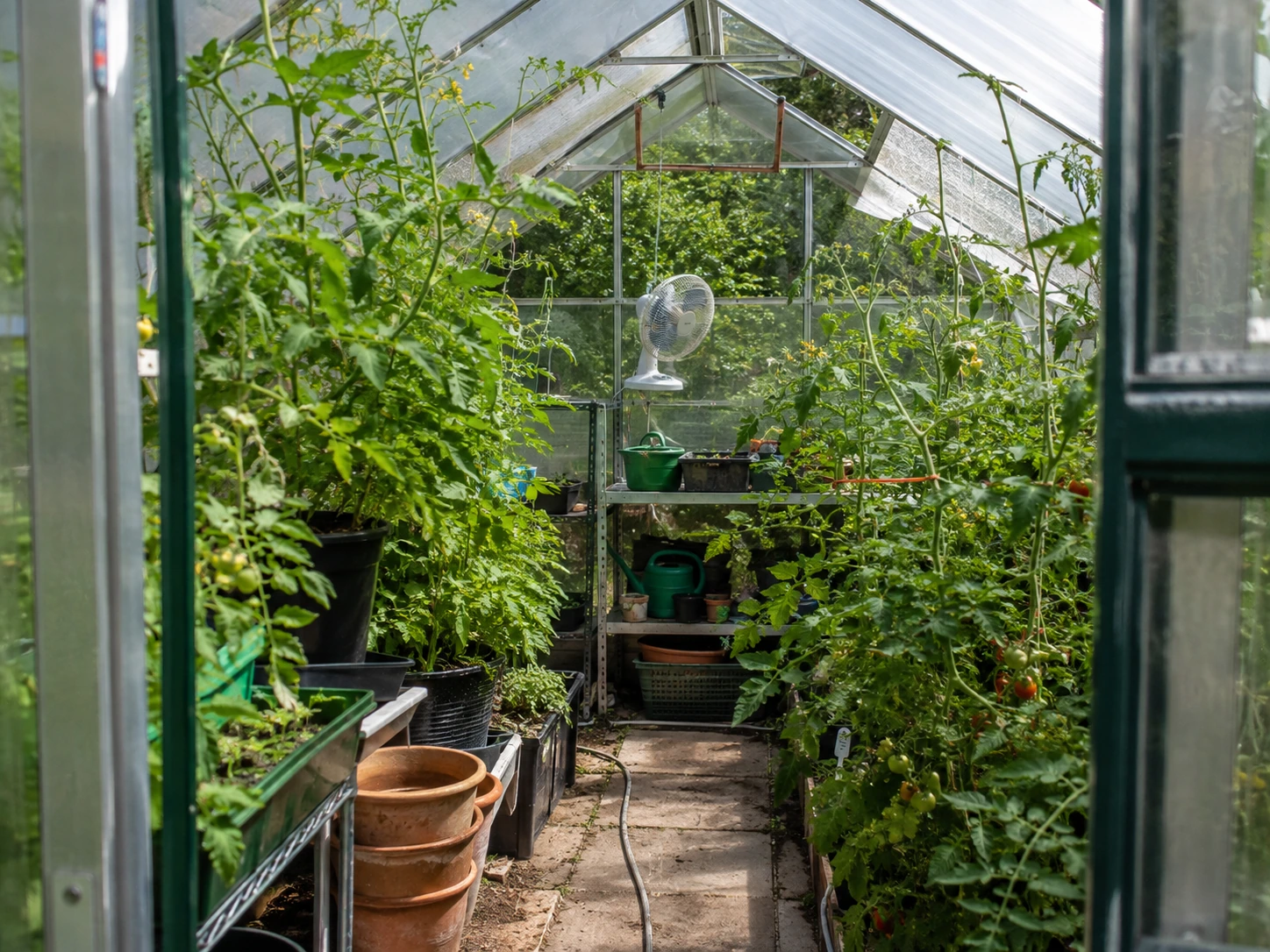
In a greenhouse, improve ventilation and airflow whenever conditions become hot and humid.
Avoid crowding plants so tightly that air cannot move through the foliage.
If you live in a naturally humid climate, there is no need to obsess over an exact humidity percentage. Concentrate on the things you can control: airflow, temperature, watering and overall plant health.
6. Too much nitrogen
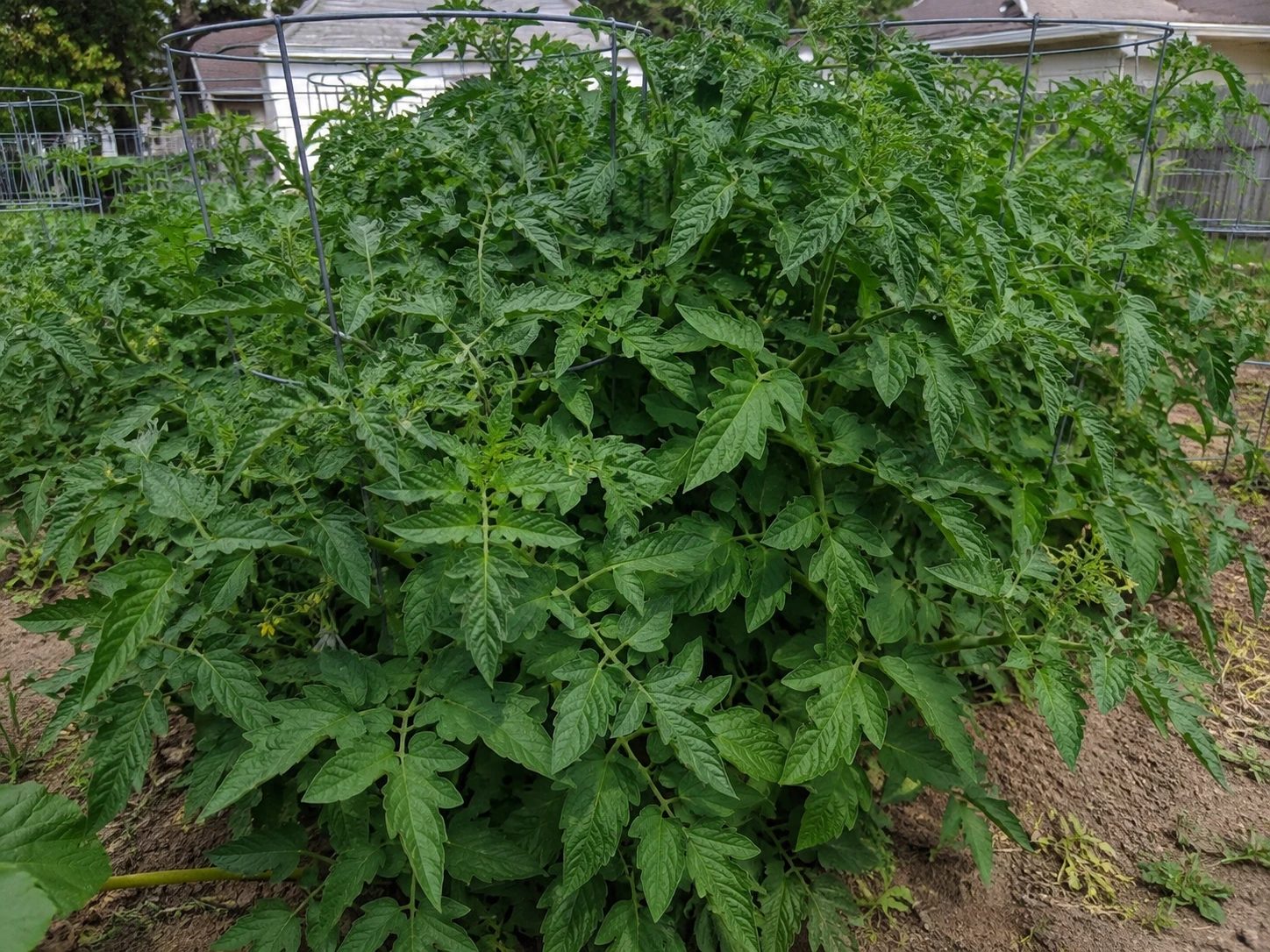
A huge, dark-green tomato plant is not always a productive tomato plant.
Nitrogen encourages leafy vegetative growth. If tomatoes receive excessive nitrogen, they can put too much energy into stems and leaves instead of flowering and fruiting normally.
Signs that excessive nitrogen may be contributing include:
- Very lush, dark-green foliage
- Rapid leafy growth
- Thick stems
- Few fruits despite a large plant
- Heavy feeding with a high-nitrogen fertilizer
This does not mean tomatoes should receive no nitrogen. They need nitrogen for healthy growth.
The problem is imbalance.
What to do
Do not add extra fertilizer simply because flowers are dropping.
If you have already been feeding heavily, stop and reassess before adding more.
Use a fertilizer intended for tomatoes and follow the manufacturer’s rate rather than assuming more feed will produce more fruit.
Be especially careful with high-nitrogen products intended mainly to encourage leafy growth.
There is also no need to chase blossom drop with large doses of phosphorus unless a soil test or another reliable diagnosis indicates a deficiency. Temperature, moisture and pollination are much more common explanations for sudden flower loss.
7. Not enough sunlight
Tomato plants need substantial light to support flowering and fruit development.
A plant in too much shade may survive and continue producing foliage, but it can struggle to support a good crop.
Aim for at least six hours of direct sunlight per day, with more often beneficial where the climate allows it.
Low-light problems are common on:
- Shaded balconies
- North-facing sites
- Gardens beside tall fences
- Plants crowded closely together
- Tomatoes shaded by trees or buildings
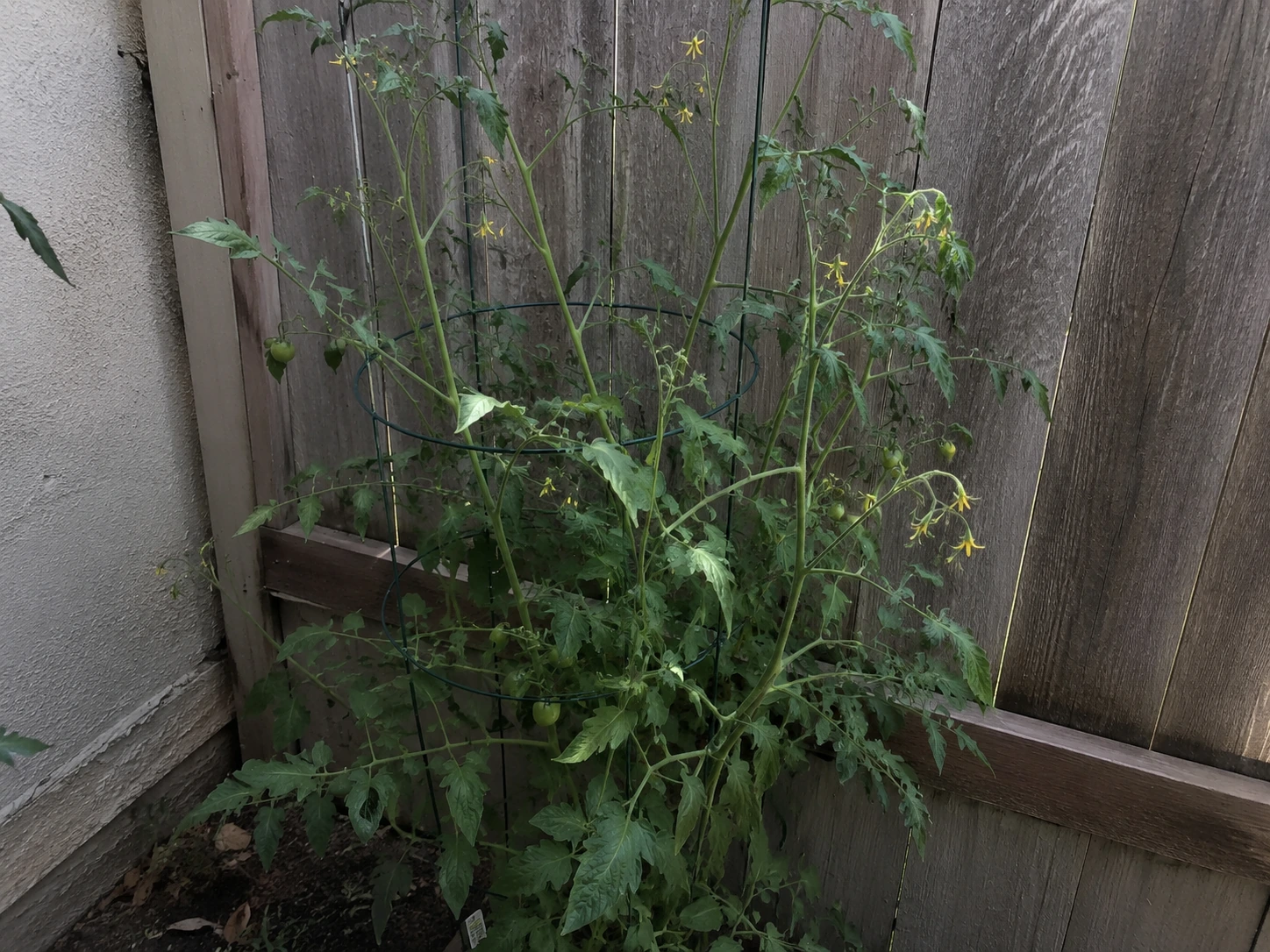
Before moving a container, observe the site over an entire day. A place that looks sunny in the morning may be shaded for most of the afternoon.
If the plant is in the ground and cannot be moved, prune or reposition nearby non-tomato plants only where sensible to improve light and airflow. Avoid excessive pruning of the tomato itself merely to expose flowers.
8. The plant is already carrying a heavy crop
Sometimes blossom drop happens because the tomato plant is already supporting many developing fruits.
A plant has limited resources. If it is carrying a large crop while also dealing with heat, limited water or another stress, some newer flowers may fail to develop.
This is not necessarily a sign that you need to intervene.
Look at the whole plant. If it is healthy and already loaded with tomatoes, losing a portion of the newest blossoms is much less worrying than flower drop on a plant that has set no fruit at all.
Continue providing steady water, appropriate feeding and good growing conditions.
9. Pests, disease or other stress
Blossom drop itself is usually a physiological problem rather than an infectious disease, but a plant weakened by another problem can start shedding flowers.
Inspect the plant for:
- Severe leaf spotting
- Widespread yellowing
- Wilting that does not recover after watering
- Damaged flower clusters
- Heavy aphid, whitefly or thrips infestations
- Stem damage
- Root problems
- Signs of serious disease
If the foliage is yellowing as well as the flowers dropping, use our guide to why tomato leaves turn yellow to narrow down the cause.
Do not immediately spray a tomato plant simply because flowers are falling. If there are no signs of pests or disease, environmental stress is a much more likely place to start.
How to stop tomato flowers from falling off
You cannot force every tomato flower to set fruit, and you cannot control the weather. What you can do is remove avoidable stresses.
1. Keep the soil evenly moist
Check plants regularly during warm weather, especially tomatoes in pots.
Do not wait until the plant is severely wilted before watering, and avoid repeatedly alternating between bone-dry soil and saturation.
2. Mulch around the root zone
Organic mulch helps slow water loss and reduces rapid changes in soil temperature and moisture.
Keep mulch slightly away from the main stem rather than piling it against the plant.
3. Avoid excessive fertilizer
Use tomato fertilizer according to the label and avoid repeatedly adding high-nitrogen feed.
If the plant is already extremely lush and green, extra fertilizer is unlikely to be the answer.
4. Improve pollination
On calm days or in sheltered growing spaces, gently shake the plant or flower clusters to release pollen.
You do not need to touch every individual flower.
5. Improve greenhouse airflow
Vent greenhouses on warm days. Good airflow helps control temperature and humidity and also provides movement around the flowers.
6. Protect plants during temperature extremes
Temporary shade can help during severe heat, while fleece or another appropriate cover can protect plants during unusually cold nights.
Do not leave protective covers on if they cause the plant to become even hotter.
7. Give tomatoes enough light
Where possible, grow tomatoes in a position receiving at least six hours of direct sunlight.
If a container is permanently shaded, moving it can sometimes make a dramatic difference.
8. Keep the plant generally healthy
Deal with serious pests and diseases promptly, give roots enough room and avoid unnecessary stress.
Plants in undersized containers can dry extremely quickly and become stressed during flowering. If you are growing tomatoes in pots, make sure the container is suitable for the size and type of plant.
Should you manually pollinate tomato flowers?
You can, but many outdoor tomato plants do not need it.
If the plant is outdoors in a reasonably breezy location and already setting some tomatoes, natural movement is probably doing the job.
Manual pollination is more useful when:
- Plants are in a greenhouse
- Plants are on a very sheltered balcony
- Air is unusually still
- You see many flowers but almost no fruit
- Natural pollinator activity is low
It is important to understand that hand pollination cannot overcome severe temperature stress.
If pollen has become nonviable because conditions are too hot or too cold, vibrating the flower will not magically make it fertile.
Treat manual pollination as a useful aid, not a guaranteed cure.
How to hand-pollinate tomato flowers
Tomato hand-pollination is simple.
Method 1: Gently shake the plant
Hold the main support or a flower-bearing branch and gently shake it for a few seconds.
The aim is vibration, not force.
Method 2: Tap the flower cluster
Lightly tap the stem just behind an open cluster of flowers.
This can be enough to release pollen.
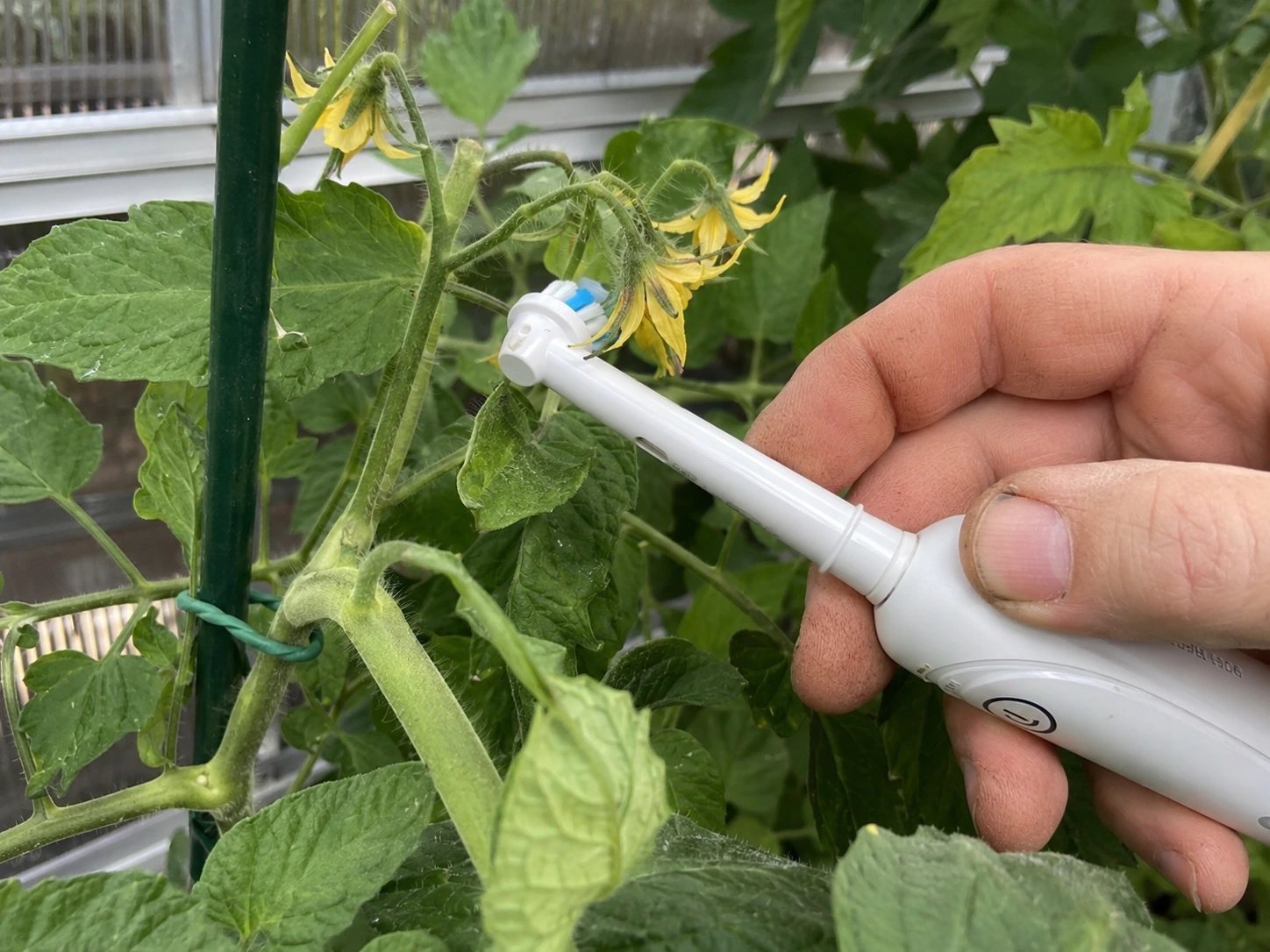
Method 3: Use an electric toothbrush
An electric toothbrush can imitate the vibration produced by a bumblebee.
Switch it on and briefly touch the back or stem of the flower cluster, not the delicate centre of the flower.
You may sometimes see a small puff of pollen.
There is no benefit in aggressively vibrating the flowers or doing it constantly. A gentle vibration of open flowers during suitable conditions is enough.
Do tomato flowers grow back after falling off?
A flower that has already dropped will not reattach or grow back.
However, a healthy tomato plant can produce many new flowers.
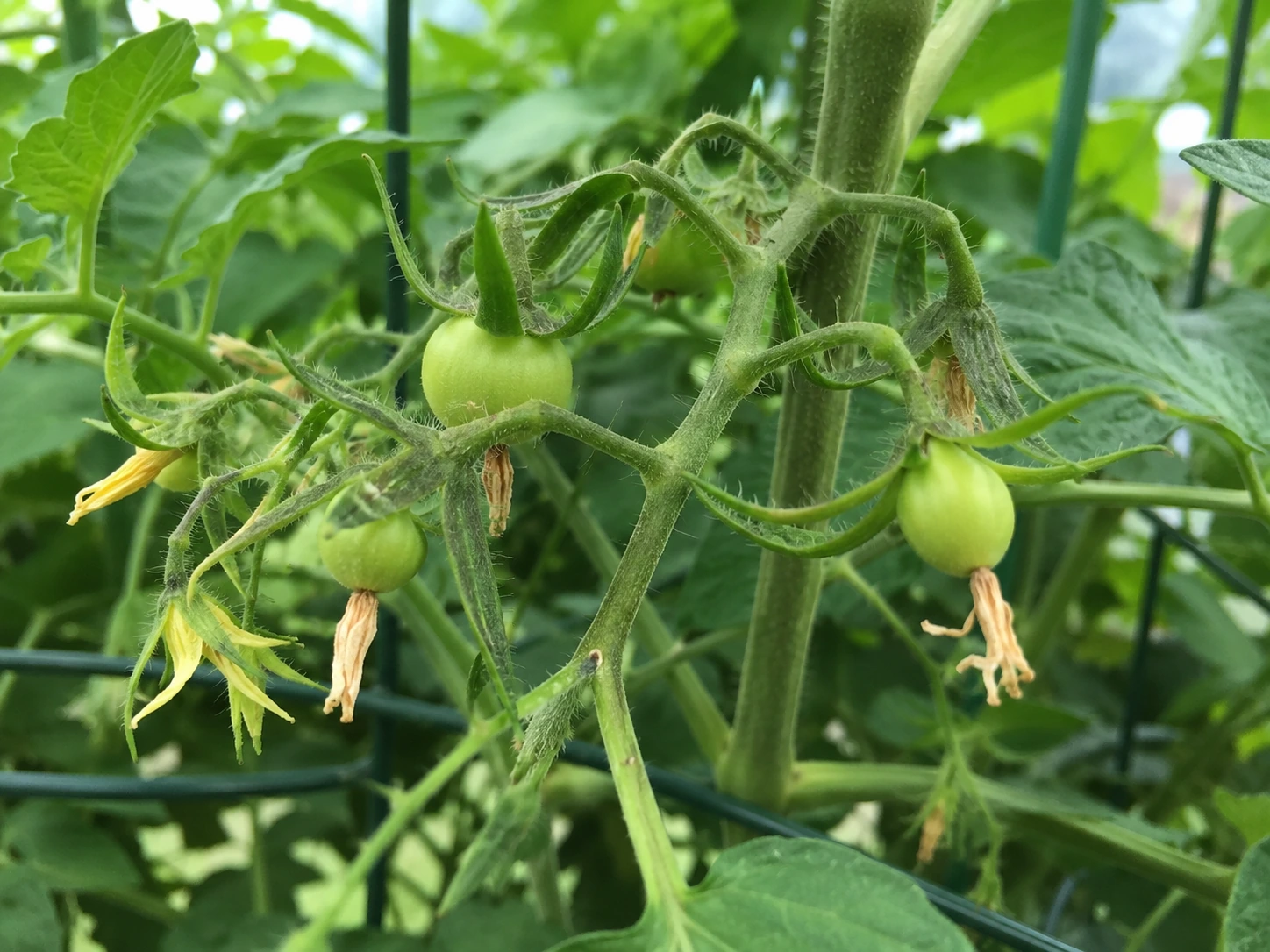
This is why temporary blossom drop during a heatwave or cold spell does not necessarily mean your harvest is ruined.
Indeterminate tomatoes continue growing and producing flower clusters throughout much of the season. Once conditions improve, later flowers can pollinate successfully and become fruit.
Determinate tomatoes have a more concentrated flowering and fruiting period, so prolonged bad conditions during flowering can have a larger effect on their final crop.
Are some tomato varieties better at setting fruit in hot weather?
Yes. Tomato varieties differ in their ability to set fruit under difficult temperatures.
Gardeners in consistently hot climates can look for varieties described as heat-set, hot-set or heat-tolerant.
Some extension sources recommend heat-adapted cultivars such as:
- Solar Fire
- Solar Set
- Florida 91
- Sunmaster
- Sunchaser
Availability varies by country, so choose varieties that are well suited to your local climate.
Smaller-fruited tomatoes can also be useful in challenging conditions. Cherry and grape tomatoes often give home gardeners a more dependable crop than very large-fruited varieties when conditions are less than ideal.
The most important point is to choose tomatoes adapted to your growing season, not simply the variety with the largest fruit or most impressive photograph.
What if the flowers stay on but no tomatoes appear?
Give them a little time first.
A successfully pollinated flower does not instantly become an obvious tomato. The petals fade, and the small ovary at the base begins to enlarge.
If flowers repeatedly remain for a while, then yellow and fall without any swelling at the base, fruit set is failing.
Check temperature first, followed by soil moisture, pollination, feeding and light.
Why do tomato flowers turn yellow and fall off?
The flowers themselves are naturally yellow. What is more useful diagnostically is the small stem behind the flower.
When an unpollinated or aborted tomato flower is about to drop, this stem can yellow before separating from the plant.
If many flower stems are yellowing at once, look for recent temperature extremes or conditions that may have interfered with pollination.
Why are my tomato flowers drying up?
Dry, brown or shrivelled tomato flowers that never develop fruit are often simply aborted blossoms.
Hot weather, cold nights, drought stress and failed pollination are common causes.
If only the petals are drying but a tiny green fruit is swelling behind them, that is normal. The old flower parts will eventually fall away while the tomato continues growing.
Why are my tomato flowers falling off in hot weather?
Heat can interfere with successful pollination and fertilization.
This is especially common when temperatures remain high for several days and nights do not cool enough.
Keep the plant adequately watered, mulch the root zone and provide temporary afternoon shade where extreme heat is a recurring problem.
Once the weather moderates, healthy plants often begin setting fruit again.
Why are my tomato flowers falling off in a greenhouse?
Greenhouses can combine several blossom-drop triggers at once:
- High daytime temperatures
- Warm nights
- High humidity
- Limited air movement
- Fewer pollinating insects
Ventilation should be your first priority during warm conditions.
You can also gently shake flower clusters to assist pollination when the air is still.
Why are my tomato flowers falling off in pots?
Container tomatoes are particularly prone to rapid moisture and temperature changes.
A small pot can become very hot and dry in direct sun. The plant may appear fine in the morning and become severely stressed by afternoon.
Use a sufficiently large container, make sure it drains properly and monitor the compost closely during hot weather.
If container growing is causing repeated plant stress, our guide to how to grow tomatoes in pots covers pot size, drainage, feeding, support and general care.
Why are flowers falling off before producing tomatoes?
The flower probably failed to complete pollination and fertilization, or the plant aborted it because growing conditions were too stressful.
Look first at:
- Recent daytime and nighttime temperatures
- Soil moisture
- Whether flowers receive vibration from wind or pollinators
- Fertilizer use
- Sunlight
- Overall plant health
Those six checks solve the mystery in many home gardens.
Frequently asked questions
Is blossom drop a tomato disease?
Usually, no.
Tomato blossom drop is generally a physiological response to growing conditions, not an infectious disease.
Diseases and pests can indirectly cause flowers to drop by weakening the plant, but temperature, moisture and pollination problems are much more common causes.
Should I remove flowers that are turning brown?
You usually do not need to.
An aborted flower will normally dry and fall on its own. Removing it will not make the plant redirect enough energy to noticeably improve the crop.
Concentrate on correcting the underlying growing conditions.
Does too much water make tomato flowers fall off?
It can.
Constantly waterlogged soil reduces oxygen around the roots and can cause root stress. On the other hand, allowing the plant to become severely dry can also cause blossom drop.
Aim for evenly moist, well-drained soil.
Does overwatering stop tomatoes from fruiting?
Severe or prolonged overwatering can stress roots and contribute to poor flowering or fruit set.
But if a tomato plant suddenly stops setting fruit during very hot weather, temperature may be the more immediate cause.
Look at all the growing conditions rather than diagnosing the problem from watering alone.
Should I use bloom booster fertilizer when flowers are falling?
Not automatically.
Blossom drop is often caused by temperature, water stress or pollination failure, none of which will be corrected by adding extra phosphorus.
Use an appropriate tomato fertilizer at the recommended rate and avoid excessive nitrogen. If you suspect a genuine nutrient deficiency, a soil or growing-medium test is more useful than guessing.
Will Epsom salt stop tomato blossom drop?
Epsom salt is not a general treatment for blossom drop.
It supplies magnesium and sulfur, but adding it does not fix heat stress, poor pollination, inconsistent watering or excessive nitrogen.
Only use magnesium supplements when there is a good reason to believe the plant or soil is deficient.
How long after flowering do tomatoes appear?
After successful pollination, the tiny ovary behind the flower begins to enlarge. You may notice a small green tomato within several days, although growth rate depends strongly on temperature, variety and growing conditions.
Can a tomato plant have too many flowers?
A healthy plant can produce more flowers than it ultimately carries to mature fruit.
It is normal for some blossoms to fail, particularly when the plant already has a substantial crop or experiences temporary stress.
The concern is when most or all flowers repeatedly fall without setting tomatoes.
Final takeaway
If your tomato flowers are falling off, start with the most likely causes before reaching for sprays or extra fertilizer.
Check the weather first. Very hot days, warm nights and cold nights can all interfere with tomato fruit set.
Then check the soil. Keep moisture reasonably consistent without leaving the roots waterlogged.
If the plant is growing in a greenhouse, enclosed patio or sheltered balcony, give the open flowers a gentle shake to assist pollination and improve airflow where possible.
Finally, avoid excessive nitrogen and make sure the plant receives enough sunlight.
Most importantly, remember that blossom drop is often temporary. A healthy tomato plant can continue producing new flowers, and once the stressful conditions pass, those later blossoms may set fruit normally.
A few fallen flowers are not the end of your tomato harvest. Focus on keeping the plant healthy and stable, and give the next cluster the best possible conditions to succeed.