Why Are My Tomato Leaves Turning Yellow? 21 Causes and Easy Fixes
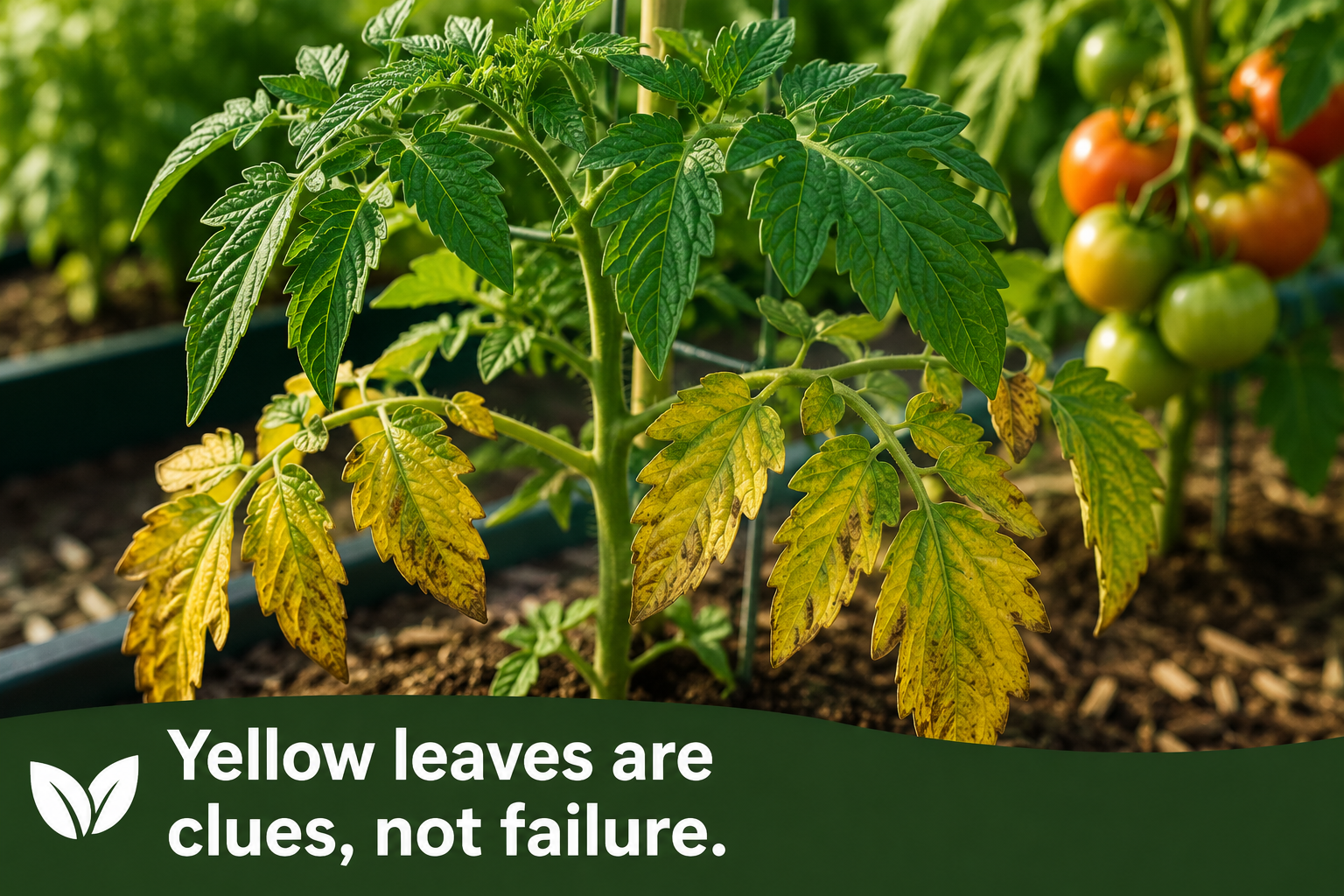
Yellow tomato leaves can look worrying, but they are not always bad news.
Sometimes a yellow leaf is just an old leaf retiring. Sometimes it is a thirsty plant asking for water. Other times, it is a warning sign that something more serious is happening with the roots, soil, pests, or disease.
The good news? Your tomato plant is giving you clues.
If you look at where the yellowing starts, what pattern it makes, and how the rest of the plant looks, you can usually work out what is wrong and what to do next.
This guide will help you diagnose yellow tomato leaves step by step, so you can stop guessing and start fixing.
If your tomatoes are growing in containers, it also helps to understand the basics of how to grow tomatoes in pots, because pot size, compost, drainage, watering, and feeding all affect leaf colour.
Quick Answer: Why Are My Tomato Leaves Turning Yellow?
Tomato leaves usually turn yellow because of watering problems, natural ageing, transplant shock, nutrient deficiencies, pests, poor drainage, temperature stress, or disease.
If only the lowest old leaves are yellow and the rest of the plant looks healthy, it may be normal. If many leaves are yellowing, wilting, spotting, curling, or dying quickly, the plant needs closer attention.
The most common causes are:
- Overwatering
- Underwatering
- Lack of nutrients
- Poor drainage
- Old lower leaves dying naturally
- Transplant shock
- Fungal diseases such as early blight or Septoria leaf spot
- Pests such as aphids, whiteflies, or spider mites
Quick Diagnosis Table
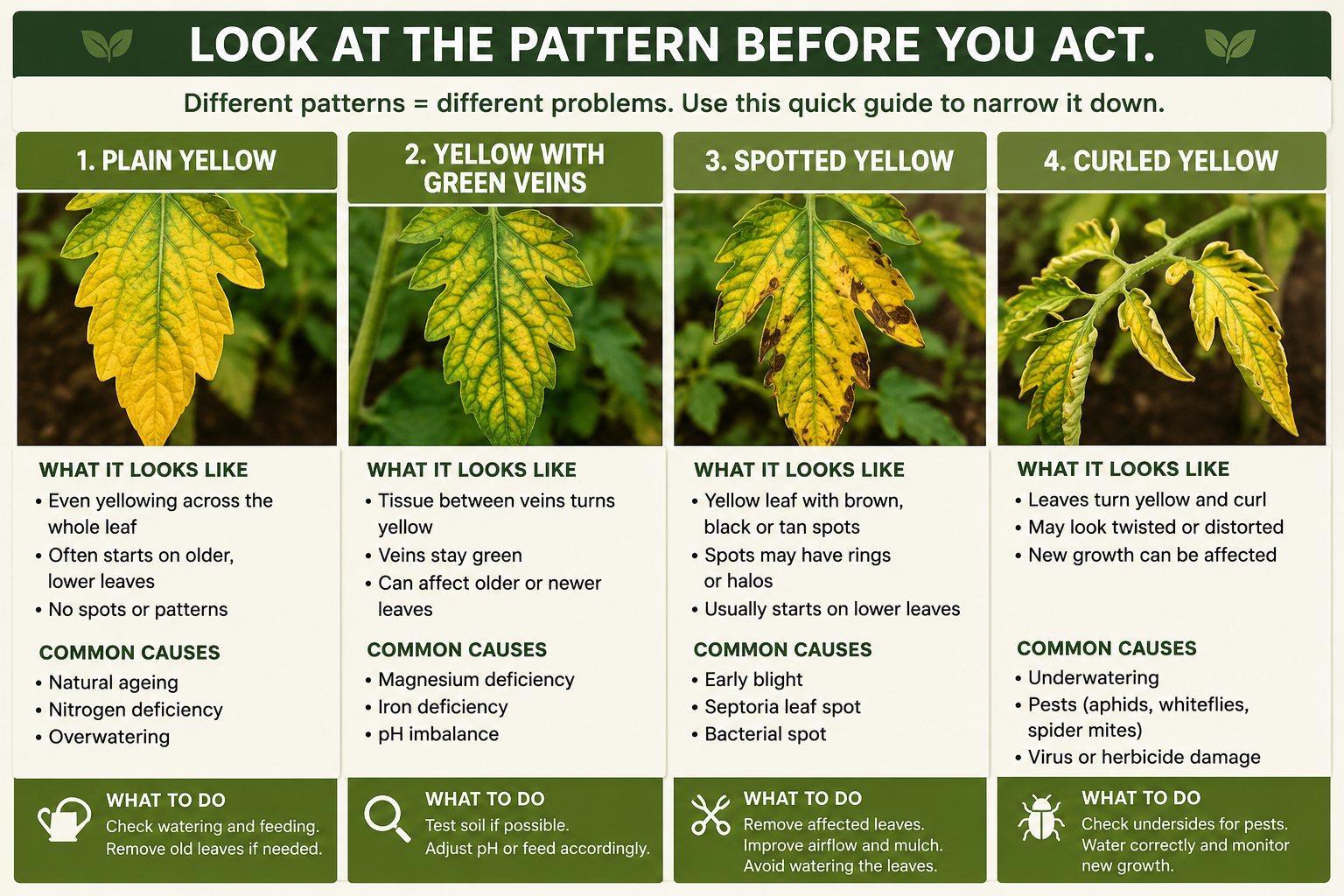
Use this first. Instead of guessing, match what you see on the plant with the most likely cause.
| What you see | Most likely cause | What to do first |
|---|---|---|
| Only the lowest old leaves are yellow | Natural ageing | Remove old yellow leaves and check that the top growth is still healthy. |
| The seedling’s first tiny leaves turn yellow | Cotyledons naturally dying | Do nothing if the true tomato leaves above them look healthy. |
| Leaves turn yellow soon after planting outside | Transplant shock | Water consistently and give the plant one to two weeks to settle. |
| Yellow leaves with soggy soil | Overwatering or poor drainage | Let the soil dry slightly and make sure water can drain away. |
| Yellow, crispy leaves with dry soil | Underwatering | Water deeply at the base until moisture reaches the root zone. |
| Yellow leaves with green veins | Magnesium, iron, or pH issue | Check your feeding routine and consider testing the soil pH. |
| Whole plant looks pale and older leaves yellow first | Nitrogen deficiency | Feed with a balanced fertiliser or suitable tomato feed. |
| Yellow leaf edges turning brown | Potassium deficiency | Use tomato feed once flowers and fruit begin forming. |
| Plant is pale, leggy, and sitting in shade | Not enough sunlight | Move potted tomatoes to a sunnier spot if possible. |
| Yellow leaves with brown target-like spots | Early blight | Remove affected leaves, improve airflow, and avoid wetting leaves. |
| Tiny spots with yellowing lower leaves | Septoria leaf spot | Remove infected leaves and mulch the soil to reduce splashback. |
| Yellow leaves with sticky residue or tiny insects | Aphids or whiteflies | Check underneath the leaves and wash pests off with water. |
| Yellow stippling with fine webbing | Spider mites | Spray the undersides of leaves and use insecticidal soap if needed. |
| One side of the plant wilts and yellows | Fusarium or Verticillium wilt | Remove badly affected plants and use resistant varieties next time. |
| Twisted, yellow, strange-looking new growth | Herbicide damage or virus | Check for chemical exposure, contaminated compost, or unusual distortion. |
First: Do Not Panic
A few yellow leaves do not automatically mean your tomato plant is dying.
Tomatoes are fast-growing plants. They are constantly moving energy around: making roots, stems, leaves, flowers, and fruit. As the plant matures, some older leaves may naturally fade and die.
The important question is:
Is the yellowing limited and slow, or spreading fast?
If it is only a few old leaves at the bottom, your plant may be fine. If the yellowing is spreading upward, comes with spots, wilting, curling, sticky residue, or stunted growth, then it is time to investigate.
Think of yellow leaves as a message, not a disaster.
1. Natural Ageing: Old Lower Leaves Turning Yellow
This is one of the most harmless reasons for yellow tomato leaves.
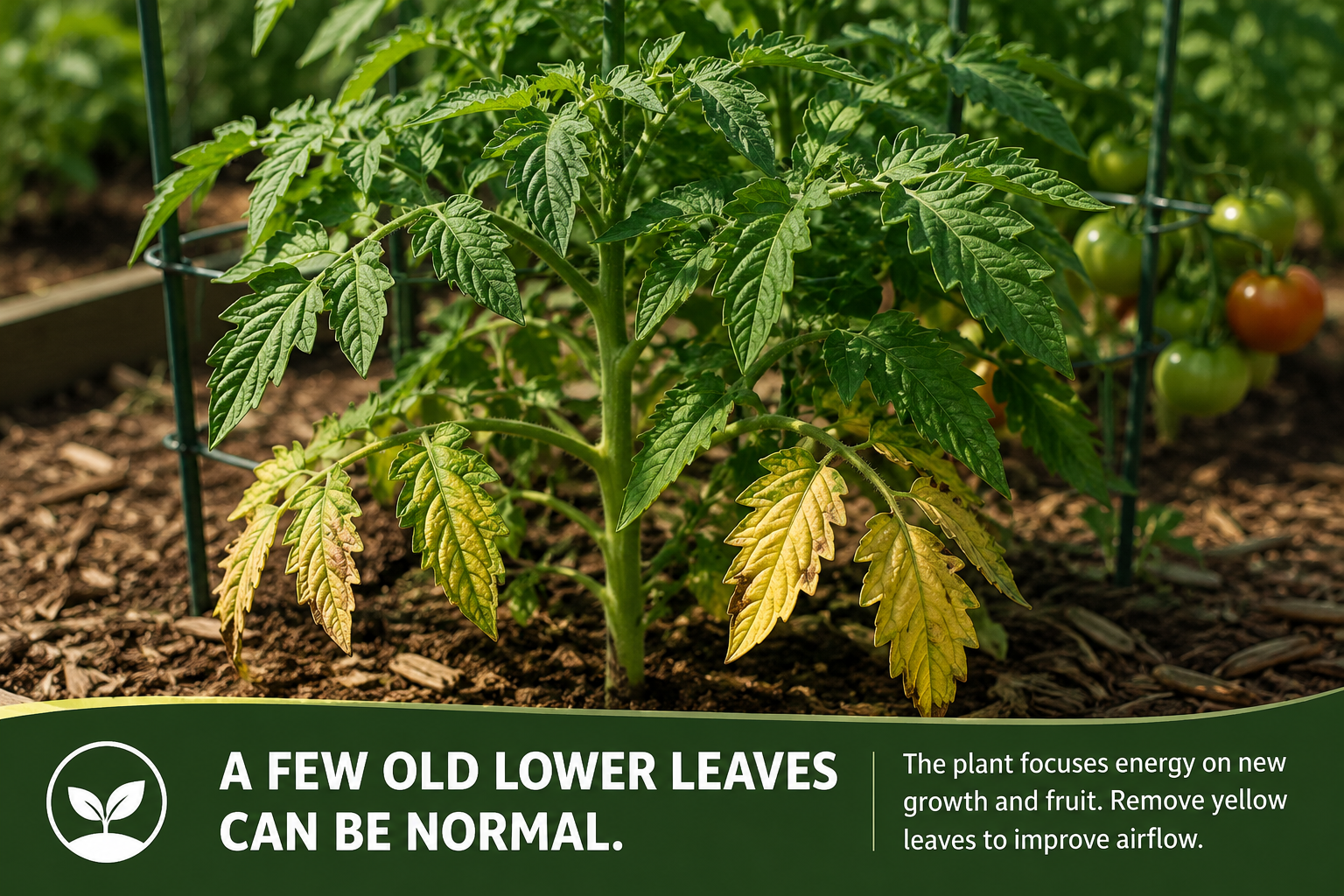
As tomato plants grow taller, the lowest leaves often receive less sunlight. The plant may stop investing energy in those older leaves and focus instead on new growth, flowers, and fruit.
What It Looks Like
- Yellowing starts at the very bottom of the plant
- Only a few older leaves are affected
- The top of the plant looks green and healthy
- The plant is still growing, flowering, or fruiting normally
What to Do
Remove the yellow lower leaves with clean scissors or by gently pinching them off.
This can actually help the plant because it improves airflow around the base and stops old leaves from touching damp soil.
When to Worry
If yellowing keeps moving up the plant, or if the leaves also have spots, wilting, or brown patches, it may not be natural ageing.
2. Seed Leaves Turning Yellow on Young Tomato Plants
If your tomato plant is still a young seedling, the first tiny leaves may turn yellow and drop off. These are called cotyledons, or seed leaves.
They help the seedling get started, but once the plant grows proper tomato leaves, the cotyledons are no longer needed.
What It Looks Like
- The lowest tiny seed leaves turn yellow
- The true leaves above them look green
- The seedling continues growing normally
What to Do
Usually, nothing.
If the true leaves look healthy, this is normal. Your seedling is simply moving on to the next stage of growth.
3. Transplant Shock
Tomatoes can sulk after being moved.
If you recently planted your tomatoes outside, moved them into bigger pots, or bought them from a garden centre, yellow leaves may be caused by transplant shock.
The plant is adjusting to new light, wind, temperature, compost, and watering conditions.
What It Looks Like
- Yellowing appears soon after transplanting
- Leaves may droop slightly
- Growth slows for a few days
- The plant usually still looks alive and recoverable
What to Do
Keep the plant evenly watered, but not soggy.
Protect it from harsh wind, strong midday sun, and cold nights while it settles. If you are moving indoor-grown seedlings outdoors, harden them off gradually over 7–10 days before planting them permanently outside.
Most tomato plants recover from mild transplant shock within a week or two.
4. Overwatering
Overwatering is one of the most common reasons tomato leaves turn yellow.
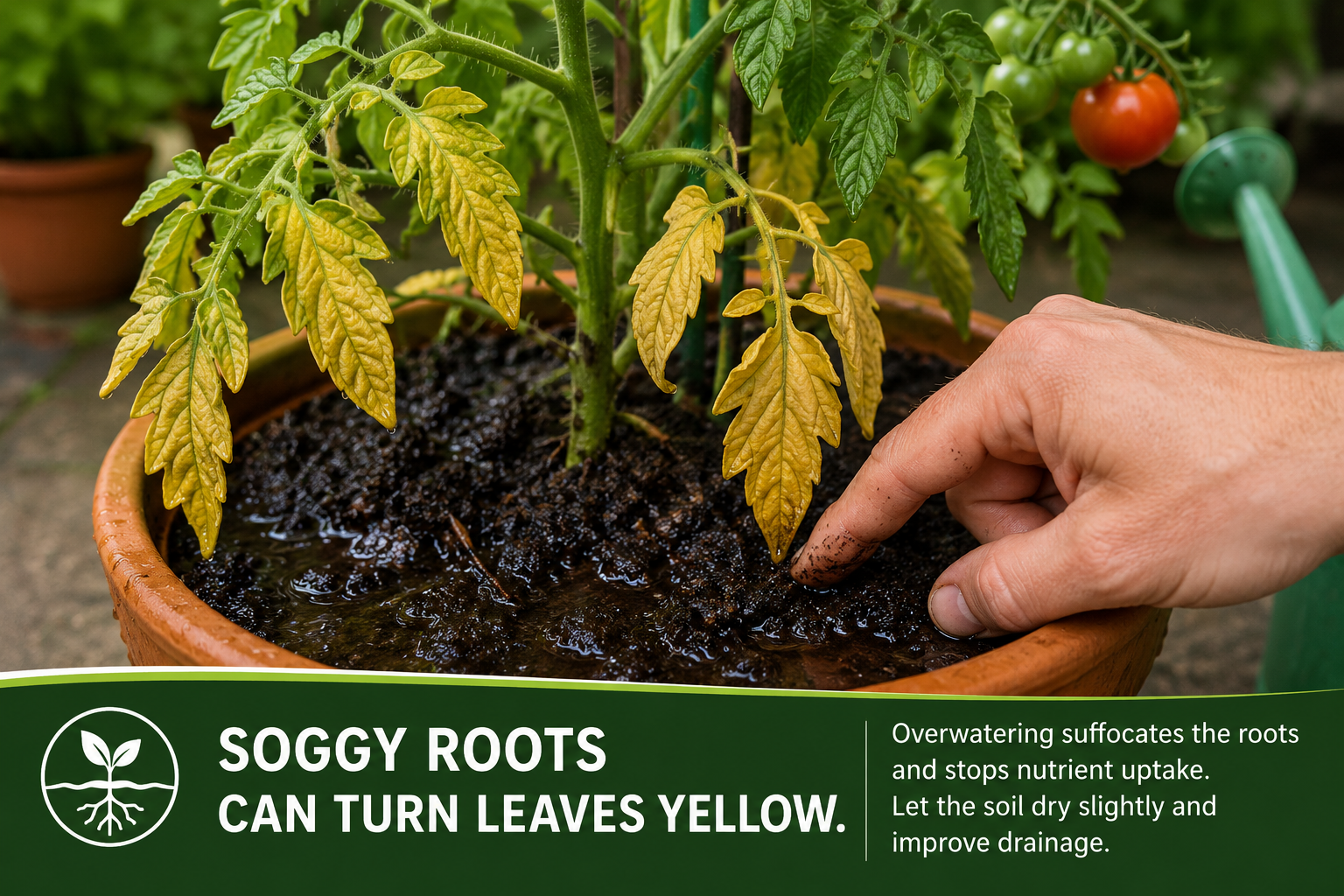
Tomato roots need water, but they also need oxygen. When soil stays constantly wet, the roots can suffocate. Damaged roots cannot take up nutrients properly, so the leaves begin to yellow.
What It Looks Like
- Leaves turn yellow and may droop
- Soil feels wet or heavy
- The pot may smell sour or stale
- Lower leaves often yellow first
- Plant looks tired even though it has been watered
How to Check
Push your finger about 5cm into the soil or compost.
If it feels wet and cold, wait before watering again. If the pot has no drainage holes, water may be trapped around the roots.
What to Do
Let the soil dry slightly before watering again.
Make sure containers have drainage holes. If the plant is in a pot, lift it slightly or place it on pot feet so water can escape. Avoid letting the pot sit in a saucer full of water.
For future watering, aim for evenly moist, not constantly wet.
Container-grown tomatoes are especially easy to overwater or underwater, so make sure your setup follows the basics in our guide to growing tomatoes in pots.
5. Underwatering
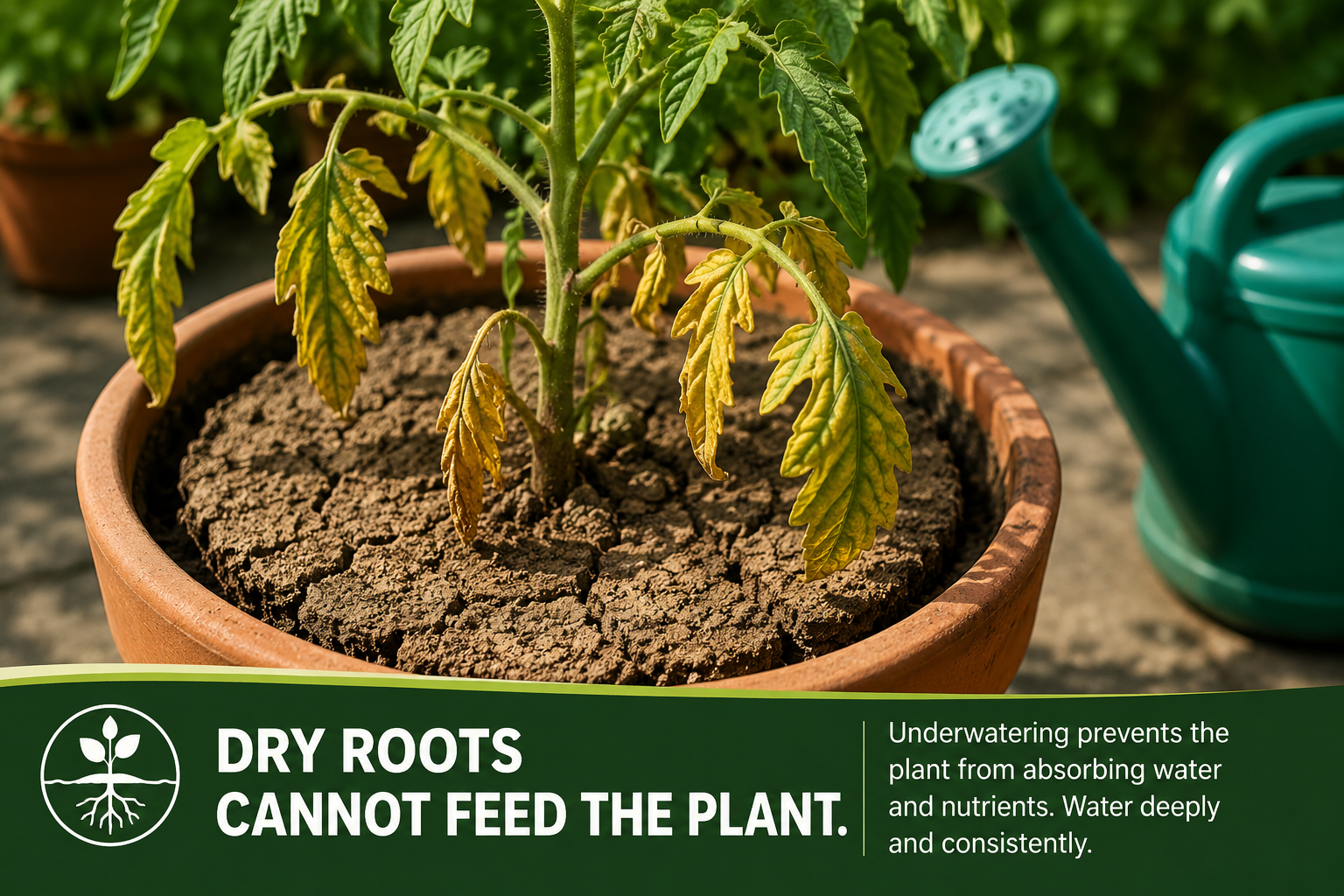
Underwatering can also cause yellow leaves, especially in pots and grow bags.
When soil becomes too dry, the plant cannot take up water or nutrients. Leaves may turn pale, yellow, crispy, or curled.
What It Looks Like
- Leaves look dry, thin, or crispy
- Soil pulls away from the edge of the pot
- Plant wilts during the day
- Leaves may recover slightly after watering
- Fruit may split after sudden heavy watering
What to Do
Water deeply at the base of the plant until water reaches the root zone.
For potted tomatoes, water until excess water drains from the bottom of the pot. In hot weather, check pots every day. Large tomato plants in containers may need watering once or even twice daily during heatwaves.
Helpful Tip
Do not give little splashes of water every day. That encourages shallow roots.
Water deeply, then let the top few centimetres dry slightly before watering again.
6. Poor Drainage and Compacted Soil
Sometimes the problem is not how often you water. It is where the water goes.
If the soil is heavy, compacted, or poorly drained, tomato roots can struggle even if your watering routine seems sensible.
This is especially common in pots filled with garden soil instead of proper potting compost.
What It Looks Like
- Leaves yellow even with regular watering
- Soil stays wet for a long time
- Plant growth is slow
- Roots may look brown or weak
- The plant looks generally unhappy
What to Do
For pots, use good-quality peat-free potting compost or tomato compost. Avoid heavy garden soil in containers.
For garden beds, improve drainage with organic matter and avoid planting tomatoes in low, waterlogged areas.
Healthy roots are the secret engine of a healthy tomato plant.
For a full container setup, including pot size, compost, drainage, and support, read our beginner guide on how to grow tomatoes in pots.
7. Nitrogen Deficiency
Tomatoes are hungry plants. If they do not get enough nutrients, the leaves can turn yellow.
Nitrogen is especially important for leafy green growth. When nitrogen is low, older leaves often turn pale green or yellow first.
What It Looks Like
- Older lower leaves turn evenly yellow
- Whole plant may look pale
- Growth may be slow or weak
- Stems may look thin
- Plant lacks that rich green tomato colour
What to Do
Feed with a balanced fertiliser or a tomato feed according to the label instructions.
If the plant is in a pot, feeding matters even more because nutrients wash out gradually as you water.
Do Not Overdo It
Too much nitrogen can create a huge leafy plant with fewer flowers and fruit.
The goal is not to force-feed the tomato. The goal is steady, balanced growth.
8. Magnesium Deficiency
Magnesium helps plants make chlorophyll, the green pigment leaves need for photosynthesis.
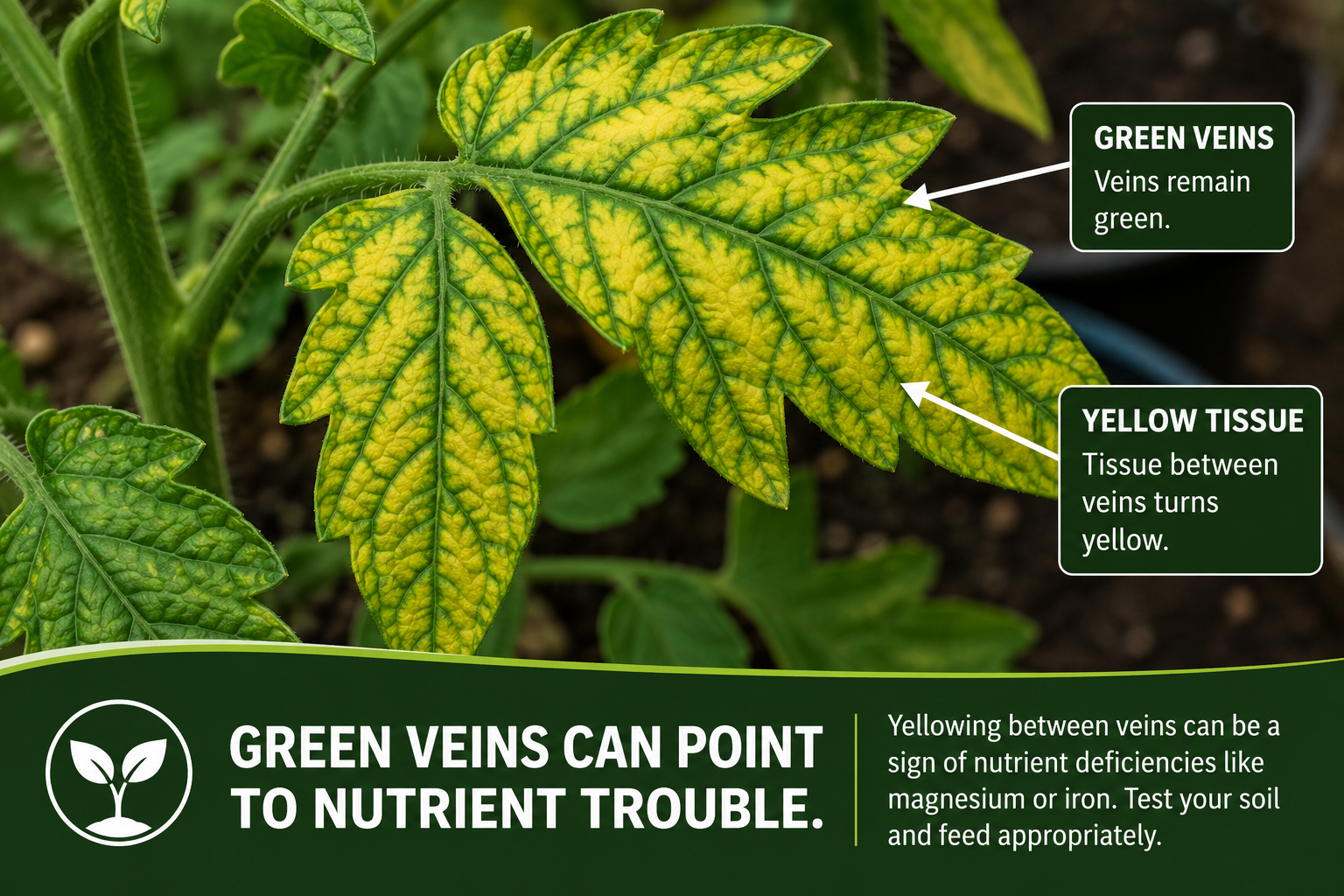
A magnesium deficiency often creates a very specific yellowing pattern called interveinal chlorosis. That simply means the leaf turns yellow between the veins while the veins stay green.
What It Looks Like
- Yellowing between the veins
- Veins stay greener than the rest of the leaf
- Older leaves are usually affected first
- Leaves may develop brown patches later
What to Do
Use a tomato fertiliser that includes magnesium or apply a magnesium supplement only if you are confident this is the problem.
Some gardeners use Epsom salts for magnesium deficiency, but do not use them as a random cure-all. Too much magnesium can interfere with other nutrients.
A soil test is the best way to know what is really missing.
9. Iron Deficiency and Soil pH Problems
Iron deficiency can also cause yellowing between the veins, but it usually appears on the youngest leaves first.
Often, the issue is not that the soil has no iron. The issue is that the plant cannot access it because the soil pH is too high or too low.
Tomatoes prefer slightly acidic soil.
What It Looks Like
- New top leaves turn yellow
- Veins may stay green
- Older lower leaves may remain greener
- Plant may look weak despite feeding
What to Do
Check the soil pH if possible.
Avoid repeatedly adding random fertilisers without knowing the cause. If pH is the problem, adding more feed may not fix it because the plant still cannot access the nutrients properly.
For containers, repotting into fresh tomato compost can sometimes solve the issue more simply than trying to correct old, tired compost.
10. Potassium Deficiency
Potassium helps tomatoes with flowering, fruiting, and overall plant strength.
A potassium deficiency can cause yellowing around leaf edges, followed by browning or scorching.
What It Looks Like
- Yellowing starts around leaf edges
- Edges may turn brown or dry
- Leaves may look scorched
- Fruit production may be poor
What to Do
Use a tomato feed once flowers and fruit begin forming.
Tomato feeds are usually designed to support flowering and fruiting, rather than just leafy growth.
11. Not Enough Sunlight
Tomatoes love sun. If they are in too much shade, they may become pale, leggy, and yellow.
What It Looks Like
- Plant stretches toward light
- Stems become long and weak
- Leaves look pale green or yellow
- Few flowers appear
- Fruit ripens slowly
What to Do
Move potted tomatoes to a sunnier place if possible.
Tomatoes usually need 6–8 hours of direct sunlight per day for strong growth and good fruiting.
If your garden is partly shaded, cherry tomatoes and smaller bush varieties are often more forgiving than large beefsteak types.
Balconies can be brilliant for tomatoes, but light, wind, heat, and watering need a little extra thought. Our guide to growing tomatoes on a balcony explains how to choose the best spot and keep plants healthy in small spaces.
12. Temperature Stress
Tomatoes like warmth, but they do not enjoy extremes.
Cold nights can stress tomato plants and slow nutrient uptake. Very hot weather can also cause wilting, yellowing, flower drop, and leaf scorch.
Cold Stress
Cold-stressed tomato leaves may look pale, yellow, purple-tinged, or water-soaked. Growth may pause until temperatures improve.
Heat Stress
In hot weather, tomato plants may droop during the afternoon. If they recover by evening or the next morning, they are usually coping. If they stay wilted and yellowing, they may be under serious stress.
What to Do
For cold weather, delay planting outdoors until nights are mild. Use fleece or move pots under cover if a cold night is forecast.
For heat, water deeply in the morning, mulch the soil surface, and give potted plants a little afternoon shade during extreme heat.
13. Edema: Too Much Water Inside the Leaves
Edema, also spelled oedema, happens when a plant takes up more water than it can release through its leaves.
This can happen in cool, cloudy, humid conditions, especially if soil stays too wet.
What It Looks Like
- Yellow patches or spots
- Small blisters or bumps
- Corky or rough patches on leaves
- Often appears after wet, dull weather
What to Do
Improve airflow, avoid overwatering, and give plants more space.
If tomatoes are in a greenhouse, open vents or doors during the day when possible.
14. Aphids, Whiteflies, and Spider Mites
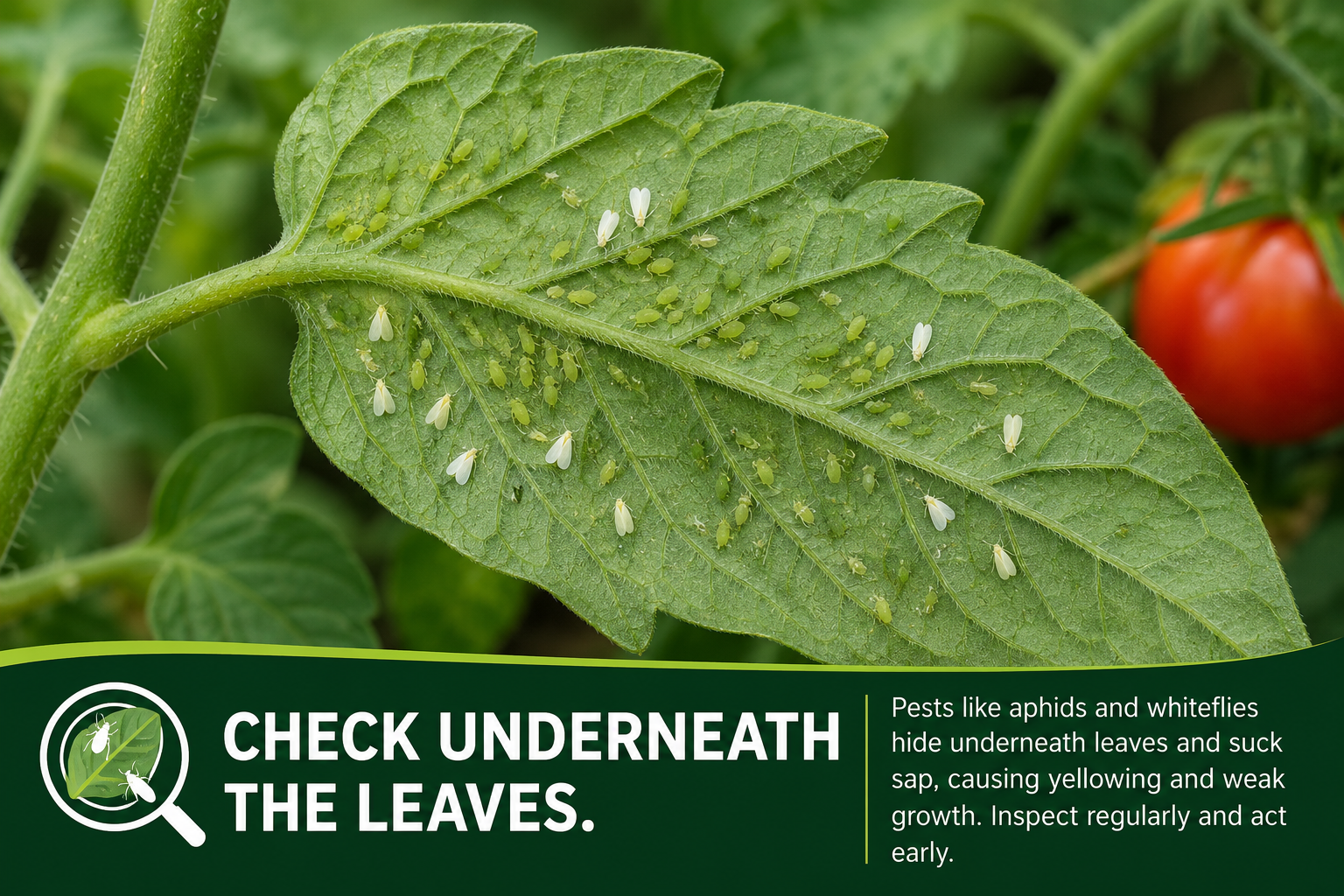
Tiny pests can suck sap from tomato leaves, causing yellowing, curling, and weak growth.
They often hide underneath leaves, so you may not notice them at first.
Aphids
Aphids are small, soft-bodied insects that cluster on new growth and leaf undersides.
They can cause:
- Yellowing leaves
- Curled leaves
- Sticky honeydew
- Distorted new growth
Whiteflies
Whiteflies are tiny white insects that flutter up when disturbed.
They can cause:
- Yellow leaves
- Weak growth
- Sticky residue
- Premature leaf drop
Spider Mites
Spider mites are tiny and difficult to see, but they leave clues.
Look for:
- Fine webbing
- Tiny yellow or white dots on leaves
- Dry, dusty-looking foliage
- Yellowing and leaf drop in hot, dry conditions
What to Do
Start simple.
Spray pests off with water, especially from the undersides of leaves. Remove badly infested leaves. Encourage beneficial insects such as ladybirds.
For heavier infestations, use insecticidal soap according to the label instructions.
Avoid using harsh broad-spectrum sprays unless truly necessary, because they can kill helpful insects too.
15. Early Blight
Early blight is a common tomato disease that often starts on the lower leaves.
Despite the name, it does not only appear early in the season.
What It Looks Like
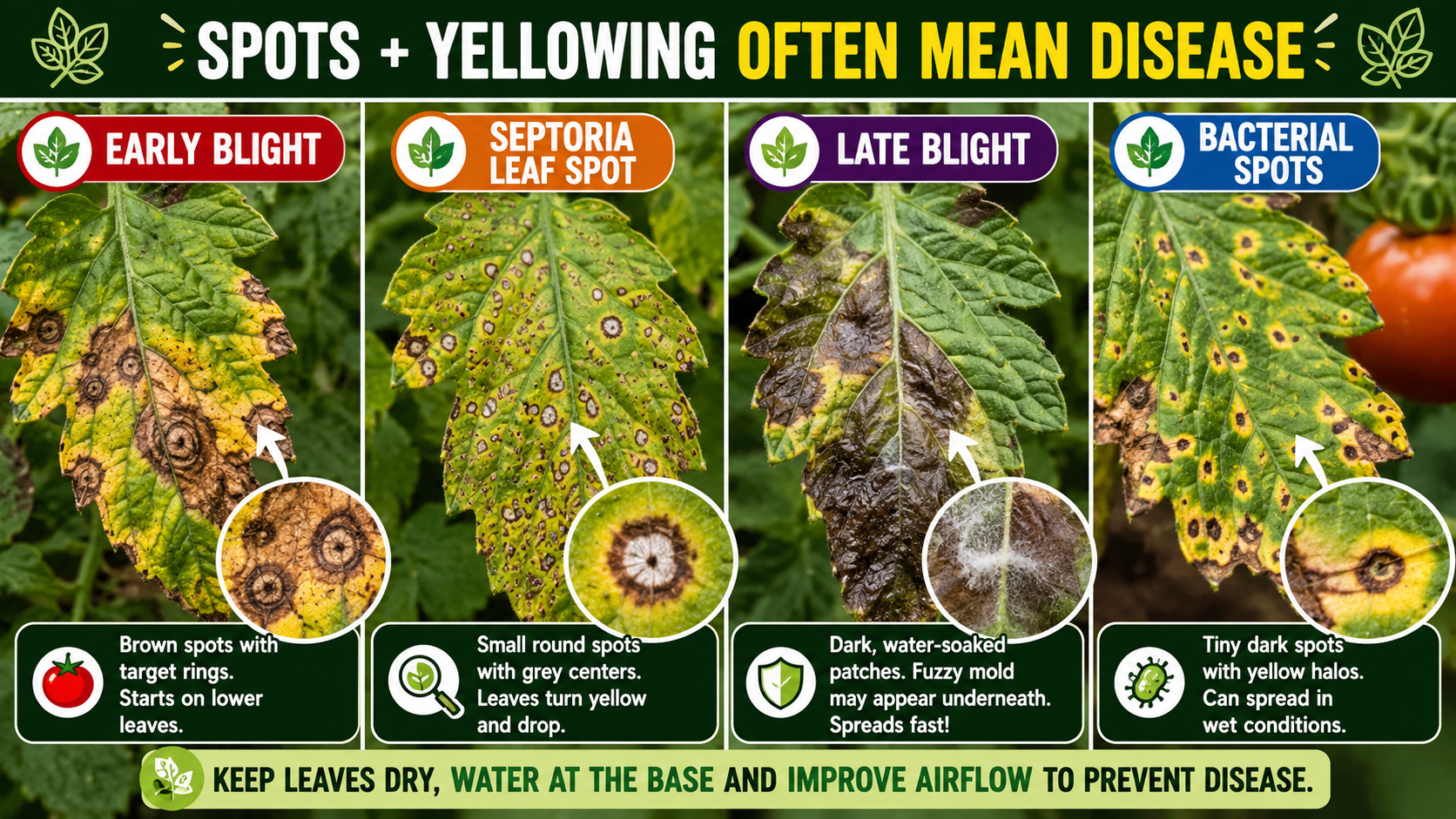
- Brown spots on lower leaves
- Spots may have target-like rings
- Yellowing around the spots
- Leaves eventually turn yellow, brown, and drop
- Disease moves upward over time
What to Do
Remove affected lower leaves as soon as you see them.
Do not compost diseased foliage. Put it in the bin instead.
Water at the base of the plant, mulch the soil, improve airflow, and avoid overcrowding. If early blight is a regular problem in your garden, choose resistant varieties where possible.
16. Septoria Leaf Spot
Septoria leaf spot is another common reason tomato leaves turn yellow and die.
It usually starts low on the plant and spreads upward, especially in wet or humid weather.
What It Looks Like
- Many small round spots
- Grey or pale centres
- Dark edges
- Leaves turn yellow and die
- Usually starts on lower leaves
What to Do
Remove infected leaves quickly.
Mulch around the base of the plant to stop soil splashing onto the foliage. Water at the base, not over the leaves. Space plants well so leaves dry quickly after rain.
The earlier you catch it, the easier it is to slow down.
17. Late Blight
Late blight is more serious than ordinary yellowing.
It can spread quickly in cool, wet weather and can destroy tomato plants fast.
What It Looks Like
- Dark, water-soaked patches
- Leaves may look scorched or collapsed
- White mould may appear underneath leaves in humid weather
- Stems and fruit may also be affected
- Plant declines rapidly
What to Do
If you strongly suspect late blight, remove affected plants and dispose of them safely.
Do not compost infected plants. Bag them and bin them.
Because late blight can spread quickly, it is better to act fast than hope it goes away.
18. Fusarium and Verticillium Wilt
Fusarium wilt and Verticillium wilt are soil-borne diseases that affect the plant’s internal water system.
Instead of attacking just the leaf surface, they block the plant’s ability to move water and nutrients.
What It Looks Like
- Yellowing and wilting from the bottom upward
- One side of a leaf, branch, or plant may be worse
- Plant wilts even when soil is moist
- Lower leaves yellow, brown, and die
- Growth becomes weak
What to Do
Unfortunately, there is no simple cure once a plant is badly infected.
Remove severely affected plants and avoid planting tomatoes in the same soil next season. In future, look for tomato varieties with disease resistance codes such as V and F.
If this happens repeatedly in the same bed, grow tomatoes in large pots with fresh compost for a season or two.
19. Bacterial Spot and Bacterial Speck
Bacterial diseases can also cause yellowing, spotting, and leaf drop.
They often spread during warm, wet weather and can move from plant to plant through splashing water, hands, or tools.
What It Looks Like
- Tiny dark spots
- Yellow halos around spots
- Leaves yellow and drop
- Spots may also appear on fruit
- Worse in wet conditions
What to Do
Avoid handling tomato plants when leaves are wet.
Remove affected leaves. Water at soil level. Improve airflow. Clean tools between plants, especially if you are pruning diseased foliage.
20. Viral Diseases
Viruses usually cause more than plain yellowing. They often create strange patterns, distorted leaves, stunted growth, or unusual colouring.
What It Looks Like
- Mottled light and dark green patterns
- Twisted or curled leaves
- Narrow, stringy, or distorted growth
- Ring spots
- Bronzing or purple tones
- Stunted plant growth
What to Do
There is no cure for viral tomato diseases.
Remove badly affected plants to reduce spread. Control weeds around your growing area, because weeds can host pests that spread viruses.
If you smoke or handle tobacco products, wash your hands before touching tomato plants, because some tomato viruses can be spread mechanically.
21. Herbicide Damage and Contaminated Compost
Tomatoes are very sensitive to herbicides.
Even a small amount of weedkiller drift from a nearby lawn, path, field, or neighbouring garden can damage tomato plants.
Contaminated manure, mulch, or compost can also cause problems.
What It Looks Like
- Yellowing leaves
- Twisted or curled growth
- Narrow, strap-like leaves
- Distorted new shoots
- Plant looks strange rather than simply hungry or dry
What to Do
If herbicide damage is mild, the plant may grow out of it.
If damage is severe, the plant may never crop properly. Avoid using lawn weedkillers near tomatoes, and be careful where you source compost, manure, and mulch.
Should You Remove Yellow Tomato Leaves?
Yes, in many cases you should remove yellow tomato leaves, especially if they are old, diseased, touching the soil, or blocking airflow.
Remove leaves when:
- They are fully yellow or brown
- They have disease spots
- They touch the soil
- They are crowded at the base
- They are attracting pests
Use clean scissors or secateurs. Do not remove too many healthy leaves at once, because the plant still needs leaves to make energy.
A good rule: remove the problem leaves, not half the plant.
What to Do Today: A Simple 10-Minute Tomato Check
If your tomato leaves are turning yellow, do this today:
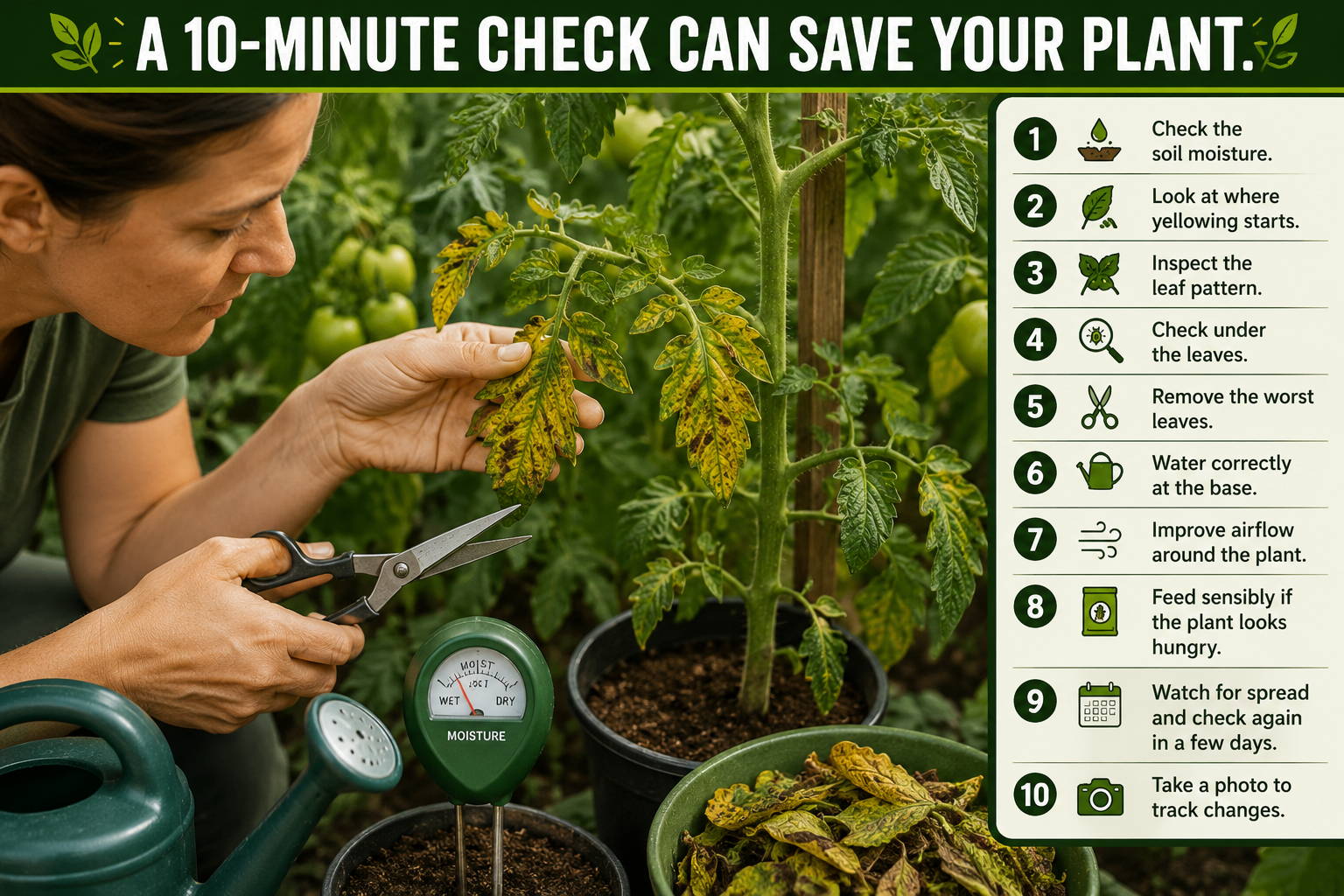
-
Check the soil moisture
Push your finger 5cm into the soil. Is it dry, moist, or soggy? -
Look at where the yellowing starts
Bottom leaves only? New top leaves? One branch? Whole plant? -
Inspect the leaf pattern
Plain yellow? Yellow with green veins? Yellow with spots? Yellow and curled? -
Check under the leaves
Look for aphids, whiteflies, spider mites, eggs, or webbing. -
Remove the worst leaves
Cut off dead, yellow, or spotted leaves and bin diseased material. -
Water correctly
Water at the base, not over the leaves. -
Improve airflow
Remove crowded lower leaves and make sure plants are not packed too close together. -
Feed sensibly
If the plant looks pale and hungry, use a suitable tomato feed. -
Watch for spread
Check again in two or three days. If it spreads quickly, disease may be involved. -
Take a photo
Photos help you compare changes and spot whether the plant is improving or getting worse.
How to Prevent Yellow Leaves on Tomato Plants
You cannot prevent every yellow leaf, but you can prevent many of the common problems.
Water Consistently
Tomatoes like steady moisture.
Avoid letting the plant go from bone dry to soaking wet. This is especially important for tomatoes in pots and grow bags.
Water at the Base
Try to keep the leaves dry.
Wet leaves encourage fungal diseases, especially if plants are crowded or the weather is humid.
Mulch the Soil
A layer of straw, compost, bark, or shredded leaves helps keep moisture steady and reduces soil splash.
Soil splash is one of the ways disease spores reach lower tomato leaves.
Feed Regularly
Tomatoes need nutrients to grow and fruit well.
Once flowers and fruit appear, feed with a tomato fertiliser according to the label instructions.
Give Plants Space
Crowded tomato plants stay damp for longer and disease spreads more easily.
Good airflow is one of the simplest ways to keep tomato plants healthier.
Remove Lower Leaves
Once the plant is established, remove yellowing lower leaves and any leaves touching the soil.
This makes watering easier and improves airflow around the stem.
Rotate Crops
If you grow tomatoes in the ground, avoid planting tomatoes, potatoes, peppers, or aubergines in the same spot year after year.
These crops are related and can share some diseases.
Choose Resistant Varieties
If disease has been a regular problem, look for tomato varieties with resistance codes such as:
- V for Verticillium wilt resistance
- F for Fusarium wilt resistance
- N for nematode resistance
- T for tobacco mosaic virus resistance
- LB for late blight resistance
Resistant varieties are not magic shields, but they can make tomato growing much easier.
Common Mistakes That Make Tomato Leaves Turn Yellow
Avoid these and your plants will already be in better shape:
-
Watering every day without checking the soil
Always check moisture first. -
Using pots without drainage holes
Tomato roots hate sitting in water. -
Planting tomatoes too close together
Crowding increases disease risk. -
Splashing soil onto leaves
Mulch and base watering help prevent this. -
Feeding randomly
Too much of the wrong fertiliser can cause more problems. -
Ignoring the undersides of leaves
Many pests hide underneath. -
Leaving diseased leaves on the plant
Remove and bin them early. -
Composting diseased tomato foliage
Bin diseased material instead. -
Planting too early outside
Cold stress can make leaves yellow and growth stall. -
Panicking over one yellow leaf
Diagnose before acting.
Frequently Asked Questions
Are yellow tomato leaves bad?
Not always. A few yellow leaves at the bottom of a mature tomato plant can be normal. But widespread yellowing, yellowing with spots, wilting, curling, or rapid decline usually means the plant is stressed or diseased.
Should I cut yellow leaves off tomato plants?
Yes, you can remove yellow leaves, especially if they are old, diseased, or touching the soil. Use clean scissors or secateurs and avoid removing too many healthy leaves at once.
Can yellow tomato leaves turn green again?
Usually, fully yellow leaves do not turn green again. The goal is to fix the cause so new growth stays healthy. Remove badly yellow or diseased leaves and watch the new growth.
Do tomato leaves turn yellow from too much water?
Yes. Overwatering can suffocate roots and stop the plant from taking up nutrients properly. If the soil is soggy and the leaves are yellow or drooping, let the soil dry slightly and improve drainage.
Do tomato leaves turn yellow from not enough water?
Yes. Underwatered tomatoes may develop yellow, dry, crispy leaves. Water deeply at the base of the plant and keep moisture more consistent.
Why are the bottom leaves of my tomato plant turning yellow?
Bottom leaves often yellow because they are older, shaded, or close to damp soil. If the rest of the plant looks healthy, this may be normal. If spots or disease symptoms appear, remove affected leaves and improve airflow.
Why are my tomato leaves yellow with green veins?
Yellow leaves with green veins often suggest a nutrient issue such as magnesium or iron deficiency. Magnesium problems often show on older leaves first, while iron problems often show on younger top leaves first. Soil pH can also affect nutrient uptake.
Why are my tomato leaves yellow and curling?
Yellow, curling leaves can be caused by watering stress, pests, herbicide damage, viruses, or heat stress. Check soil moisture first, then inspect the undersides of leaves for insects.
Why are my tomato leaves yellow with brown spots?
Yellow leaves with brown spots are often caused by fungal or bacterial disease, especially early blight, Septoria leaf spot, bacterial spot, or bacterial speck. Remove affected leaves, water at the base, mulch the soil, and improve airflow.
What is the fastest way to fix yellow tomato leaves?
The fastest first step is to check soil moisture, remove dead or diseased yellow leaves, water correctly at the base, and inspect for pests. If the plant looks pale and hungry, feed with a suitable tomato fertiliser.
Can tomato feed fix yellow leaves?
Tomato feed can help if the yellowing is caused by lack of nutrients. It will not fix overwatering, poor drainage, disease, herbicide damage, or viruses. Diagnose the cause before adding more feed.
Should I use Epsom salt for yellow tomato leaves?
Only use Epsom salt if you strongly suspect magnesium deficiency. It is not a general cure for yellow leaves. Too much can create other nutrient problems, so use carefully.
Why are my tomato leaves turning yellow after transplanting?
This is often transplant shock. The plant is adjusting to new conditions. Keep it evenly watered, protect it from harsh weather, and give it time to settle.
Why are my potted tomato leaves turning yellow?
Potted tomatoes often yellow because of inconsistent watering, poor drainage, depleted compost, or lack of feeding. Check the compost moisture, make sure the pot drains well, and feed once flowers or fruit appear. For the full setup, see our guide on how to grow tomatoes in pots.
Can yellow tomato leaves be caused by disease?
Yes. Early blight, Septoria leaf spot, late blight, wilts, bacterial diseases, and viruses can all cause yellowing. Disease yellowing often comes with spots, wilting, distorted growth, or rapid spread.
Final Thoughts
Yellow tomato leaves are not a failure. They are a message.
Sometimes the message is simple: “I am an old leaf.”
Sometimes it is: “I need better watering.”
Sometimes it is: “Please check me for pests or disease.”
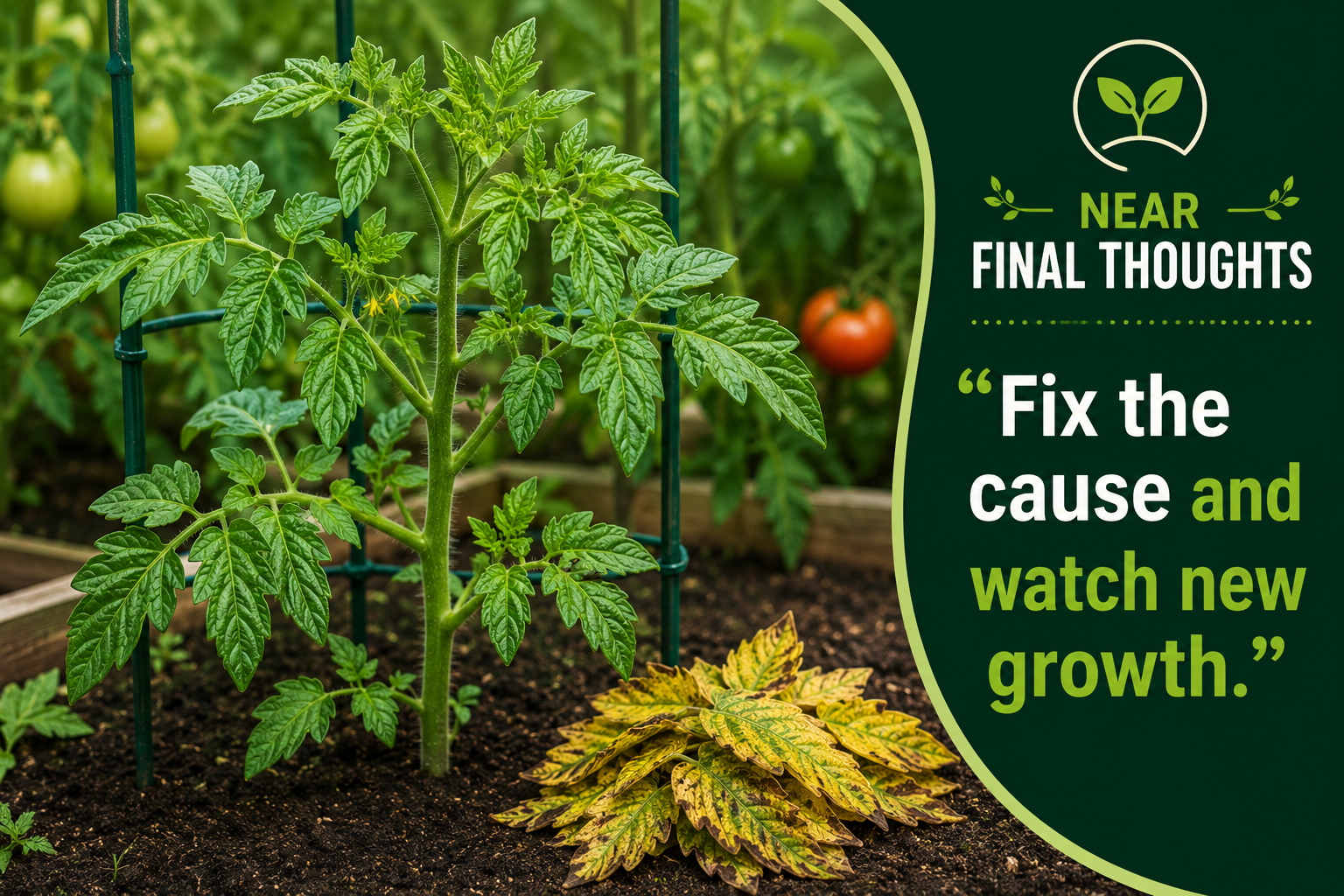
The trick is to slow down, look closely, and read the clues.
Start with the basics: check the soil, inspect the leaves, remove anything diseased, water at the base, feed sensibly, and improve airflow.
With a little detective work, many tomato plants bounce back beautifully — and even if a few yellow leaves appear along the way, you can still end up with a happy plant and a basket full of homegrown tomatoes.
Happy growing!