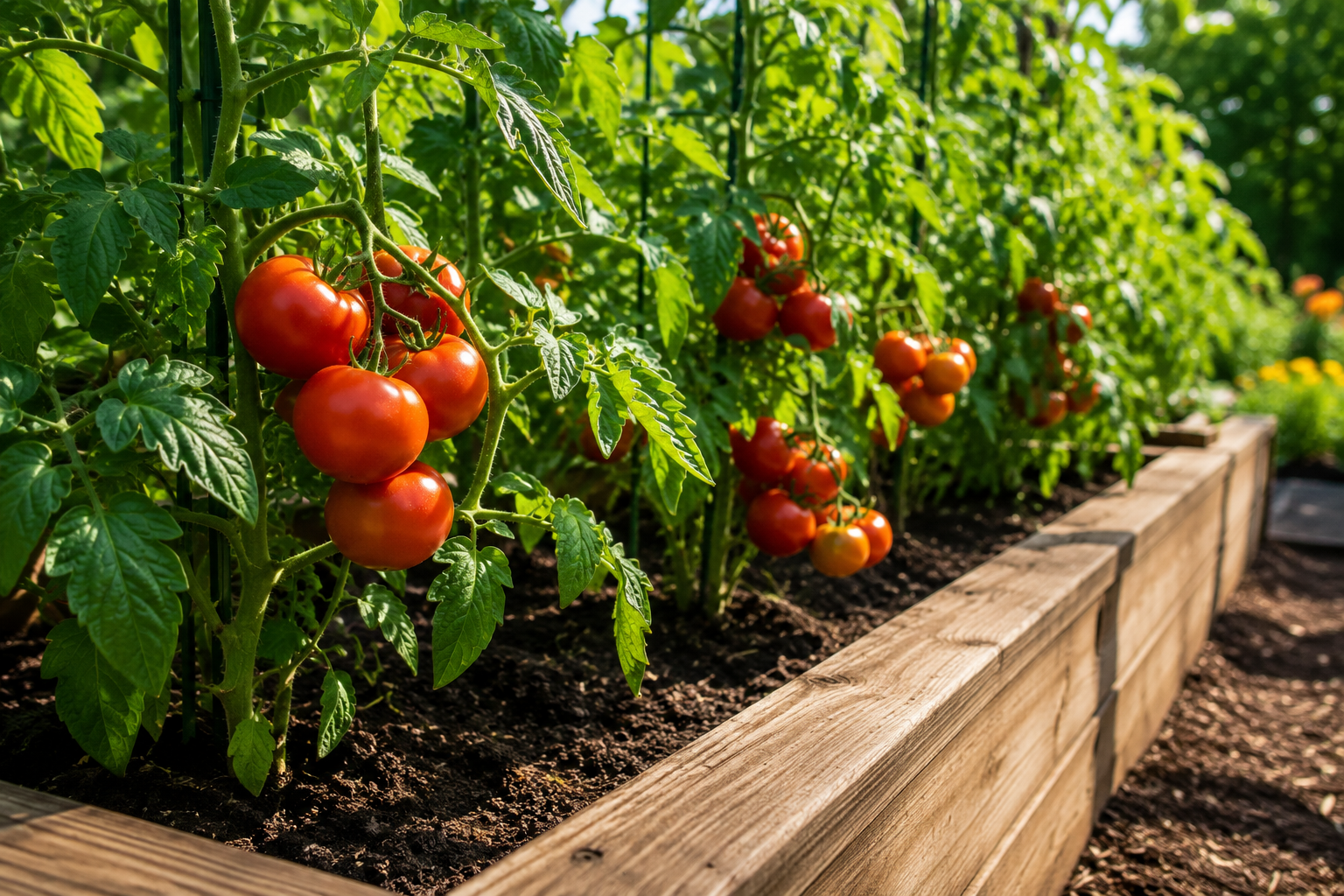
How to Grow Tomatoes in Raised Beds: The Complete Beginner's Guide
How to Grow Tomatoes in Raised Beds: The Complete Beginner’s Guide
Growing tomatoes in raised beds is one of the easiest ways to get healthier plants, better soil, fewer drainage problems, and a more reliable harvest. If your garden soil is heavy clay, compacted, rocky, poor in nutrients, or difficult to work with, a raised bed gives you much more control from the start.
Tomatoes love warmth, rich soil, steady moisture, and plenty of sun. A raised bed can provide all of those things when it is set up properly. The soil warms faster in spring, drains better after rain, and can be filled with a loose, fertile mix that tomato roots can grow through easily.
This guide explains how to grow tomatoes in raised beds from start to finish, including the best bed depth, soil mix, spacing, tomato varieties, watering routine, feeding schedule, pruning method, support options, and common mistakes to avoid.
Why Grow Tomatoes in Raised Beds?
Raised beds are especially useful for tomatoes because they solve several common problems at once.
In normal garden soil, tomatoes may struggle if the ground is too wet, too compacted, too cold, or low in organic matter. In a raised bed, you can create a better growing environment from the beginning.
The main benefits of growing tomatoes in raised beds include:
- Better drainage
- Warmer soil in spring
- Looser soil for stronger root growth
- Easier control over soil quality
- Fewer weeds
- Better access for planting, pruning, and harvesting
- Less soil compaction
- Easier crop rotation in small gardens
- More control in gardens with poor or contaminated soil
Raised beds are also ideal for small spaces. You can grow several productive tomato plants in a compact area as long as you give them enough sunlight, spacing, support, water, and food.
Choose the Best Location for a Tomato Raised Bed
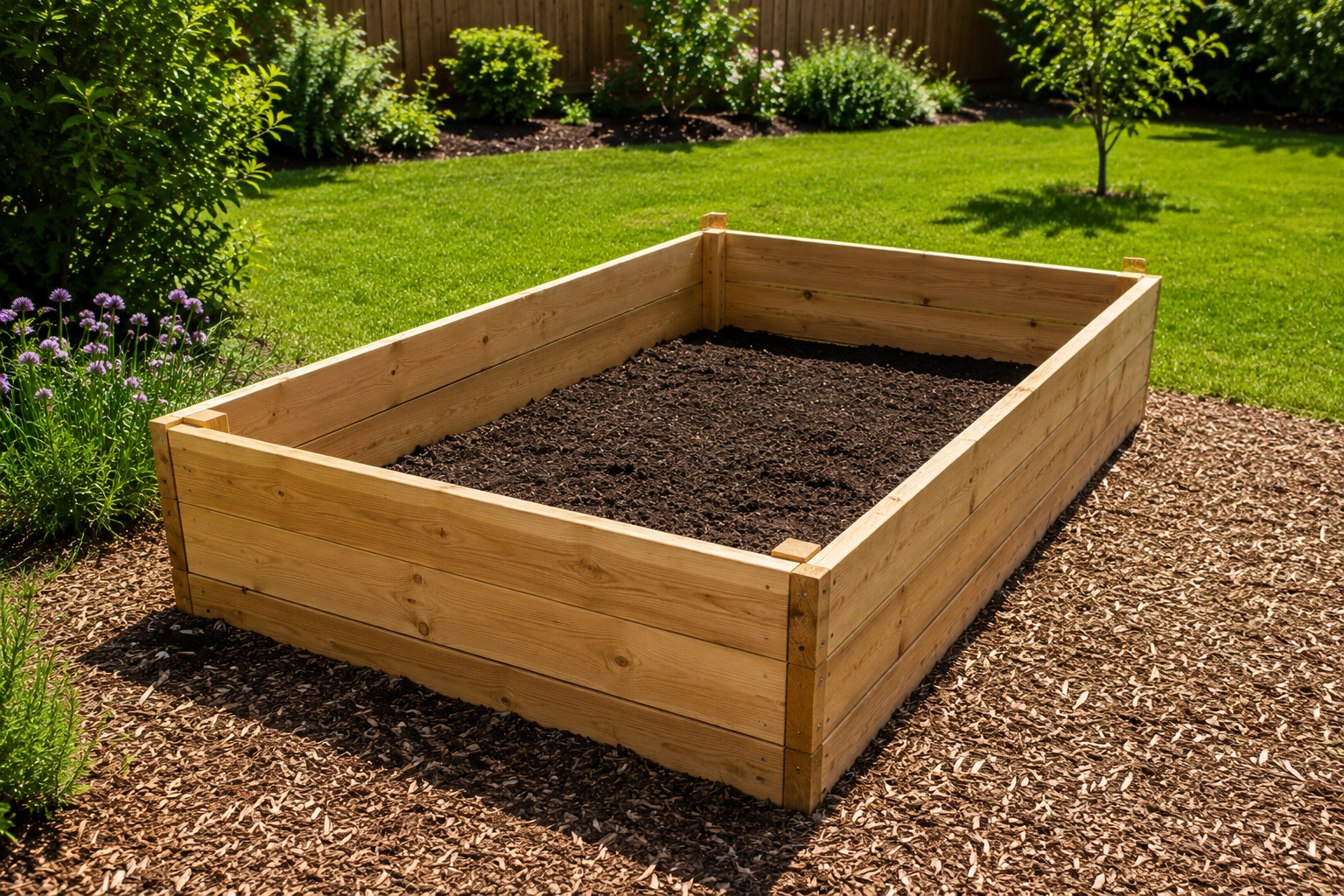
Choose the sunniest spot you have before building or filling your raised bed.
Tomatoes need a sunny, warm, open position. Before building or filling your raised bed, choose the location carefully because this has a huge effect on how well your plants grow and ripen.
Tomatoes need at least 6 to 8 hours of direct sunlight per day. For the best harvest, especially in cooler climates, aim for 8 to 10 hours of sun if possible.
Choose a spot that is:
- Sunny for most of the day
- Sheltered from strong wind
- Away from large trees and hedges
- Not shaded by buildings, fences, or walls
- Easy to reach with a watering can or hose
- Level enough for a stable raised bed
If you live in a cooler area, placing the raised bed near a south-facing wall or fence can help provide extra warmth. The wall can absorb heat during the day and release some of it at night.
If you are building more than one raised bed, a north-to-south orientation can help sunlight reach the plants more evenly during the day. This is especially useful when growing tall indeterminate tomato varieties that could shade other plants.
Best Raised Bed Size for Tomatoes
A practical raised bed size for tomatoes is 4 feet wide by 8 feet long. This size gives you enough space for several plants while still allowing you to reach the centre of the bed from both sides.
The width is important. A raised bed should usually be no wider than 4 feet if you can access it from both sides. This lets you plant, weed, prune, water, and harvest without stepping into the bed.
Avoid walking on the soil inside the raised bed. One of the biggest advantages of raised beds is loose, uncompacted soil. If you step into the bed, the soil becomes compressed, which makes it harder for roots to spread and harder for water and air to move through the soil.
If the bed is against a wall or fence and you can only reach it from one side, keep it around 2 to 3 feet wide.
A good raised bed size for tomatoes:
- 4 ft x 4 ft: good for 4 tomato plants
- 4 ft x 8 ft: good for 6 to 8 tomato plants, depending on variety and spacing
- 2 ft x 8 ft: good for narrow spaces or beds against a wall
- 3 ft x 6 ft: good for small gardens
How Deep Should a Raised Bed Be for Tomatoes?
Tomatoes have strong root systems, so deeper beds are usually better.
The minimum soil depth for tomatoes is about 10 to 12 inches, but a deeper bed of 12 to 18 inches is better. If possible, a depth of 18 to 24 inches gives the roots more room to spread and helps the bed hold more moisture during hot weather.
A deeper raised bed is helpful because it:
- Holds more water
- Holds more nutrients
- Gives roots more space
- Reduces watering frequency
- Helps plants cope better with heat
- Supports larger indeterminate tomato plants
If your raised bed is open at the bottom and placed directly over soil, tomato roots can grow down into the ground below. In that case, a 12-inch bed can still work well if the soil underneath is not heavily compacted.
If the bed has a solid base, or if it is placed on concrete, paving, or a patio, choose a deeper bed if possible.
Best Materials for Tomato Raised Beds
Raised beds can be made from several materials. The best choice depends on your budget, garden style, and how long you want the bed to last.
Common raised bed materials include:
- Cedar
- Redwood
- Untreated pine
- Galvanised steel
- Bricks
- Concrete blocks
- Stone
- Composite boards
Wood is popular because it looks natural and is easy to work with. Cedar and redwood last longer because they resist rot better than cheaper softwoods. Untreated pine is cheaper but usually breaks down faster.
Galvanised steel beds are long-lasting, tidy, and increasingly popular. They warm up quickly and are useful in small gardens, but they can become hot in very warm climates.
Bricks, stones, and concrete blocks are strong and permanent, but they can cost more and take longer to build.
If using treated timber, choose modern garden-safe treated wood and avoid old reclaimed timber that may contain unsafe preservatives. If you are unsure, you can line the inside walls of the raised bed with heavy-duty plastic, but leave the bottom open so water can drain freely.
Best Soil Mix for Tomatoes in Raised Beds
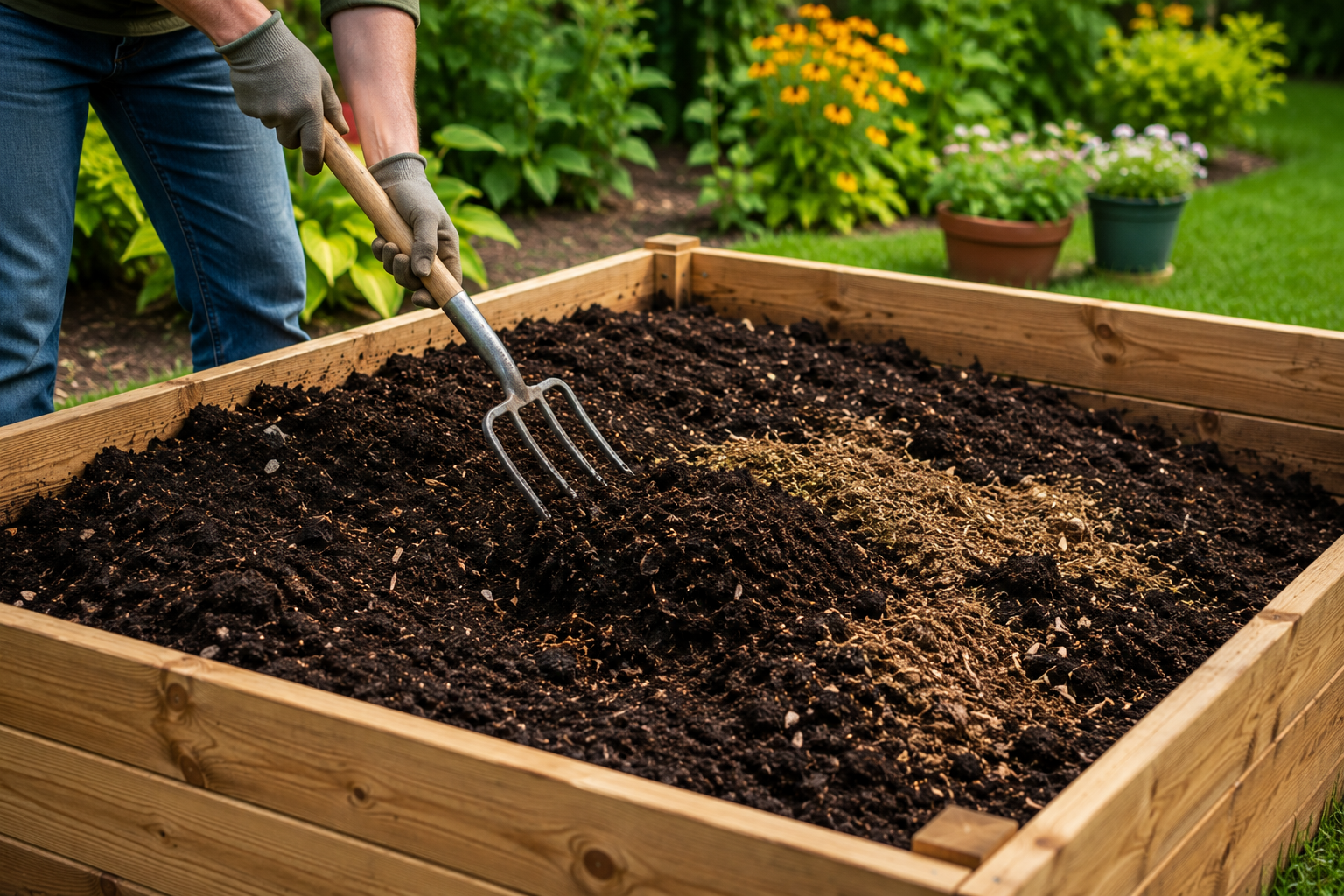
A loose, compost-rich soil mix is the foundation of healthy tomato plants.
The soil is one of the most important parts of growing tomatoes in raised beds. Tomatoes are heavy-feeding plants, and they need soil that is rich, loose, moisture-retentive, and well-draining.
Do not fill a raised bed with only heavy garden soil. It can compact, drain poorly, and restrict root growth. Also avoid filling a large raised bed with only light potting compost, because it can dry out too quickly and may not provide enough long-term structure.
A good raised bed tomato soil mix is:
- 50% to 60% good-quality topsoil
- 30% to 40% compost or well-rotted manure
- 10% drainage and structure material, such as leaf mould, coarse compost, or fine bark
Another simple mix is:
- 2 parts topsoil
- 1 part compost
- 1 part well-rotted organic matter
The goal is to create soil that holds moisture but does not stay soggy. When you squeeze a handful of good raised bed soil, it should hold together slightly but crumble apart easily.
Before planting, mix compost into the top layer of the bed. Compost improves soil structure, feeds soil life, and slowly releases nutrients.
Best Soil pH for Raised Bed Tomatoes
Tomatoes grow best in slightly acidic soil with a pH of around 6.0 to 6.8. They can usually tolerate a range from about 6.0 to 7.0, but slightly acidic soil is ideal for nutrient availability.
If possible, test your soil before planting. A soil test can tell you:
- Soil pH
- Nitrogen level
- Phosphorus level
- Potassium level
- Organic matter level
- Whether lime or sulphur is needed
If your soil is too acidic, garden lime can raise the pH. If your soil is too alkaline, sulphur or more organic matter may help lower it gradually.
Testing the soil every few years is a good habit, especially in raised beds where nutrients can change over time.
Choosing the Best Tomato Varieties for Raised Beds
You can grow almost any type of tomato in a raised bed, but some are easier to manage than others.
The most important thing to understand is the difference between determinate and indeterminate tomatoes.
Determinate Tomatoes
Determinate tomatoes are often called bush tomatoes. They grow to a certain height, produce most of their fruit over a shorter period, and then slow down or stop growing.
They are usually easier to manage in raised beds because they stay more compact.
Determinate tomatoes are good if you want:
- Smaller plants
- Easier support
- A concentrated harvest
- Tomatoes for sauces or preserving
- A neater raised bed
Examples of determinate or compact tomato varieties include:
- Celebrity
- Roma
- Patio Princess
- Bush Early Girl
- San Marzano Nano
- Tumbling Tom
Determinate tomatoes usually need a cage or short stake, but they do not need as much pruning as indeterminate varieties.
Indeterminate Tomatoes
Indeterminate tomatoes are vining tomatoes. They keep growing, flowering, and producing fruit until cold weather or frost stops them.
They can grow very tall, sometimes reaching 6 to 12 feet or more, so they need strong support.
Indeterminate tomatoes are good if you want:
- A longer harvest season
- Fresh tomatoes over many weeks
- Cherry tomatoes
- Slicing tomatoes
- Heirloom tomatoes
- High yields from vertical space
Examples of indeterminate tomatoes include:
- Sungold
- Gardener’s Delight
- Cherokee Purple
- Brandywine
- Black Krim
- Better Boy
- Alicante
- Moneymaker
Indeterminate tomatoes are excellent for raised beds if you install strong stakes, cages, trellises, or a string support system.
Best Tomato Types for Raised Beds
Tomatoes also come in different fruit types. The best choice depends on how you want to use them.
Cherry and Grape Tomatoes
Cherry and grape tomatoes are small, sweet, and usually very productive. They are often the easiest tomatoes for beginners because they ripen quickly and keep producing.
They are perfect for salads, snacking, lunchboxes, and children’s gardens.
Slicing Tomatoes
Slicing tomatoes are medium to large round tomatoes. They are good for sandwiches, salads, burgers, and everyday kitchen use.
They are a good all-purpose choice for raised beds.
Beefsteak Tomatoes
Beefsteak tomatoes produce very large fruits. They can be delicious, but they need strong support, rich soil, regular feeding, and a longer growing season.
They are better for gardeners who have enough space and can keep up with watering and support.
Paste Tomatoes
Paste tomatoes, also called plum tomatoes, have thicker flesh, fewer seeds, and less juice. They are ideal for sauces, soups, passata, drying, and cooking.
They are often determinate, which makes them a good option for raised beds.
Heirloom Tomatoes
Heirloom tomatoes are older open-pollinated varieties known for flavour, colour, and unusual shapes. They can be excellent, but some are less disease-resistant than modern hybrids.
If you grow heirlooms, give them plenty of airflow and avoid wetting the leaves.
Look for Disease-Resistant Tomato Varieties
When buying tomato seeds or plants, check the label for disease-resistance letters. These letters show which diseases the variety has been bred to resist.
Common tomato resistance codes include:
- V = Verticillium wilt
- F = Fusarium wilt
- N = Nematodes
- T = Tobacco mosaic virus
- A = Alternaria stem canker
- LB = Late blight
Disease resistance is useful in raised beds, especially if you have grown tomatoes, potatoes, peppers, or aubergines in the same soil before.
When to Start Tomato Seeds
Tomatoes are usually started indoors before being planted outside. This gives them a head start before the weather is warm enough.
Start tomato seeds indoors about 6 to 8 weeks before your last expected frost date.
Tomato seeds germinate best in warm conditions, ideally around 24°C to 29°C. A heated propagator or heat mat can help, but it is not always necessary if your home is warm enough.
Use a light seed-starting mix and keep the compost moist but not waterlogged. Once the seedlings appear, move them into strong light immediately.
Weak light causes leggy seedlings. Leggy tomato plants have long, thin stems and are more likely to struggle after transplanting. Grow lights or a bright south-facing windowsill can help prevent this.
Choosing Healthy Tomato Plants
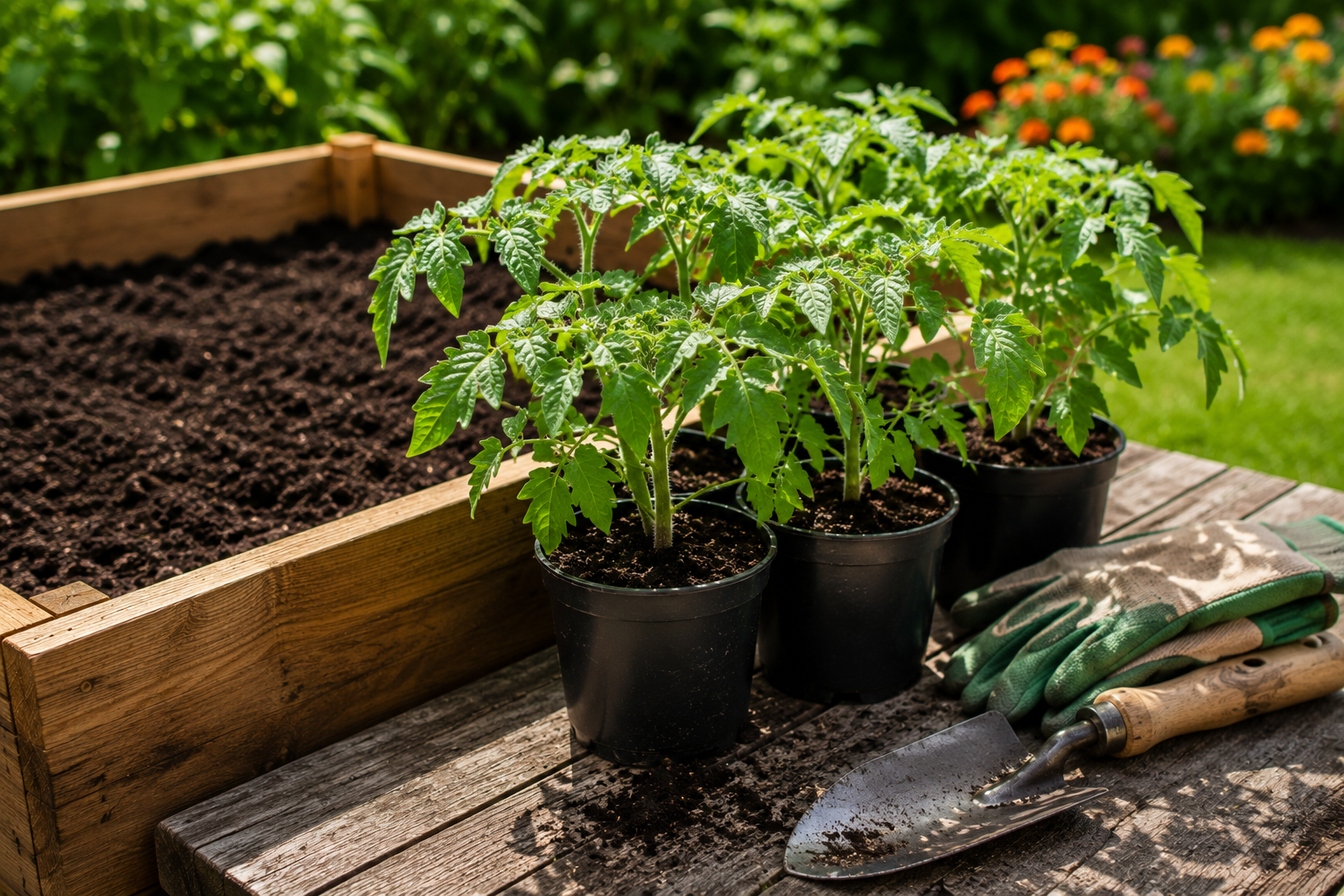
Choose short, sturdy tomato plants with healthy green leaves.
If you do not want to grow tomatoes from seed, you can buy young plants from a garden centre or nursery.
Choose plants that are:
- Short and sturdy
- Deep green
- Free from yellowing leaves
- Free from pests
- Not rootbound
- Not already covered in flowers or fruit
- Around 6 to 10 inches tall
Avoid tall, weak, stretched plants. Also avoid plants with lots of flowers or small fruit already forming. These may look tempting, but they often establish more slowly after planting.
A strong young tomato plant should have a thick stem, healthy leaves, and a compact shape.
Hardening Off Tomato Plants
Before planting tomatoes into a raised bed, harden them off. This means gradually introducing indoor-grown plants to outdoor conditions.
Tomato plants raised indoors are used to steady temperatures, low wind, and softer light. If you plant them outside suddenly, they can suffer from sun scorch, wind damage, or cold shock.
Harden off tomato plants over 7 to 10 days.
A simple hardening-off routine:
- Put the plants outside in a sheltered, shaded place for 1 to 2 hours.
- Bring them back indoors or into a greenhouse.
- Increase the time outside each day.
- Gradually introduce more direct sun.
- Keep them protected from strong wind and cold nights.
- Plant them out once they can handle a full day outside.
Do not rush this stage. Proper hardening off helps plants establish faster and reduces transplant shock.
When to Plant Tomatoes in Raised Beds
Plant tomatoes outside only after the danger of frost has passed.
Tomatoes are warm-season plants. Cold soil and cold nights can stunt them badly. Even if the plants survive, they may sit still for weeks and grow slowly.
Wait until:
- The last frost has passed
- Soil temperature is at least 15°C
- Night temperatures are consistently above 10°C to 13°C
- The plants have been hardened off
Raised beds warm up faster than ground soil, so you may be able to plant slightly earlier than you would in a traditional garden bed. However, do not plant too early. Warm, steady conditions are better than rushing.
How to Plant Tomatoes Deeply
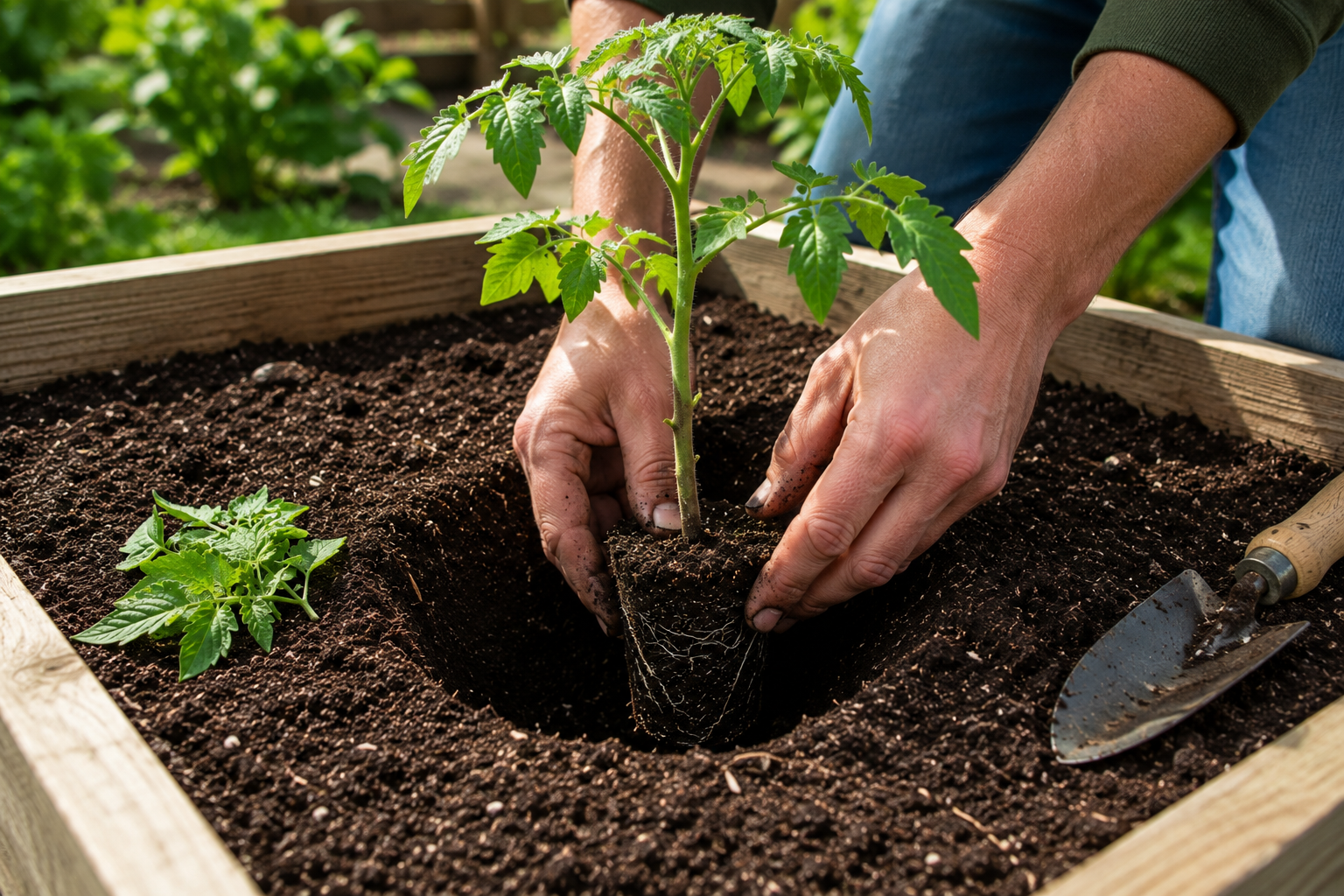
Plant tomatoes deeply so they can grow extra roots along the buried stem.
Tomatoes are special because they can grow roots along their buried stems. This means you can plant them deeper than most vegetables.
Deep planting creates a stronger root system, which helps the plant absorb more water and nutrients.
To plant tomatoes deeply:
- Remove the lowest leaves.
- Dig a deep planting hole.
- Place the plant in the hole so part of the stem is buried.
- Leave the top set of healthy leaves above the soil.
- Firm the soil gently around the stem.
- Water well.
You can bury up to two-thirds of the stem if the plant is tall enough.
Trench Planting for Leggy Tomato Plants
If your tomato plants are tall and leggy, use the trench planting method.
Instead of digging a deep hole, dig a shallow trench about 3 to 4 inches deep. Lay the plant sideways in the trench and gently bend the top of the plant upward so the leafy growing tip is above the soil.
Cover the buried stem with soil. Roots will grow along the stem, creating a stronger plant.
This method is especially useful in raised beds because the top layer of soil is usually warmer than deeper soil.
Tomato Spacing in Raised Beds
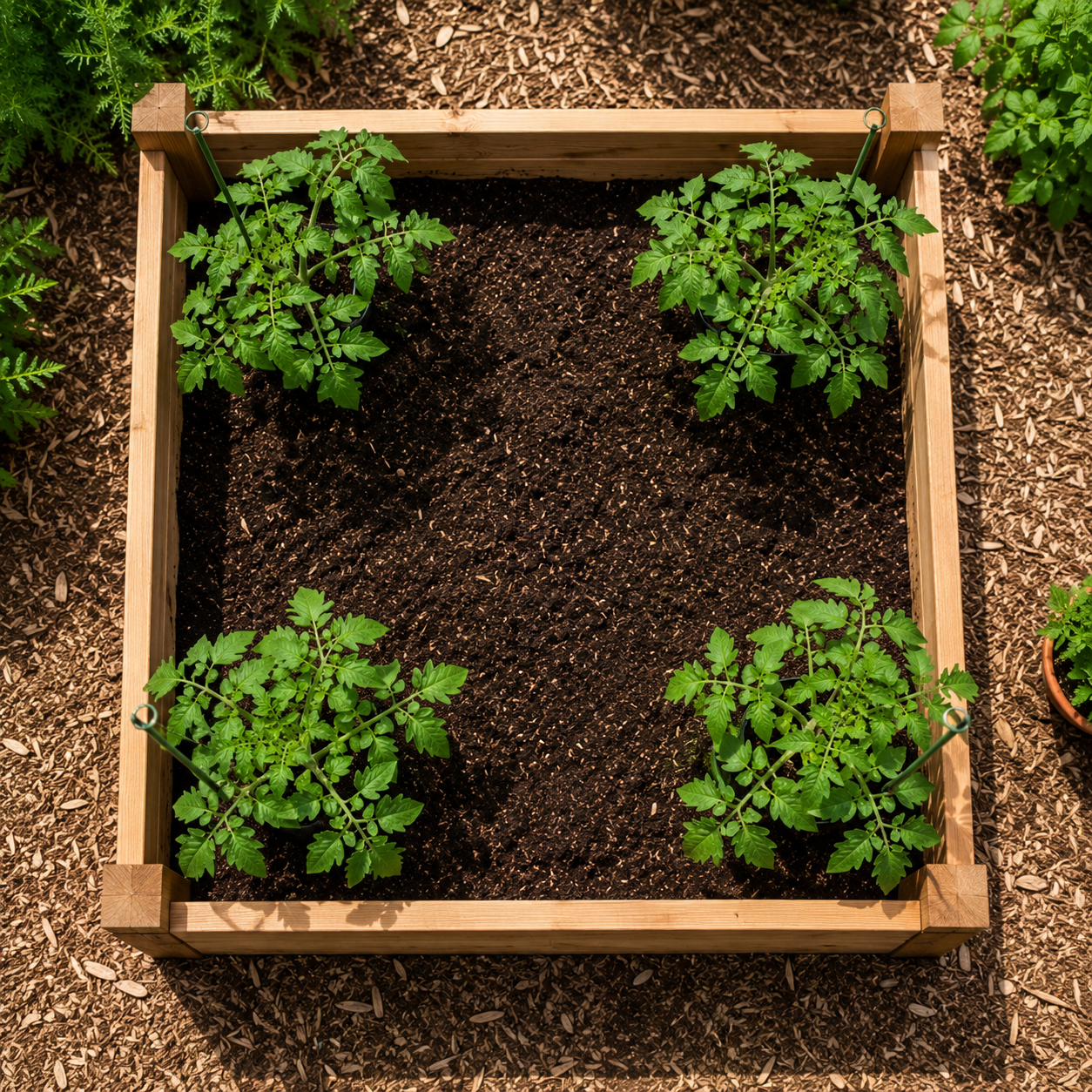
In a 4x4 raised bed, four tomato plants gives good spacing and airflow.
Spacing is very important in raised beds. It is tempting to squeeze in extra plants, but overcrowding leads to poor airflow, more disease, smaller harvests, and harder maintenance.
As a general rule:
- Space determinate tomatoes 18 to 24 inches apart
- Space indeterminate tomatoes 24 to 36 inches apart
- Give large unstaked plants up to 3 feet of space
- Leave enough room to reach each plant for pruning and harvesting
In a 4 ft x 4 ft raised bed, a simple layout is one tomato plant in each corner. That gives you four plants with enough space for airflow and support.
In a 4 ft x 8 ft raised bed, you can usually grow six to eight tomato plants, depending on variety and support method.
For beginners, it is better to grow fewer plants well than to overcrowd the bed.
Install Tomato Supports Early
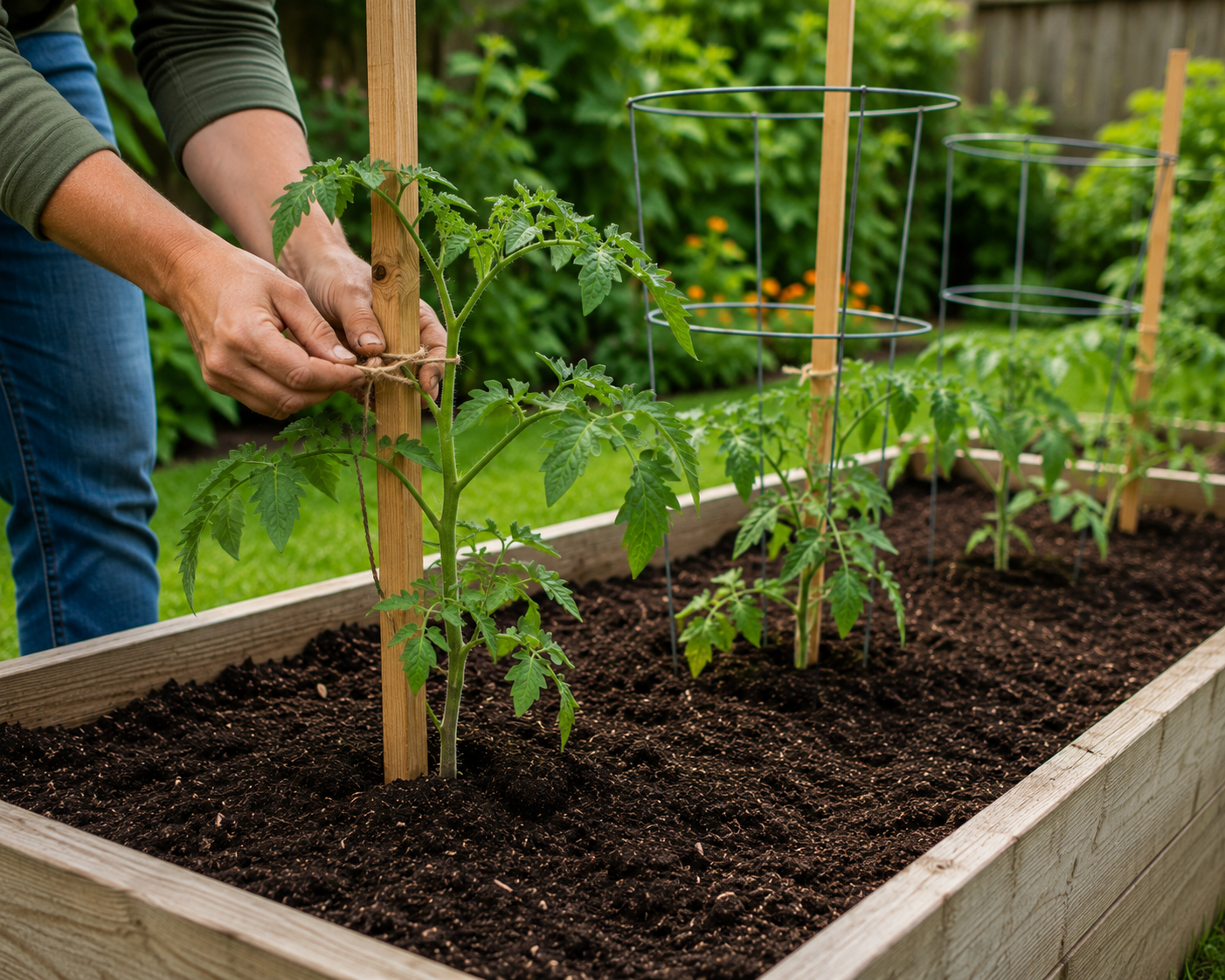
Install cages, stakes, or trellises when you plant to avoid damaging roots later.
Install supports on the same day you plant your tomatoes. This is one of the most useful practical tips for raised bed tomato growing.
If you wait until the plants are large, pushing stakes or cages into the soil can damage the roots.
Tomato supports help:
- Keep fruit off the soil
- Improve airflow
- Reduce disease
- Prevent broken stems
- Make harvesting easier
- Keep the raised bed organised
The best support system depends on the type of tomato you are growing.
Tomato Cages
Cages are good for determinate tomatoes and some medium-sized indeterminate varieties.
Choose strong cages, not flimsy ones. Heavy-duty wire cages are better because tomato plants become heavy when loaded with fruit.
Cages with wide mesh openings make harvesting easier.
Tomato Stakes
Stakes are useful for indeterminate tomatoes. Use stakes at least 6 feet tall for vining varieties.
Drive the stake firmly into the bed near the plant. Tie the main stem loosely to the stake as it grows.
Use soft ties, garden twine, cloth strips, or tomato clips. Do not tie too tightly because the stem needs room to expand.
A figure-eight tie works well because it supports the plant without rubbing the stem directly against the stake.
Trellis or String Support
A trellis or string system is excellent for raised beds, especially if you want a tidy, vertical growing setup.
You can run strong twine from an overhead frame and clip or twist the tomato stem around the string as it grows.
This method works especially well for indeterminate tomatoes.
Basket Weave Support
The basket weave method is useful when growing tomatoes in rows. Stakes are placed between plants, and twine is woven back and forth to hold the plants upright.
This method is common for larger plantings and can work well in long raised beds.
Watering Tomatoes in Raised Beds
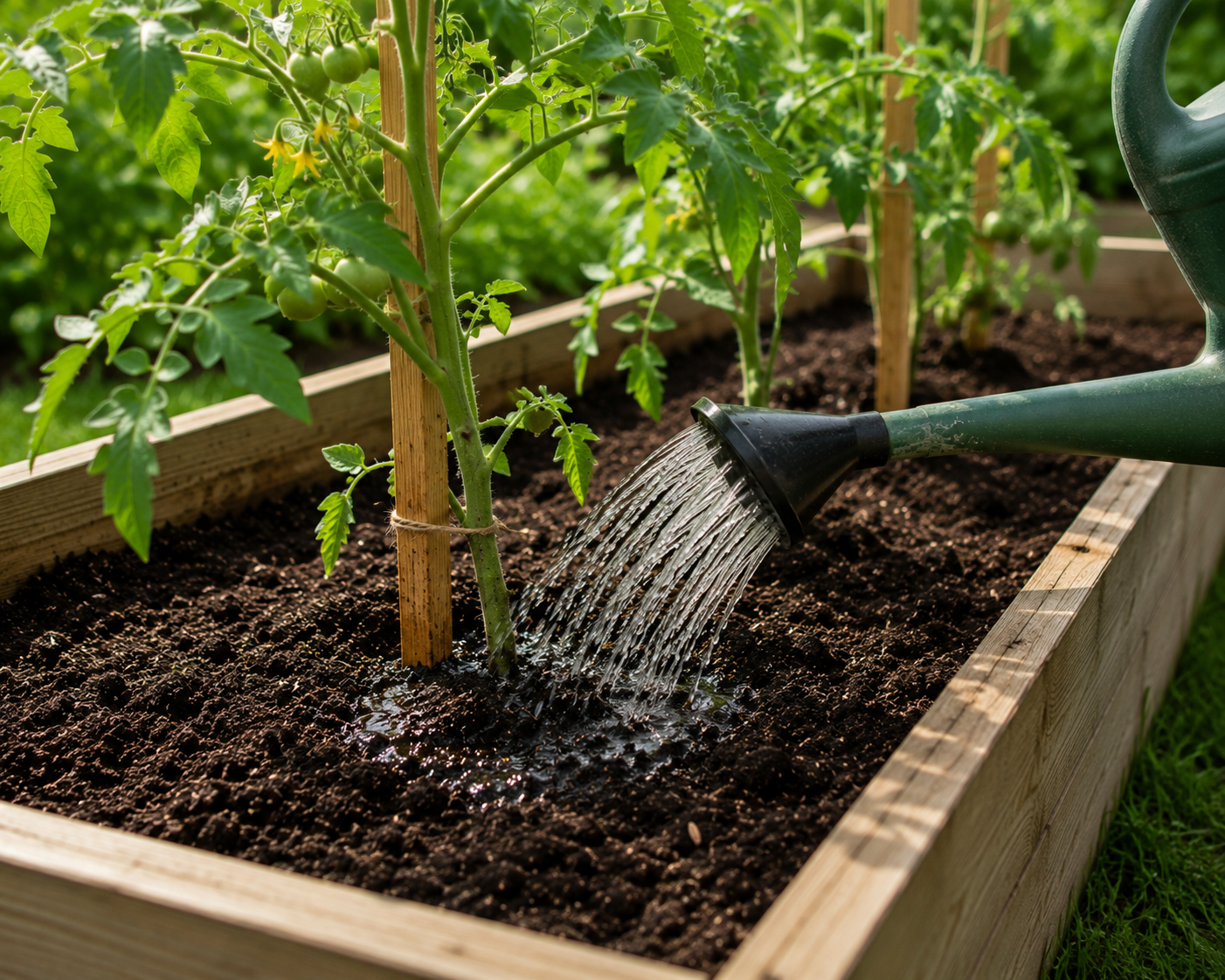
Water the soil, not the leaves, to reduce disease problems.
Consistent watering is one of the most important parts of growing tomatoes in raised beds.
Raised beds drain well, which is good, but they can also dry out faster than in-ground beds. During hot weather, you may need to check the soil daily.
Tomatoes usually need about 1 to 2 inches of water per week, but this depends on temperature, wind, soil type, mulch, and plant size.
The goal is not just to water more. The goal is to water consistently.
Inconsistent watering causes problems such as:
- Blossom end rot
- Fruit cracking
- Leaf curl
- Poor fruit development
- Plant stress
- Reduced harvests
Water deeply rather than giving small amounts every day. Deep watering encourages roots to grow down into the soil.
How to Water Tomatoes Correctly
Always water tomatoes at the base of the plant. Try to keep the leaves dry.
Wet foliage increases the risk of fungal diseases such as early blight and late blight.
Good watering methods include:
- Drip irrigation
- Soaker hoses
- Watering cans aimed at the soil
- A hose on a gentle setting at the base of the plant
Avoid overhead sprinklers if possible.
Water in the morning when you can. Morning watering gives the soil moisture before the heat of the day and allows any wet leaves to dry quickly.
Mulching Raised Bed Tomatoes
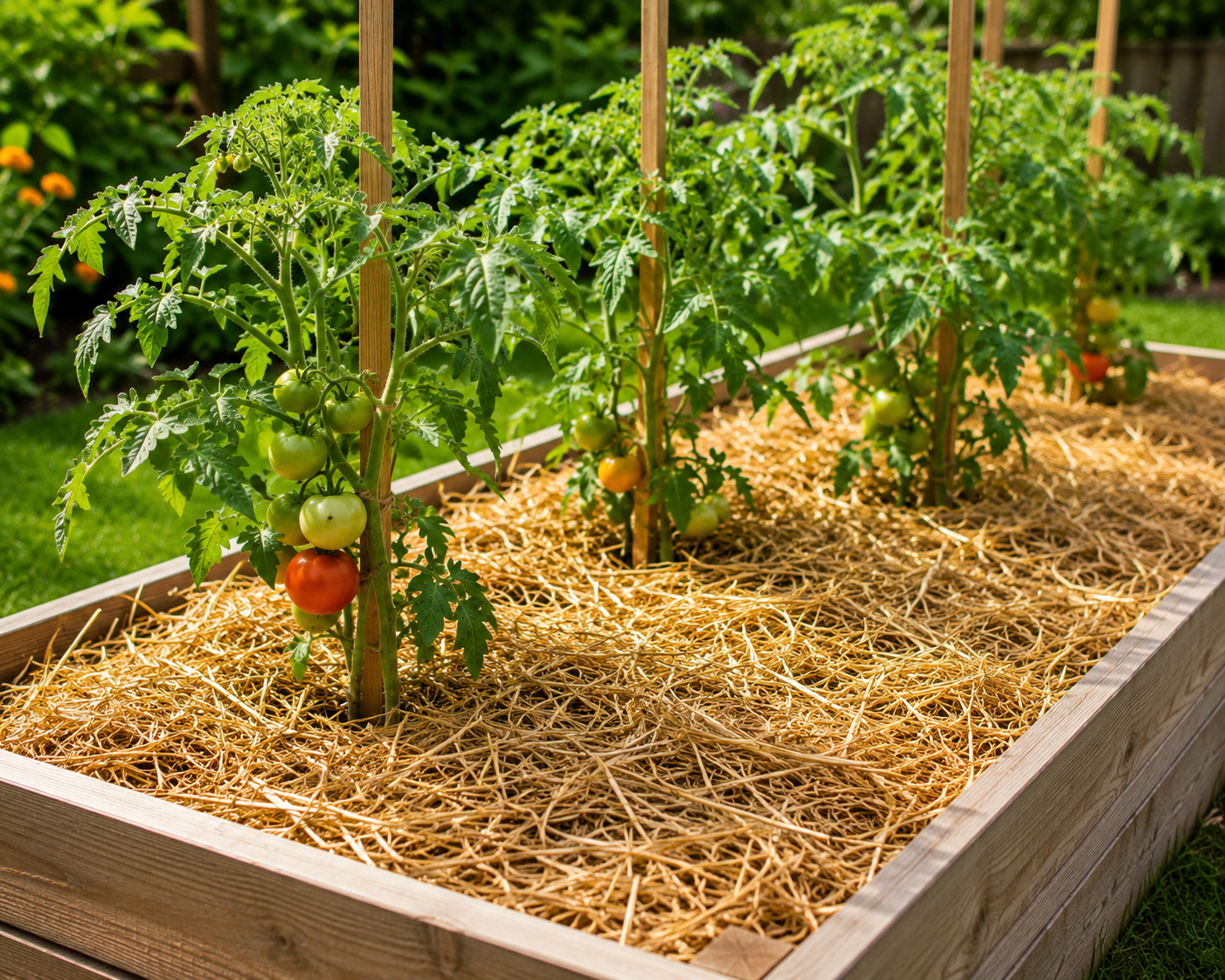
Mulch helps hold moisture, reduce weeds, and prevent soil splash.
Mulch is extremely useful for tomatoes in raised beds.
A layer of mulch helps:
- Hold moisture in the soil
- Reduce watering frequency
- Suppress weeds
- Keep soil temperature more stable
- Prevent soil from splashing onto leaves
- Reduce the spread of soil-borne diseases
Good mulch materials include:
- Weed-free straw
- Grass clippings from untreated lawns
- Leaf mould
- Compost
- Bark chips
- Shredded leaves
Apply a mulch layer around 2 to 4 inches deep.
Leave a small gap around the tomato stem so moisture does not sit directly against it.
Wait until the soil has warmed before applying thick organic mulch. If you mulch too early in cool weather, the soil may stay colder for longer.
Feeding Tomatoes in Raised Beds
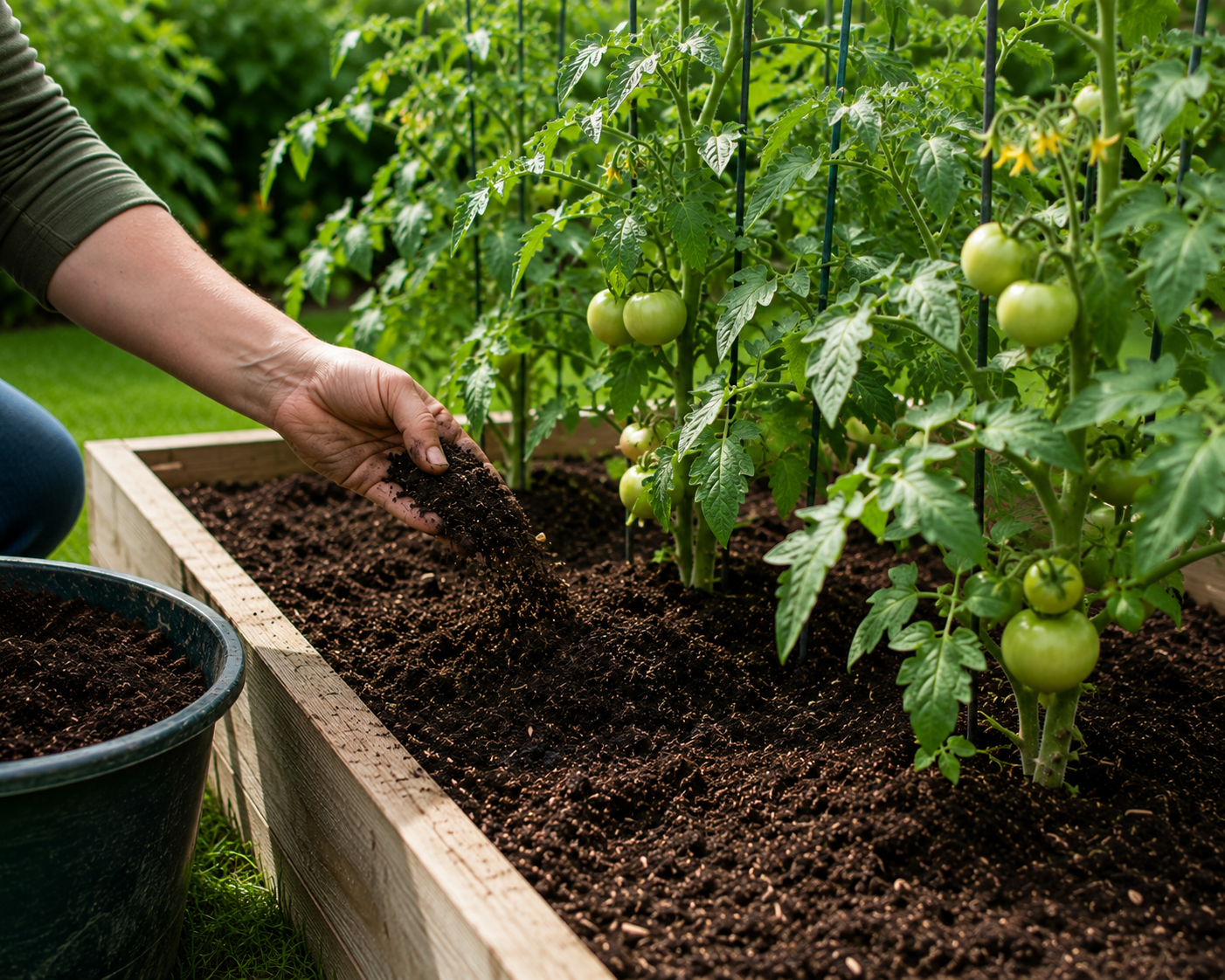
Feed tomatoes once fruit begins to form to support a strong harvest.
Tomatoes are heavy feeders. They need a steady supply of nutrients to grow strong stems, healthy leaves, flowers, and fruit.
Before planting, mix compost into the bed. You can also add a balanced organic fertiliser or a tomato fertiliser according to the packet instructions.
Avoid adding too much nitrogen. Excess nitrogen can produce large leafy plants with fewer flowers and less fruit.
For tomatoes, a fertiliser lower in nitrogen and higher in phosphorus and potassium is usually better once fruiting begins.
Look for fertiliser ratios such as:
- 5-10-10
- 4-6-8
- Tomato-specific fertiliser
- Organic tomato feed
Start feeding once the first small fruits begin forming. A good time is when the first fruits are about the size of a marble or golf ball.
Continue feeding every 2 to 4 weeks, depending on the fertiliser type and the condition of the plants.
If growing in a very rich compost-based bed, you may need less fertiliser. If leaves are pale, growth is weak, or fruiting is poor, the plants may need more nutrition.
Pruning Tomatoes in Raised Beds
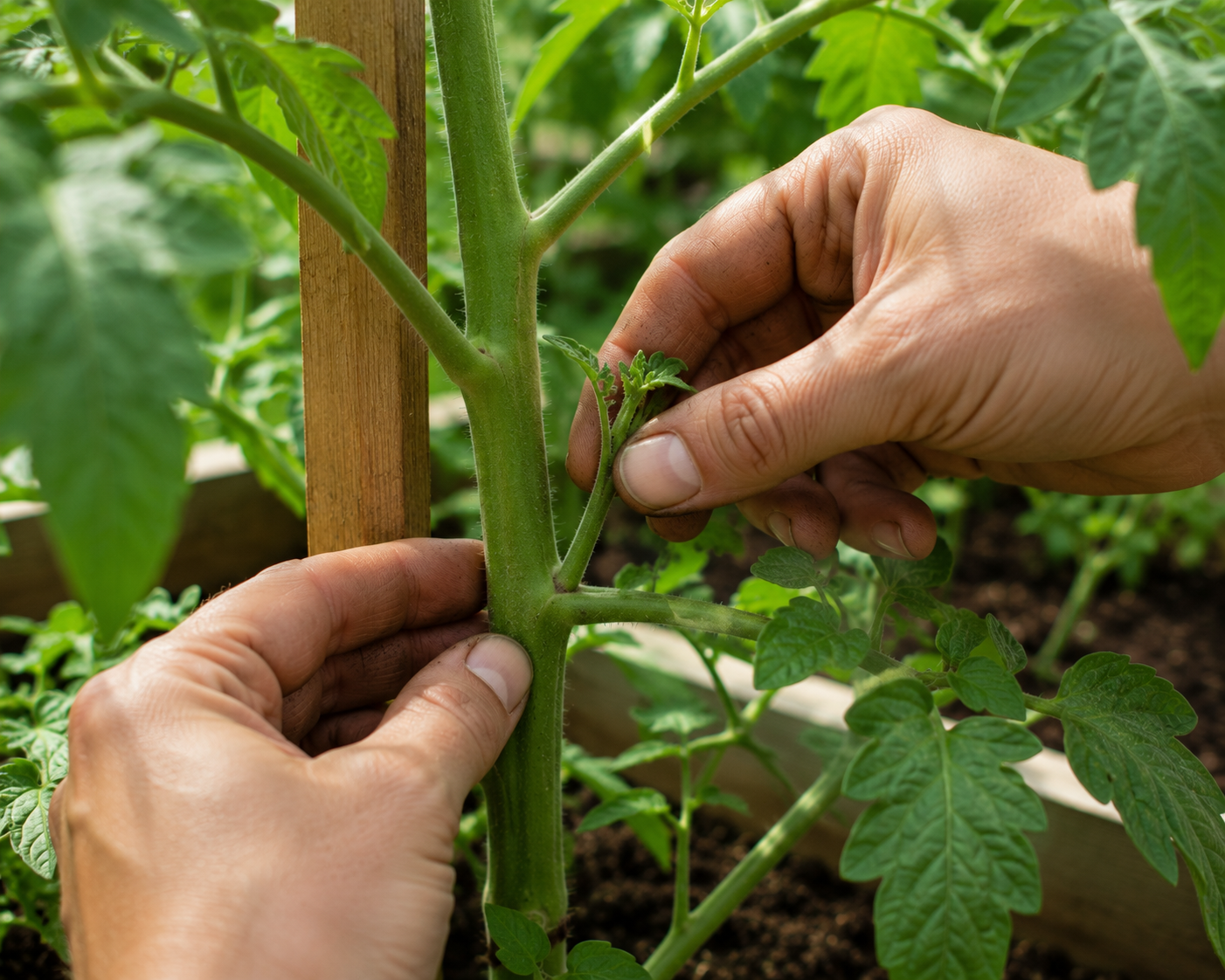
Pruning indeterminate tomatoes improves airflow and keeps plants manageable.
Pruning helps control growth, improve airflow, and make harvesting easier. However, not all tomatoes should be pruned the same way.
The most important rule is:
- Prune indeterminate tomatoes
- Be careful with determinate tomatoes
Pruning Indeterminate Tomatoes
Indeterminate tomatoes produce side shoots called suckers. These grow in the joint between the main stem and a leaf branch.
Removing some suckers helps keep the plant manageable and improves airflow.
To prune indeterminate tomatoes:
- Look for suckers growing between the main stem and leaf branches.
- Pinch out small suckers with your fingers.
- Use clean scissors or secateurs for larger shoots.
- Remove weak, crowded, or low growth.
- Keep the plant tied to its support.
You do not have to remove every sucker. Some gardeners grow one main stem, while others allow two or three main stems for a larger plant.
In raised beds, moderate pruning is often best. It keeps the plant open without reducing too much leaf cover.
Pruning Determinate Tomatoes
Determinate tomatoes should not be heavily pruned.
Because they produce their crop over a shorter period, removing too many shoots can reduce the total harvest.
For determinate tomatoes, only remove:
- Yellow leaves
- Diseased leaves
- Leaves touching the soil
- Very low growth below the first flower cluster
Do not remove lots of healthy suckers from determinate plants.
Remove Lower Tomato Leaves
Once the plant is established, remove the lowest leaves from the bottom 8 to 12 inches of the stem.
This helps:
- Improve airflow
- Keep foliage away from damp soil
- Reduce disease splashback
- Make watering easier
Always remove diseased leaves quickly and dispose of them away from the garden. Do not compost badly diseased tomato leaves.
Pollinating Tomatoes in Raised Beds
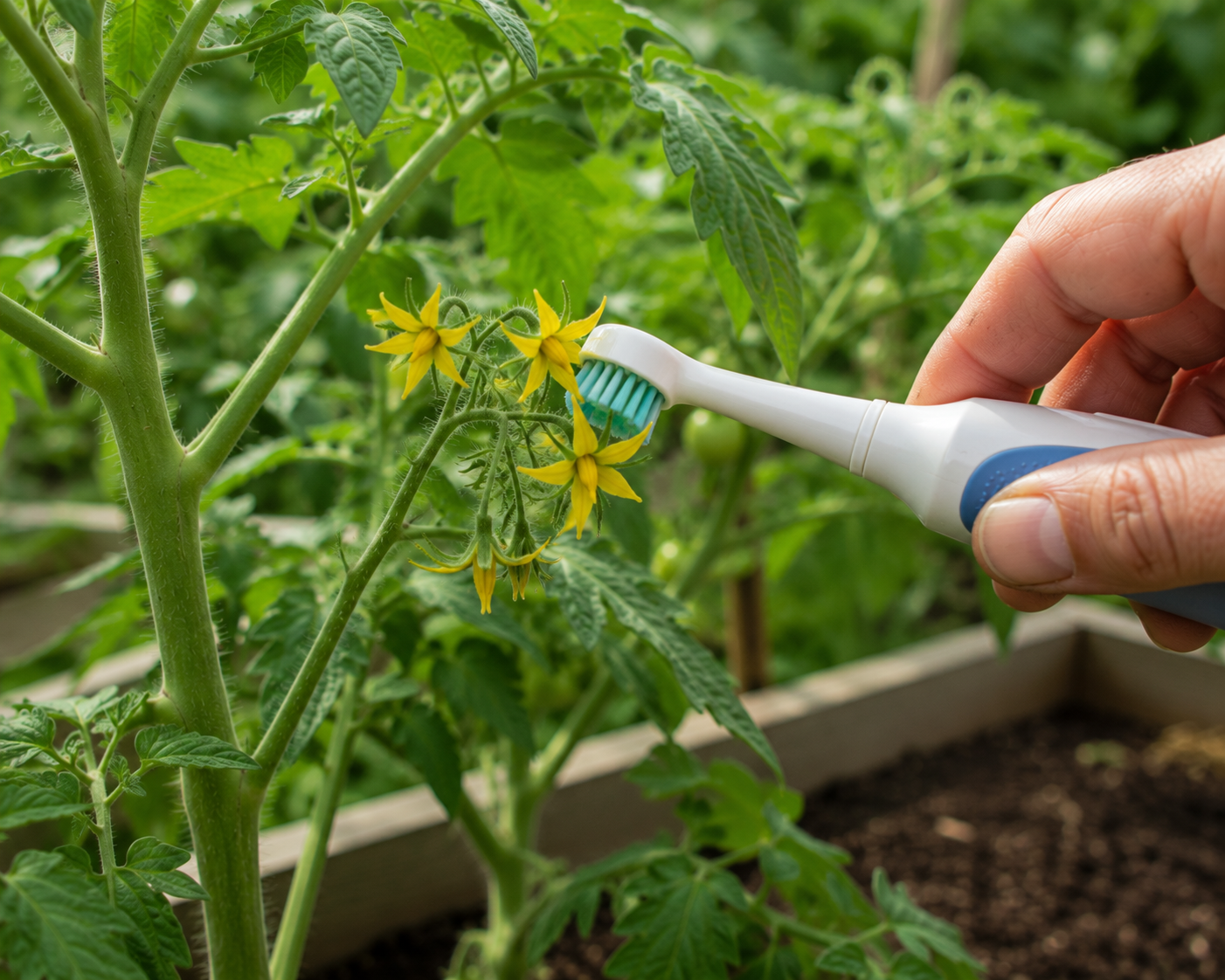
In still weather, gently vibrating tomato flowers can help with pollination.
Tomatoes are self-pollinating, which means each flower contains both male and female parts. However, the flowers still need movement to release pollen.
Outdoors, wind and bees usually do the job. But if your raised bed is in a very sheltered spot, pollination may be weaker.
Signs of poor pollination include flowers dropping without forming fruit.
You can help pollination by:
- Gently shaking the plant
- Tapping flower clusters
- Brushing flowers lightly
- Using an electric toothbrush near the flower stem to vibrate the flowers
This is especially useful in still weather, greenhouses, or sheltered patios.
Common Tomato Problems in Raised Beds
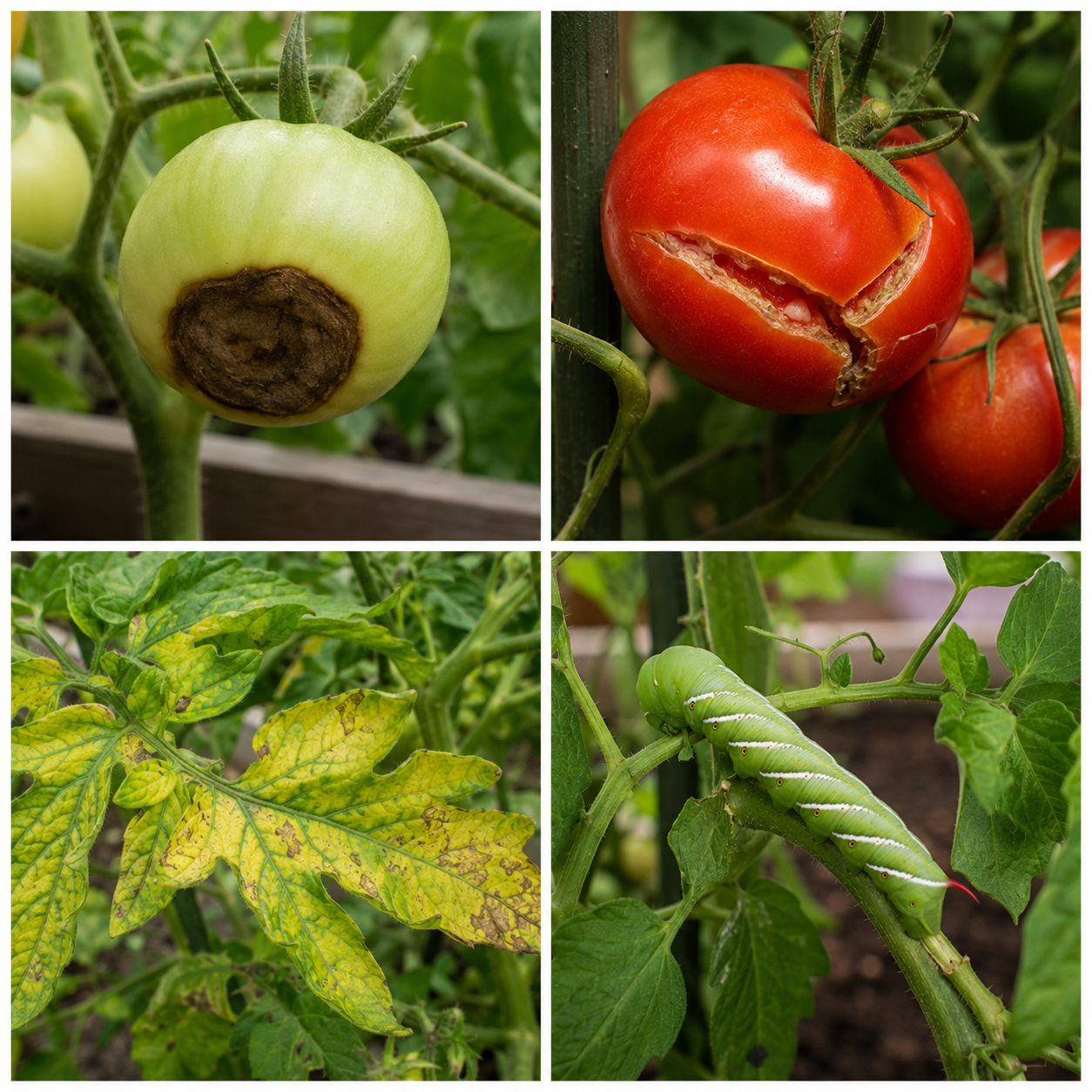
Most tomato problems are easier to fix when you spot them early.
Raised beds reduce some problems, but tomatoes can still suffer from pests, diseases, and environmental stress.
The key is to check your plants often. A quick daily look can help you catch problems early.
If your tomato leaves are turning yellow, read this full troubleshooting guide: Why Are My Tomato Leaves Turning Yellow?.
Blossom End Rot
Blossom end rot appears as a dark, sunken, leathery patch on the bottom of the tomato fruit.
It is often described as a calcium problem, but the real cause is usually inconsistent watering. If the plant cannot move calcium properly through its tissues, the fruit develops blossom end rot.
To prevent blossom end rot:
- Water consistently
- Mulch the soil
- Avoid letting the bed dry out completely
- Avoid overfeeding with nitrogen
- Keep soil pH in the correct range
- Do not damage roots
Adding calcium does not always fix the problem if watering is inconsistent.
Fruit Cracking and Splitting
Tomatoes often split when a dry period is followed by heavy rain or sudden overwatering. The fruit swells quickly and the skin bursts.
To reduce cracking:
- Water evenly
- Mulch the bed
- Harvest ripe fruit before heavy rain
- Avoid letting soil swing between very dry and very wet
- Choose crack-resistant varieties if this is a regular problem
Early Blight and Late Blight
Blight is one of the most common tomato disease problems. It often appears as dark spots, yellowing leaves, or rotting fruit.
To reduce blight risk:
- Space plants properly
- Water at soil level
- Avoid wetting leaves
- Remove lower leaves
- Mulch to prevent soil splash
- Remove infected leaves quickly
- Avoid overcrowding
- Rotate tomato crops each year if possible
If a plant is badly infected, remove the diseased material and dispose of it in the rubbish rather than composting it.
Fusarium and Verticillium Wilt
These are soil-borne diseases that cause tomato plants to yellow, wilt, and decline.
Prevention is the best strategy.
To reduce the risk:
- Choose resistant varieties
- Look for V and F disease-resistance codes
- Rotate crops
- Avoid planting tomatoes in the same soil every year
- Keep plants healthy and unstressed
Do not grow tomatoes in the same raised bed every year if you can avoid it. Rotate with unrelated crops such as beans, lettuce, onions, carrots, or herbs.
Tomato Hornworms
Tomato hornworms are large green caterpillars that can strip leaves quickly.
Check plants regularly, especially if leaves suddenly disappear or you see dark droppings on the foliage.
Pick hornworms off by hand and remove them.
If you see a hornworm covered in small white cocoons, leave it in place. Those cocoons belong to parasitic wasps, which help control hornworms naturally.
Aphids and Whiteflies
Aphids and whiteflies suck sap from tomato plants. They can cause curling leaves, sticky residue, and weakened growth.
To manage them:
- Spray them off with water
- Encourage ladybirds and other beneficial insects
- Use insecticidal soap if needed
- Remove badly infested leaves
- Avoid overfeeding with nitrogen, which encourages soft leafy growth
Flea Beetles and Potato Beetles
Flea beetles chew tiny holes in leaves. Potato beetles can damage tomato relatives as well.
Healthy established tomato plants can tolerate some leaf damage, but young plants may need protection.
Use row covers early in the season if pests are a regular issue, but remove covers when flowers appear so pollinators can access the plants.
Catfacing
Catfacing causes misshapen fruit with scars or rough areas. It is often triggered by cold weather during flower development.
To reduce catfacing:
- Avoid planting too early
- Protect young plants from cold nights
- Choose varieties less prone to the problem
Large beefsteak tomatoes are more likely to suffer from catfacing than small cherry tomatoes.
Sunscald
Sunscald appears as pale, papery patches on tomato fruit. It happens when fruit is suddenly exposed to intense sun, often after too much foliage has been removed.
To prevent sunscald:
- Avoid over-pruning
- Keep enough leaves to shade fruit
- Maintain healthy foliage
- Use support systems that hold the plant upright without exposing all fruit
Pruning is useful, but tomatoes still need leaves to protect the fruit and feed the plant.
Crop Rotation in Raised Beds
Crop rotation is important for tomatoes because they are prone to soil-borne diseases.
Avoid growing tomatoes in the same raised bed every year. Also avoid planting them where you recently grew related crops such as:
- Potatoes
- Peppers
- Aubergines
- Chillies
These crops are all in the same plant family and can share similar diseases.
A simple rotation plan is:
- Year 1: Tomatoes
- Year 2: Beans or peas
- Year 3: Leafy greens or onions
- Year 4: Tomatoes again
If you only have one raised bed, refresh the soil each year with compost and remove old roots and plant debris carefully. Growing disease-resistant varieties becomes even more important.
Companion Planting for Raised Bed Tomatoes
Companion planting is not magic, but it can help you make better use of space and attract beneficial insects.
Good companion plants for tomatoes include:
- Basil
- Parsley
- Marigolds
- Nasturtiums
- Chives
- Lettuce
- Garlic
- Borage
Avoid overcrowding the bed. Companion plants should not compete too heavily with tomatoes for light, water, or nutrients.
Low-growing herbs and flowers around the edges of the raised bed can work well.
Harvesting Tomatoes
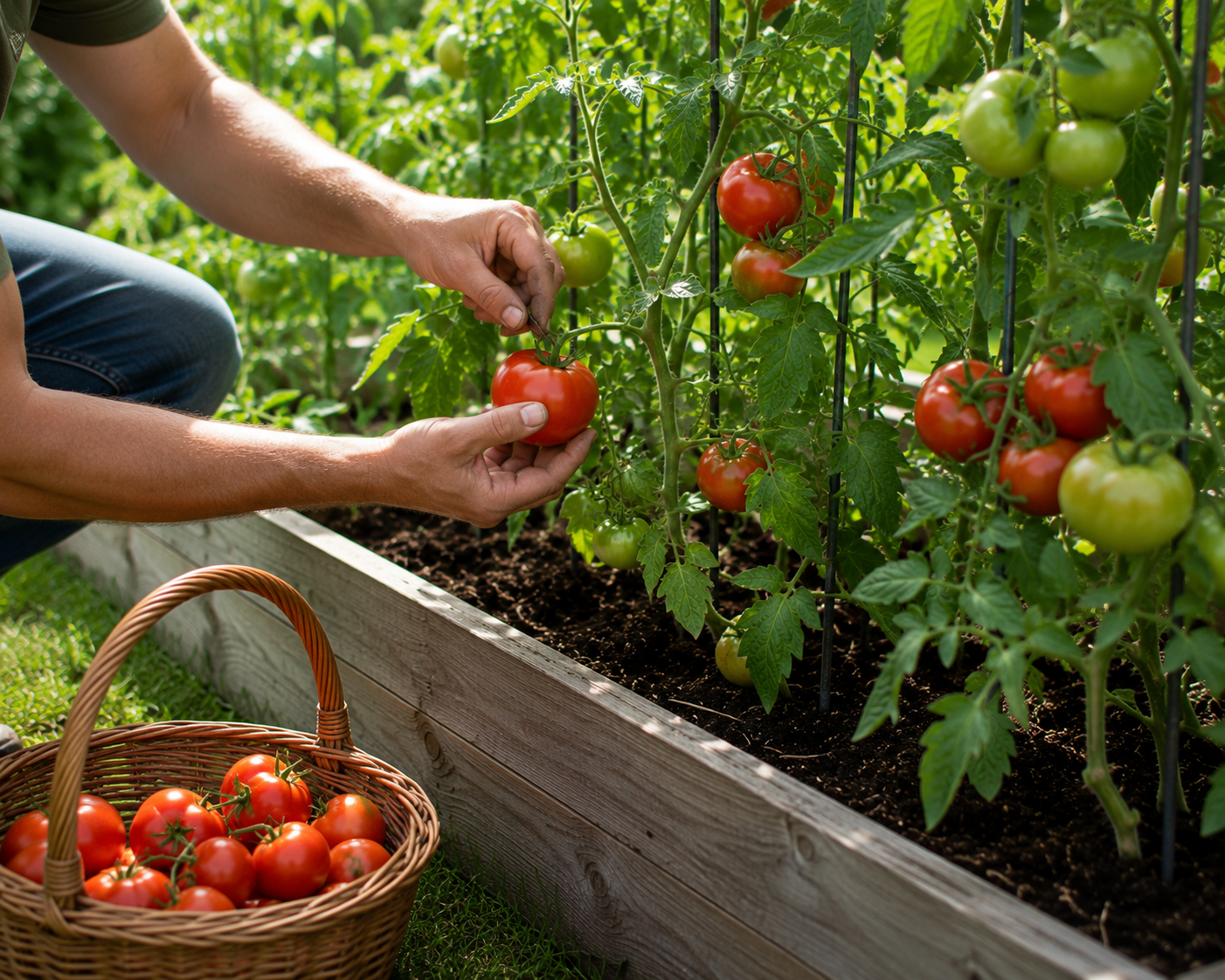
Pick tomatoes when they are fully coloured, firm, and ready to eat.
Tomatoes taste best when picked fully ripe, firm, and deeply coloured.
A ripe tomato should come away from the vine with a gentle twist. Do not pull hard, as this can damage the plant.
Harvest tomatoes regularly to encourage the plant to keep producing.
If heavy rain is forecast, pick nearly ripe tomatoes early to prevent splitting. If frost is coming, harvest mature green tomatoes and ripen them indoors.
Tomatoes can ripen off the plant once they have reached the breaker stage, when they first begin to show colour.
How to Store Fresh Tomatoes
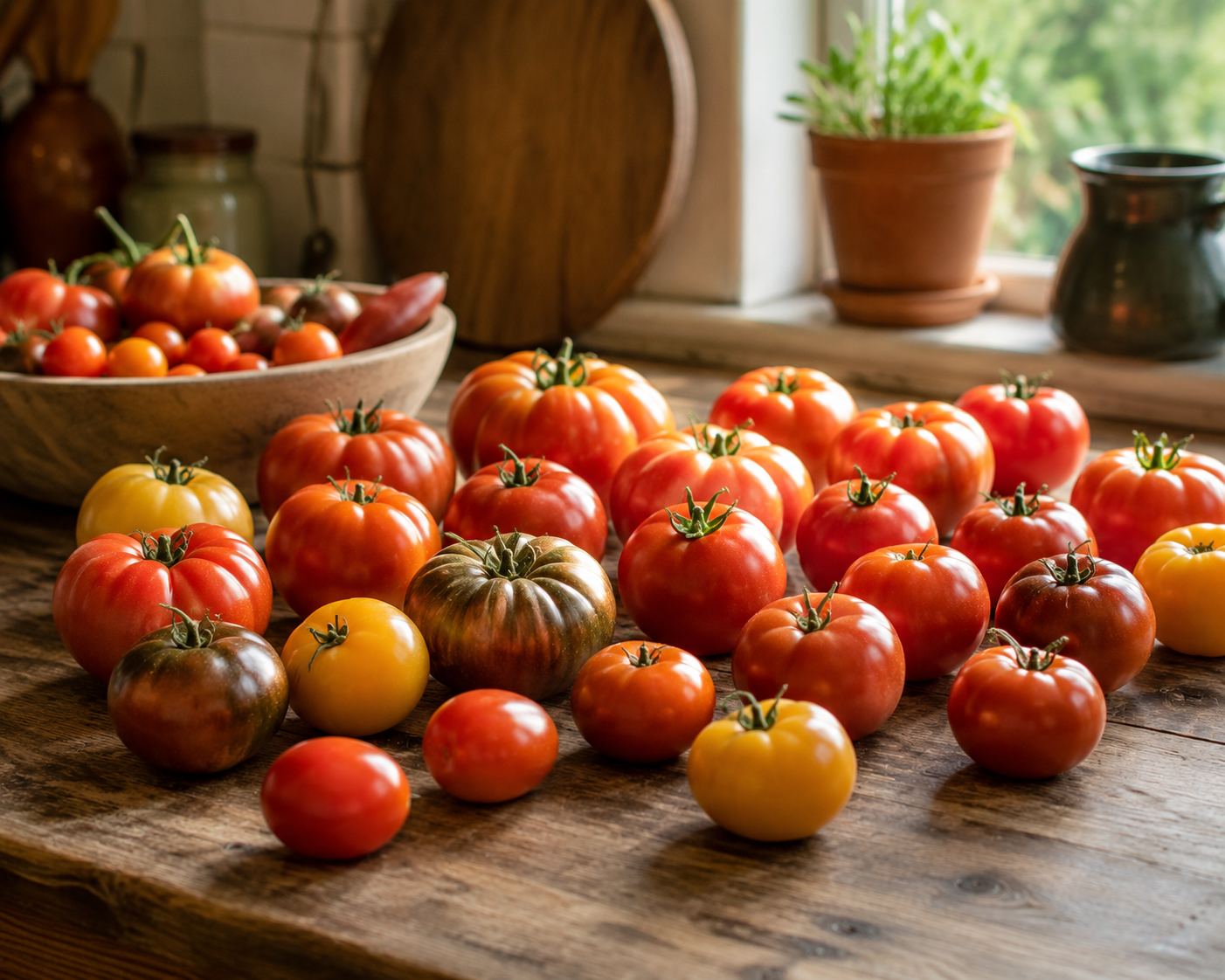
Store fresh tomatoes at room temperature for the best flavour and texture.
Do not refrigerate fresh garden tomatoes unless they are already cut or about to spoil.
Cold temperatures damage tomato flavour and texture. Refrigerated tomatoes often become mealy and lose their rich aroma.
Store ripe tomatoes:
- At room temperature
- Out of direct sunlight
- In a single layer
- Stem side down if possible
- Away from bananas and other strong ethylene-producing fruit if they are already ripe
Use ripe tomatoes as soon as possible for the best flavour.
End-of-Season Raised Bed Tomato Care
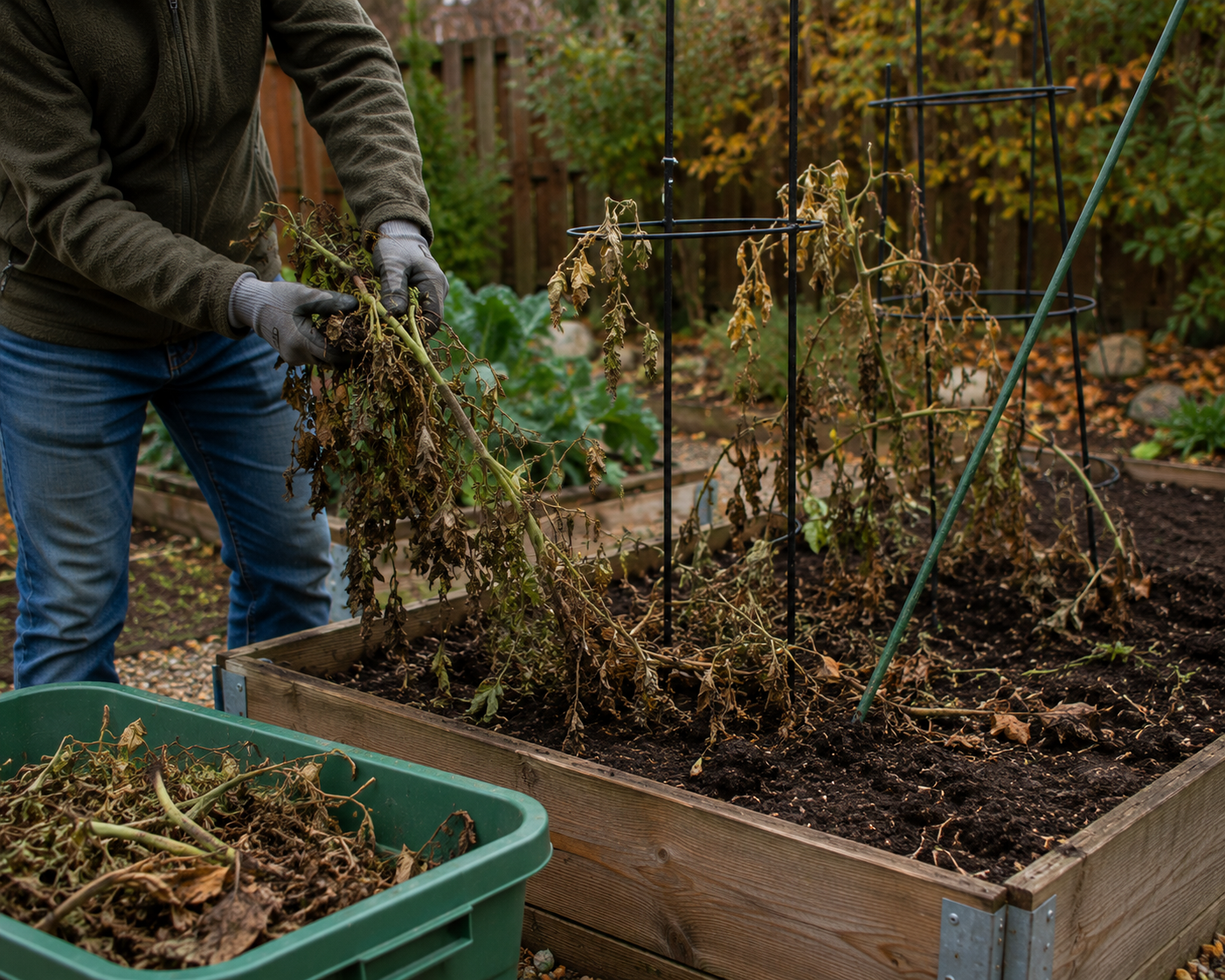
End-of-season cleanup helps reduce pests and diseases next year.
At the end of the season, remove old tomato plants from the raised bed. Do not leave diseased leaves, stems, or fruit in the soil.
End-of-season cleanup helps reduce pest and disease problems next year.
At the end of the season:
- Remove old tomato plants.
- Dispose of diseased material in the rubbish.
- Compost only healthy plant material.
- Remove fallen fruit.
- Clean stakes, cages, and supports.
- Add compost to the bed.
- Cover the soil with mulch or a cover crop.
If blight or wilt was a problem, be extra careful with cleanup and crop rotation.
Quick Raised Bed Tomato Growing Checklist
Use this checklist when setting up your raised bed tomatoes:
- Choose a sunny location with 6 to 8+ hours of direct sunlight.
- Use a raised bed at least 12 inches deep.
- Fill with rich, loose, well-draining soil.
- Mix in compost before planting.
- Choose determinate tomatoes for compact growth or indeterminate tomatoes for long harvests.
- Harden off plants before transplanting.
- Plant after frost risk has passed.
- Bury tomato stems deeply.
- Space plants properly.
- Install supports at planting time.
- Water deeply and consistently.
- Mulch once the soil has warmed.
- Feed when fruit starts forming.
- Prune indeterminate plants for airflow.
- Remove lower leaves near the soil.
- Watch for pests and disease.
- Harvest tomatoes when fully coloured and firm.
Frequently Asked Questions About Growing Tomatoes in Raised Beds
How many tomato plants can I grow in a 4x4 raised bed?
You can usually grow four tomato plants in a 4x4 raised bed, placing one plant in each corner. This gives them enough space for airflow, pruning, watering, and support.
If you are growing very large indeterminate tomatoes, you may want to grow fewer plants. If you are growing compact determinate or dwarf varieties, four plants should work well.
How deep should a raised bed be for tomatoes?
A raised bed for tomatoes should be at least 10 to 12 inches deep, but 12 to 18 inches is better. For large indeterminate tomatoes, deeper beds of 18 to 24 inches are ideal because they hold more water and give roots more space.
What is the best soil mix for tomatoes in raised beds?
A good tomato raised bed mix is 50% to 60% topsoil, 30% to 40% compost, and 10% organic material for structure and drainage, such as leaf mould or fine bark.
The soil should be fertile, loose, well-draining, and rich in organic matter.
Do tomatoes grow better in raised beds or pots?
Tomatoes can grow well in both, but raised beds are usually easier for larger plants because they provide more root space, more stable moisture, and better soil temperature. Pots are useful for patios and balconies, but they dry out faster and need more frequent watering.
For a full container-growing guide, read: How to Grow Tomatoes in Pots.
Should I use tomato cages or stakes in raised beds?
Use cages for determinate or bush tomatoes. Use stakes, trellises, or string supports for indeterminate tomatoes. Install supports when you plant to avoid damaging roots later.
How often should I water tomatoes in raised beds?
Tomatoes usually need about 1 to 2 inches of water per week, but raised beds may dry out faster in hot weather. Check the soil regularly. Water deeply whenever the top few inches of soil begin to dry out.
The key is consistency. Avoid letting the soil swing from bone dry to soaking wet.
Should I prune tomatoes in raised beds?
Prune indeterminate tomatoes to improve airflow and control growth. Remove some suckers and lower leaves. Do not heavily prune determinate tomatoes because it can reduce the harvest.
Can I grow tomatoes in the same raised bed every year?
It is better not to grow tomatoes in the same raised bed every year. Rotate them with unrelated crops to reduce soil-borne disease problems. If you have limited space, refresh the soil with compost, remove plant debris, and choose disease-resistant varieties.
Final Thoughts
Growing tomatoes in raised beds is one of the best ways to create the warm, rich, well-drained growing conditions that tomato plants love. With the right bed depth, good soil, proper spacing, steady watering, strong support, and regular feeding, even a small raised bed can produce a generous harvest.
The most important things to remember are simple: give tomatoes full sun, plant them deeply, keep the soil evenly moist, feed them once fruiting begins, and support them before they become heavy.
Do those things well, and your raised bed can become one of the most productive parts of your garden.
Happy growing!