How Many Tomato Plants Per Pot? A Simple Guide
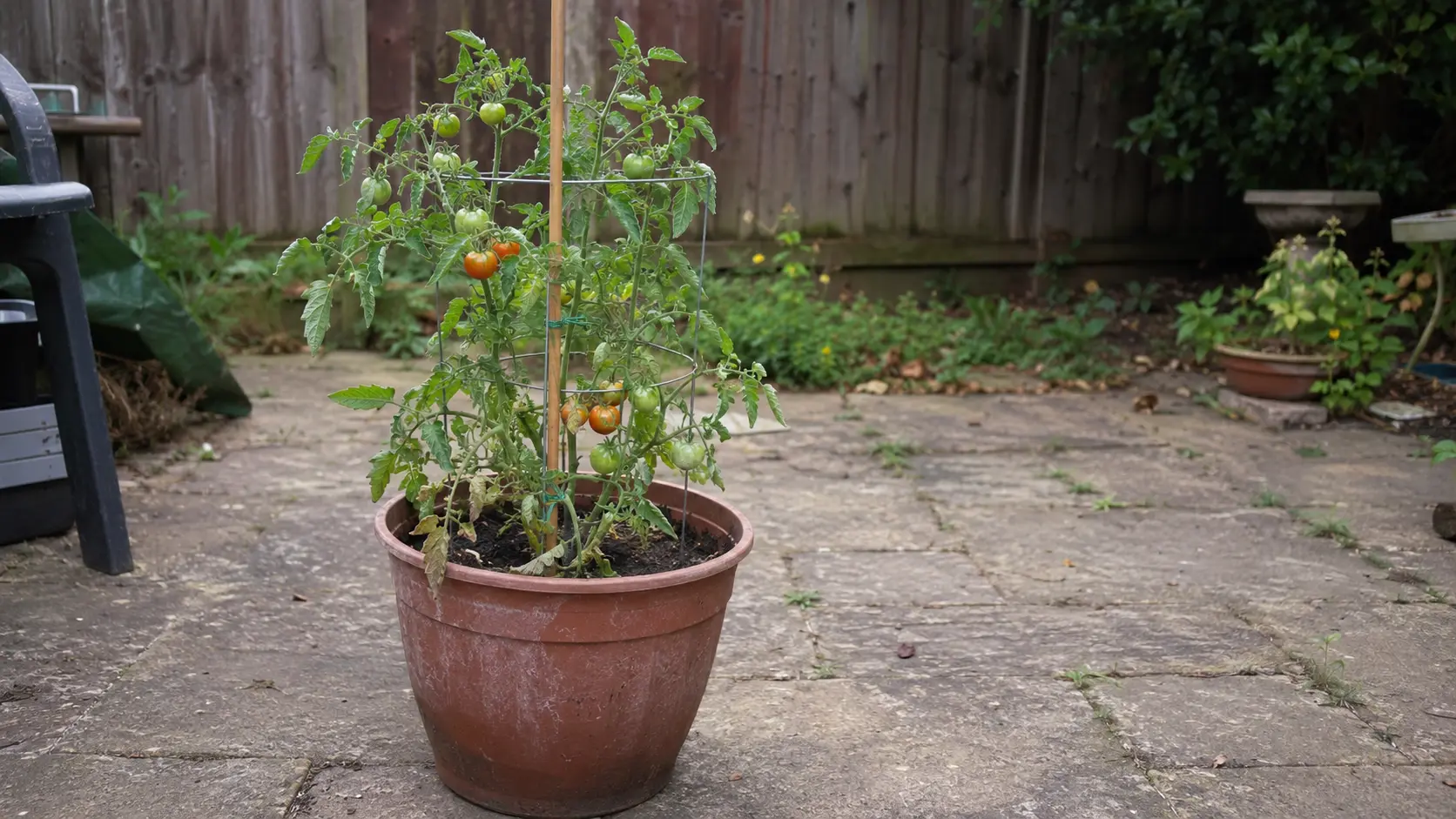
The simple answer is one tomato plant per pot.
Although two small seedlings may look as if they have plenty of room, mature tomato plants have large root systems and need generous amounts of water, nutrients, light, and airflow. Giving each plant its own container usually results in stronger growth and a better harvest than crowding several plants together.
There are a few exceptions for extra-large planters, troughs, and grow bags. This guide explains those exceptions and helps you match the right number of plants to the container you have.
Quick Answer: How Many Tomato Plants Can You Grow in One Pot?
For most container-grown tomatoes, use this rule:
Plant one tomato plant in each pot, bucket, or individual grow bag.
The pot must still be large enough for the variety. One full-sized tomato plant will struggle in a tiny container even when it does not have to share.
Here is a quick guide:
| Tomato type | Suggested container size | Plants per pot |
|---|---|---|
| Micro tomato | 1–3 gallons | 1 |
| Dwarf tomato | 5–7 gallons | 1 |
| Determinate or bush tomato | At least 5 gallons; 10 gallons is easier to manage | 1 |
| Indeterminate or vining tomato | At least 10 gallons; 15–20 gallons is preferable | 1 |
Container recommendations can vary by cultivar, so check the seed packet or plant label as well. When you have a choice, select the larger pot. A greater volume of potting mix gives the roots more room and helps prevent the container from drying out too quickly.
Why One Tomato Plant Per Pot Works Best
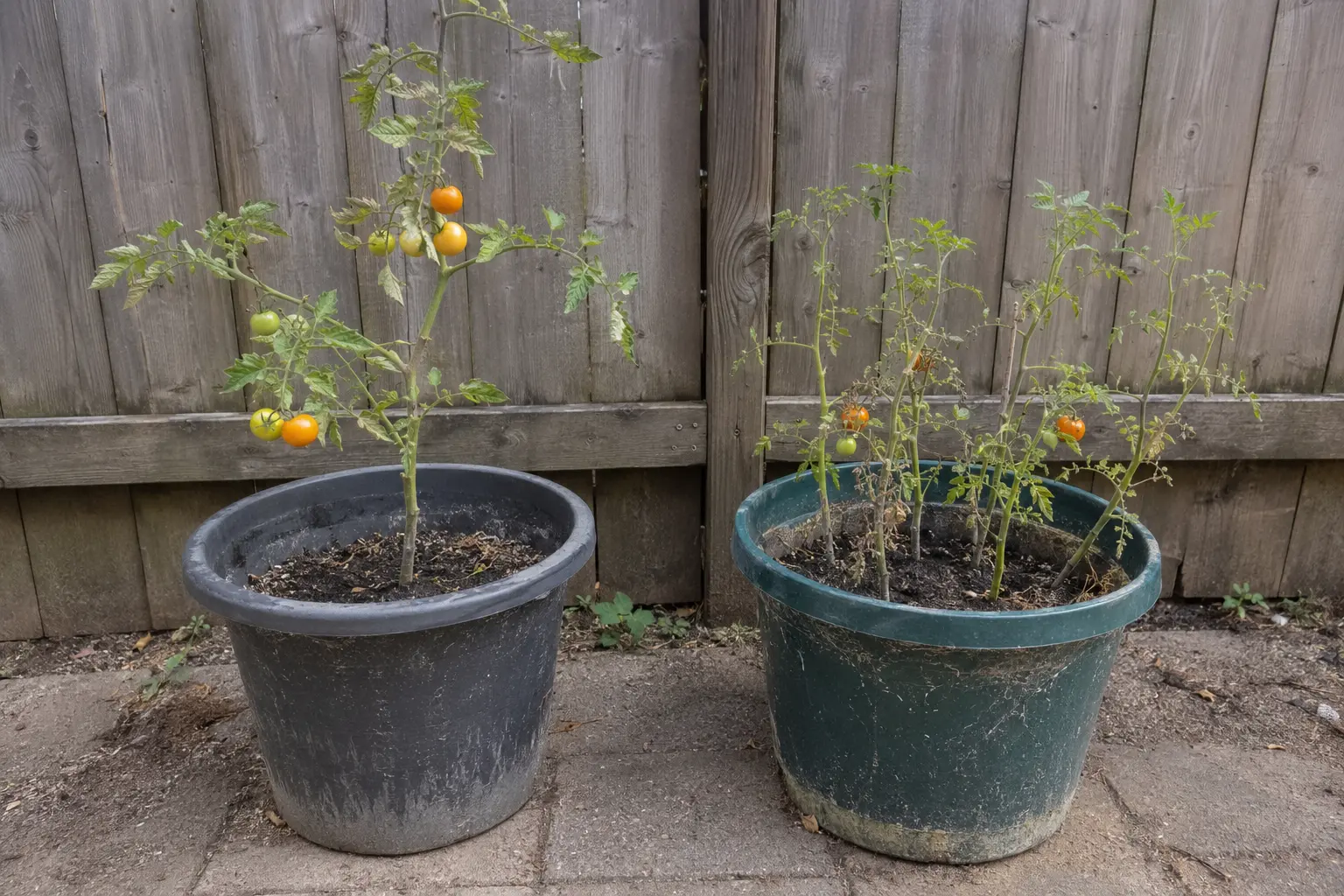
Tomatoes are vigorous plants. Even compact varieties need more room than their young size suggests. Putting several seedlings into one ordinary pot creates competition below and above the soil.
The roots need room
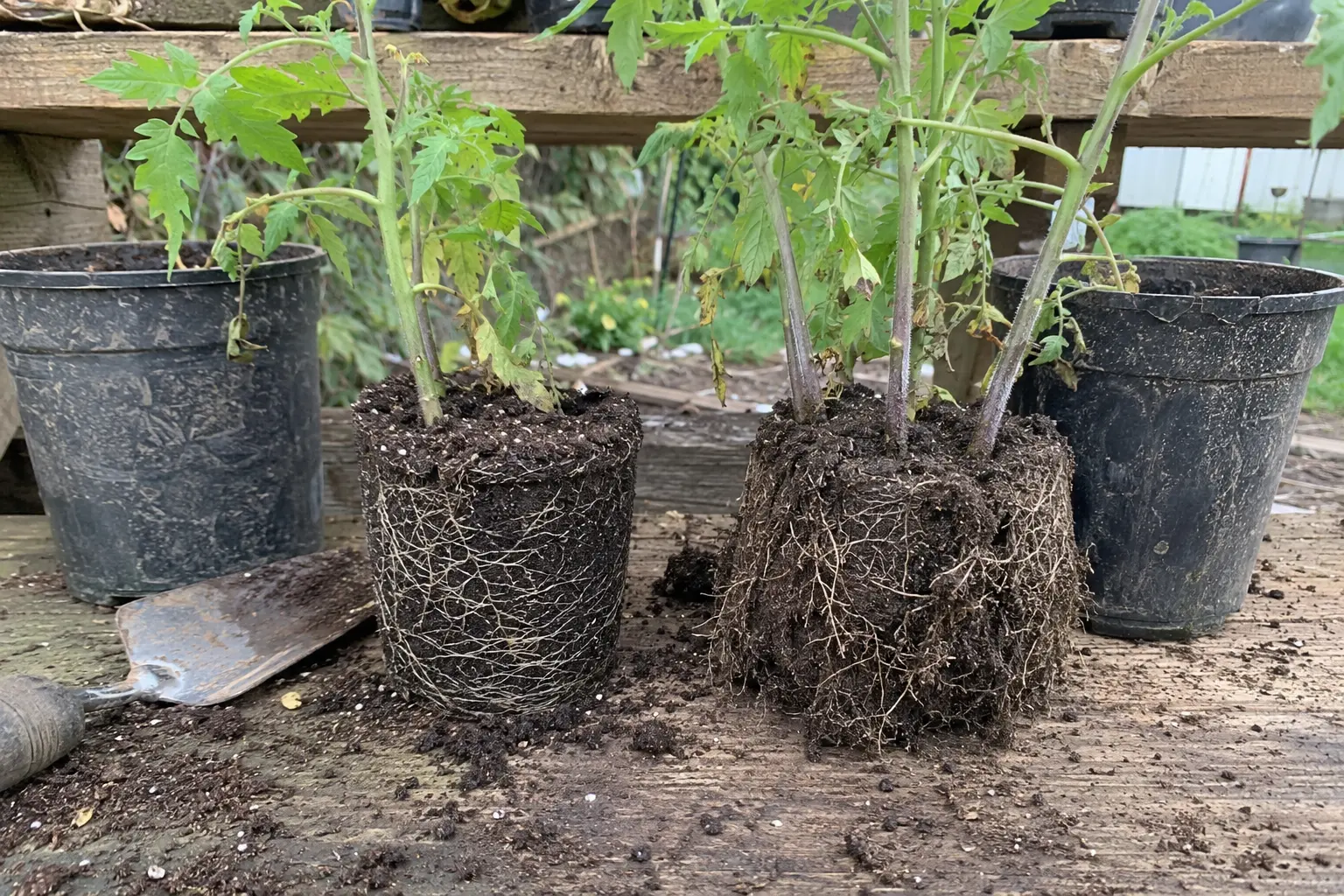
A tomato develops a wide network of roots to take up moisture and nutrients. In a crowded container, the roots compete for the same limited volume of potting mix. The plants may become root-bound, dry out rapidly, or produce less fruit.
Each plant needs reliable access to water
Pots lose moisture faster than garden soil. Two tomato plants sharing a container use the available water more quickly, making it harder to keep moisture levels consistent.
This does not mean that you should keep the compost constantly soggy. It means each plant needs enough potting mix to hold useful moisture without becoming waterlogged. If you are planning your care routine, see our guide on how often to water tomatoes in pots.
Tomatoes are hungry plants
Tomatoes need a steady supply of nutrients to grow, flower, and develop fruit. When two plants share a small root zone, both draw from the same limited supply. Adding extra fertilizer does not solve the lack of root space, water capacity, or airflow—and too much fertilizer can create problems of its own.
Crowded foliage reduces airflow
Closely packed stems and leaves hold humidity and take longer to dry. This can create conditions that favor common tomato diseases. A single plant is easier to support, inspect, and keep open to moving air.
More plants do not always mean more tomatoes
It is tempting to assume that two plants will provide twice the harvest. In a container that is only large enough for one, the opposite may happen. Both plants can become stressed and underproductive. One healthy plant with enough space is usually a better investment.
How Pot Size Changes the Answer
The one-plant rule is useful, but the correct pot size depends on the plant’s mature growth habit—not the size of the seedling on planting day.
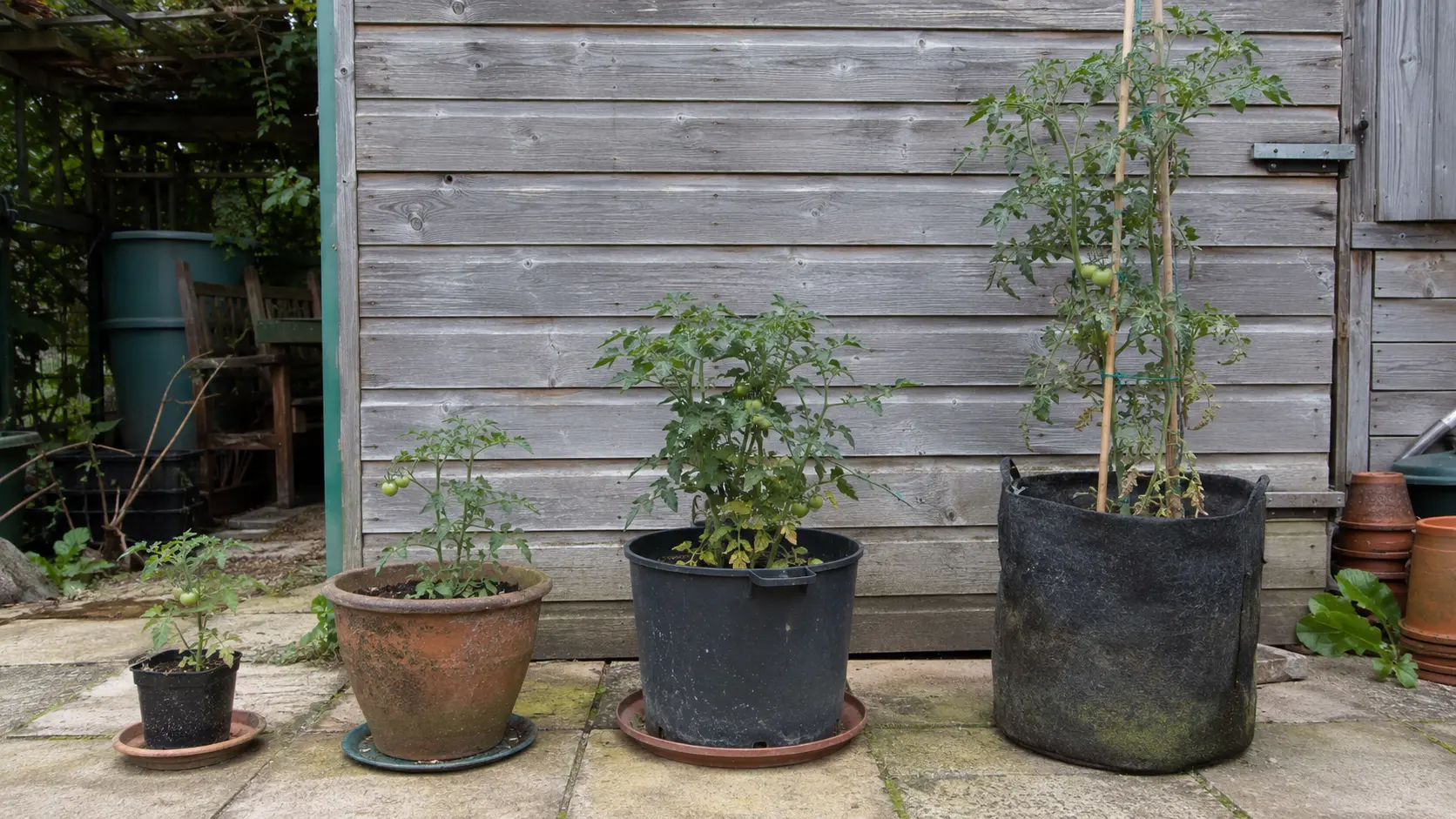
Micro tomatoes
Micro tomatoes are bred to stay unusually small. Some mature at only 6–18 inches tall and can grow in 1- to 3-gallon containers.
Even with these tiny varieties, one plant per pot is the easiest arrangement. Examples include compact cultivars such as Micro Tom and other varieties specifically labelled for tabletops or very small containers.
Do not assume that every cherry tomato is a micro tomato. Many cherry varieties are vigorous indeterminate plants and need much larger pots.
Dwarf tomatoes
Dwarf tomatoes have compact, sturdy growth but can still produce full-sized fruit. A 5- to 7-gallon pot is a practical starting point for one plant, although a larger container can make watering and feeding easier.
Look for the word dwarf in the cultivar description rather than judging by fruit size alone.
Determinate or bush tomatoes
Determinate tomatoes grow to a genetically limited height and produce most of their crop within a relatively concentrated period. Their controlled growth makes many of them well suited to patios, balconies, and container gardens.
Plant one determinate tomato in a pot holding at least 5 gallons. If space allows, a 10-gallon container gives the roots more room and provides a larger moisture reserve during warm weather.
Good container candidates often include words such as bush, patio, or container in their names or descriptions. Always confirm the mature size before buying.
Indeterminate or vining tomatoes
Indeterminate tomatoes continue growing and producing until cold weather or disease stops them. Many reach 6 feet or taller and develop large root systems.
Grow one indeterminate plant in a container of at least 10 gallons, with 15–20 gallons preferable for vigorous varieties. Large beefsteak and heirloom tomatoes generally benefit from the upper end of that range.
These plants also require strong support. Make sure the pot is wide and heavy enough to remain stable when the mature vine is covered with foliage and fruit.
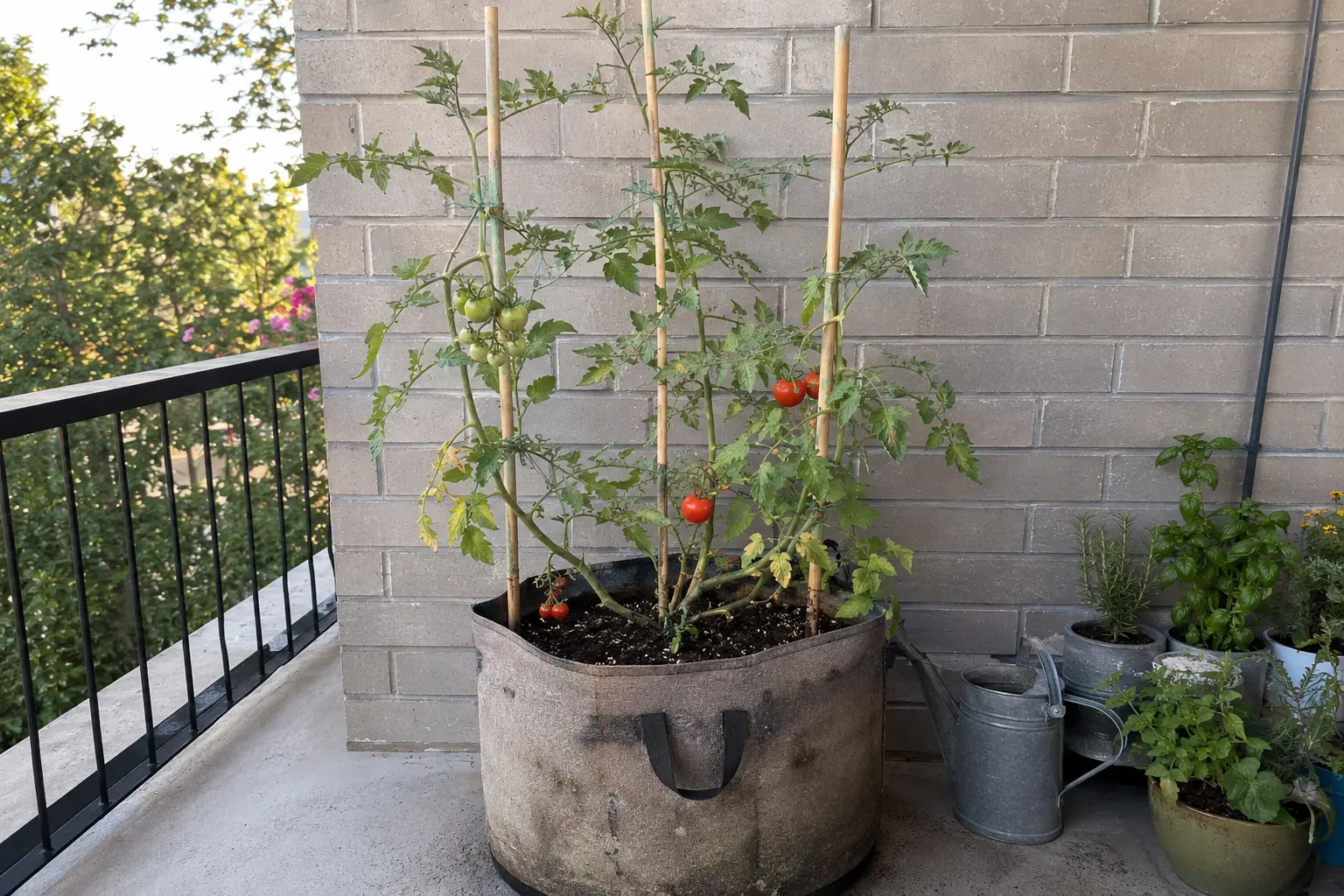
Can You Put Two Tomato Plants in One Pot?
You can put two tomato plants in one container only when the planter provides enough soil volume and spacing for both mature plants.
In practice, this means treating a large planter as two separate growing spaces. Each plant should receive roughly the same root room it would have in an individual pot, with enough distance between the stems for good airflow.
For example, two compact determinate plants may share a very large trough if:
- the container provides sufficient potting mix for both plants;
- the plants can be spaced at least 14–18 inches apart;
- both plants receive direct sunlight;
- the planter has excellent drainage; and
- each plant has its own support.
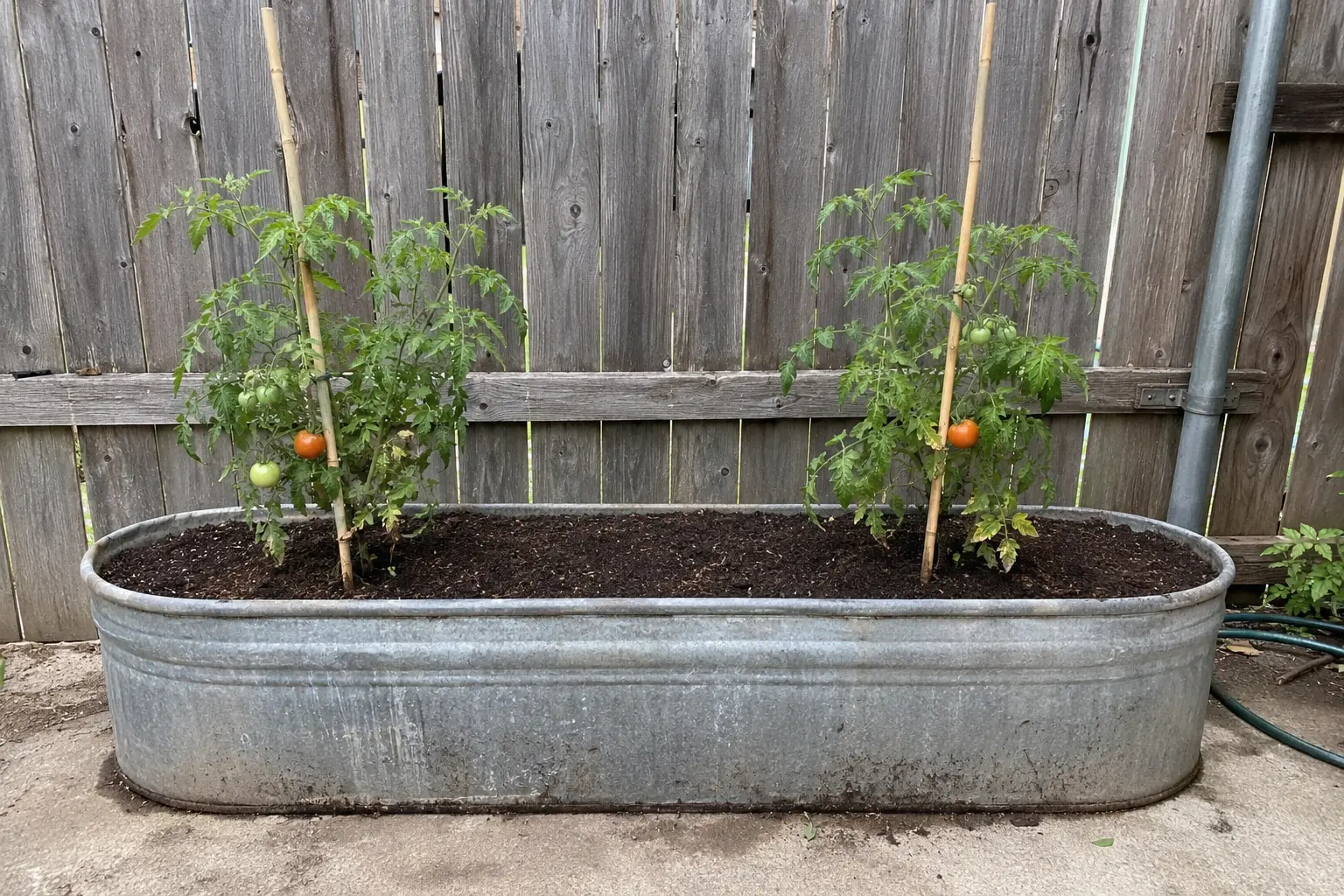
Two standard tomato plants should not share a 5-gallon bucket. A 10-gallon container is also usually better used for one healthy plant, especially if the variety is indeterminate.
When deciding whether a planter is large enough, divide its total volume by the number of plants. A 20-gallon planter shared by two plants provides about 10 gallons per plant. The shape and depth of the planter still matter, but this quick calculation helps prevent overcrowding.
How Many Tomato Plants Per Grow Bag?
The answer depends on what you mean by a grow bag.
Individual fabric grow bags
Treat a round or square fabric grow bag like a pot: grow one tomato plant per bag. Match the bag’s capacity to the mature tomato variety using the same size guide above.
Traditional long growing bags
A long compost-filled growing bag may support more than one plant because it is designed with several planting positions. In a standard growing bag, two tomato plants is a sensible modern recommendation. This gives each plant more root space than crowding three into the same bag.
Follow the manufacturer’s instructions because growing bags differ in dimensions and compost volume. If the bag is shallow or small, reducing the plant count is safer than squeezing in an extra seedling.
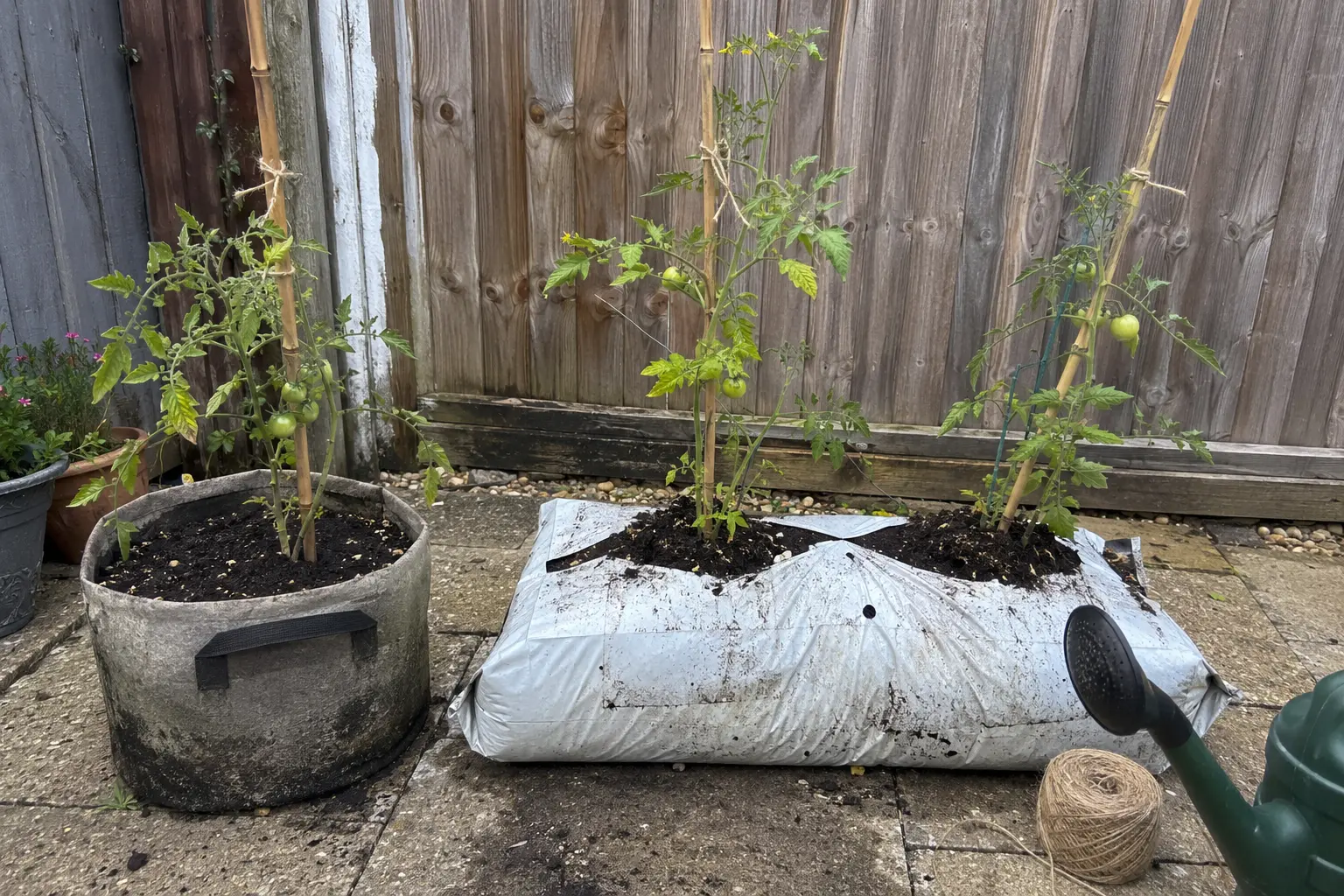
How Many Tomato Plants Per Trough or Window Box?
Long troughs and deep window boxes can hold multiple compact tomato plants, provided each one has enough room.
Space plants approximately 14–18 inches apart and choose bush, dwarf, patio, or tumbling varieties. The container should be deep and wide enough to give each plant a useful root zone. Ordinary narrow flower boxes are usually too small for full-sized tomato plants.
For a simple estimate:
- Measure the usable inside length of the planter.
- Allow 14–18 inches for each compact plant.
- Check that the total soil volume also meets the needs of every plant.
- Leave space around the outside plants instead of placing their stems directly against the ends.
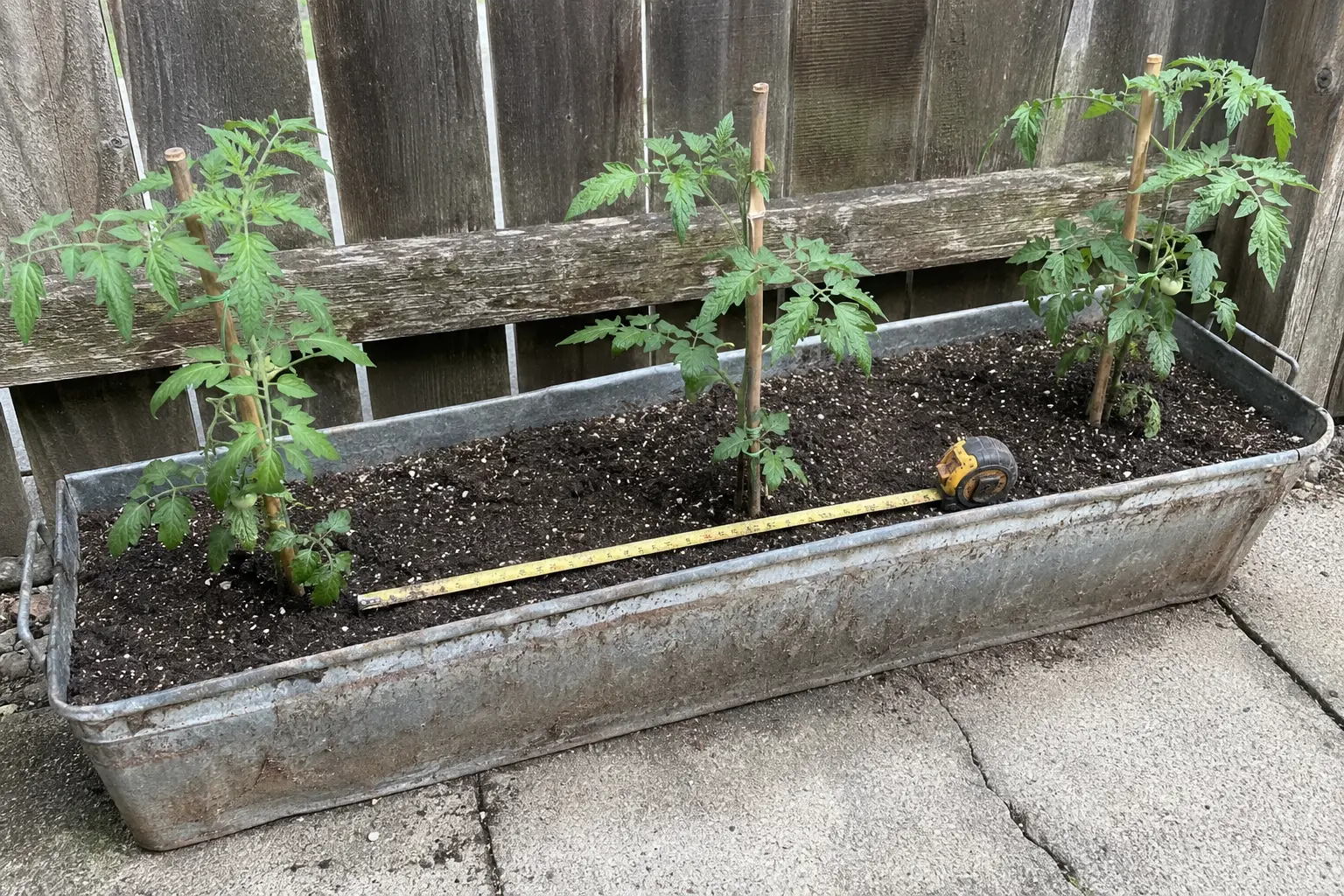
Spacing alone is not enough. A long but very shallow container may still lack the soil volume needed for healthy tomatoes.
What to Do If You Planted Too Many Tomatoes in One Pot
If several seedlings are growing together, deal with them while they are still young. Their roots become harder to separate as they develop.
Separate young seedlings
Water the pot first so the potting mix holds together without being hard and dry. Gently remove the root ball, ease the seedlings apart, and place each one in its own suitable container. Hold seedlings by their leaves rather than squeezing their delicate stems.
Some fine-root damage is difficult to avoid. Replant promptly, water them in, and shelter them from harsh midday sun for a short time while they recover.
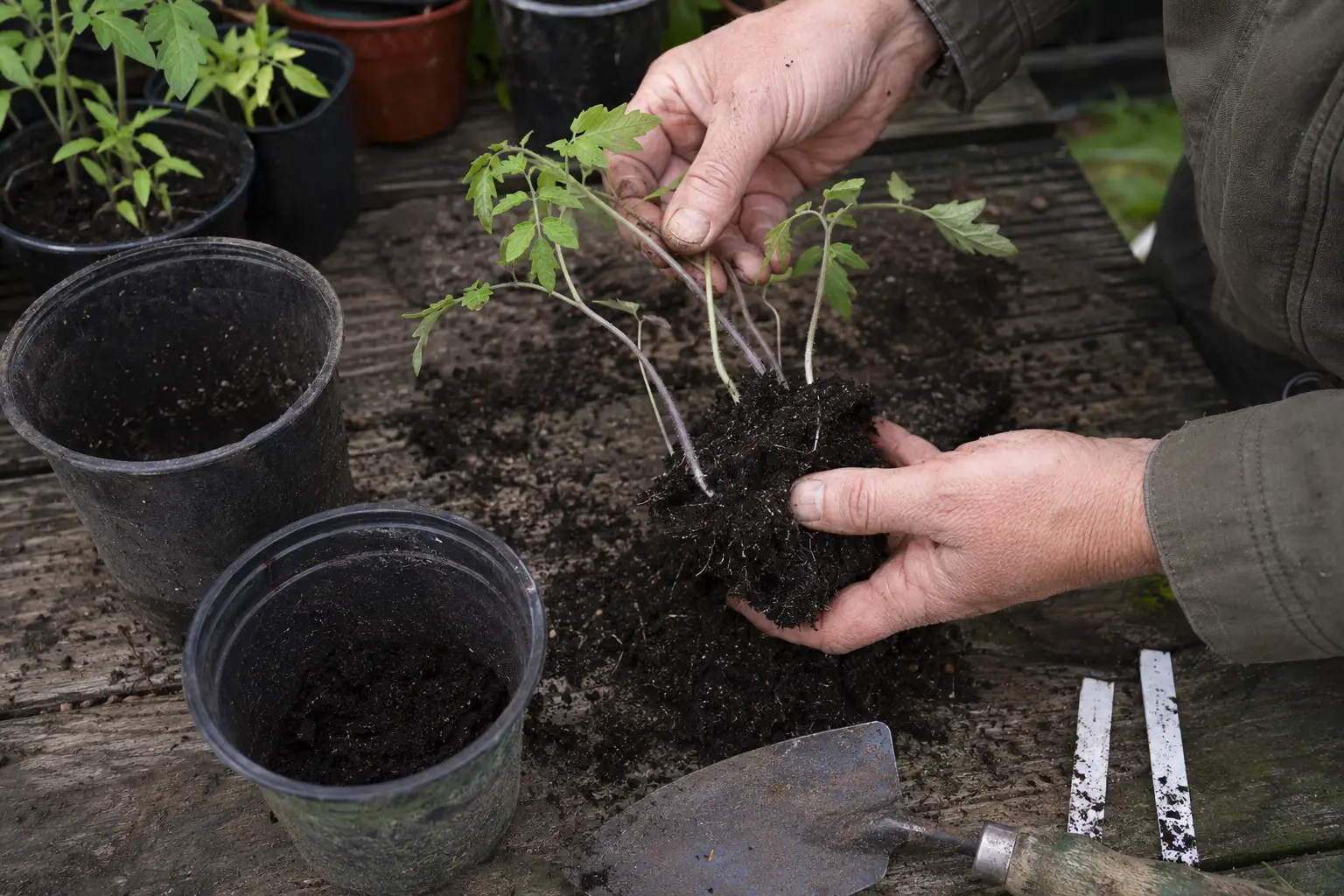
Thin very small seedlings
If the seedlings are too tangled to separate safely, keep the strongest one and snip the others off at soil level with clean scissors. Do not pull them out, as this can disturb the roots of the plant you want to keep.
Avoid separating mature plants unless necessary
Established tomato roots may be tightly intertwined. Pulling mature plants apart can cause severe damage to both. If crowding is already affecting growth, it may be better to remove the weaker plant by cutting it at the base rather than risking the healthier one.
Choosing the Best Tomato for a Pot
The easiest container tomatoes are varieties whose mature size suits the space you have. Look for descriptions such as:
- micro;
- dwarf;
- patio;
- compact;
- bush; or
- suitable for containers.
Fruit size is not a reliable guide to plant size. A plant that produces tiny cherry tomatoes may grow into a long, vigorous vine, while a compact dwarf plant may produce medium or large fruit.
Before choosing a cultivar, check three details on the packet or label:
- Growth habit: determinate, indeterminate, dwarf, or micro.
- Mature height and spread: this shows how much above-ground space it needs.
- Recommended container size: cultivar-specific advice should take priority over a general rule.
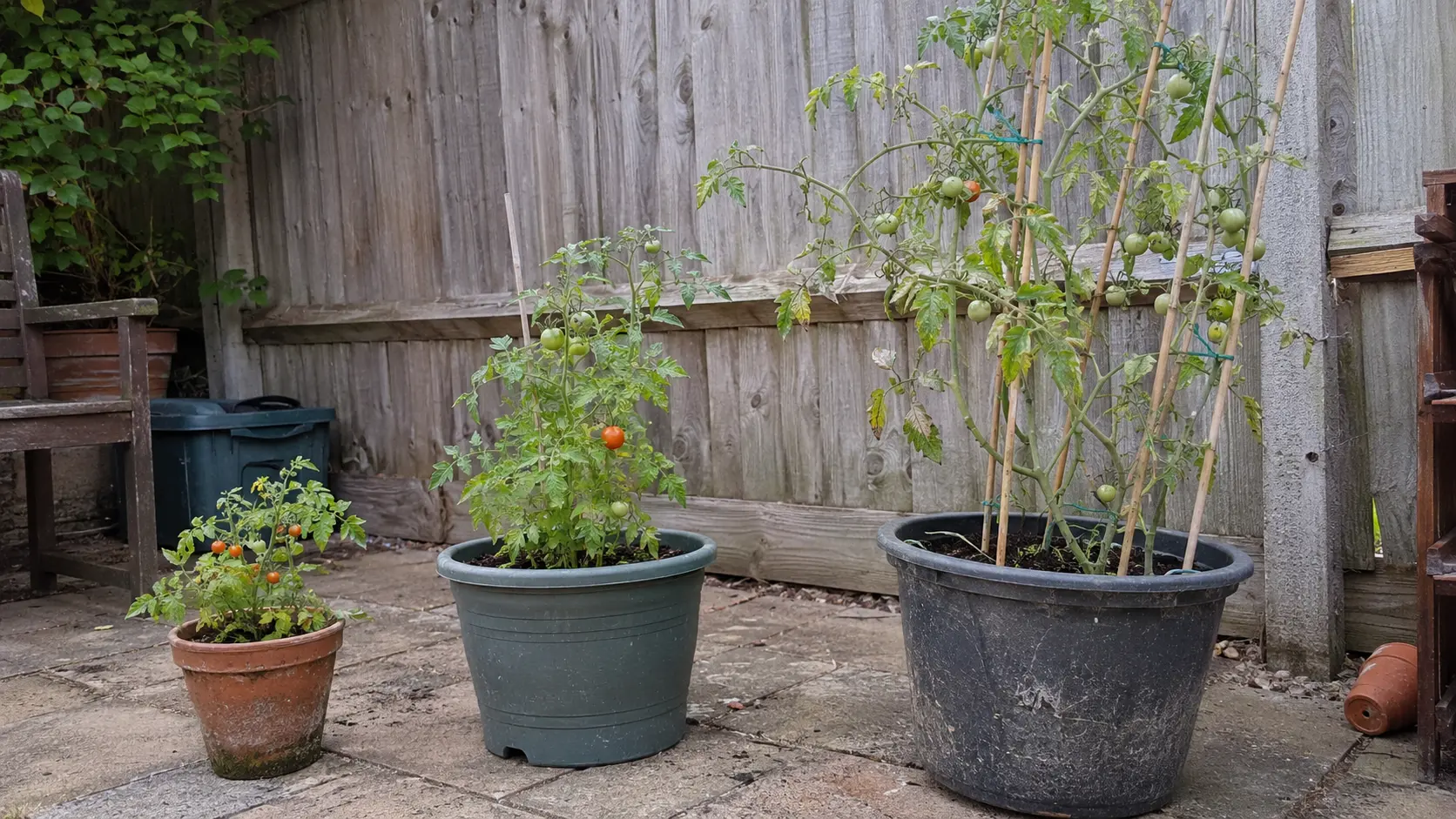
If you are new to container gardening, a compact determinate or dwarf variety is usually easier to manage than a vigorous indeterminate vine.
Common Plant-Count Mistakes
Keeping every seedling
Several seeds are often sown as insurance, but they are not meant to remain together for the whole season. Keep the strongest seedling and transplant or remove the extras.
Choosing the pot by the seedling’s current size
A young tomato looks tiny in a large container. Choose for its mature size instead. By midsummer, the extra root room will no longer look excessive.
Treating every cherry tomato as compact
Cherry describes the fruit, not the plant. Check whether the variety is micro, dwarf, determinate, or indeterminate before choosing its pot.
Trying to compensate with more fertilizer
Fertilizer cannot create extra root space or airflow. If a pot is overcrowded, the best solution is to reduce the number of plants or move them to a larger container.
Counting planting holes instead of checking bag volume
A growing bag may have three marked holes, but that does not automatically mean three large tomato plants will perform well. Consider the bag’s actual dimensions, the tomato variety, and the manufacturer’s current guidance.
Frequently Asked Questions
Can I grow two tomato plants in a 5-gallon bucket?
No. A 5-gallon bucket should contain only one compact tomato plant. Two plants would have to compete for a small amount of potting mix and would make consistent watering much more difficult.
How many cherry tomato plants can I put in one pot?
Usually one. Cherry tomatoes can be large indeterminate vines, despite producing small fruit. Only genuinely micro or compact cherry varieties belong in small containers, and each should still have its own pot.
How many tomato plants can grow in a 10-gallon pot?
Grow one tomato plant in a 10-gallon pot. That size works well for many determinate varieties and can serve as a practical minimum for smaller indeterminate plants.
How many tomato plants can grow in a 20-gallon pot?
One large indeterminate tomato will make excellent use of a 20-gallon pot. Two compact determinate plants may share a wide 20-gallon planter if they can be spaced properly, but individual pots are easier to manage.
Can two tomato plants grow in the same hole?
It is not recommended. The plants will compete from the beginning, and separating their stems above the soil does not provide separate root zones below it.
How far apart should tomatoes be in a large planter?
Allow approximately 14–18 inches between compact container varieties, then confirm the mature spread specified for the cultivar. Vigorous indeterminate tomatoes need more room and generally perform better in separate pots.
Is one tomato plant enough?
One healthy tomato plant can produce a generous harvest, although the amount varies widely with the variety, weather, growing conditions, and care. If you want several varieties or a longer harvest, grow additional plants in separate containers.
The Bottom Line
For the healthiest plants and the simplest care routine, grow one tomato plant per pot. Use at least 5 gallons for most compact bush tomatoes and a much larger container—often 15–20 gallons—for vigorous indeterminate varieties.
Multiple plants can share an extra-large trough or traditional growing bag, but only when every plant receives adequate soil volume, spacing, light, and airflow. When in doubt, give each tomato its own pot. One uncrowded, thriving plant is more likely to reward you than several plants competing for the same limited space.