How to Grow Tomatoes in a Greenhouse: Beginner's Guide
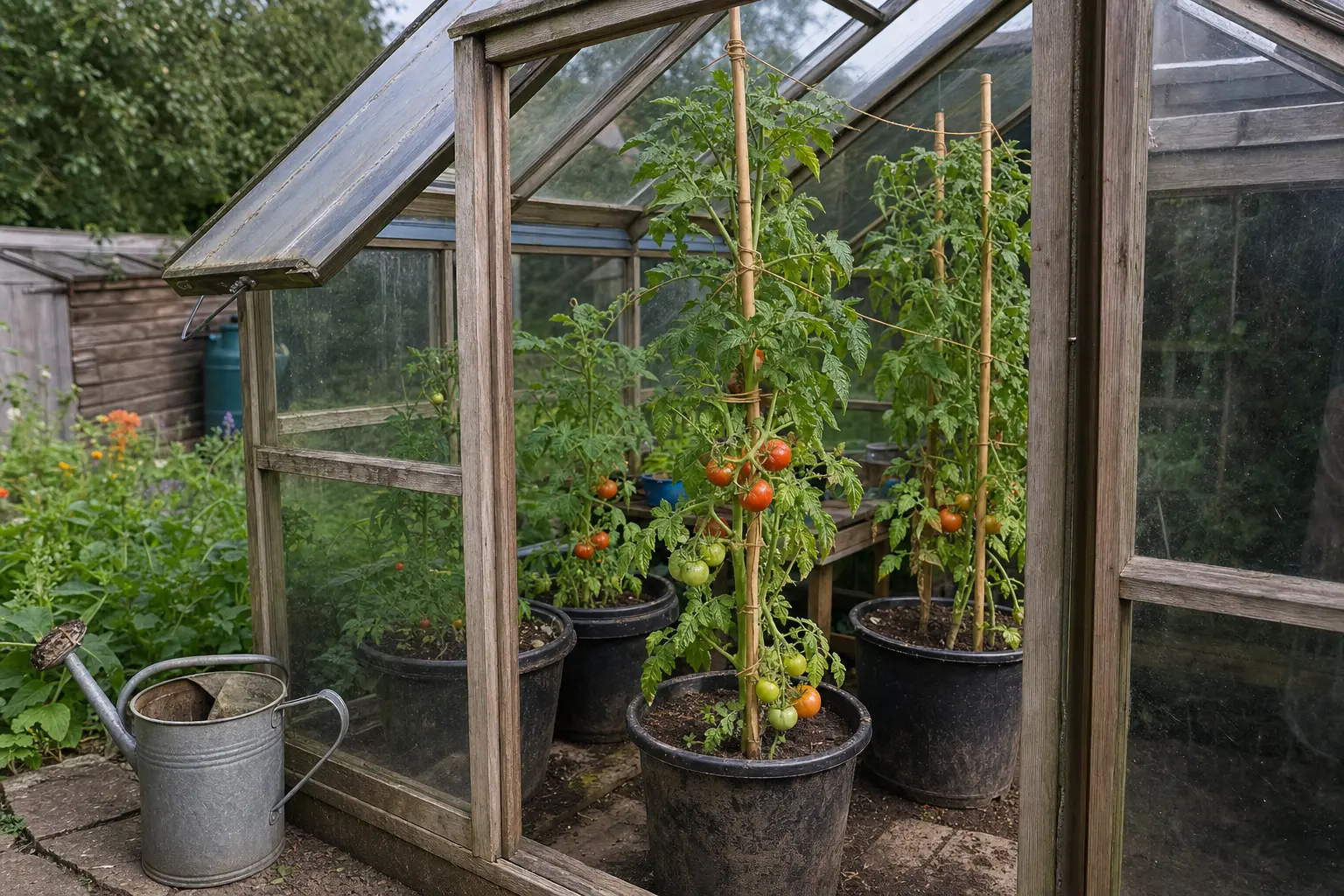
Growing tomatoes in a greenhouse is one of the best ways to get an earlier, more reliable crop, especially in cooler or changeable climates. A greenhouse gives tomatoes extra warmth, shelter from heavy rain and more control over watering, but it also creates new jobs: ventilation, pollination, humidity control and regular pruning matter more under cover.
Quick answer
To grow tomatoes in a greenhouse, sow seeds indoors in late winter to early spring, raise strong young plants in bright warmth, then plant them into large pots, grow bags, ring culture or greenhouse borders once temperatures are reliably mild. Give each plant plenty of light, steady moisture, regular tomato feed after flowering, good support, daily ventilation and help with pollination by gently tapping or vibrating flower trusses. Train tall cordon tomatoes to one main stem, remove sideshoots often, and keep the greenhouse airy to reduce disease.
In a simple home greenhouse, the biggest wins are:
- choose greenhouse-suitable varieties, especially cordon types if space is tight;
- avoid planting too early into cold compost or soil;
- water evenly rather than letting plants swing between drought and soaking;
- open vents and doors on warm days;
- gently shake flower trusses once flowers open;
- feed once the first fruits begin to form;
- check plants often for pests, leaf problems and blossom-end rot.
Contents
- Why grow tomatoes in a greenhouse?
- What type of tomatoes grow best in a greenhouse?
- When to sow and plant greenhouse tomatoes
- Choosing pots, grow bags or greenhouse borders
- How to plant tomatoes in a greenhouse
- Temperature, light and ventilation
- Watering and feeding greenhouse tomatoes
- Pruning, training and supporting plants
- Pollinating tomatoes in a greenhouse
- Common greenhouse tomato problems
- Harvesting greenhouse tomatoes
- Mistakes to avoid
- FAQ
Why grow tomatoes in a greenhouse?
Tomatoes are tender, warm-season plants. Outdoors, they can struggle with cold nights, wind, heavy rain and short summers. A greenhouse helps by trapping warmth and giving the plants a more sheltered growing environment.
The main benefits are:
- Earlier crops: plants can start growing strongly before outdoor conditions are suitable.
- A longer season: the greenhouse stays warmer at both ends of summer.
- Less rain on leaves: dry foliage can reduce the risk of some fungal problems.
- Better control over watering: you decide when the roots get moisture.
- Vertical growing: cordon tomatoes can be trained up canes or strings, making good use of limited floor space.
The trade-off is that a greenhouse is not a “plant and forget” system. It can become too hot, too humid or too still. Under glass or plastic, tomatoes often need more attention to air movement, pollination and consistent watering than they do outside.
What type of tomatoes grow best in a greenhouse?
Most home greenhouse growers get the best results from cordon tomatoes, also called indeterminate tomatoes. These grow as tall vines and keep producing new leaves, flowers and fruit over a long period. Because they grow upwards, they use greenhouse space efficiently.
Bush tomatoes, also called determinate tomatoes, are shorter and more spreading. They are easier because they usually do not need sideshooting, but they can take up more floor space. They suit large pots, low greenhouses, shelves early in the season, or very small structures where tall supports are awkward.
Good beginner choices
For a first greenhouse crop, choose reliable varieties rather than the most unusual ones. Look for:
- varieties described as suitable for greenhouse growing;
- good disease resistance;
- compact or manageable growth if your greenhouse is small;
- cherry or small-fruited varieties if you want quicker, generous harvests;
- salad tomatoes for an all-purpose crop;
- beefsteak tomatoes only if you can provide strong support and steady watering.
Large-fruited tomatoes can be very rewarding, but they are more prone to cracking, uneven ripening and blossom-end rot if watering or temperatures fluctuate. Cherry tomatoes are often more forgiving for beginners.
If you are still choosing varieties for your garden as well as your greenhouse, see our guide to the best tomato varieties for gardens.
When to sow and plant greenhouse tomatoes
For an unheated greenhouse in a temperate climate, a practical beginner timetable is:
| Job | Typical timing | Notes |
|---|---|---|
| Sow seeds indoors | Late February to March | Use warmth and bright light; avoid cold windowsills at night. |
| Pot on seedlings | When true leaves appear | Handle by a leaf, not the delicate stem. |
| Start acclimatising plants | April to May | Move gradually towards greenhouse conditions. |
| Plant in final position | When nights are reliably mild | Cold roots slow growth and can check young plants. |
| First harvests | Mid to late summer | Earlier in heated greenhouses or warm areas. |
A heated greenhouse allows earlier sowing and planting, but only if you can provide enough warmth and light. Starting very early without good light often produces thin, stretched seedlings. Strong, stocky plants usually perform better than large, pale plants that have struggled indoors.
How to sow tomato seeds
- Fill small pots or modules with seed compost.
- Sow seeds thinly and cover lightly.
- Keep compost warm and slightly moist, not waterlogged.
- Once seedlings appear, move them into the brightest place you can provide.
- Turn pots regularly if seedlings lean towards the light.
- Pot seedlings on when they have their first true leaves.
Tomato seedlings can be planted a little deeper when potted on. The buried stem can form extra roots, helping the plant become sturdier.
Choosing pots, grow bags or greenhouse borders
Greenhouse tomatoes can be grown in several ways. The best method depends on your space, watering habits and whether you have healthy greenhouse soil.
| Growing method | Best for | Watch out for |
|---|---|---|
| Large pots | Flexible layouts and small greenhouses | Pots dry out quickly in hot weather. |
| Grow bags | Simple, tidy seasonal growing | Limited compost volume means careful watering and feeding. |
| Greenhouse border soil | Larger root run and fewer containers | Soil diseases can build up if crops are not rotated. |
| Ring culture | Greenhouse borders or gravel beds | Needs more setting up and careful watering. |
For pots, use a generous container rather than squeezing plants into something small. A larger root volume makes watering easier and reduces stress. If you want more detail on container size and drainage, read our guide to growing tomatoes in pots.
Grow bags are convenient, but they hold a limited amount of compost. They work best when used with good supports and a consistent watering routine. For a full setup guide, see how to grow tomatoes in grow bags.
Whatever system you choose, use fresh, good-quality, free-draining but moisture-retentive compost. For containers, a peat-free multipurpose or loam-based compost is usually suitable. Our guide to the best soil for tomatoes in pots explains what to look for in a container mix.
How to plant tomatoes in a greenhouse
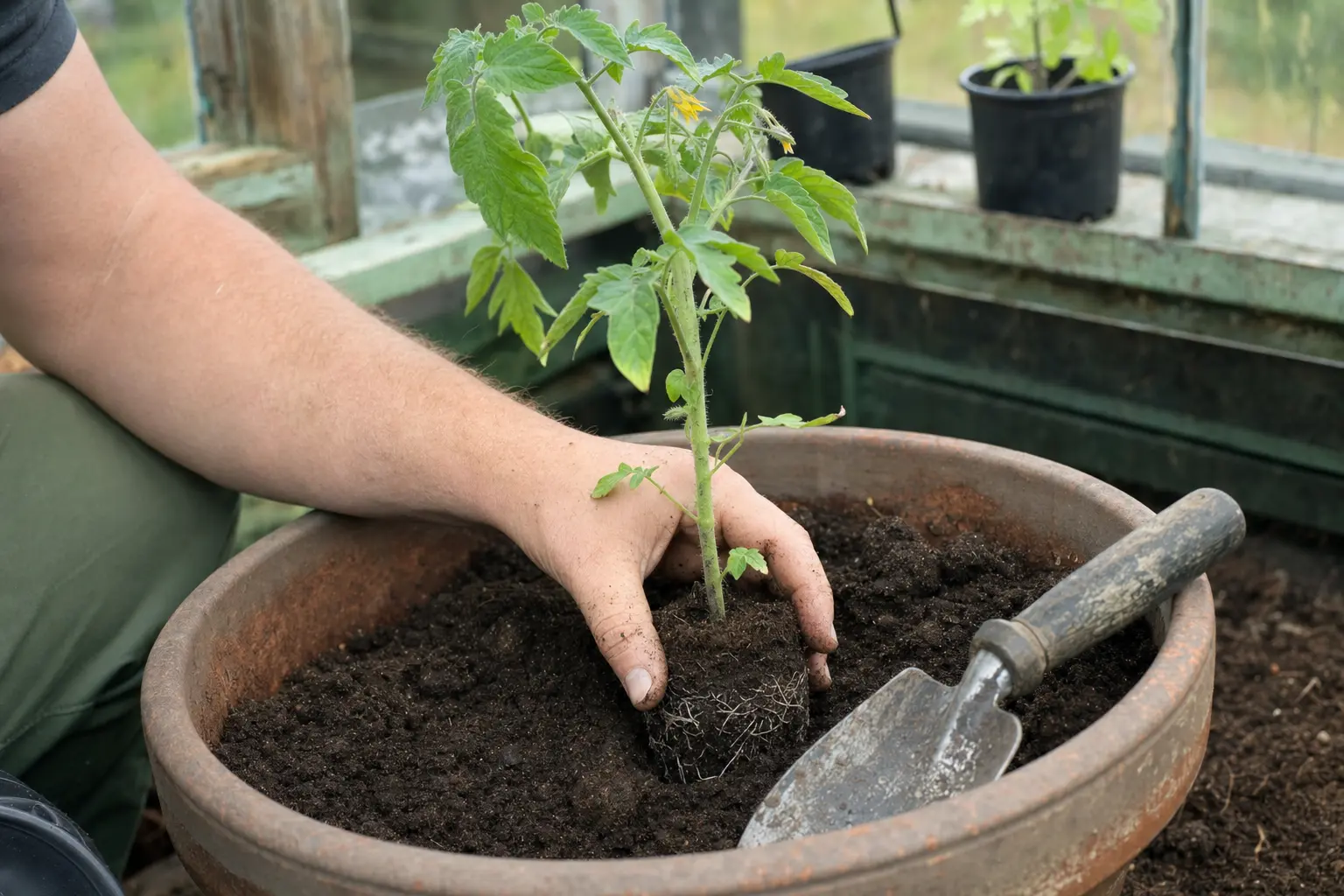
Plant tomatoes into their final greenhouse position when the plants are sturdy, well rooted and the greenhouse is warm enough at night. Avoid rushing: a tomato planted into cold compost may sit still for weeks.
Step-by-step planting
- Water the young plant first so the rootball is moist before transplanting.
- Prepare the planting hole or container with fresh compost or improved border soil.
- Set the plant slightly deeper than it was in its pot, leaving the lowest leaves above the surface.
- Firm gently so the rootball has good contact with the compost.
- Water in well at the base of the plant.
- Add support immediately using a cane, string, stake or trellis.
- Label the variety so you can compare results later.
In greenhouse borders, avoid growing tomatoes in the same soil year after year if disease has been a problem. Containers and grow bags help because you can start with fresh compost each season.
Spacing
Do not overcrowd greenhouse tomatoes. Crowding reduces air movement, makes pruning harder and encourages disease. As a broad guide, allow about 45–60 cm between cordon plants, depending on the variety, support system and greenhouse width. Very vigorous plants need more room.
If you are growing in pots, one tomato plant per large pot is usually the safest beginner approach. In a grow bag, two plants are easier to manage than three because each plant has more root space and moisture.
Temperature, light and ventilation
A greenhouse is useful because it traps heat, but too much heat can be just as damaging as too little. Tomato flowers may set poorly when conditions are too hot, too cold, too humid or too dry.
Practical temperature targets
For home growers, aim for roughly:
- daytime: warm, bright and airy, ideally around the low to mid 20s°C;
- night-time: mild, generally above about 13–16°C for active growth;
- hot weather warning: take action when the greenhouse climbs towards 29–32°C or more.
These are practical ranges, not magic numbers. A small unheated greenhouse will swing more widely than a commercial glasshouse. The aim is to avoid cold checks at night and excessive heat by day.
How to stop a greenhouse overheating
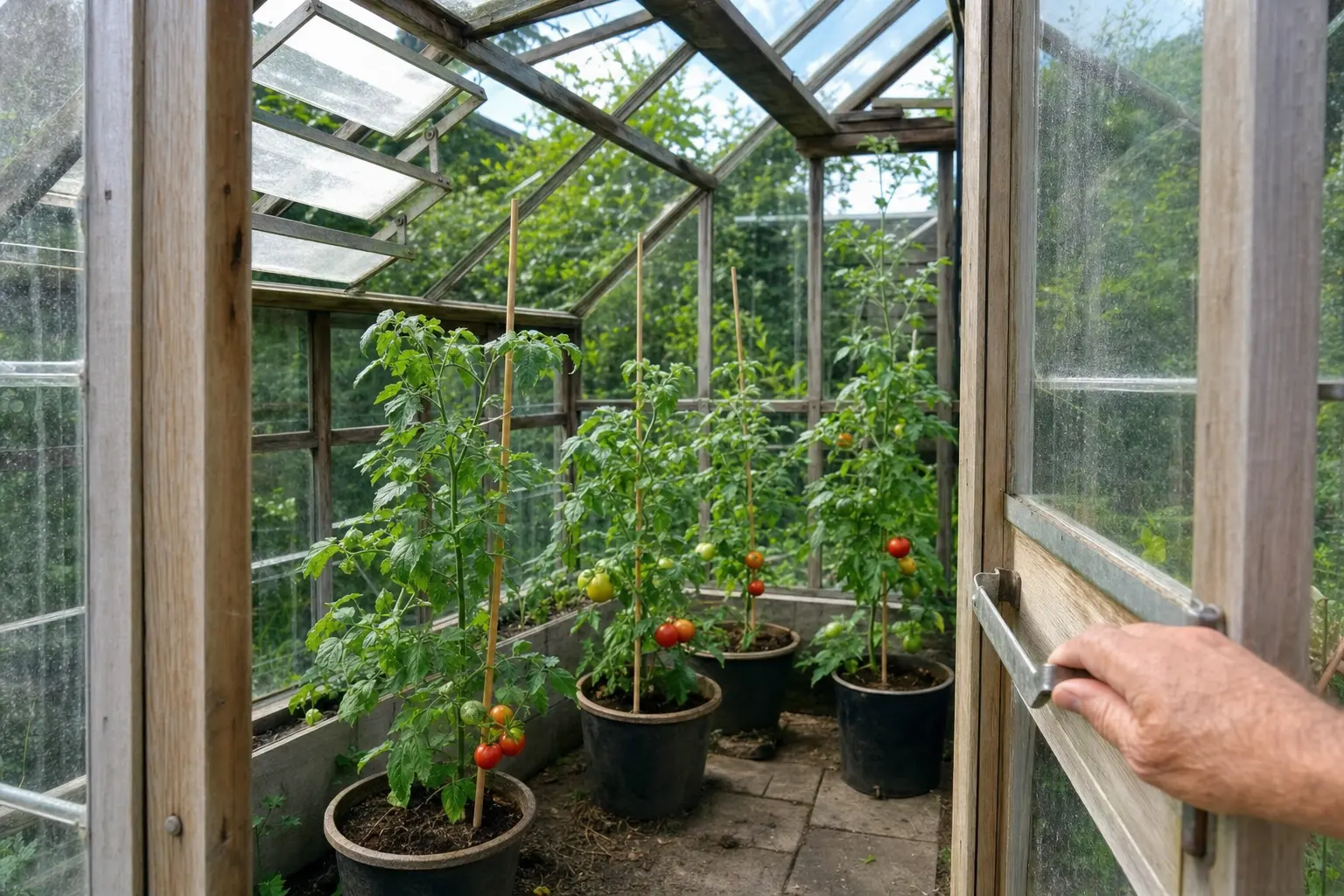
On sunny days, temperatures can rise quickly even when the air outside feels cool. Use several small actions together:
- open roof vents, louvres and doors early in the day;
- use automatic vent openers if you are away during working hours;
- damp down paths in very dry heat, but do not keep foliage wet overnight;
- use shade cloth or greenhouse shading in heatwaves;
- keep plants well spaced so air can move between them;
- water consistently so roots are not stressed during hot afternoons.
Shading is useful in hot weather, but too much shade reduces light. Tomatoes need strong light to crop well, so use shading as a heat-management tool rather than making the greenhouse permanently dim.
Managing humidity
High humidity and still air encourage fungal problems such as leaf mould and grey mould. Very dry air can also interfere with pollen release. The best beginner approach is simple: ventilate daily, water at the base, avoid wetting leaves late in the day, and remove excess lower foliage once plants are established.
Condensation on the inside of the greenhouse is a sign that humidity is high. On cool days, short periods of ventilation can help replace damp air without chilling the plants for too long.
Watering and feeding greenhouse tomatoes
Watering is one of the most important skills when you grow tomatoes in a greenhouse. Plants under cover cannot rely on rain, and containers can dry rapidly in warm weather.
Watering routine
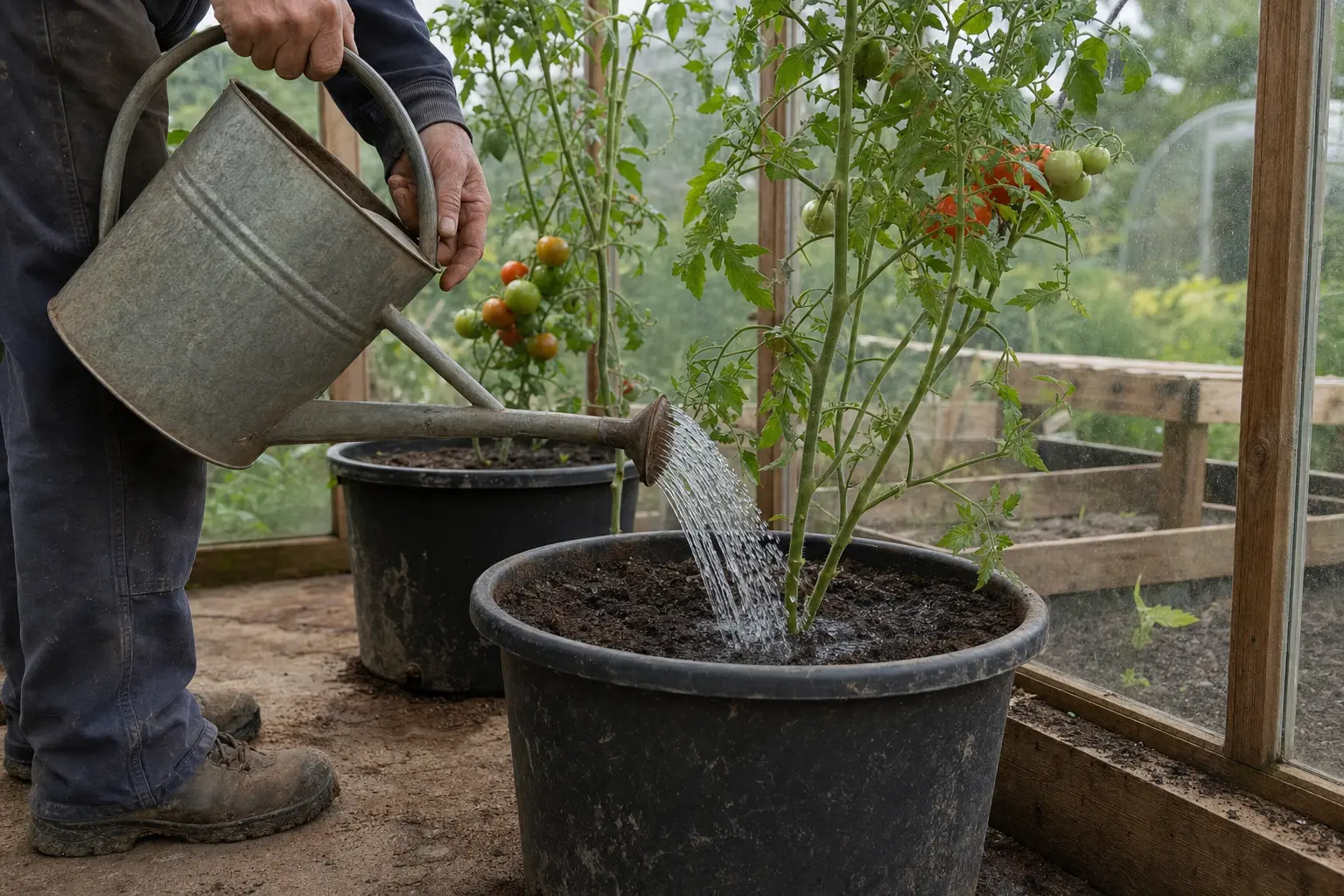
Check plants daily in warm weather. Water when the top of the compost begins to dry, but before the plant wilts. Aim to keep the root zone evenly moist.
Good watering habits include:
- water at the base of the plant, not over the leaves;
- water deeply enough to moisten the root area;
- avoid frequent tiny splashes that only wet the surface;
- do not leave pots standing in stagnant water;
- water early in the day where possible;
- increase watering as plants grow, flower and carry fruit.
Uneven watering is a major cause of fruit problems. If compost swings from bone dry to soaking wet, fruits are more likely to split and plants are more likely to suffer blossom-end rot.
Feeding greenhouse tomatoes
Tomatoes are hungry plants, but more fertiliser is not always better. Too much nitrogen can produce lush leafy growth at the expense of flowers and fruit.
A simple feeding plan is:
- Grow young plants in decent compost without overfeeding.
- Start using a liquid tomato feed once the first fruits begin to form.
- Feed according to the product instructions, usually weekly or more often for heavily cropping container plants.
- Keep watering consistent, because roots need moisture to take up nutrients properly.
If leaves are pale and growth is weak, the plant may need more feed, better root conditions or more warmth. If the plant is huge, dark green and leafy but has few flowers, ease off high-nitrogen feeding and improve light and ventilation.
Pruning, training and supporting plants
Most greenhouse tomatoes are grown as cordons because they crop well in a small footprint. A cordon tomato is trained as a single main stem, usually up a cane or vertical string.
How to train cordon tomatoes
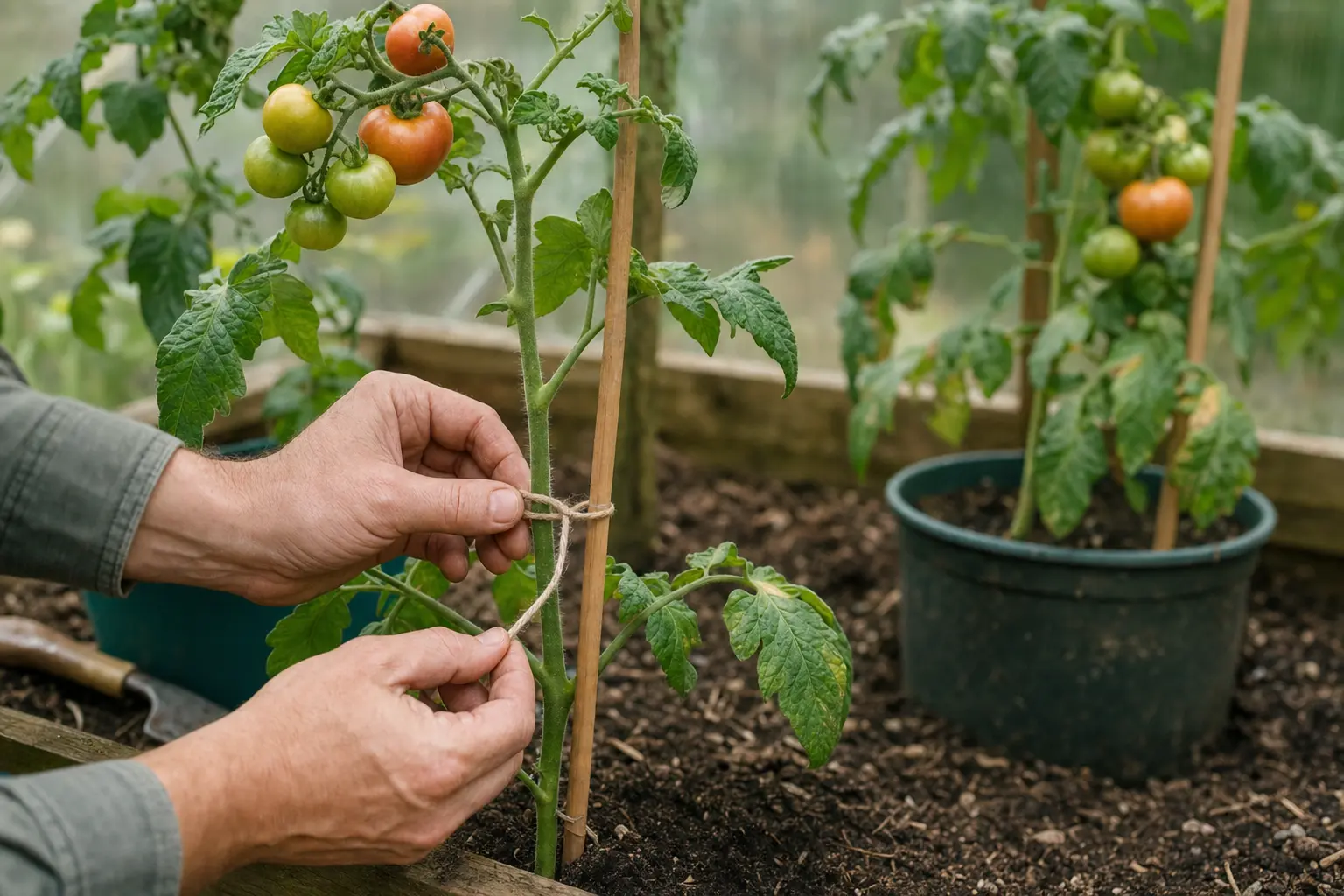
- Put the support in place at planting time.
- Tie the main stem loosely to a cane, or twist it gently around a slack vertical string.
- Check ties weekly so they do not cut into the stem.
- Remove sideshoots while they are small.
- Remove yellowing lower leaves as the plant matures.
- Stop the plant near the greenhouse roof by pinching out the growing tip above the final truss you want to ripen.
Sideshoots are small shoots that appear in the joint between the main stem and a leaf. If left in place, they become extra stems, making the plant crowded and harder to manage. Pinch them out with your fingers when they are small.
Should you remove leaves?
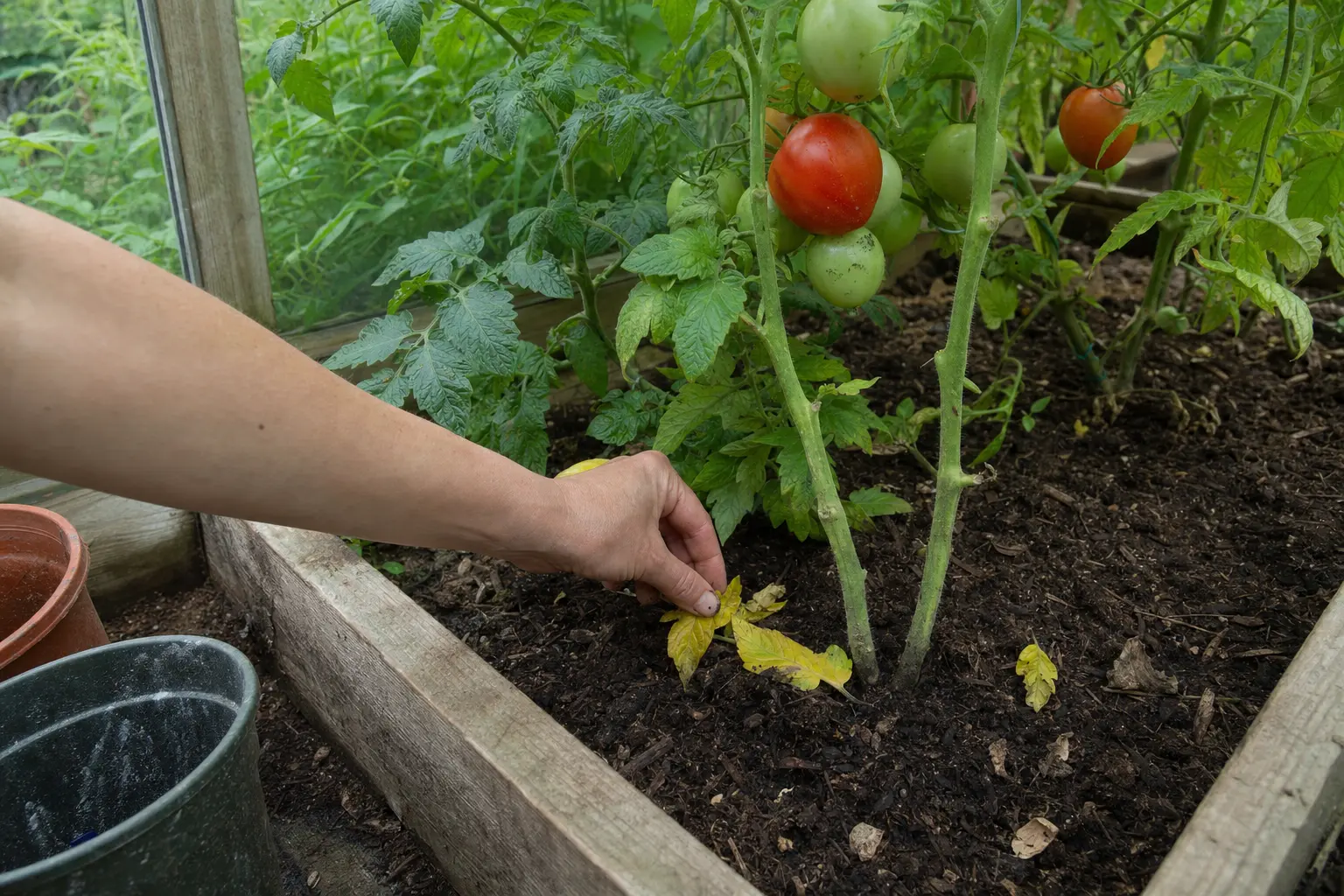
Remove leaves carefully, not aggressively. Lower leaves that are yellowing, touching the compost or blocking airflow can be taken off. Leaves around fruit trusses should not all be stripped away at once, because foliage helps feed the plant and can protect fruit from sunscald.
A good rule is: remove enough foliage to improve air movement and access, but leave enough healthy leaf cover to power ripening and shade fruit in hot sun.
Bush tomatoes are different
Do not prune bush tomatoes in the same way as cordons. They naturally stop at a shorter height and carry fruit on side branches. Removing too many shoots from bush plants can reduce your crop. They may still need a cane or short support to stop heavy stems flopping.
Pollinating tomatoes in a greenhouse
Tomatoes are self-pollinating, meaning each flower contains what it needs to set fruit. Outdoors, wind and insects shake the flowers and help pollen move. In a greenhouse, the air can be too still, so flowers may need help.
Poor pollination can lead to:
- flowers dropping without setting fruit;
- small or misshapen tomatoes;
- patchy fruit set on a truss;
- good leaf growth but disappointing harvests.
Easy hand pollination method
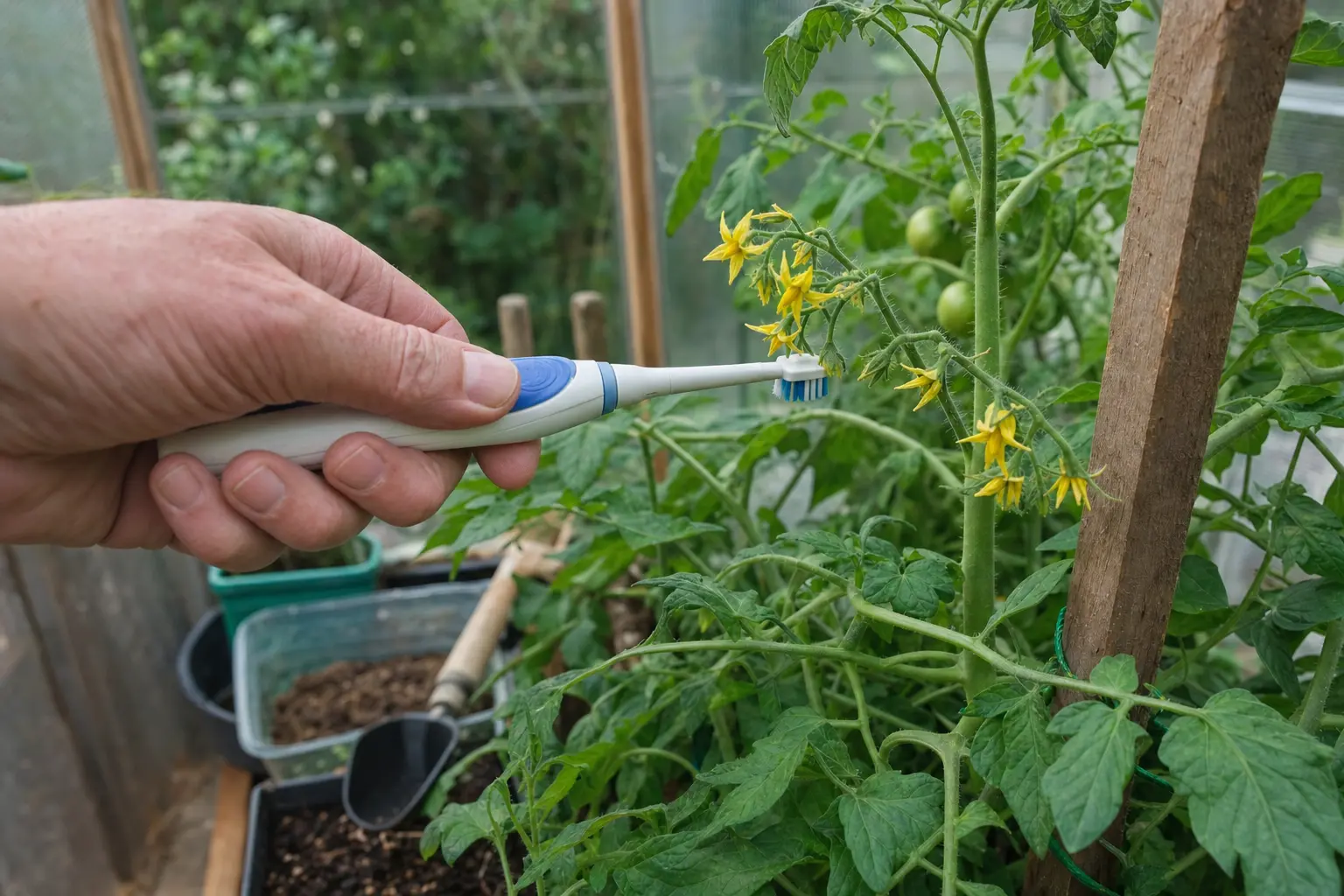
Once flowers open, help pollination several times a week:
- Choose a dry, warm part of the day, often late morning to early afternoon.
- Gently tap the flower truss with a finger.
- Or vibrate the stem behind the flowers with an electric toothbrush for a second or two.
- Avoid pushing the brush into the flower itself.
- Repeat as new flowers open.
You do not need to hand-pollinate every flower individually. The aim is simply to vibrate the truss so pollen is released.
Ventilation also helps. Open doors and vents during the day so air can move and pollinating insects can enter.
Common greenhouse tomato problems
Greenhouses reduce some outdoor problems, but they can increase issues linked to heat, humidity, water stress and pests.
Blossom-end rot
Symptoms: A dark, sunken, leathery patch appears at the blossom end of the fruit, opposite the stem.
Likely causes: Blossom-end rot is linked to calcium shortage in the developing fruit, often triggered by uneven watering, dry roots, root damage or rapid growth. It is not usually solved by simply adding more feed.
What to do:
- remove badly affected fruits;
- water more evenly;
- avoid letting containers dry out completely;
- use a good compost and avoid excessive nitrogen;
- mulch greenhouse borders to reduce moisture swings.
Large plum and beefsteak tomatoes are often more vulnerable than cherry tomatoes.
Fruit splitting and cracking
Symptoms: Cracks appear around the stem or down the sides of ripening fruit.
Likely causes: Sudden changes in water availability, high fruit temperatures and irregular watering.
What to do:
- keep compost evenly moist;
- ventilate and shade during hot spells;
- harvest ripe fruit promptly;
- avoid heavy watering after severe drying.
Split fruit is often still usable if harvested quickly, but discard any fruit that smells sour, is mouldy or has been badly invaded by pests.
Poor fruit set
Symptoms: Flowers drop, trusses are patchy, or fruits are misshapen.
Likely causes: Poor pollination, temperatures too high or too low, very high or very low humidity, low light, or plant stress.
What to do:
- tap or vibrate flower trusses regularly;
- ventilate daily;
- avoid overheating;
- keep watering steady;
- do not overfeed with nitrogen.
Leaf mould, grey mould and fungal problems
Symptoms: Yellowing patches, mouldy growth, grey fuzzy mould on dead tissue, or leaves deteriorating in humid conditions.
Likely causes: Still, humid air; crowded plants; wet foliage; old infected leaves left in place.
What to do:
- increase ventilation;
- water at soil level;
- remove affected leaves promptly;
- space plants properly;
- clear old plant debris from the greenhouse.
Yellow leaves
Symptoms: Lower leaves turn yellow, sometimes with spots or general weakness.
Likely causes: Natural ageing, nutrient shortage, overwatering, underwatering, root restriction, low light or disease.
What to do:
- remove old yellow lower leaves;
- check compost moisture before watering again;
- feed once fruiting begins;
- improve light and spacing;
- look closely for pests on leaf undersides.
Whitefly, aphids and spider mites
Symptoms: Sticky leaves, tiny insects, mottled foliage, fine webbing or weak new growth.
Likely causes: Warm, sheltered greenhouse conditions allow pests to multiply quickly.
What to do:
- inspect plants often, especially under leaves;
- remove small infestations early by hand or with a gentle water spray;
- use yellow sticky traps to monitor flying pests;
- encourage ventilation and avoid stressed plants;
- choose biological controls where appropriate for enclosed greenhouses.
Harvesting greenhouse tomatoes
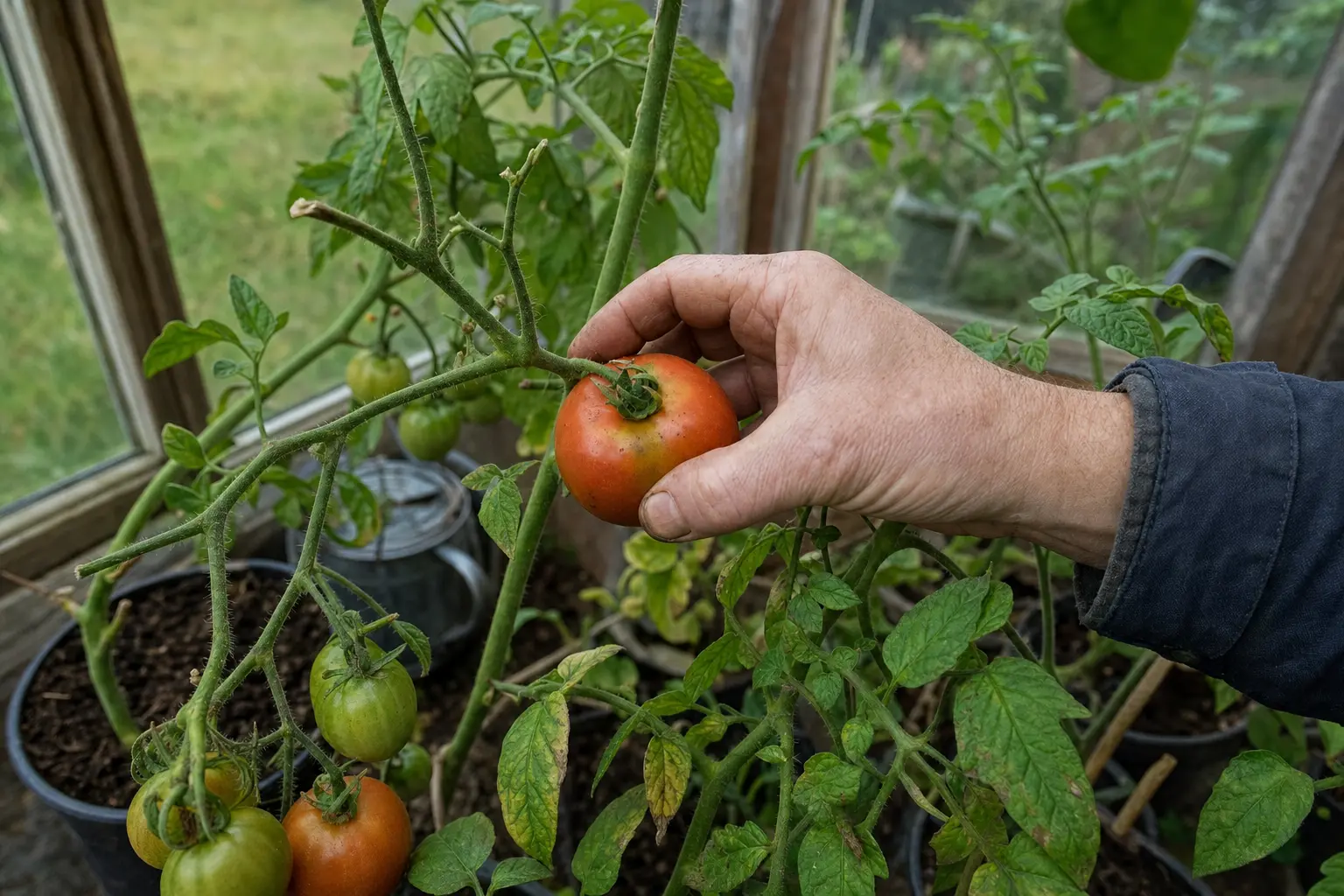
Pick tomatoes when they have developed good colour and come away easily. In warm weather, check plants daily because ripe fruits can split or attract pests if left too long.
At the end of the season, remove flowers and tiny fruits that will not have time to mature. This helps the plant put energy into ripening the fruit already formed. If cold weather is approaching, mature green tomatoes can be picked and ripened indoors at room temperature.
Do not store ripe tomatoes in the fridge unless you need to slow deterioration for a short time. Room-temperature tomatoes usually keep a better flavour and texture.
Mistakes to avoid
Avoid these common greenhouse tomato mistakes:
- Sowing too early without enough light. This creates weak, leggy plants.
- Planting into cold compost. Warm air is not enough if the roots are cold.
- Overcrowding. It reduces airflow and makes disease more likely.
- Forgetting to ventilate. A closed greenhouse can overheat very quickly.
- Using weak supports. Heavy fruiting plants can snap, lean or collapse if canes, strings or ties are not strong enough.
- Watering erratically. Drought followed by soaking encourages cracking and blossom-end rot.
- Feeding too early or too strongly. Excess nitrogen encourages leaves instead of fruit.
- Not helping pollination. Still greenhouse air can mean poor fruit set.
- Letting cordons become tangled. Remove sideshoots while they are small.
- Stripping too many leaves. Fruits need some leaf cover, especially in strong sun.
- Leaving diseased debris in place. Good hygiene matters in enclosed spaces.
FAQ
Can you grow tomatoes in an unheated greenhouse?
Yes. An unheated greenhouse is ideal for summer tomato growing in many temperate gardens. Sow indoors, raise plants in warmth, and only move them into final positions when nights are reliably mild. Be ready to protect young plants during late cold snaps.
Do greenhouse tomatoes need bees?
Bees and other insects can help, but tomatoes do not depend on them in the same way as crops with separate male and female flowers. Tomato flowers are self-pollinating, but they need movement. In a greenhouse, gently tapping or vibrating flower trusses several times a week can improve fruit set.
How often should I water tomatoes in a greenhouse?
There is no fixed schedule because pot size, compost, plant size, weather and greenhouse temperature all affect drying. Check daily in warm weather and water when the compost is starting to dry but before plants wilt. The goal is even moisture, not constant saturation.
Should I grow greenhouse tomatoes in pots or grow bags?
Both work. Pots give each plant its own root space and are easy to move before planting. Grow bags are tidy and convenient but can dry out quickly and need careful feeding. For beginners, large pots or two plants per grow bag are easier to manage than crowded planting.
When should I feed greenhouse tomatoes?
Start feeding with a tomato fertiliser once the first fruits begin to form. Before that, young plants usually need good compost, light, warmth and careful watering more than strong feeding.
Why are my greenhouse tomato flowers falling off?
The most common reasons are poor pollination, heat stress, cold nights, dry roots, very humid or very dry air, and too much leafy growth from high-nitrogen feeding. Improve ventilation, steady the watering, avoid overheating and gently vibrate flower trusses when open.
Should I close the greenhouse at night?
In cool weather, closing the greenhouse at night helps retain warmth. In hot summer weather, you may need to leave vents partly open to prevent humidity building up. Balance warmth with airflow, and avoid creating a damp, stagnant greenhouse overnight.
How many trusses should I leave on a greenhouse tomato plant?
This depends on your season length, greenhouse height and plant vigour. In a small unheated greenhouse, many growers stop cordon plants once they have several good trusses and the plant is nearing the roof. Pinch out the growing tip above a leaf after the final truss so existing fruits have time to ripen.
Final tips for success
To grow tomatoes in a greenhouse successfully, think of the greenhouse as a controlled but living environment. Your plants need warmth, but not trapped heat; moisture, but not soggy roots; foliage, but not a jungle; and flowers, but not still air.
Start with strong plants, give them space, support them early, water consistently and ventilate every day. If you check your plants little and often, most problems are easier to prevent than cure — and your greenhouse can reward you with weeks of fresh, sweet tomatoes.