How to Prune Tomatoes: A Beginner’s Guide
Knowing how to prune tomatoes can make your plants easier to manage, improve airflow and help fruit ripen well. The key is not to prune every tomato plant in the same way. Tall cordon tomatoes usually need regular sideshoot removal, while bush tomatoes need very little pruning beyond removing low, yellowing or diseased leaves.
Quick answer: prune cordon tomatoes by pinching out the small sideshoots that grow between the main stem and leaf stems. Remove leaves that touch the soil, and take off yellowing or diseased leaves as the plant grows. Do not remove lots of healthy foliage at once, and do not heavily prune bush or trailing tomatoes, because their side stems carry much of the crop.
Contents
- Should you prune tomato plants?
- Cordon, bush and trailing tomatoes: why type matters
- What you need before pruning
- How to prune tomatoes step by step
- How to prune cordon tomatoes
- How to prune bush tomatoes
- Removing lower tomato leaves
- Topping tomato plants at the end of the season
- Pruning tomatoes in pots, greenhouses and grow bags
- Common tomato pruning mistakes
- Tomato pruning FAQ
Should you prune tomato plants?
Pruning tomato plants is helpful, but it is not always essential. The best approach depends on the type of tomato, how it is supported and how crowded the plant has become.
Pruning can help to:
- Improve airflow around stems and leaves, which is useful in damp weather and in greenhouses.
- Keep leaves away from the soil, reducing the chance of soil splashing onto lower foliage.
- Make plants easier to tie in, water and harvest.
- Concentrate growth on existing fruit, especially on tall cordon plants late in the season.
- Reduce a tangled canopy, so light reaches more of the plant.
However, pruning is not automatically better. Tomato leaves feed the plant, shade fruit and protect tomatoes from sunscald. If you strip too many leaves, you can stress the plant, reduce yield and expose fruit to harsh sun.
A good beginner rule is simple: prune lightly, but regularly. Remove the right small shoots at the right time, rather than cutting away large pieces of the plant after it has become overgrown.
Cordon, bush and trailing tomatoes: why type matters
Before pruning, check the seed packet, plant label or variety description. Tomato varieties are usually described as cordon or bush in the UK. You may also see the terms indeterminate and determinate.
| Tomato type | Growth habit | How much pruning? | Best beginner approach |
|---|---|---|---|
| Cordon / indeterminate | Tall, vining plants that keep growing upwards | Regular pruning | Remove sideshoots, tie in the main stem, remove low leaves and top late in the season |
| Bush / determinate | Shorter, naturally branching plants that reach a set size | Minimal pruning | Leave most side stems alone; remove only low, yellowing, damaged or diseased leaves |
| Trailing / tumbling | Compact plants that spill over pots, baskets or troughs | Very little pruning | Avoid removing productive stems; tidy only dead or diseased growth |
| Dwarf patio types | Compact plants for small pots | Light tidying only | Remove damaged foliage and support heavy stems if needed |
Cordon tomatoes are trained as tall plants with one main stem, usually up a cane, string or trellis. These are the plants most beginners think of when they hear pruning advice such as “pinch out the sideshoots”.
Bush tomatoes are different. They naturally form several stems and many of those stems flower and fruit. If you remove too many sideshoots from a bush tomato, you remove potential tomatoes.
If you are not sure what type you have, observe the plant. A cordon tomato quickly pushes upwards and needs tying to a tall support. A bush tomato is shorter, stockier and branches more freely. If still unsure, prune only the lowest leaves and wait before removing sideshoots.
For help choosing plants that suit your garden, see our guide to the best tomato varieties for gardens.
What you need before pruning
You do not need expensive equipment to prune tomatoes. For most young sideshoots, your fingers are enough.
Useful kit includes:
- Clean hands.
- Sharp scissors, snips or secateurs for thicker shoots.
- Soft twine, plant clips or tomato ties.
- A sturdy cane, string, cage or trellis.
- A small container for removed leaves and shoots.
- Disinfectant or rubbing alcohol for cleaning tools, especially if plants show disease.
When to prune tomatoes
The best time to prune is on a dry day, ideally when the foliage is dry. Dry conditions help pruning wounds heal more quickly and reduce the risk of spreading disease.
Avoid pruning when plants are:
- Wilted from drought.
- Wet after rain or watering.
- Newly transplanted and not yet settled.
- Suffering badly from disease or nutrient stress.
- In extreme heat.
For cordon tomatoes, start checking for sideshoots once the plant is growing strongly and flower trusses are forming. Continue little and often through the season.
How to prune tomatoes step by step
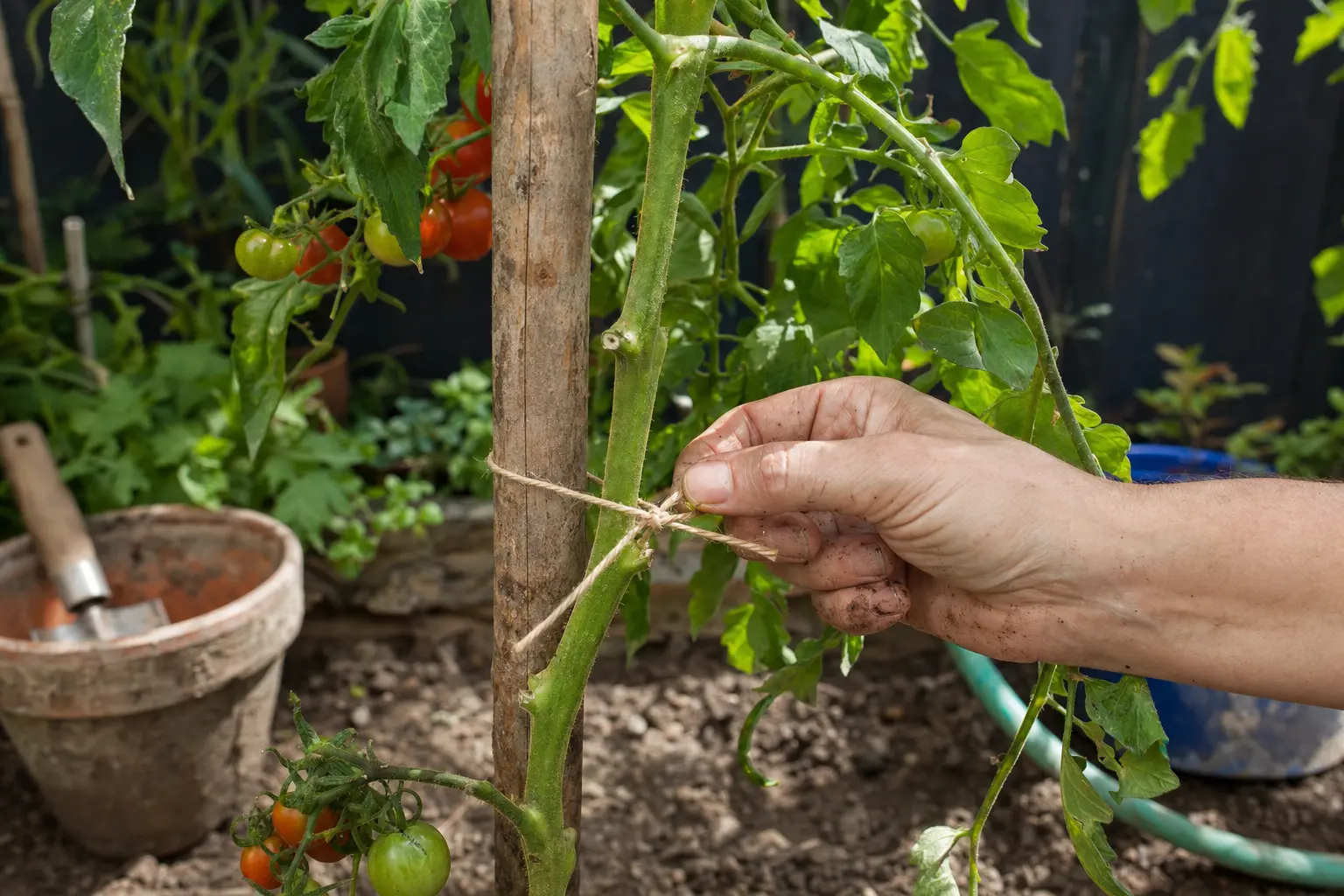
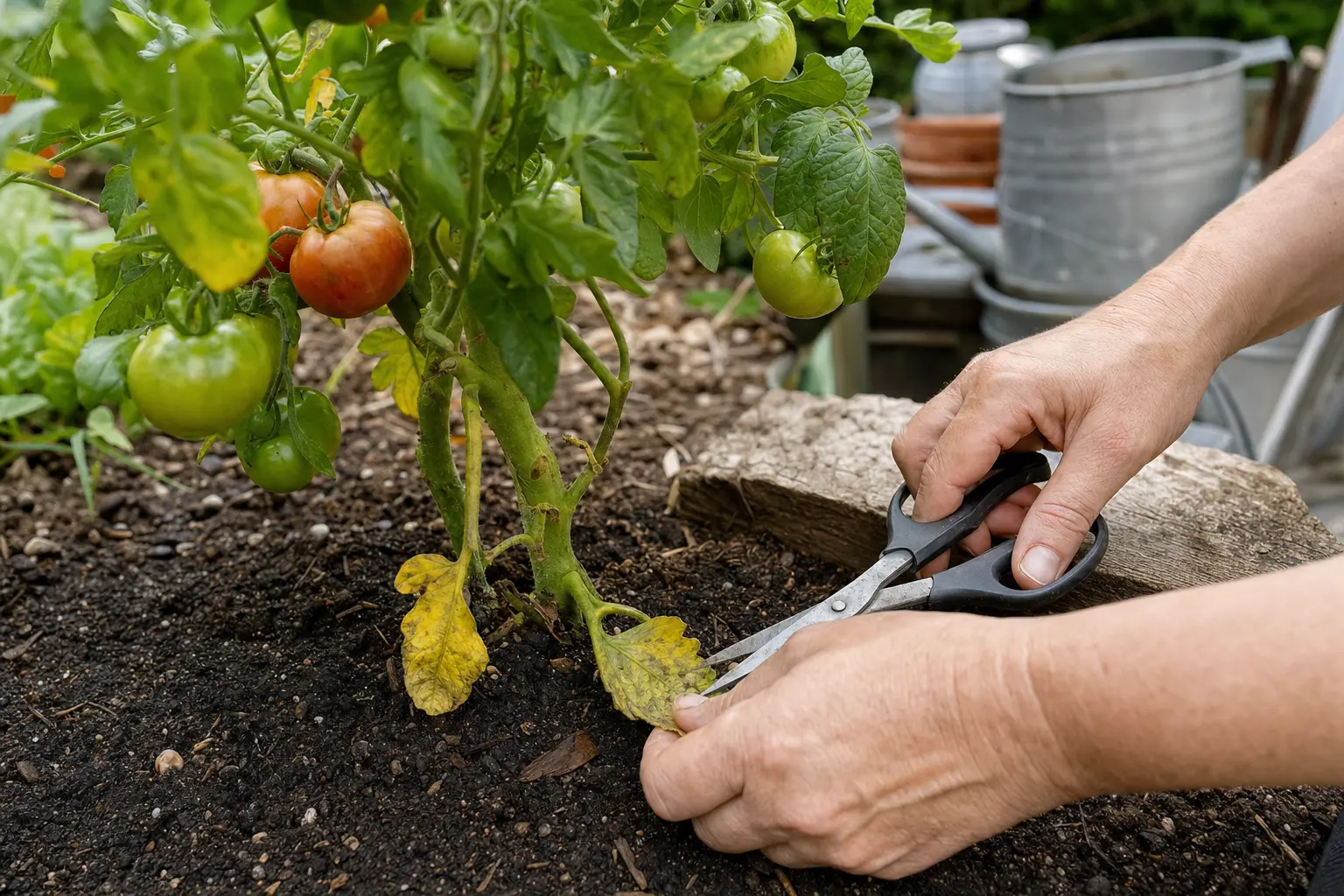
This is the basic method for beginners. It works especially well for cordon tomatoes, with lighter use on bush plants.
1. Identify the main stem
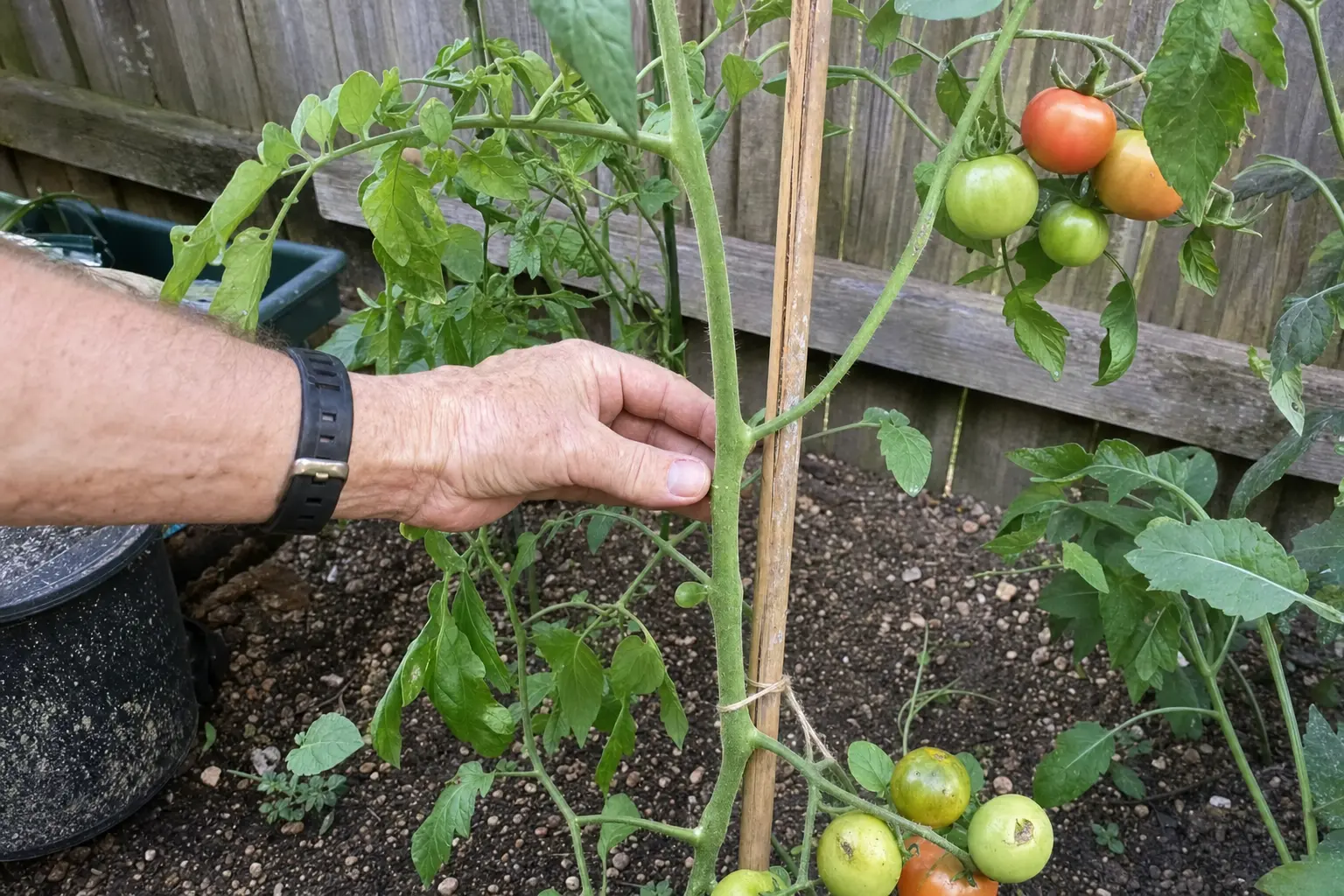
The main stem is the central upright stem that grows from the base of the plant. On a cordon tomato, this is the stem you train up a cane or string.
Do not cut the main stem during normal summer pruning. You only remove its growing tip later, when topping the plant.
2. Find the leaf axils
A leaf axil is the joint where a leaf stem meets the main stem. Tomato sideshoots, often called suckers, grow from this joint.
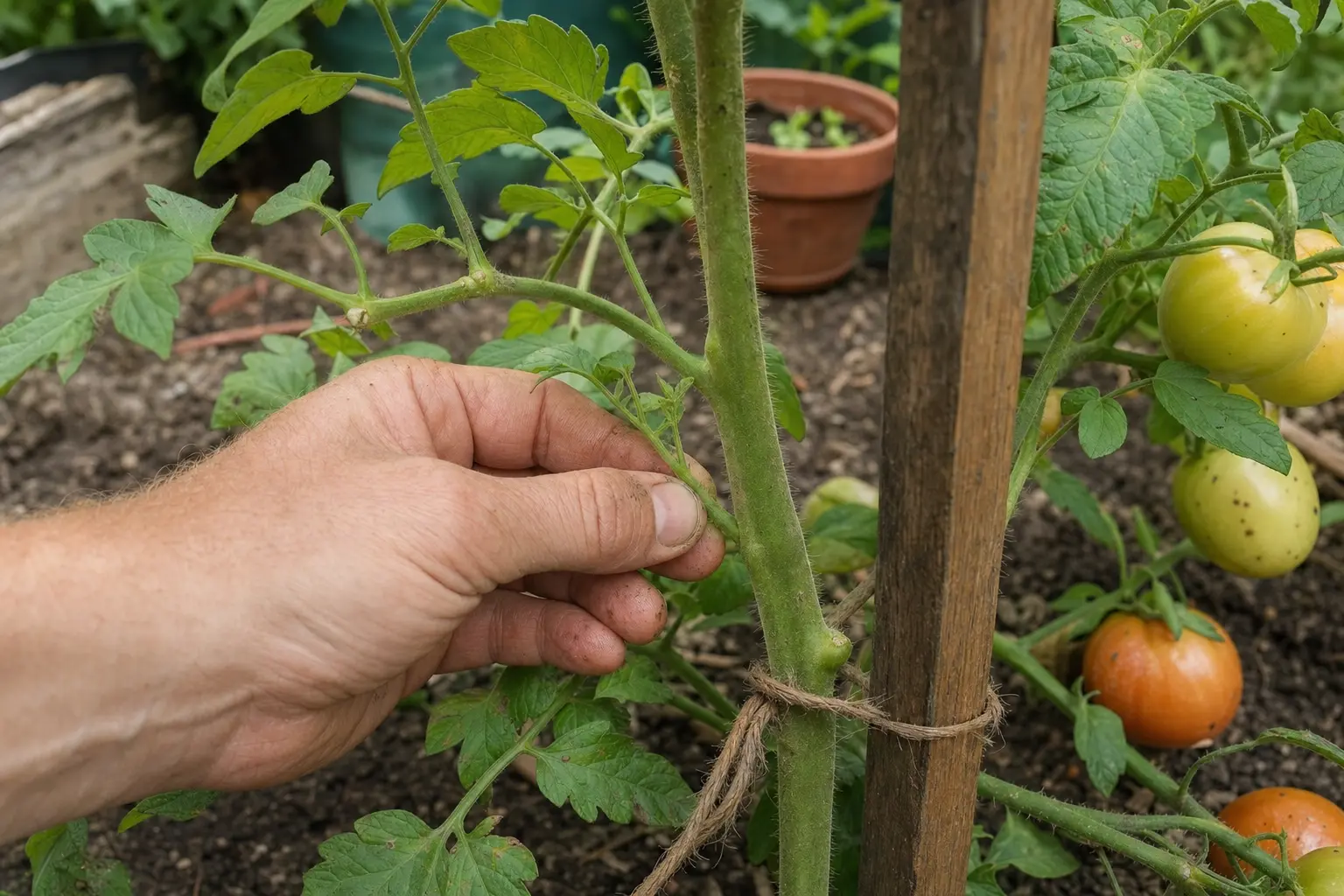
A small sideshoot looks like a little new shoot tucked into the angle between the main stem and a leaf. If left, it can become a full stem with leaves, flowers, fruit and more sideshoots of its own.
3. Remove small sideshoots on cordon tomatoes
On cordon tomatoes, pinch out sideshoots while they are small and soft. Hold the shoot near its base and snap or pinch it away cleanly.
Try to remove sideshoots when they are only a few centimetres long. Small shoots leave smaller wounds, are easier to remove and do not waste much of the plant’s energy.
If a sideshoot has become thick and woody, use clean snips rather than tearing it. Make a clean cut close to the main stem without cutting into the stem itself.
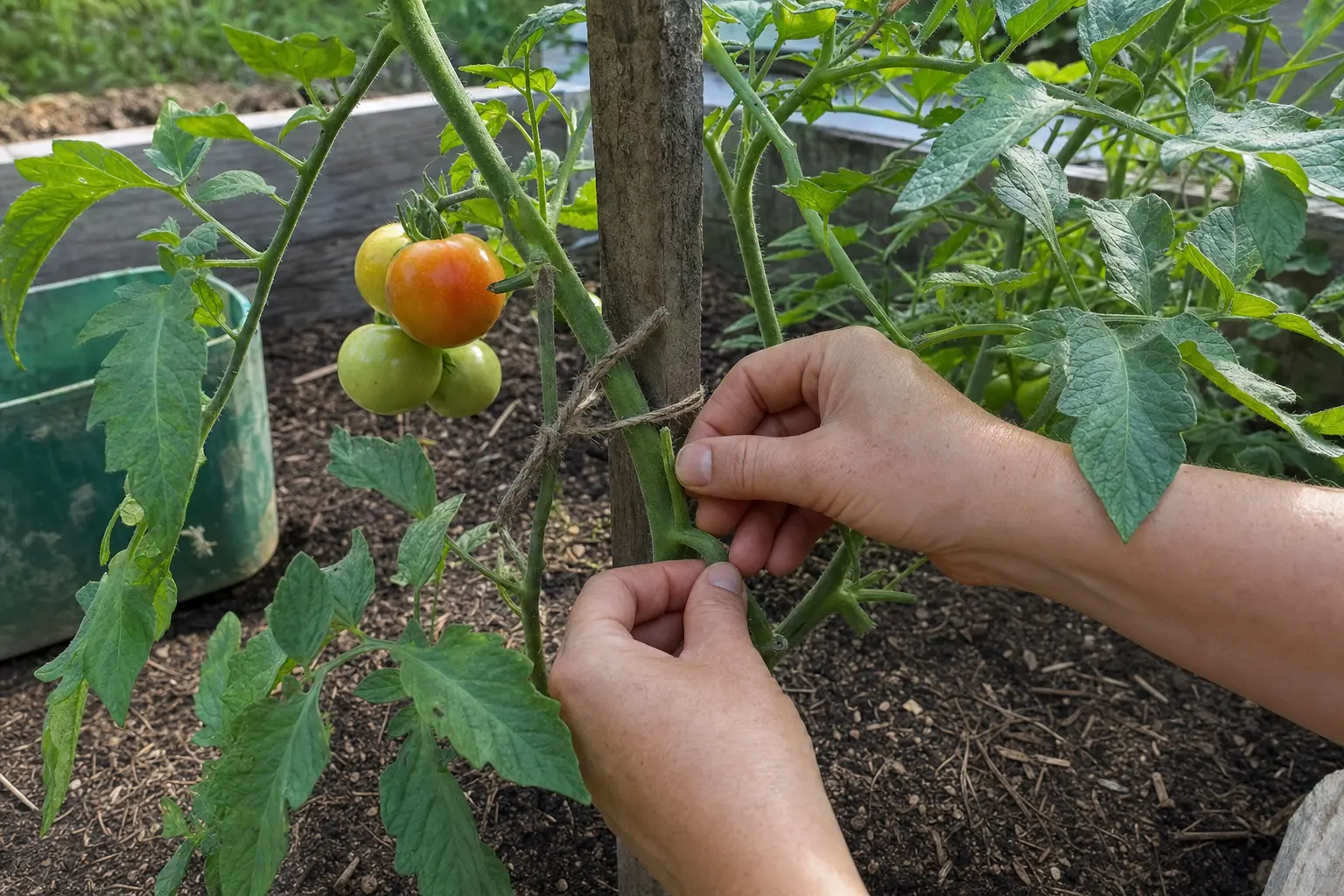
4. Tie in the plant after pruning
Pruning and support go together. As the main stem grows, tie it loosely to a cane or clip it to a vertical string. Leave room for the stem to thicken.
A good tie should:
- Hold the plant securely.
- Avoid rubbing or cutting into the stem.
- Sit below a leaf joint where possible.
- Be checked and loosened as the plant grows.
If you are growing tomatoes in containers, support matters even more because tall plants can become top-heavy. Our guide to growing tomatoes in pots explains pot size, supports and container care in more detail.
5. Remove low, yellowing or diseased leaves
Take off leaves touching the soil and remove any yellow, dead or diseased foliage. Put diseased material in the bin rather than composting it at home, especially if you suspect blight or leaf spot.
Do not remove every leaf below every fruit truss in one go. Keep enough healthy foliage to shade fruit and feed the plant.
6. Repeat little and often
Check cordon tomatoes every few days in warm weather. Sideshoots grow quickly, particularly in greenhouses and after feeding.
A regular routine is easier than a major rescue prune. Once a week is usually manageable for most gardeners, but fast-growing plants may need more frequent checks.
How to prune cordon tomatoes
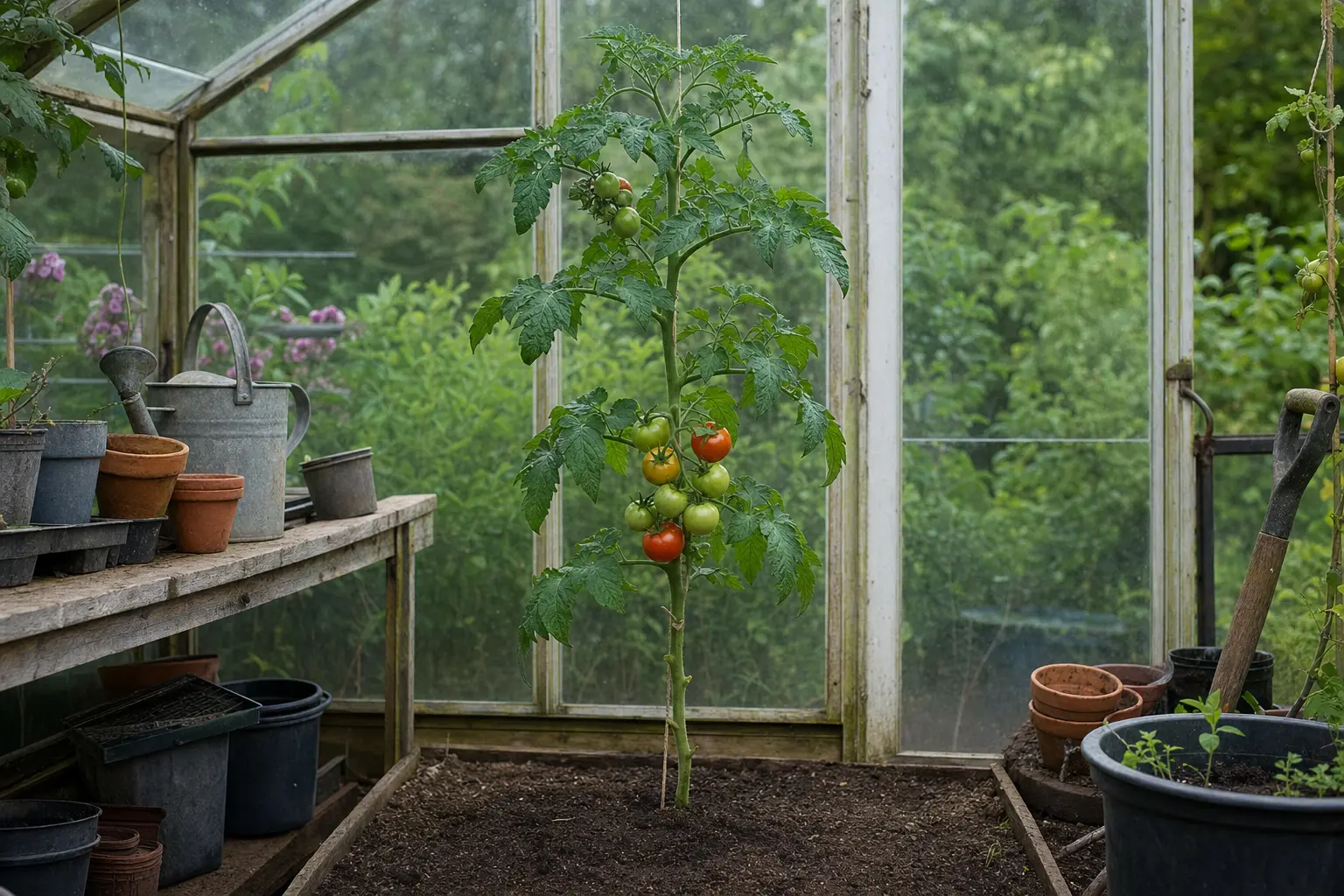
Cordon tomatoes are the main candidates for pruning. They are usually grown as a single upright stem, although some gardeners train two stems where there is enough space and support.
Single-stem cordon pruning
For a simple single-stem cordon:
- Choose the strongest main stem.
- Tie it to a cane or string.
- Pinch out sideshoots from the leaf axils.
- Remove leaves touching the soil.
- Continue tying in as the plant grows.
- Stop the plant by removing the growing tip late in the season.
This keeps the plant narrow and manageable, which is useful in a greenhouse, raised bed, grow bag or small garden.
Two-stem cordon pruning
A two-stem system can work if you have strong support and enough space. Instead of removing every sideshoot, keep one strong sideshoot just below the first flower truss and train it as a second leader. Remove other sideshoots.
This can give more fruiting area, but it also creates a larger plant. Beginners growing in small pots or crowded greenhouses are usually better starting with one main stem.
How many trusses should cordon tomatoes carry?
A truss is a cluster of tomato flowers or fruit. In cooler UK conditions, outdoor cordons are often stopped after fewer trusses than greenhouse plants because outdoor fruit needs time to ripen before autumn.
As a practical guide:
- Outdoor cordon tomatoes: allow about four good fruit trusses, then stop the plant later in summer.
- Greenhouse cordon tomatoes: allow about six trusses if the plant is healthy, well fed and has space.
- Short-season or cool areas: stop slightly earlier so existing fruit can ripen.
- Warm, long-season areas: plants may carry more, provided the support and growing conditions are strong.
The exact number is not a competition. It is better to ripen a sensible crop than to keep producing late flowers that never become usable tomatoes.
How to prune bush tomatoes
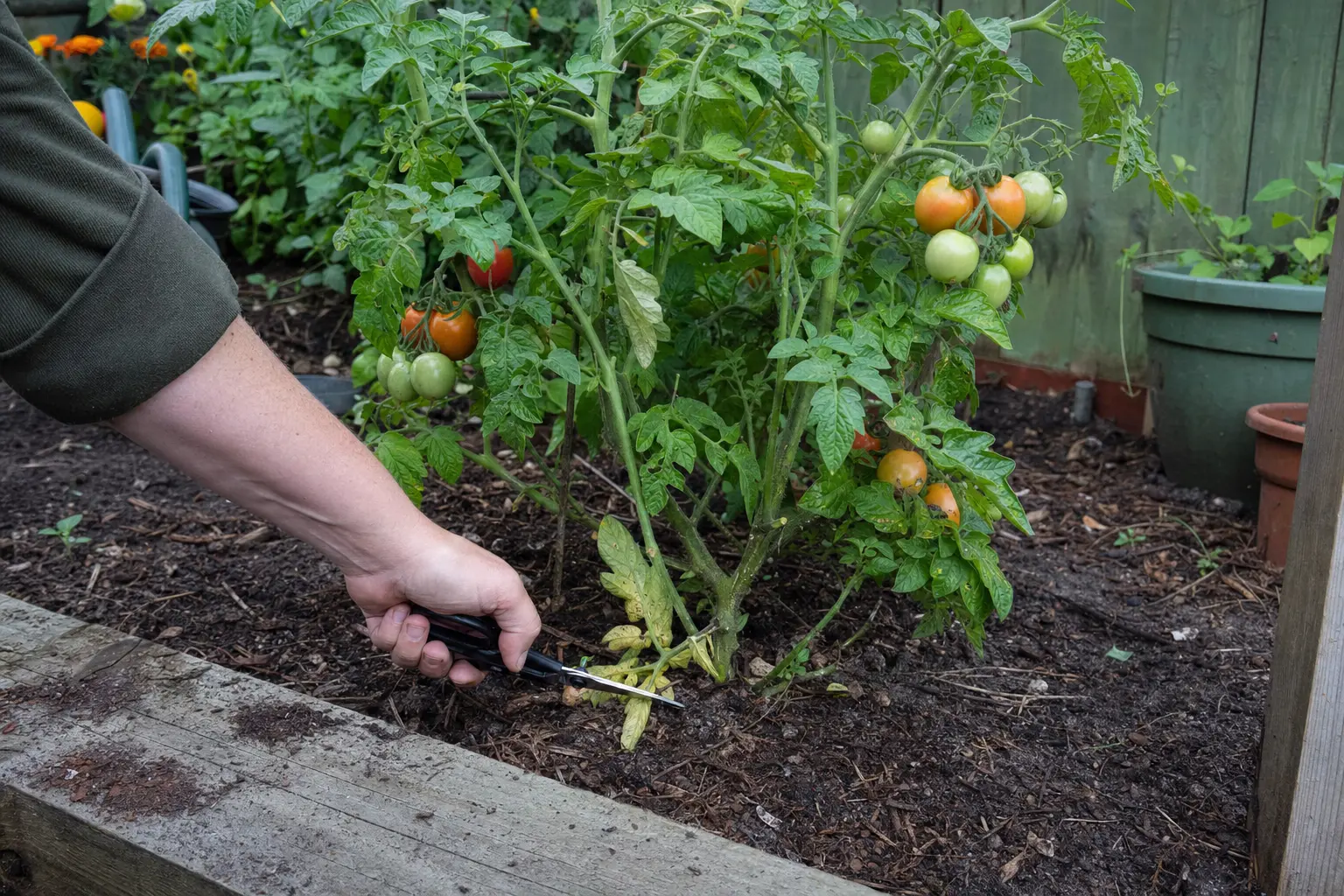
Bush tomatoes need a gentler approach. They are bred to be compact and productive without being trained as a single vertical stem.
For bush tomatoes:
- Do not routinely remove sideshoots above the first flower clusters.
- Do remove leaves that touch the soil.
- Do remove yellowing, damaged or diseased leaves.
- Do support heavy stems if they start to droop.
- Do thin a very crowded centre lightly if airflow is poor.
The most common mistake with bush tomatoes is treating them like cordons. If you pinch out all the sideshoots on a bush tomato, you can remove a large part of the crop.
Trailing tomatoes in hanging baskets and tubs need even less pruning. Let them cascade naturally and tidy only unhealthy growth.
Removing lower tomato leaves
Lower-leaf pruning is useful on both cordon and bush tomatoes, provided it is done sensibly.
The aim is to create a little clear space between the soil and the foliage. This helps airflow, makes watering easier and reduces the chance of soil splashing onto leaves.
Which lower leaves should you remove?
Remove:
- Leaves touching the compost or soil.
- Leaves buried at planting time.
- Yellowing lower leaves.
- Leaves with suspicious spots, blotches or mould.
- Very crowded leaves at the base that block airflow.
A practical beginner target is to clear the bottom 15–30cm of the plant once it is established, especially where leaves are close to the ground. Do this gradually, not all at once on a small young plant.
Which leaves should you keep?
Keep plenty of healthy leaves above the fruit. Leaves make sugars that support growth and flavour, and they also shade fruit from strong sun.
Be particularly careful not to strip the leaves around developing fruit clusters during hot sunny weather. Over-pruning can expose tomatoes to sunscald, where fruit develops pale, damaged patches.
If a plant is dense and humid, remove a few leaves to improve airflow. If a plant is already open and fruit is exposed, leave more foliage in place.
Topping tomato plants at the end of the season
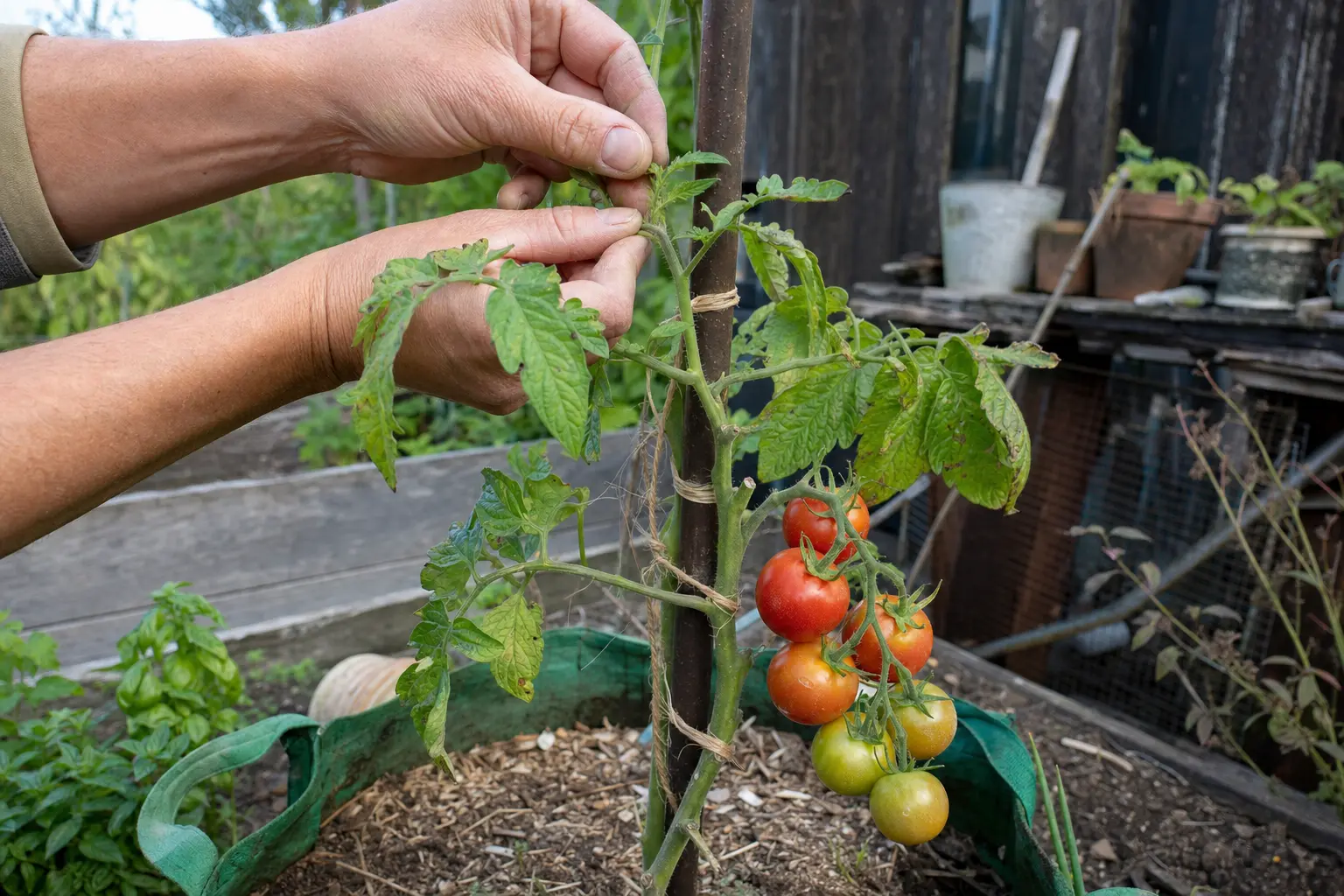
Topping means cutting off the growing tip of a tomato plant. It is mainly used on cordon tomatoes near the end of the growing season.
The aim is to stop the plant putting energy into new stems, flowers and tiny fruits that will not have time to ripen. Instead, the plant can focus on swelling and ripening the tomatoes already present.
When to top tomatoes
Top cordon tomatoes in late summer or early autumn, depending on your climate and growing method. A useful rule is to top indeterminate tomatoes about four to six weeks before your expected first frost, or when the plant has reached the top of its support and already has enough trusses.
In many UK gardens, this often means stopping outdoor cordons earlier than greenhouse cordons. Greenhouse plants usually have a longer protected season, so they can often carry extra trusses.
How to top a cordon tomato
- Choose the final fruit truss you want to keep.
- Leave one or two healthy leaves above that truss.
- Cut or pinch out the growing tip above those leaves.
- Continue watering and feeding while fruit ripens.
- Remove new flowers late in the season if they will not have time to develop.
Do not top bush tomatoes early. Determinate plants already have a natural limit to their growth, and cutting the tops can reduce the crop.
Pruning tomatoes in pots, greenhouses and grow bags
The same principles apply wherever you grow tomatoes, but the setting changes how careful you need to be.
Tomatoes in pots
Potted tomatoes dry out quickly and can become stressed if heavily pruned during hot weather. If you are pruning container-grown cordons, water consistently and avoid removing too many leaves at once.
For bush patio plants, keep pruning light. Their compact leafy shape helps support fruit production.
Tomatoes in greenhouses
Greenhouse tomatoes often grow fast, so cordon sideshoots need regular checking. Good pruning is especially useful under glass because crowded foliage can trap humid air.
Even so, do not defoliate plants completely. Greenhouse fruit can still suffer from sunscald in bright, hot conditions. Ventilation, shading in extreme heat and steady watering all matter alongside pruning.
If you grow under cover, our guide to growing tomatoes in a greenhouse covers ventilation, watering, feeding and support.
Tomatoes in grow bags
Grow bags are often used for cordon tomatoes, which means pruning is usually part of the routine. Train each plant to a cane or string, remove sideshoots regularly and clear low leaves that sit on the compost surface.
Because grow bags hold limited compost, avoid letting plants become huge, tangled and thirsty. Pruning helps keep them manageable, but steady watering is just as important.
Common tomato pruning mistakes
Pruning bush tomatoes like cordons
This is the biggest beginner error. Bush tomatoes fruit on their branching stems. Remove only low, damaged or diseased growth unless the plant is extremely crowded.
Letting cordon sideshoots get too large
A small sideshoot is easy to pinch out. A large one leaves a bigger wound and may already have taken energy from the main plant. Check regularly.
Removing too many leaves at once
Leaves are not just clutter. They feed the plant and shade fruit. If you need to thin a dense plant, do it in stages.
Pruning in wet weather
Wet foliage can spread disease more easily, and wounds dry more slowly. Wait for a dry spell if possible.
Using dirty tools
Dirty snips can transfer disease from one plant to another. Clean tools before pruning and between plants if disease is present.
Cutting off flower trusses by mistake
Sideshoots grow from the angle between a leaf and the main stem. Flower trusses grow out from the stem and carry buds or fruit. Look carefully before pinching.
Topping too early
If you remove the growing tip too soon, you limit the plant before it has produced enough fruiting trusses. Top late, when the plant has reached its support limit or when remaining flowers are unlikely to ripen.
Ignoring watering after pruning
Pruning does not replace good care. Tomatoes still need regular watering, especially in pots and grow bags. Uneven moisture can lead to splitting and blossom end rot. If watering is your main challenge, read our guide to how often to water tomatoes in pots.
A simple pruning routine for beginners
Use this routine once plants are established and growing well.
Weekly cordon tomato routine
- Check the main stem is tied securely.
- Look for sideshoots in the leaf axils.
- Pinch out small sideshoots.
- Remove leaves touching the soil.
- Cut away yellowing or diseased leaves.
- Check watering and feeding.
- Look for developing fruit trusses.
- In late summer, decide when to top the plant.
Weekly bush tomato routine
- Check that heavy stems are supported.
- Remove leaves touching the soil.
- Remove yellowing or diseased leaves.
- Thin only the most crowded growth if airflow is poor.
- Avoid removing healthy fruiting side stems.
What to do with pruned tomato leaves and shoots
Healthy soft shoots can be composted. Diseased leaves should be removed from the growing area and disposed of carefully, especially if they show spotting, mould or blight-like symptoms.
Do not leave prunings lying around the base of plants. They can hold moisture and make the area more inviting for pests and disease.
Some gardeners root healthy sideshoots as cuttings, but beginners are usually better focusing on keeping the main crop healthy rather than producing extra plants late in the season.
Tomato pruning FAQ
Do all tomato plants need pruning?
No. Cordon tomatoes usually need regular sideshoot pruning. Bush, trailing and dwarf tomatoes need little pruning beyond removing low, yellowing, damaged or diseased leaves.
What are tomato suckers?
Tomato suckers are sideshoots that grow from the leaf axils, which are the joints between the main stem and leaf stems. On cordon tomatoes, these are usually pinched out while small.
Should I remove the lower leaves from tomato plants?
Yes, remove leaves that touch or nearly touch the soil, plus yellowing or diseased leaves. This improves airflow and helps reduce soil splash. Do not remove so many leaves that fruit is left exposed and the plant is weakened.
Can I prune tomatoes with scissors?
Yes. Small sideshoots can be pinched out by hand, but scissors or secateurs are useful for thicker shoots and leaves. Use sharp, clean tools and avoid tearing the stem.
Should I prune tomato plants in pots?
Prune potted cordon tomatoes in the same way as cordons in the ground: remove sideshoots, tie in the main stem and clear low leaves. Prune bush patio tomatoes lightly. Container plants can dry out quickly, so avoid heavy pruning during heat or drought stress.
What happens if I do not prune cordon tomatoes?
An unpruned cordon tomato can become a large tangle of stems. It may still produce fruit, but it will be harder to support, water and harvest, and airflow may be poorer. Fruit may also ripen later if the plant puts lots of energy into extra leafy growth.
Can over-pruning damage tomatoes?
Yes. Removing too much foliage can reduce the plant’s ability to feed itself and can expose fruit to sunscald. Prune gradually and always leave a healthy leafy canopy.
When should I stop pruning tomatoes?
Stop removing lots of healthy foliage as harvest approaches. Continue removing diseased or yellowing leaves as needed. For cordon tomatoes, top the plant late in the season when further new growth is unlikely to ripen fruit in time.
Final thoughts
The best way to prune tomatoes is to match the pruning to the plant. Cordon tomatoes benefit from regular sideshoot removal, firm support, lower-leaf tidying and late-season topping. Bush and trailing tomatoes are more productive when left mostly alone, with only light tidying for airflow and plant health.
If in doubt, prune less rather than more. Remove small sideshoots from cordons, keep leaves off the soil, leave enough healthy foliage to shade and feed the fruit, and check plants often. That steady, gentle approach is far safer than one dramatic pruning session and will give your tomatoes the best chance of a healthy, manageable harvest.