How to Prevent Tomato Blight: Practical Steps for Healthy Plants
Tomato blight is one of the most frustrating tomato problems because it can spoil leaves, stems and fruit just as plants are starting to crop. The good news is that you can greatly reduce the risk by keeping foliage dry, spacing plants well, mulching the soil, removing infected leaves early and clearing diseased plant material at the end of the season.
Quick answer: to prevent tomato blight, grow tomatoes in a sunny, airy position, water at the base of the plant, avoid splashing soil onto leaves, prune away the lowest leaves once plants are established, use clean supports, rotate crops where possible and check plants often during warm, wet or humid weather. If blight appears, remove affected leaves promptly. If late blight is suspected and the plant is badly infected, remove the whole plant rather than trying to save it.
Blight prevention is not about one magic treatment. It is a set of small, consistent habits that make life harder for disease spores and easier for your tomato plants.
Table of contents
- What tomato blight means
- Early blight vs late blight
- How to prevent tomato blight before planting
- How to prevent tomato blight during the season
- Preventing blight in pots, grow bags and greenhouses
- What to do if you see possible blight symptoms
- Common mistakes that make blight worse
- FAQ
What tomato blight means
Gardeners often use the word “blight” for several tomato leaf diseases, but the two main diseases to understand are early blight and late blight.
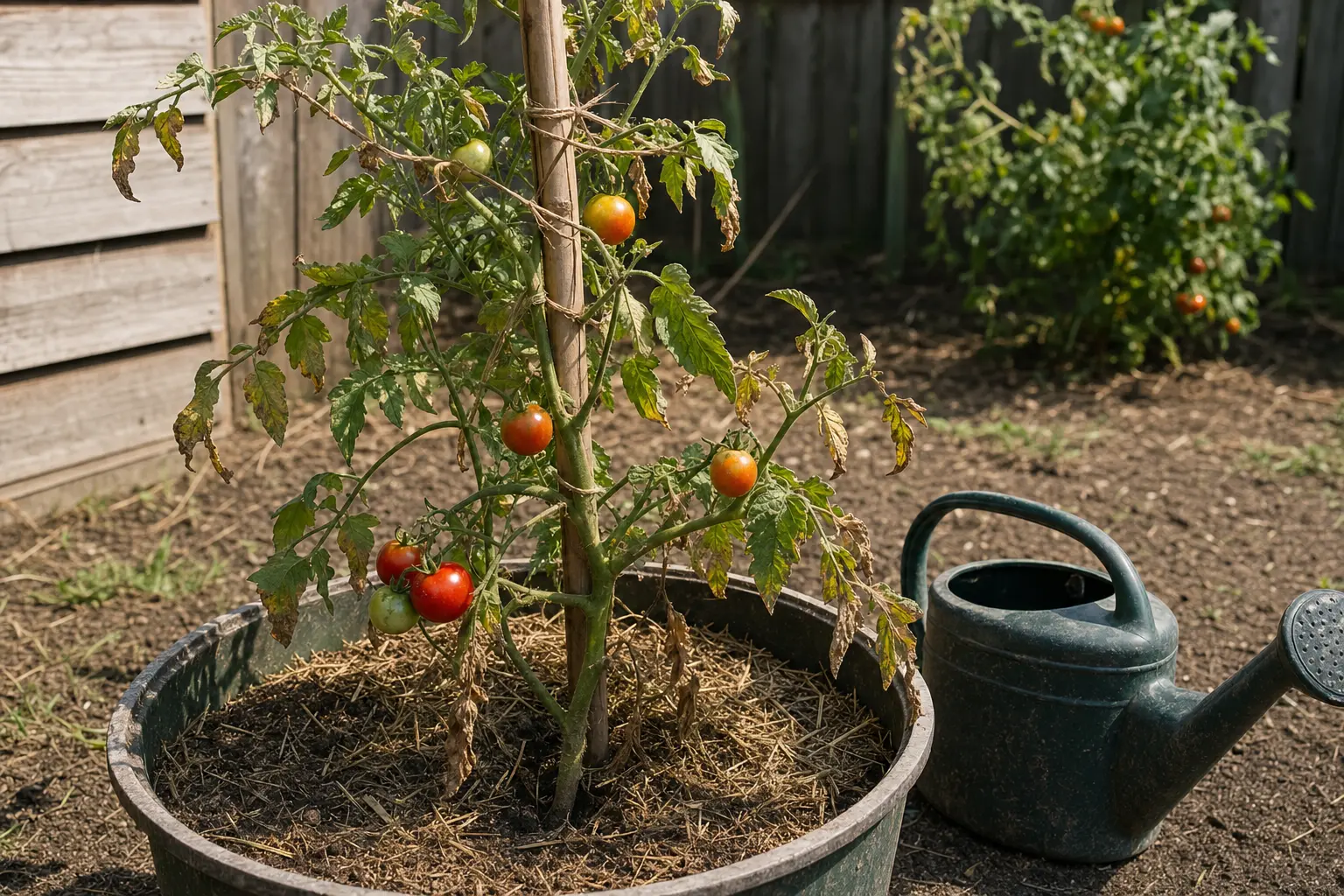
Early blight is a common fungal disease that often starts on older, lower leaves. It can cause brown spots, yellowing, leaf drop and sometimes marks on stems or fruit. It is encouraged by wet foliage, soil splash, plant stress and infected tomato debris left from previous crops.
Late blight is different. It is caused by a fungus-like water mould and can move very quickly in cool, damp weather. It can infect leaves, stems and fruit, and a severe outbreak can destroy plants rapidly. In the UK, when people talk about “tomato blight”, they often mean late blight, especially on outdoor tomatoes in wet summers.
Both diseases are easier to prevent than cure. Once a leaf is infected, it will not become healthy again. Your aim is to slow spread, protect clean growth and reduce the amount of disease that survives around your plants.
Early blight vs late blight
Use this table as a practical starting point. Symptoms can overlap with other tomato problems, so do not rely on one sign alone.
| Problem | Typical symptoms | Conditions that favour it | Main prevention steps |
|---|---|---|---|
| Early blight | Brown spots, often with target-like rings; yellowing around spots; starts on lower, older leaves; can move to stems and fruit | Warm, wet weather, heavy dew, overhead watering, soil splash, stressed plants | Mulch, water at soil level, remove lower leaves, stake or cage plants, rotate crops, clear debris |
| Late blight | Dark, water-soaked patches on leaves or stems; rapid collapse; white mould may appear on leaf undersides in damp conditions; dark, firm lesions on fruit | Cool, wet, humid weather; infected transplants, potatoes, volunteer plants or nearby outbreaks | Keep foliage dry, improve airflow, remove infected plants quickly, avoid volunteer potatoes, choose resistant varieties where blight is common |
| Septoria leaf spot and other leaf spots | Many small spots, often starting low on the plant; leaves yellow and drop | Wet foliage, splash from soil, dense growth | Similar to early blight: mulch, water at the base, improve airflow and remove badly affected leaves |
Not every yellow leaf is blight. Nutrient issues, old age, water stress and other diseases can also cause yellowing. If yellowing is the main symptom, it may help to compare it with our guide to why tomato leaves turn yellow.
How to prevent tomato blight before planting
Good blight prevention starts before your tomato plants go into the soil.
Choose the best growing site
Tomatoes need warmth, sun and air movement. A cramped, shaded, damp corner is much more likely to develop leaf disease than a bright, open spot.
Choose a site that offers:
- Full sun for strong growth and faster drying after rain.
- Good airflow around and between plants.
- Well-drained soil that does not stay waterlogged.
- Space away from potatoes, especially if late blight is common in your area.
Outdoor tomatoes are more exposed to wind-blown spores and wet weather, so prevention matters most outside. Greenhouse tomatoes are usually less exposed to late blight, but they can still suffer from humidity-related leaf diseases if ventilation is poor.
Start with healthy plants
Inspect young tomato plants before buying or planting them. Avoid any that have spotted, yellowing or mouldy leaves. A bargain tray of sickly plants can bring problems into the garden before the season has even begun.
Look for transplants that are:
- Short and sturdy rather than tall and weak.
- Deep green, but not lush and floppy.
- Free from leaf spots, mould and damaged stems.
- Growing in clean compost rather than sour, waterlogged compost.
If you grow from seed, use clean pots and fresh seed compost. Do not sow tomatoes in old trays that still contain dried plant remains unless they have been properly cleaned.
Consider blight-resistant varieties
Resistant varieties are not a guarantee, but they can reduce risk, especially where blight appears most years. Seed catalogues may describe varieties as resistant or tolerant to early blight, late blight or specific disease strains.
Examples often listed by extension sources for some blight resistance include varieties such as Mountain Magic, Defiant PhR, Plum Dandy, Mountain Fresh, Mountain Supreme and Lizzano. Availability varies by country and seed supplier, so treat these as examples rather than the only good choices.
When choosing seed, look for:
- Clear notes on early blight or late blight resistance.
- Varieties suited to your climate and growing method.
- Earlier-ripening varieties if your outdoor season is short or blight often arrives late in summer.
- Cherry and small-fruited types if you want reliable cropping from beginner-friendly plants.
Rotate tomatoes, potatoes and related crops
Early blight and several other tomato diseases can survive on plant debris. Tomatoes are in the same plant family as potatoes, peppers and aubergines, so these crops can share some disease problems.
Where space allows, avoid growing tomatoes in the same bed every year. A three-year rotation away from tomatoes, potatoes, peppers and aubergines is a good target. In a small garden, that may not always be realistic. If you cannot manage three years, even moving plants to a different bed or using fresh container compost is better than repeating the exact same set-up year after year.
Prepare clean supports
Tomato stakes, cages, strings and clips can carry old plant debris. Before using them again:
- Brush off dried soil and plant material.
- Wash supports with soapy water.
- Disinfect non-porous supports if disease was a problem last year.
- Let everything dry before use.
Wooden stakes are harder to clean than metal or plastic supports. If they were used with badly diseased plants, consider replacing them.
How to prevent tomato blight during the season
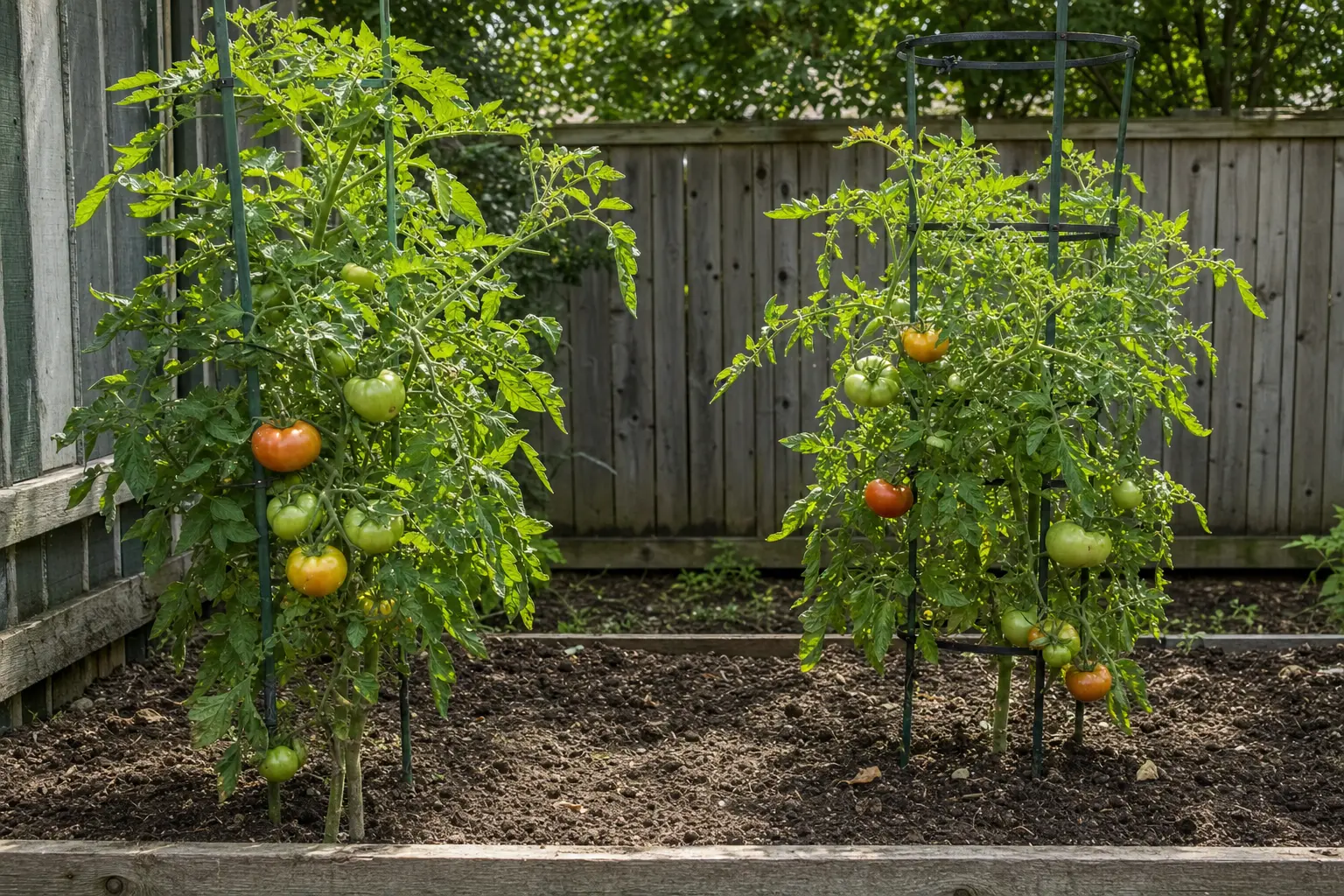
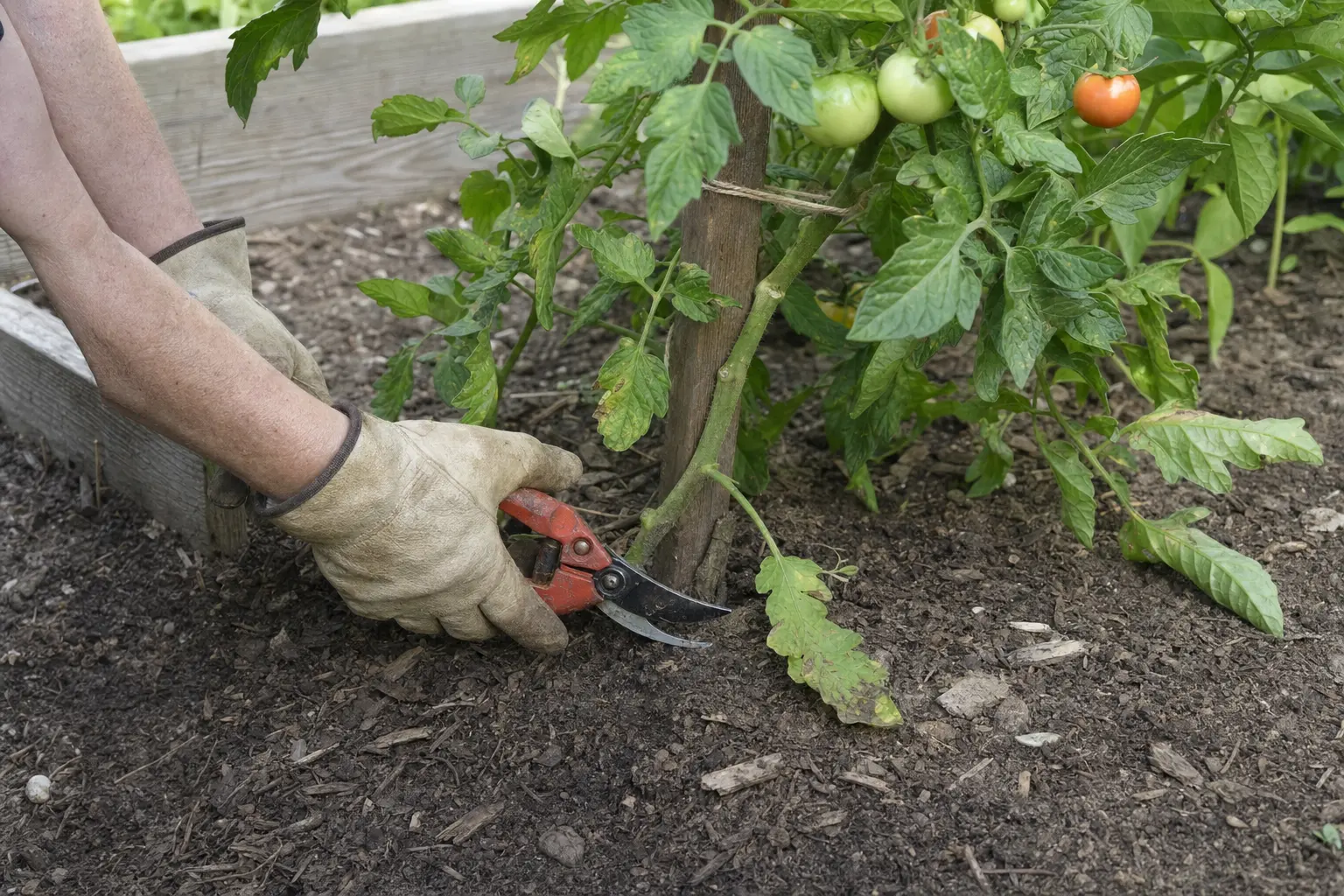
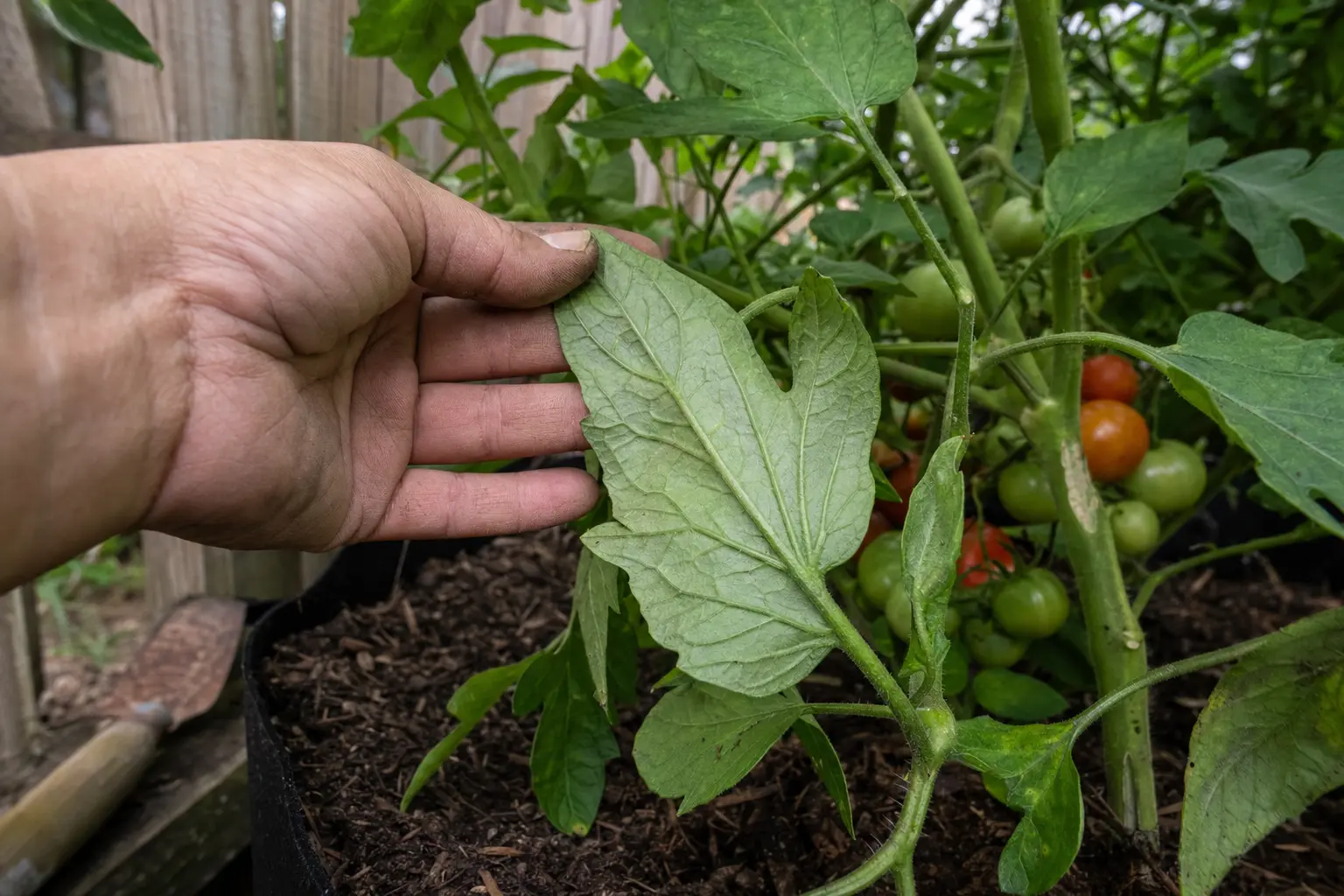
Once plants are growing, your job is to keep leaves as dry, airy and healthy as possible.
Water at the base, not over the leaves
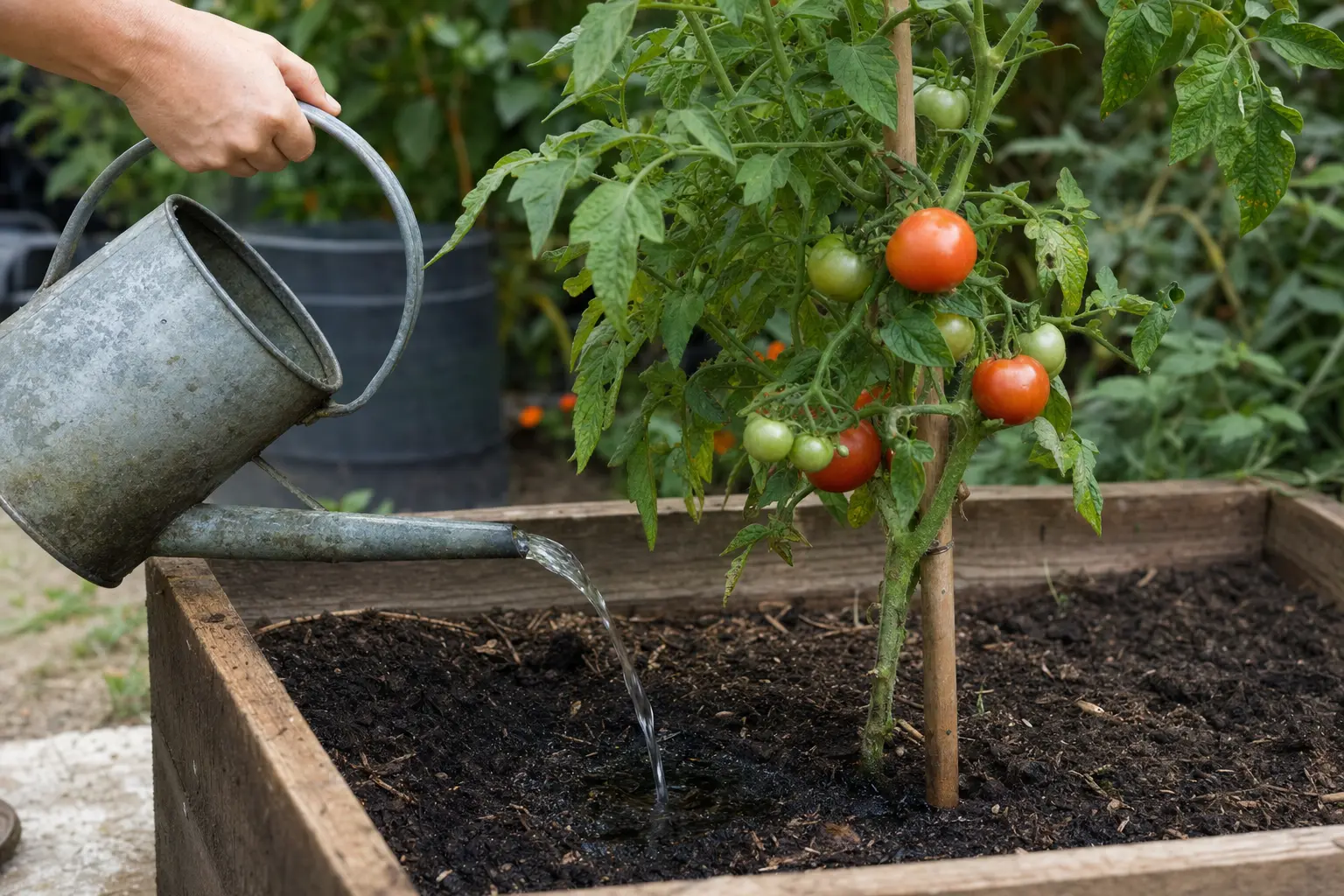
Wet leaves give many tomato diseases a chance to spread. Soil splash can also move disease spores from the ground onto lower leaves.
For lower blight risk:
- Water directly onto the compost or soil.
- Use a watering can rose removed, a drip line or a soaker hose.
- Avoid overhead sprinklers where possible.
- Water in the morning if leaves might get splashed, so they dry quickly.
- Do not water late in the evening over the foliage.
Aim for steady soil moisture rather than repeated drought followed by flooding. Erratic watering can stress plants, and stressed plants are often less able to cope with disease. It can also contribute to other fruit problems such as blossom end rot on tomatoes.
Mulch to stop soil splash
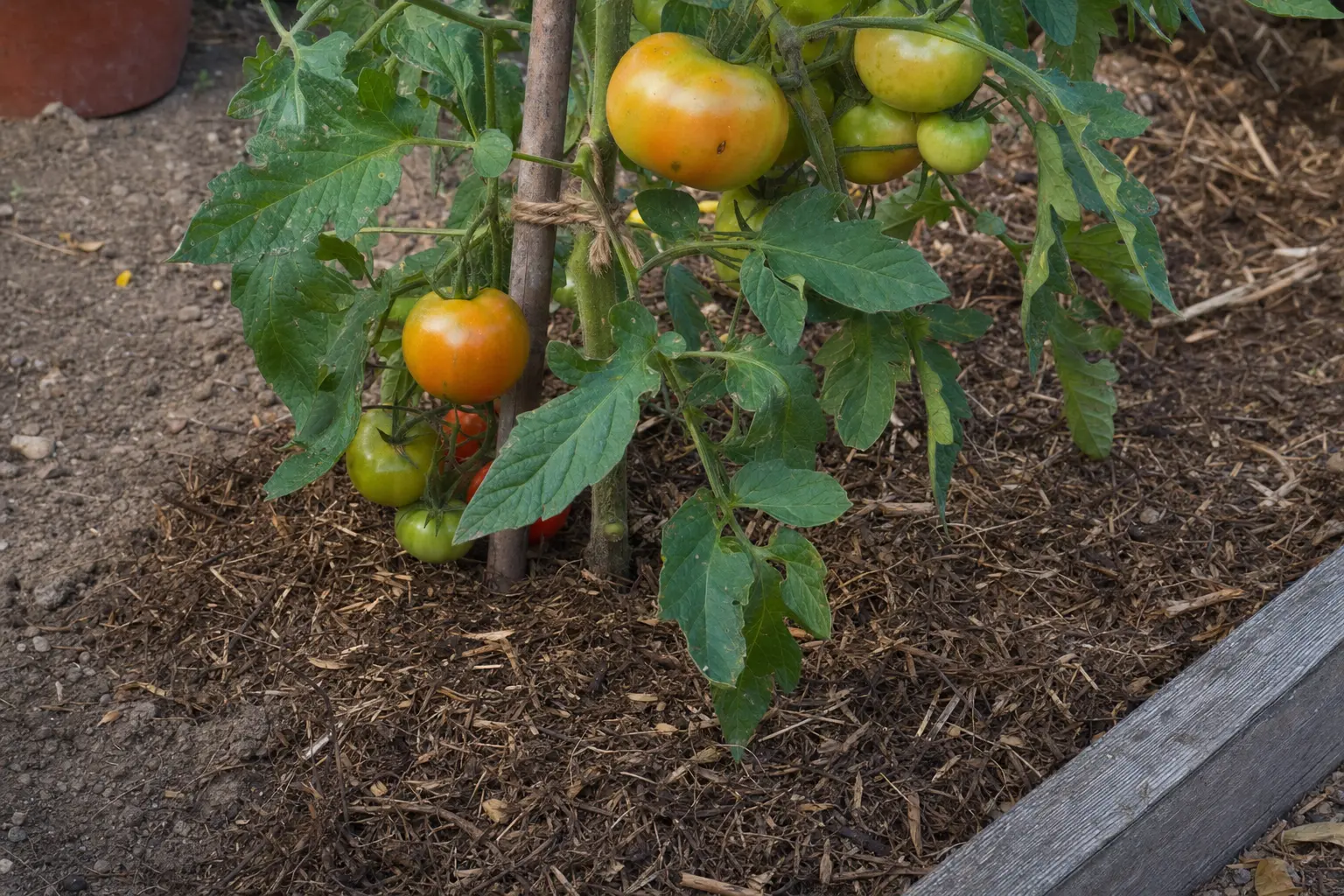
Mulch is one of the simplest ways to reduce early blight pressure. It creates a barrier between the soil and the lower leaves, so rain and watering are less likely to splash spores upwards.
Useful mulches include:
- Clean straw.
- Compost that is fully rotted and free from diseased tomato debris.
- Shredded leaves from healthy plants.
- Grass clippings only if the lawn has not been treated with weedkiller.
- Biodegradable paper mulch.
Apply mulch after the soil has warmed and the plants are established. Keep it slightly away from the main stem so the stem does not stay constantly wet.
Give plants enough space
Crowded plants dry slowly after rain and make it easier for diseases to move from leaf to leaf. Follow the spacing recommended for your variety and support method, but do not be afraid to give outdoor tomatoes extra room in damp climates.
As a beginner rule:
- Leave enough space so mature plants do not press tightly together.
- Use cages, stakes or strings to keep foliage off the ground.
- Avoid planting tomatoes where air cannot move through the crop.
- Do not pack too many plants into one grow bag.
A few well-spaced, healthy tomato plants usually produce more usable fruit than too many crowded, diseased plants.
Prune lower leaves carefully
Early blight and other leaf spots often appear first on the lowest leaves because these are nearest the soil and dry slowly. Once plants are well established and starting to grow strongly, remove the lowest leaves that touch or nearly touch the soil.
A sensible approach is to:
- Wait until the plant is established and actively growing.
- Remove leaves that rest on the soil or sit very close to it.
- Remove yellowing or spotted leaves promptly.
- Use clean secateurs or pinch out small leaves with clean hands.
- Avoid stripping too many leaves at once, as foliage helps feed and shade the fruit.
For cordon tomatoes, remove side shoots as part of normal training. For bush tomatoes, prune more lightly. Heavy pruning can expose fruit to sunscald and stress the plant.
Feed enough, but do not overdo nitrogen
Vigorous, balanced growth helps tomatoes cope better with disease. However, too much nitrogen can encourage soft, leafy growth that stays humid and crowded.
Use a tomato feed once the first trusses begin to set fruit, following the product instructions. Avoid the temptation to give extra fertiliser “just in case”. More feed is not always better.
If plants are pale, weak or slow, check watering, root space, temperature and compost quality before assuming they simply need more feed.
Check plants often in risky weather
Blight prevention is easiest when you catch problems early. Inspect plants at least weekly, and more often during damp, humid spells.
Check:
- Lower leaves first.
- The undersides of leaves.
- Stems, especially where leaves join the stem.
- Fruit shoulders and calyx ends.
- Nearby potatoes and volunteer plants.
Remove isolated affected leaves before a small problem becomes a large one. If plants are wilting as well as showing leaf damage, compare symptoms carefully, as wilting can have several causes. Our guide to why tomato plants are wilting may help narrow it down.
Preventing blight in pots, grow bags and greenhouses
Container growing can reduce some soil-related problems because you can start with fresh compost. However, pots and greenhouses bring their own risks: close spacing, uneven watering and high humidity.
In pots and grow bags
To reduce blight risk in containers:
- Use fresh, good-quality compost each season.
- Choose a pot large enough for the variety.
- Avoid pushing too many plants into one grow bag.
- Raise or space containers so air can move between plants.
- Water consistently at the base.
- Remove dead leaves from the compost surface.
Container plants can dry out quickly, then become stressed. Check moisture daily in hot weather, especially when fruit is forming.
In greenhouses and polytunnels
Late blight is generally less common under cover than outdoors, but humid, still air can encourage other fungal problems. Good ventilation is essential.
Helpful habits include:
- Open vents and doors whenever conditions allow.
- Avoid wetting paths late in the day if humidity is already high.
- Space plants so leaves are not pressed against glass or plastic.
- Remove lower leaves gradually to improve airflow.
- Clear fallen leaves and old fruit promptly.
- Avoid storing weedkillers, lawn treatments or diseased plant waste near tomatoes.
If outdoor blight is spreading locally, be careful not to carry wet infected leaves or tools from outdoor plants into the greenhouse.
What to do if you see possible blight symptoms
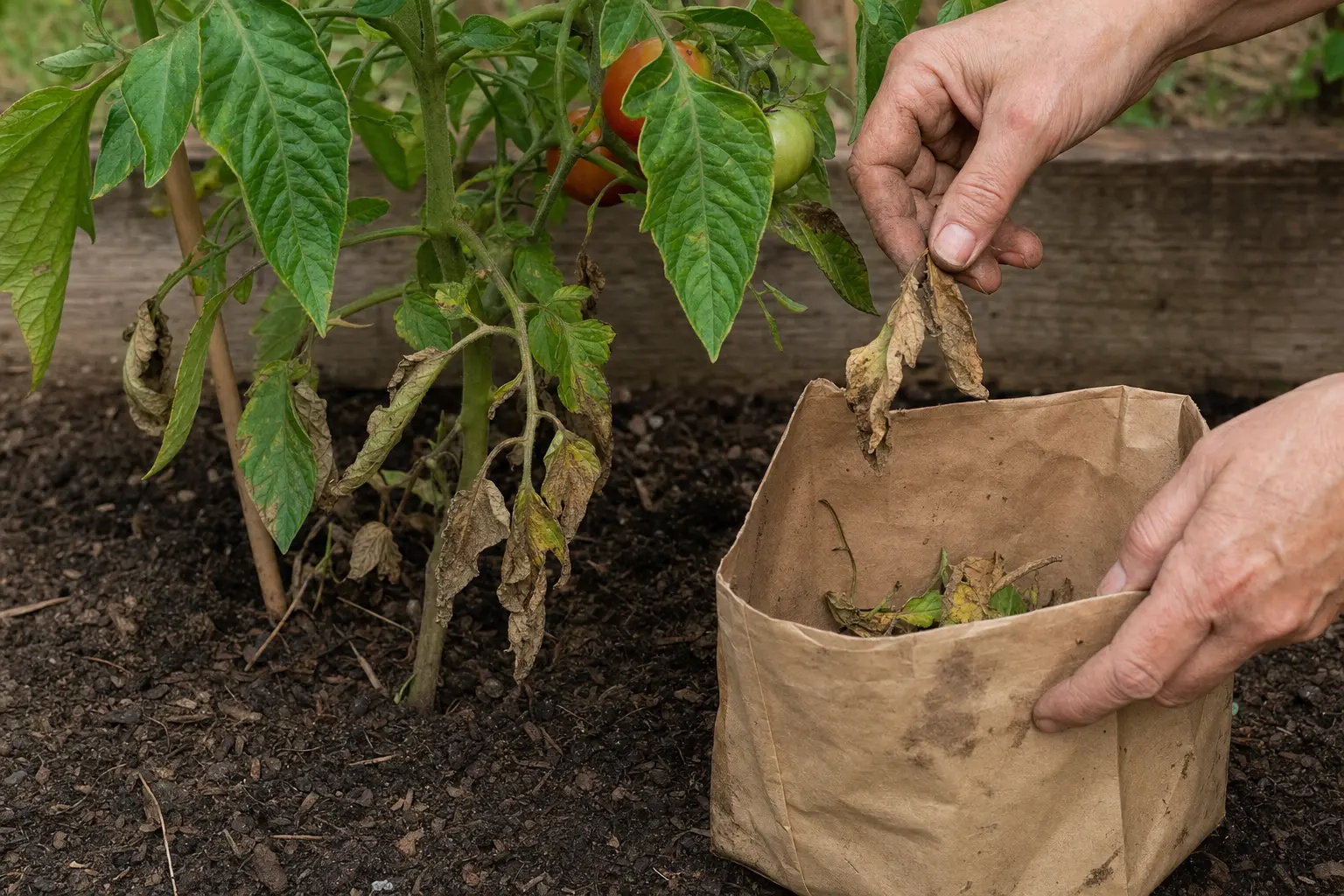
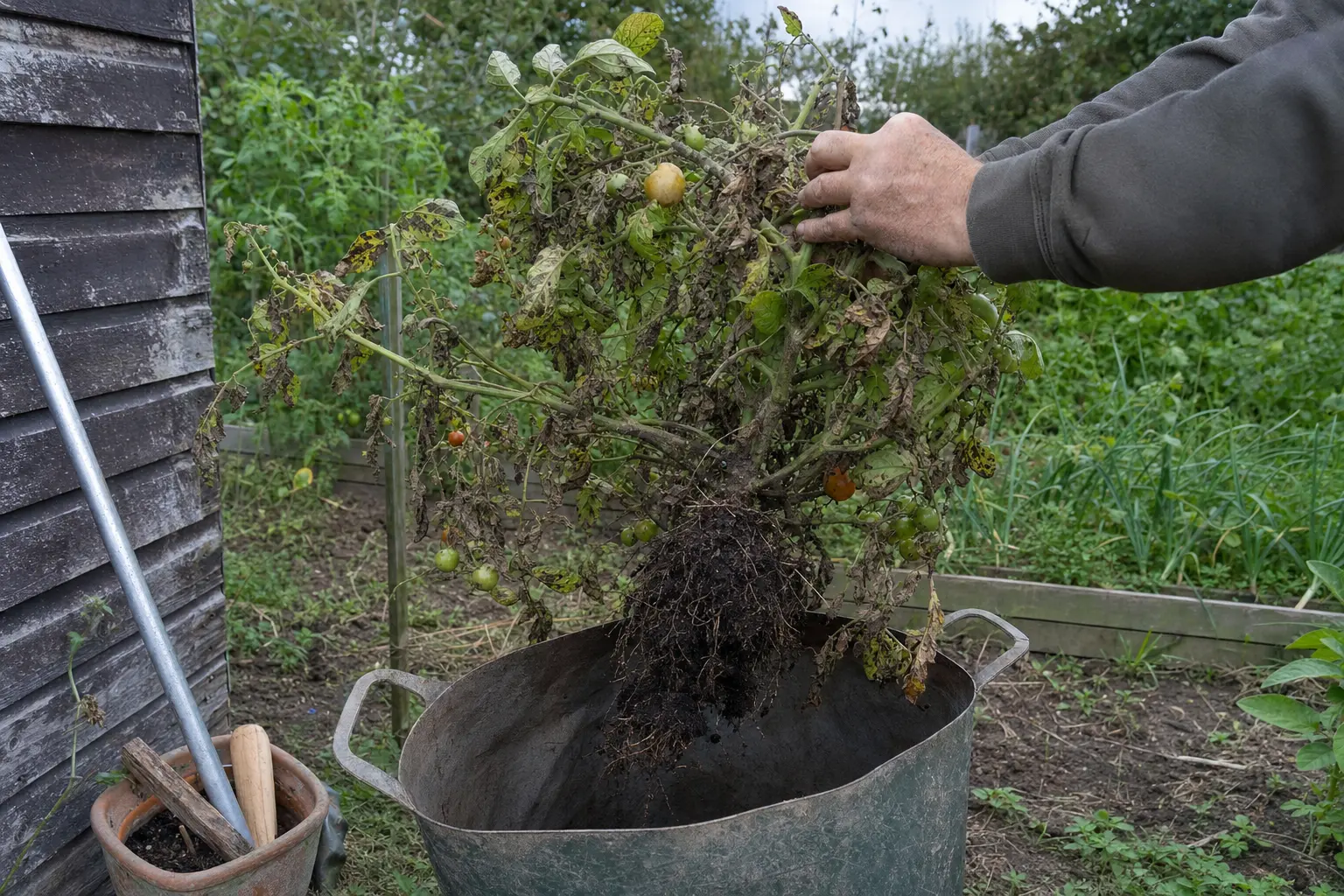
Prevention reduces risk, but no method is perfect. If you spot suspicious marks, act quickly and calmly.
Step 1: Identify the pattern
Ask yourself:
- Did symptoms start on the lower leaves?
- Are spots brown with yellowing around them?
- Are there target-like rings in the spots?
- Are leaves developing dark, water-soaked patches?
- Are stems turning dark brown or black?
- Is the weather cool, wet and humid?
- Are nearby potatoes also affected?
Lower leaf spots developing slowly often point towards early blight or other leaf spot diseases. Rapid darkening, stem lesions and fruit lesions during cool, wet weather are more worrying for late blight.
Step 2: Remove limited infected leaves
If only a few lower leaves are affected:
- Remove them in dry weather if possible.
- Put them straight into a bag or bucket.
- Do not shake diseased leaves around the plant.
- Wash your hands or tools afterwards.
- Keep monitoring the plant closely.
Do not remove so many leaves that the plant is left unable to feed the fruit. The aim is to slow disease spread, not strip the plant bare.
Step 3: Remove badly infected plants
If late blight is likely, or if a plant is rapidly collapsing with dark lesions on leaves, stems and fruit, it is usually best to remove the whole plant. This helps reduce spread to neighbouring tomatoes, potatoes and nearby gardens.
For beginners, the safest disposal method is to bag badly diseased plants and put them out according to local waste guidance. Do not put late-blight-infected plants into an ordinary cool compost heap. Home compost piles often do not heat evenly enough to kill plant pathogens.
Step 4: Think carefully before using fungicides
Fungicides are not a cure for blighted leaves. Protective products work best before infection or very early in disease development, and they must be used exactly according to the label. Product availability and legal uses vary by country, crop, formulation and year.
Before using any fungicide:
- Confirm the problem as closely as you can.
- Check that the product is labelled for tomatoes and the disease you are targeting.
- Follow the harvest interval and safety instructions.
- Avoid spraying in unsuitable weather.
- Do not rely on sprays instead of spacing, watering and hygiene.
For many home growers, cultural prevention is more practical and reliable than trying to rescue a badly infected crop with sprays.
Common mistakes that make blight worse
Avoid these common blight-prevention mistakes:
- Watering over the leaves every evening. This keeps foliage wet for hours.
- Planting too closely. Crowded leaves trap humidity and slow drying.
- Letting leaves touch the soil. Lower leaves are most exposed to soil splash.
- Ignoring early spots. A few infected leaves can become a plant-wide problem.
- Leaving diseased debris over winter. Old tomato remains can carry disease into the next season.
- Growing tomatoes after tomatoes in the same bed every year. Rotation lowers disease build-up.
- Keeping volunteer potatoes or tomato seedlings. These can act as disease hosts.
- Composting badly diseased plants in a cool heap. This may preserve rather than destroy infected material.
- Overfeeding with nitrogen. Soft, lush growth can become dense and disease-prone.
- Assuming all leaf problems are blight. Nutrient, watering, temperature and weedkiller problems can look alarming but need different solutions.
End-of-season clean-up
End-of-season hygiene is one of the best investments you can make for next year’s crop.
At the end of the season:
- Remove tomato plants, including fallen leaves and fruit.
- Dispose of diseased material carefully.
- Clean stakes, cages, pots and clips.
- Pull up volunteer tomato and potato plants.
- Avoid leaving rotten potatoes or tomato fruit in the growing area.
- Plan next year’s rotation before you forget where everything grew.
If plants stayed healthy, some material may be suitable for hot composting. If blight or serious leaf disease was present, use a more cautious disposal method.
FAQ
Can tomato blight be completely prevented?
Not always. Blight risk depends on weather, local disease pressure, variety choice and growing conditions. However, keeping leaves dry, improving airflow, mulching and removing diseased material can greatly reduce the chance of severe damage.
Does blight live in the soil?
Early blight can survive on infected tomato debris in or on the soil, which is why rotation, mulching and clean-up matter. Late blight usually needs living infected tissue, such as infected potato tubers, volunteer plants or cull piles, although disease biology can vary by region and strain. Either way, good hygiene helps.
Should I remove all the leaves from the bottom of tomato plants?
Remove leaves that touch the soil, are badly shaded, or show disease symptoms. Do not remove too much foliage at once. Tomato leaves feed the plant and help protect fruit from sunscald.
Is it safe to eat tomatoes from a plant with blight?
Do not eat fruit that is diseased, rotting or damaged. Sound, unaffected fruit from a plant with limited early blight may be usable, but inspect it carefully. If late blight is present, harvest only firm, healthy-looking fruit and use it promptly; do not store suspect fruit.
Are greenhouse tomatoes safe from blight?
They are usually at lower risk of late blight than outdoor tomatoes because rain does not wet the leaves, but they are not immune to disease. Poor ventilation, overcrowding and high humidity can still cause serious leaf problems.
Should I spray tomatoes before blight appears?
For most beginners, the first line of defence should be good growing practice: spacing, mulching, watering at the base and sanitation. If blight is a regular serious problem in your area and you are considering a preventive fungicide, check current local guidance and the product label carefully. Sprays cannot replace good plant hygiene.
What is the single most important habit for preventing tomato blight?
If you only change one thing, stop wetting the leaves. Water at the base of the plant and use mulch to reduce soil splash. Combine that with good spacing and regular checks, and you will prevent many common tomato leaf disease problems before they get out of hand.