Why Are My Tomato Plants Wilting? Causes, Checks and Fixes
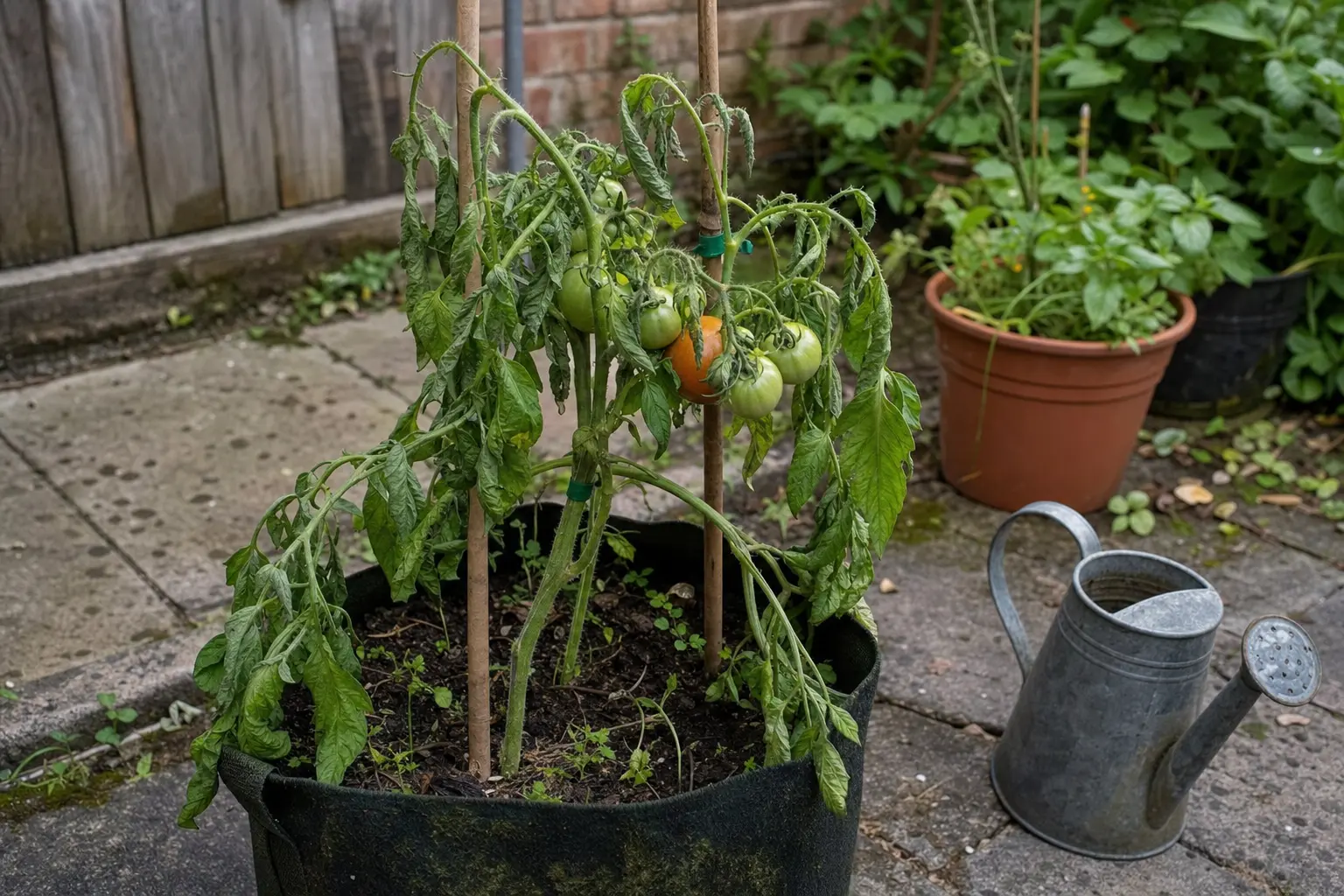
If your tomato plants are wilting, the most likely causes are dry soil, heat stress, waterlogged roots, root damage, wilt diseases, pests in the stem, nearby black walnut roots, or chemical damage. Start by checking the soil moisture at root depth. If the plant revives after a deep watering or after the day cools, it is probably stressed rather than diseased. If it stays wilted despite moist soil, look closely at the stem, roots and lower leaves.
A wilting tomato plant is not always doomed. Many plants droop temporarily on hot afternoons, especially in pots, grow bags or greenhouses. The warning sign is persistent wilting: leaves and stems remain limp overnight, the plant yellows from the bottom, one side wilts first, the stem is discoloured inside, or the roots are brown, rotten or swollen.
Use this guide to work through the common causes, what the symptoms mean, and what to do next.
Contents
- Quick answer: what to check first
- Tomato wilting diagnosis table
- Water stress: too dry, too hot or too irregular
- Overwatering, poor drainage and root rot
- Wilt diseases: Fusarium, Verticillium and bacterial wilt
- Root problems that make tomatoes wilt
- Stem damage and pests
- Weather, chemical and site problems
- Should you remove a wilting tomato plant?
- How to prevent tomato plants wilting next season
- Common mistakes to avoid
- FAQ
Quick answer: what to check first
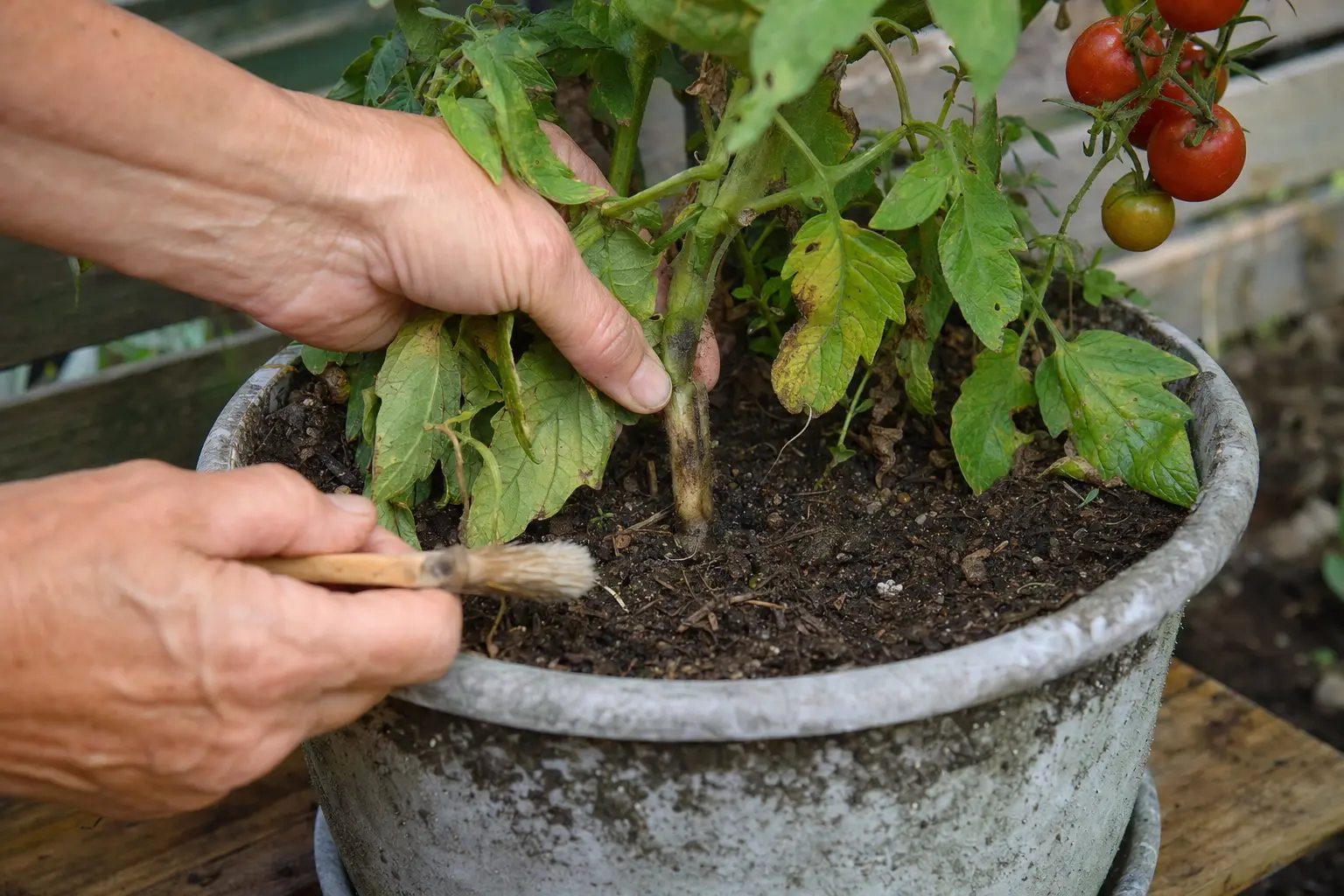
Before you assume the worst, do these simple checks.
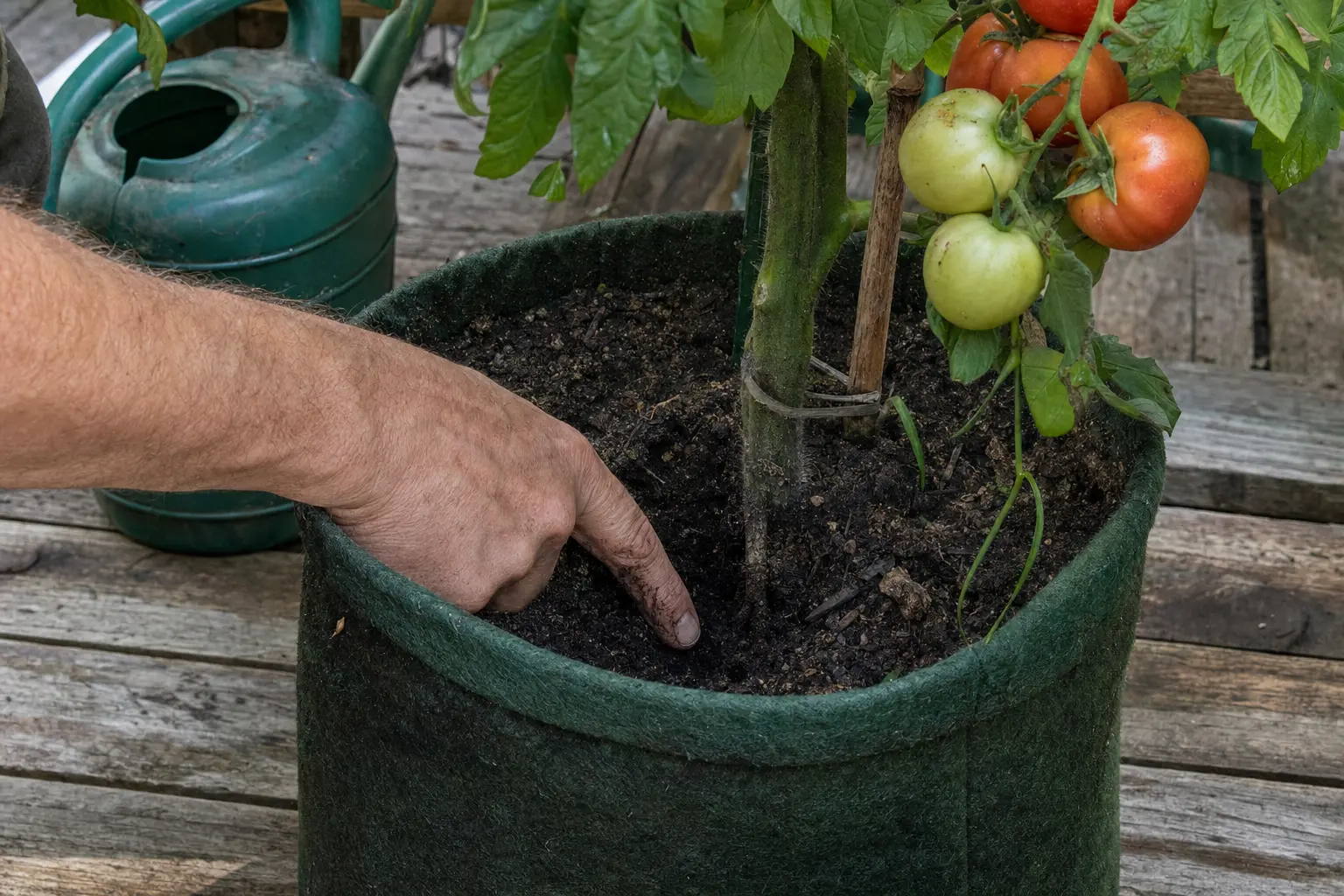
- Feel the soil below the surface. Push a finger, trowel or moisture probe 5–10cm into the compost or soil. The surface may look dry while the root zone is still moist, or look damp while the pot has a dry core.
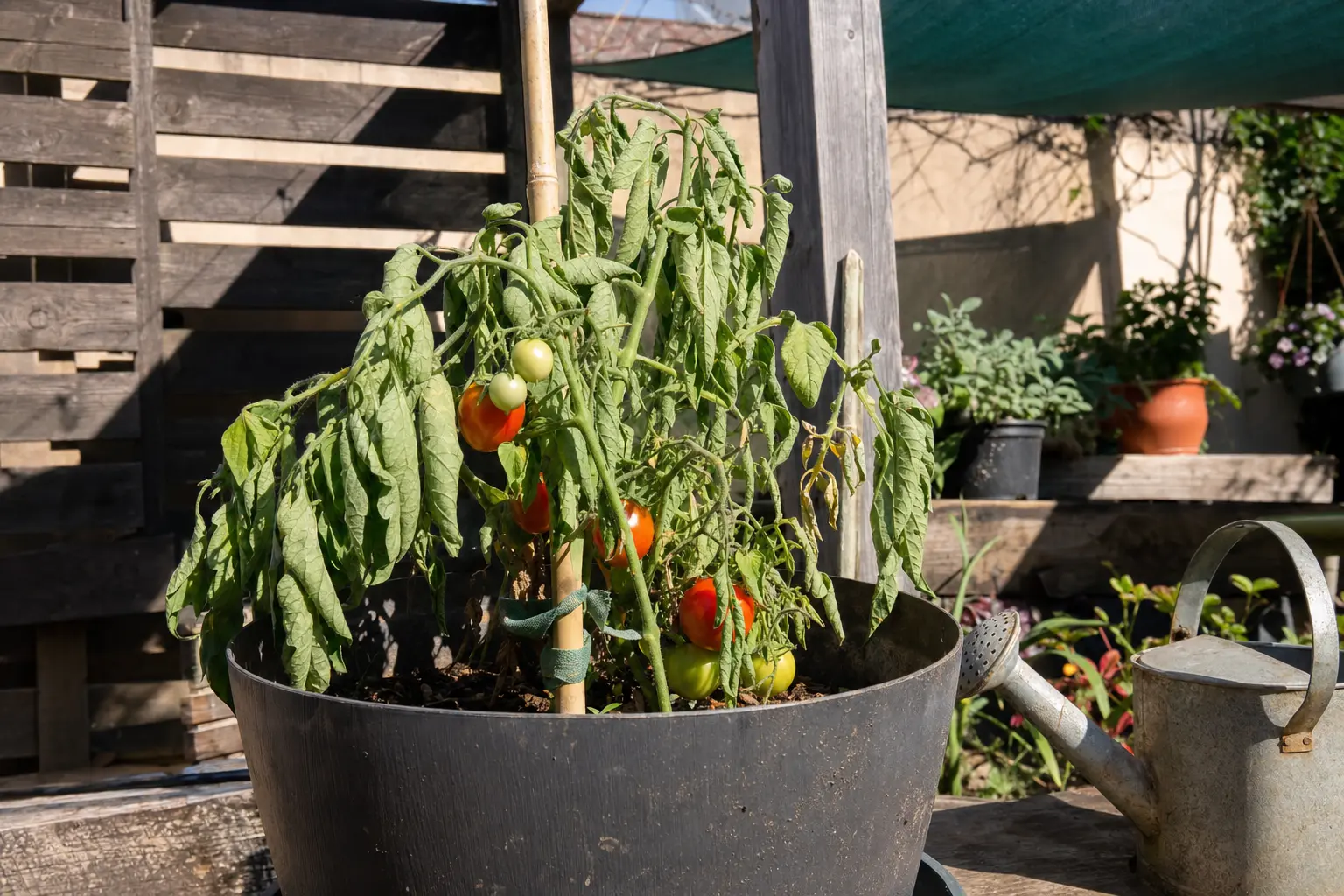
- Check the time of day. Wilting during the hottest part of the afternoon can be temporary heat stress. If the plant looks normal again in the evening or early morning, it is less worrying.
- Look at the whole plant. Is every stem limp, or only one branch? One-sided wilting can point towards vascular wilt disease or stem injury.
- Check for yellowing. Lower leaves turning yellow, then brown, along with wilting can suggest Fusarium or Verticillium wilt. If yellowing is the main symptom, compare it with common causes of yellow tomato leaves.
- Inspect the stem base. Look for dark cankers, cracks, soft rot, an insect hole, white fungal growth, tight plant ties or physical damage.
- Think about watering history. Recent drought, missed watering, a tiny pot, hot wind or a very full fruit load can all tip a plant into wilt.
- Think about excess water too. Standing water, sour-smelling compost, poor drainage or constantly wet soil can damage roots so they cannot take up water.
- Consider the site. Tomatoes growing near black walnut trees, in old tomato beds, or in recently sprayed areas may have extra risks.
If the soil is dry, water deeply and wait. A drought-stressed plant should usually perk up fairly quickly once the root ball is properly rehydrated. If the soil is moist and the plant still wilts, do not keep adding water blindly; move on to diagnosis.
Tomato wilting diagnosis table
| What you see | Likely cause | What to do now |
|---|---|---|
| Plant droops on hot afternoons but recovers overnight | Heat or temporary water stress | Water deeply when needed, mulch, shade pots during heatwaves and improve ventilation |
| Soil is dry at root depth; plant revives after watering | Underwatering | Soak the root zone thoroughly, then water consistently rather than little and often |
| Compost is wet, heavy or sour; plant wilts anyway | Overwatering, low oxygen around roots or root rot | Stop watering until the root zone begins to dry, improve drainage and check roots if safe to do so |
| Lower leaves yellow, wilt and brown; one side may be worse | Fusarium or Verticillium wilt | Remove badly affected plants, avoid composting diseased material, use resistant varieties next time |
| Sudden wilt while plant stays green, often worse in heat | Bacterial wilt or severe root/stem damage | Remove and bin suspect plants; avoid moving contaminated soil around the garden |
| One stem wilts; small hole near stem base | Stalk borer or stem injury | Cut out affected stem if possible, or remove the plant if it collapses |
| Roots have swollen knots or galls | Root-knot nematodes | Remove plant, avoid spreading soil, rotate crops or grow in clean containers next season |
| Leaves are distorted, narrow or twisted after weedkiller use nearby | Herbicide damage | Remove contamination sources; do not eat produce if pesticide exposure is uncertain |
| Plants near black walnut trees are stunted, yellowing and wilting | Walnut toxicity | Move future tomatoes to containers, raised beds or another site away from walnut roots and debris |
| Leaves look water-soaked, soft, blackened after cold nights | Cold injury | Protect young plants; remove only dead tissue once growth resumes |
Water stress: too dry, too hot or too irregular
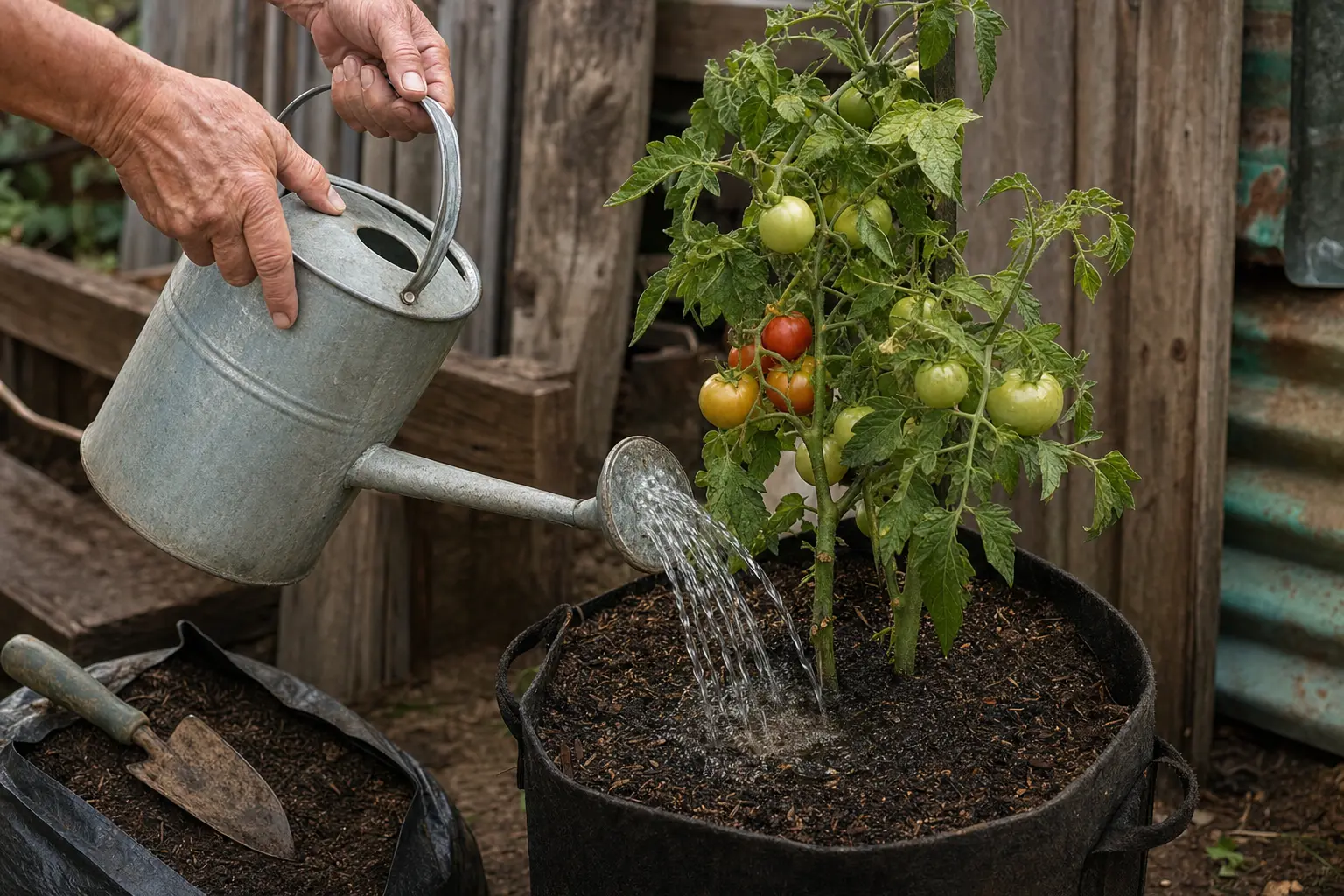
The simplest reason for tomato plants wilting is that the leaves are losing water faster than the roots can replace it. This can happen because the soil is too dry, the air is very hot and dry, the plant is in a small container, or the root system is still weak after transplanting.
Tomatoes need steady moisture, not constant soaking. Mature plants in open ground are often described as needing roughly 2.5cm (1in) of water per week, but that is only a starting point. Plants in pots, grow bags, sandy soil, windy sites and greenhouses may need water much more often in hot weather.
Signs of drought or heat stress
Drought or heat stress usually shows as:
- limp leaves and soft growing tips;
- drooping during the hottest part of the day;
- dry compost or soil several centimetres down;
- leaves that may curl upwards as the plant tries to reduce water loss;
- improvement after a thorough watering or after temperatures fall.
This is different from a plant that remains wilted all night in moist soil. A plant that recovers overnight is still under pressure, but it may be manageable.
What to do
Water the root zone slowly and deeply. For plants in the ground, water around the base rather than sprinkling the leaves. For pots and grow bags, water until moisture reaches the full depth of the compost and begins to drain freely from the bottom. If a pot has become very dry, the compost may shrink away from the sides and water may run straight through. In that case, water in stages or stand the pot in a tray briefly until the compost reabsorbs moisture.
Then reduce the chance of repeat wilting:
- add a 5cm mulch of compost, straw or another suitable organic mulch, keeping it away from direct contact with the stem;
- water in the morning where possible, so plants enter the day hydrated;
- use drip irrigation, a soaker hose or a buried watering pot to deliver water to the roots;
- move containers out of the fiercest afternoon sun during heatwaves;
- avoid small pots for large cordon or indeterminate tomatoes;
- ventilate greenhouses and polytunnels well in hot weather.
Irregular watering also contributes to fruit problems. If your plants swing from dry to drenched, you may see wilting, tomatoes splitting or blossom end rot. The aim is even moisture: not bone dry, not waterlogged.
Overwatering, poor drainage and root rot
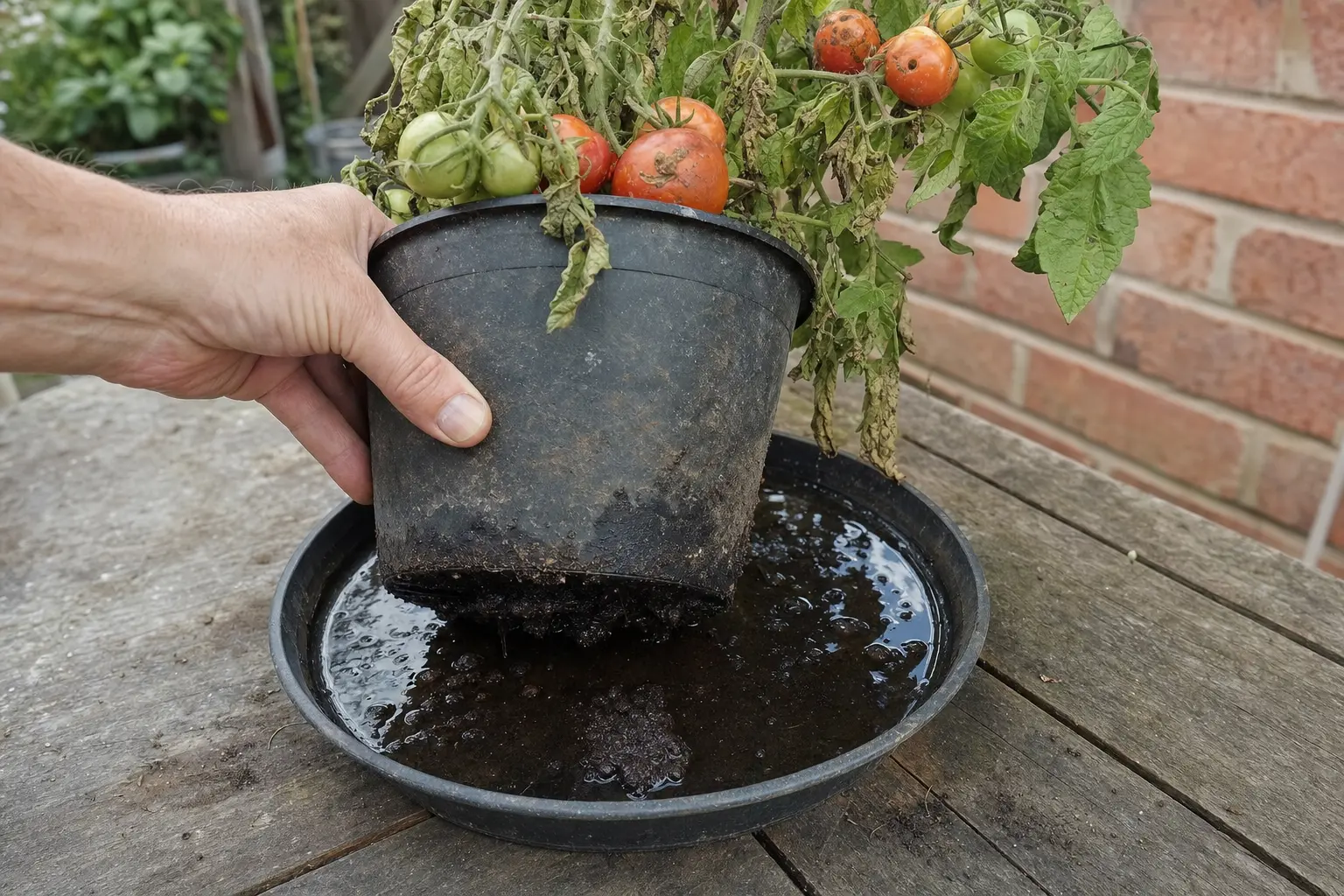
A wilted tomato is not always thirsty. Roots need oxygen as well as water. If soil stays saturated, roots can become stressed, damaged or diseased, and the plant wilts because the damaged roots can no longer supply the leaves.
This is why a beginner can water more and more, yet the plant looks worse.
Signs of overwatering or poor drainage
Look for:
- soil or compost that stays wet for days;
- green algae on the compost surface;
- a sour or stagnant smell;
- yellowing leaves as well as wilting;
- slow growth despite feeding;
- brown, soft or decaying roots if the plant is lifted;
- wilting that worsens in hot weather even though the soil is damp.
In heavy ground, the problem may be worse after prolonged rain. In containers, it may be caused by blocked drainage holes, pots standing in saucers of water, or dense old compost that no longer drains well.
What to do
If the plant is in a pot, check that water can drain freely. Raise pots on feet or bricks, empty saucers after watering, and avoid decorative outer pots that trap water around the root ball.
If the plant is in the ground, stop watering until the soil begins to dry. Do not dig around the root system aggressively, as damaged roots are more vulnerable to disease. If the bed is regularly wet, future tomatoes will do better in raised beds, large containers or improved free-draining soil.
Where root rot is suspected, there may be no quick rescue. You can try improving drainage and reducing watering, but a plant with badly rotted roots may continue to decline. Remove dead plants and the surrounding soggy debris promptly.
Wilt diseases: Fusarium, Verticillium and bacterial wilt
If tomato plants are wilting despite reasonable moisture, especially if the problem starts on lower leaves or one side of the plant, consider wilt diseases. These diseases interfere with the plant’s vascular system: the internal tubes that move water and nutrients.
The three major wilt diseases home growers hear about are Fusarium wilt, Verticillium wilt and bacterial wilt. They can look similar, and exact diagnosis may require local laboratory testing, but the symptom patterns can help you decide what to do.
Fusarium wilt
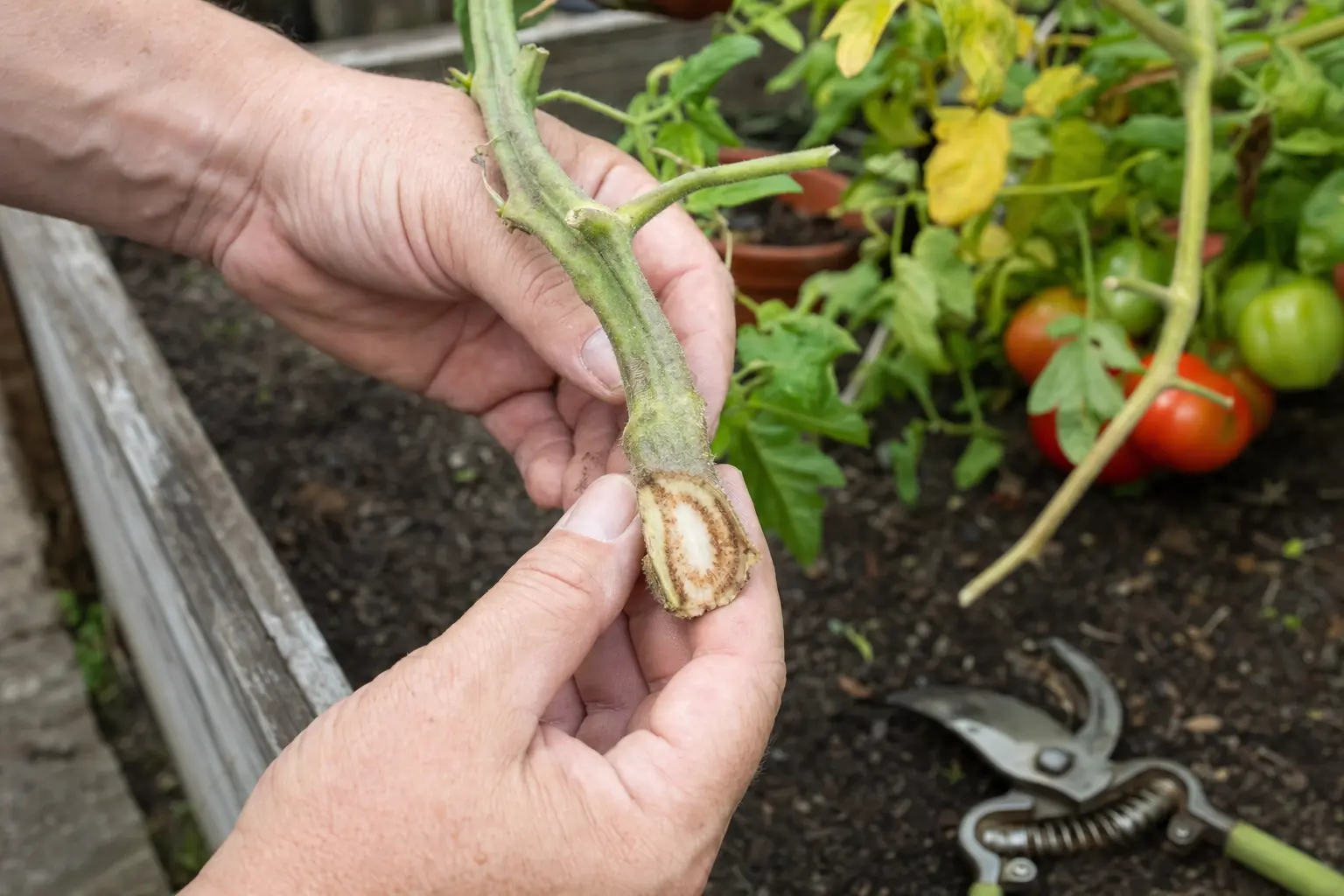
Fusarium wilt is a soil-borne fungal disease. It often shows first on older, lower leaves. Leaves may yellow, wilt, brown and die. Sometimes only one side of a plant or one side of a leaf branch is affected at first. Wilting may improve overnight in the early stages, then eventually become permanent.
A useful clue is brown discolouration in the vascular tissue just under the outer skin of the lower stem. If you cut or scrape the stem near the base, the inside may show brown streaking while the centre pith remains relatively healthy.
There is no cure once a tomato plant is infected. Remove badly affected plants and do not compost them in a cool home compost heap. In future seasons, choose varieties labelled with Fusarium resistance, rotate away from tomatoes where space allows, or grow in clean containers if the bed has a known history of the disease.
Verticillium wilt
Verticillium wilt is also soil-borne and also blocks water movement. It often starts on lower leaves and can cause yellowing, wilting and wedge-shaped yellow or brown areas on leaflets. It may progress more slowly than bacterial wilt, and symptoms can be uneven.
Like Fusarium, Verticillium can persist in soil. Resistant varieties may be marked with a V in seed catalogues or plant descriptions. Rotation helps, although Verticillium has a wider host range than some tomato-specific diseases, so weeds and other crops can complicate control.
Bacterial wilt
Bacterial wilt can be sudden and dramatic. A plant may wilt while the foliage is still green, often starting with younger leaves. It may appear to recover overnight, then wilt again during warm afternoons until it collapses permanently.
One diagnostic clue sometimes used is the bacterial streaming test: a freshly cut lower stem placed in clear water may release a cloudy, white, slimy stream. This is not a routine test every beginner needs to do, but it explains why bacterial wilt can look different from ordinary drought.
There are no effective home-garden chemical cures once bacterial wilt is present. Remove suspect plants carefully, keeping soil attached to the roots contained as much as possible. Bag and bin the plant rather than shaking soil around the bed.
What wilt diseases have in common
For all serious wilt diseases:
- watering will not cure the plant once the vascular system is blocked;
- symptoms often worsen in heat because the plant needs to move more water;
- infected plants should be removed rather than left to decay in place;
- resistant varieties are one of the most useful long-term tools;
- avoid saving seed from diseased plants;
- clean tools after cutting suspect stems;
- avoid moving soil from an affected bed into clean containers or beds.
If you repeatedly lose tomatoes in the same patch, treat that bed as suspect. Grow tomatoes elsewhere for several years if you can, or switch to large containers filled with fresh, good-quality compost.
Root problems that make tomatoes wilt
Sometimes the leaves tell you there is a water problem, but the real cause is hidden underground.
Root-knot nematodes
Root-knot nematodes are tiny worm-like pests that feed on roots. You will not usually see the pests themselves, but you may see swollen knots or galls on the roots. Above ground, affected tomatoes may be stunted, yellowish and prone to wilting, especially in hot weather.
Nematode problems often appear in patches rather than evenly across a whole garden. One plant may struggle while another nearby looks much healthier.
If you lift a failing plant and see obvious root galls, remove it and avoid spreading the soil. In warmer areas where nematodes are common, resistant varieties, crop rotation, weed control and container growing can all help. Where the problem is severe or recurring, local diagnostic advice is worthwhile because nematode species and management options vary by region.
Transplant shock and damaged roots
Newly planted tomatoes can wilt because their roots have not yet settled into the surrounding soil. This is common when plants are moved from a sheltered windowsill or greenhouse into bright sun, wind or cool nights without proper hardening off.
Root damage can also happen when hoeing too close, digging in supports, pulling weeds roughly, or letting pots dry so severely that fine roots die.
Help plants recover by:
- watering thoroughly at planting;
- protecting young plants from strong wind and intense sun for a few days;
- keeping the root zone evenly moist;
- avoiding deep cultivation close to the stem;
- tying plants gently so stems are supported but not strangled.
If the plant was only shocked, new growth should look firmer and healthier within a few days.
Stem damage and pests
A tomato plant may wilt because water cannot move through one stem or through the main stem.
Stalk borers and internal stem pests
If one branch or one plant wilts suddenly, inspect the lower stem for a small entrance hole, frass or a damaged area. Stalk borer larvae can tunnel inside stems, causing wilting above the damage. They are often associated with nearby tall grasses or weedy areas.
Once a borer is inside the stem, sprays are usually not helpful. If only one side shoot is affected, prune it out and dispose of it. If the main stem collapses, remove the plant.
Aphids, mites and sap-sucking pests
Small numbers of aphids rarely cause whole-plant wilt, but heavy infestations can curl, distort, stunt and weaken leaves. Spider mites can be a problem in hot, dry conditions and may cause fine pale speckling, dirty-looking leaf undersides and general decline.
Check the undersides of leaves and the soft new growth. A strong jet of water, hand removal, encouraging natural predators and avoiding unnecessary broad-spectrum insecticides are usually better first steps than reaching immediately for sprays.
Tight ties, broken stems and support problems
A simple physical problem can mimic disease. A tight tie can cut into the stem as it thickens, restricting water movement. A heavy fruiting branch may split partly away from the main stem. Wind can kink an unsupported plant.
Check every tie and support. Loosen anything tight, use soft ties, and add extra support under heavy trusses. If a stem is badly cracked, remove that section cleanly.
Weather, chemical and site problems
Not every wilt is caused by water or disease. Tomatoes are sensitive plants, and several environmental problems can look alarming.
Cold injury
Tomatoes are tender, warm-season plants. Cold nights can leave leaves looking limp, water-soaked, dark or blackened. Young plants are especially vulnerable if planted outdoors too early.
If the growing point is still alive, the plant may recover. Wait before pruning, then remove dead tissue once you can clearly see what is healthy. Protect future plants with fleece, cloches or by delaying planting until temperatures are reliably suitable.
Herbicide damage
Tomatoes are very sensitive to some weedkillers. Drift from lawn or path spraying, vapour from stored products, contaminated manure, or contaminated compost can cause twisted, narrow, distorted growth. Wilting may occur if damage is severe.
If you suspect herbicide exposure, remove the source immediately. Do not add suspect manure, lawn clippings or compost to vegetable beds. If edible parts may have been directly exposed to a pesticide, follow the product label and local safety advice; when in doubt, do not eat affected produce.
Black walnut toxicity
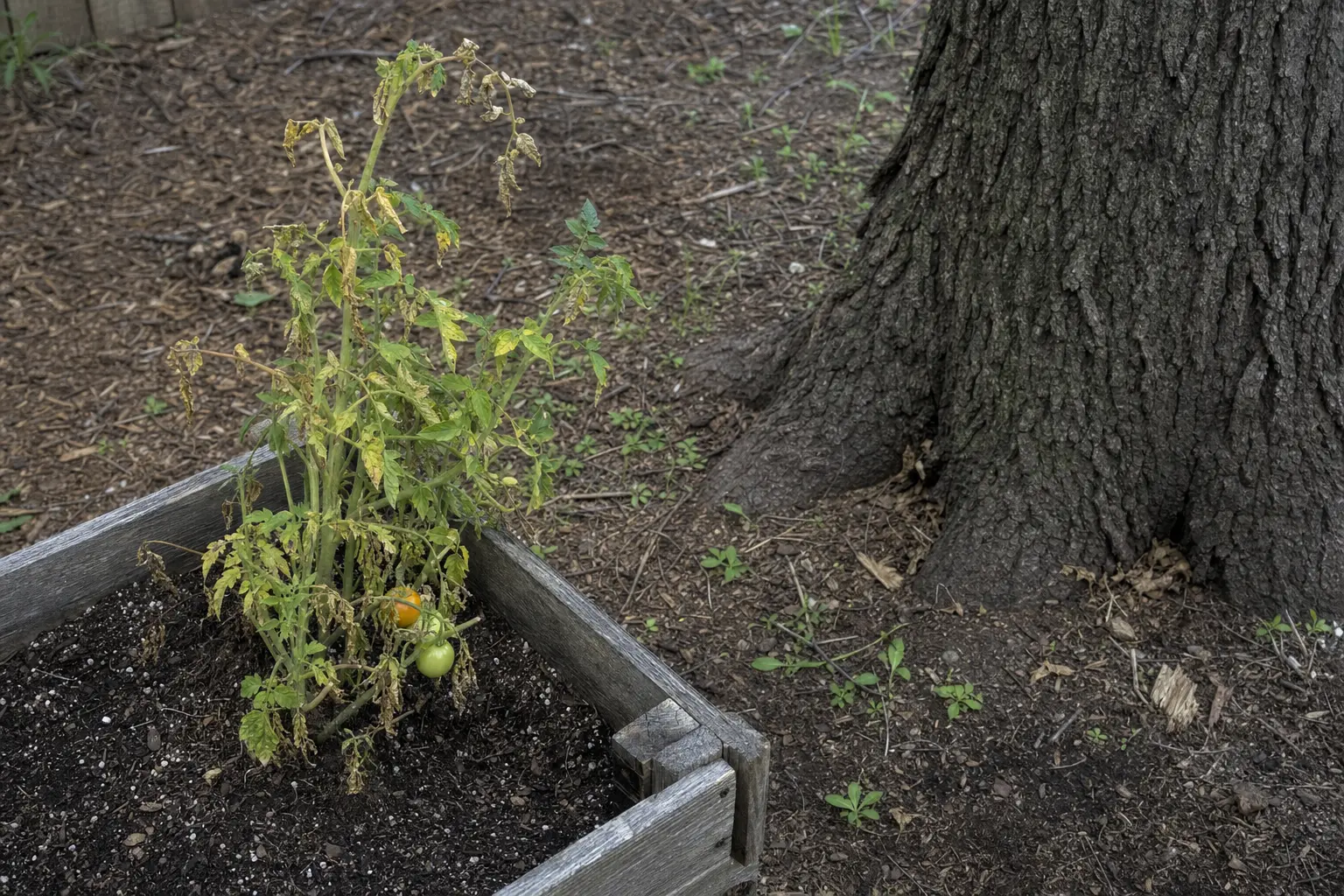
Tomatoes are sensitive to juglone, a natural chemical associated with black walnut trees. The toxin can come from living roots, leaves, nuts, twigs and decaying debris. Affected tomatoes may be stunted, yellowing and wilted, especially when grown within the walnut root zone.
Moving the tomatoes is usually the practical answer. Future crops are safer in containers or raised beds positioned away from walnut roots and debris. Cutting down the tree is not an immediate fix, because old roots can remain a problem for years.
Should you remove a wilting tomato plant?
Remove a tomato plant if it is clearly collapsing and not recovering, especially when disease is likely. Leaving a dying diseased plant in place can increase the amount of infected debris in the bed and may make diagnosis harder.
It is usually sensible to remove and bin the plant if:
- it remains wilted overnight despite moist but not waterlogged soil;
- the lower stem shows brown internal streaking;
- the plant wilts suddenly while still green and other causes do not fit;
- roots are rotten, heavily galled or badly damaged;
- there is white fungal growth or sclerotia at the stem base;
- several plants in the same bed show similar progressive wilt.
Do not panic-remove every plant that droops on a hot afternoon. First water correctly, wait for cooler conditions, and compare morning and evening appearance. Temporary drooping is common; permanent wilt is the concern.
Can you eat tomatoes from a wilting plant?
If the fruit is sound, fully developed and the plant has not been exposed to herbicide or unsafe chemicals, tomatoes from a stressed plant are often still usable. Do not eat fruit that is rotten, mouldy, badly damaged or from plants where pesticide exposure is uncertain.
If you remove a diseased plant with green fruit attached, use judgement. Fruit quality may be poor, and moving infected plant material around the garden can spread soil or debris. Keep suspect plants contained and clean up carefully.
How to prevent tomato plants wilting next season
You cannot prevent every tomato problem, but you can make wilting much less likely.
Prepare the site well
Choose a warm, sunny, sheltered position with free-draining but moisture-retentive soil. Add garden compost or well-rotted organic matter before planting. Avoid compacted ground and wet pockets where water sits after rain.
Give plants enough space for air movement and root growth. Crowded plants dry unevenly, stay humid, and are harder to inspect.
Water consistently
Aim for deep, regular watering rather than a light sprinkle. The root zone should be evenly moist. Containers dry faster than open ground and may need daily watering in hot weather, especially once plants are large and fruiting.
Mulch helps reduce evaporation and keeps soil moisture steadier. Keep mulch slightly away from the stem to reduce rotting risk.
Use clean growing methods
If you have had wilt diseases before, avoid planting tomatoes in the same soil year after year. Rotate with unrelated crops where possible. In small gardens, grow in large containers with fresh compost rather than reusing suspect soil.
Remove old tomato roots, stems and diseased leaves at the end of the season. Clean stakes, cages and tools before reusing them.
Choose resistant varieties where problems repeat
Plant labels and seed catalogues may include disease-resistance letters. V usually refers to Verticillium resistance and F to Fusarium resistance, sometimes with numbers indicating races. Resistance does not make plants invincible, but it can greatly reduce risk where these diseases are known problems.
Heirloom tomatoes can be wonderful, but many have less built-in resistance than modern hybrids. If you repeatedly lose heirlooms to wilt, try growing a resistant hybrid alongside them, or grow heirlooms in clean containers.
Avoid unnecessary root and stem stress
Handle transplants gently, harden them off before outdoor planting, and avoid disturbing roots after planting. Insert stakes or cages early so you do not damage roots later. Tie stems loosely and check ties as plants thicken.
Common mistakes to avoid
- Watering every wilted plant more and more. Wilting can come from root rot or vascular disease, not just thirst.
- Judging by the soil surface only. Always check moisture at root depth.
- Using tiny containers for large tomato plants. Small pots dry rapidly and overheat.
- Letting pots stand in water. Wet roots can fail just as badly as dry roots.
- Ignoring one-sided wilting. It can be an early clue for wilt disease or stem injury.
- Composting badly diseased plants. Cool home composting may not reliably deal with infected material.
- Planting tomatoes in the same problem bed every year. Soil-borne diseases and nematodes can build up.
- Spraying weedkiller near tomatoes. Even drift or vapour can damage sensitive plants.
- Assuming all leaf curl is fatal. Curling from heat or moisture stress can be temporary if the plant is otherwise healthy.
- Waiting too long to remove a collapsing diseased plant. Prompt removal reduces infected debris and makes clean-up easier.
FAQ
Why are my tomato plants wilting even though I water them?
The roots may be too wet, damaged, diseased or unable to supply water fast enough in heat. Wilt diseases can also block the plant’s internal water-conducting tissue. Check whether the soil is actually dry at root depth before adding more water.
Why does my tomato plant wilt during the day and recover at night?
This can be temporary heat or water stress, especially in hot sun, wind, containers or greenhouses. However, early Fusarium, Verticillium or bacterial wilt can also show daytime wilting with overnight recovery. If yellowing, one-sided wilt or stem discolouration appears, investigate disease.
Should I cut off wilted tomato leaves?
Remove leaves that are dead, diseased or touching the soil, but do not strip a stressed plant bare. If the whole plant is wilted, pruning leaves will not fix root rot or vascular wilt. Diagnose the cause first.
Can an overwatered tomato plant recover?
Sometimes, if the roots are only mildly stressed and drainage improves quickly. Stop watering until the root zone begins to dry, make sure containers drain freely, and avoid letting pots sit in water. If roots are brown, soft and rotten, recovery is less likely.
What does Fusarium wilt look like on tomatoes?
It often starts with lower leaves turning yellow, wilting and browning. One side of the plant or one side of a branch may be worse. If the lower stem is cut or scraped, brown streaking may be visible in the water-conducting tissue near the outside of the stem.
Is tomato wilt contagious?
Some causes are not contagious, such as drought, heat, cold injury or walnut toxicity. Soil-borne diseases, bacterial diseases and some pests can spread or persist in soil and plant debris. Remove suspect diseased plants carefully and avoid moving contaminated soil.
Why is only one branch of my tomato plant wilting?
One wilting branch can be caused by a cracked stem, a tight tie, stalk borer damage, localised disease or a blocked section of vascular tissue. Inspect the branch back to the main stem and look for holes, cankers, kinks or discolouration.
Should I grow tomatoes in containers after wilt disease?
Containers can be a good option if a garden bed has recurring soil-borne wilt problems. Use fresh, good-quality compost, clean pots and clean supports. Do not fill containers with soil from the infected bed.
Are wilting tomato plants always dying?
No. Many tomatoes droop temporarily in hot weather and recover in the evening. The danger signs are wilting that continues overnight, yellowing and browning, stem discolouration, root rot, root galls, or sudden collapse while the soil is already moist.