Why Are My Tomatoes Splitting? Causes, Fixes and How to Prevent It
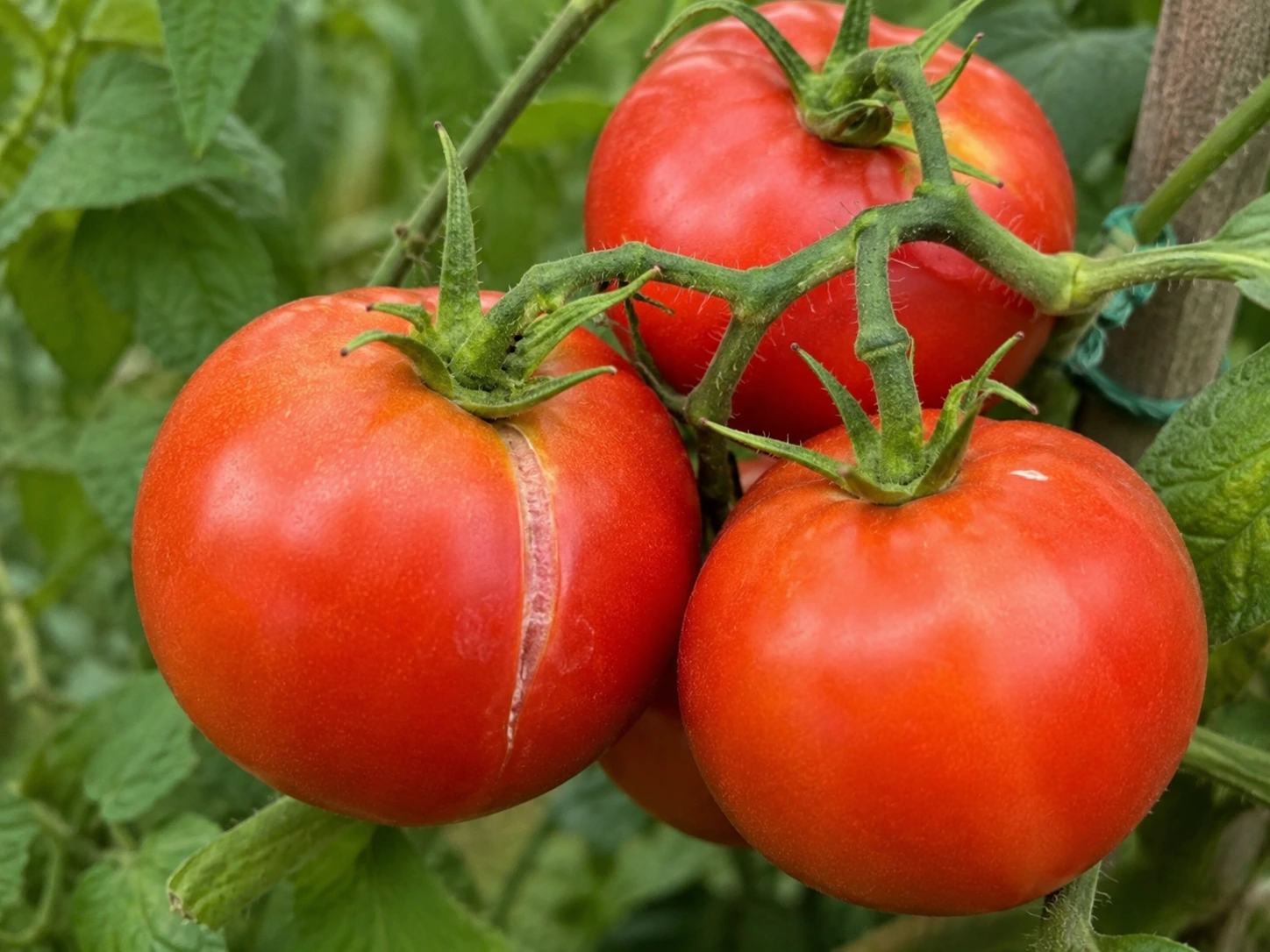
Few things are more disappointing than finding a nearly ripe tomato split open just before harvest. The fruit may have a deep crack running down from the stem, a ring around its shoulders, or several small marks across the skin.
The good news is that tomato splitting is usually not a disease. It is a physical growth problem that happens when the inside of the fruit expands faster than its skin can stretch.
In most cases, the main cause is a sudden change in soil moisture—especially heavy rain or a large watering after the plant has been allowed to become too dry. You cannot control every downpour, but consistent watering, mulch and timely harvesting can greatly reduce the damage.
Quick answer: Tomatoes usually split when they absorb water too quickly after a dry period. The flesh swells faster than the skin can expand, so the skin cracks. Keep the soil evenly moist, mulch around the plant and pick ripening tomatoes before heavy rain.
In this guide
- Why do tomatoes split?
- The different types of tomato cracks
- What causes tomatoes to split?
- How to prevent tomatoes from splitting
- How to stop tomatoes splitting in pots
- Should you pick tomatoes before rain?
- Are some tomato varieties less likely to split?
- Can you eat split tomatoes?
- Frequently asked questions
Why do tomatoes split?
A tomato grows as water, sugars and other materials move into the developing fruit. Its skin normally expands at the same time.
Problems begin when the fruit suddenly takes in water faster than the outer skin can stretch. Pressure builds inside the tomato, and the skin tears at its weakest point.
This often happens after the following sequence:
- The soil becomes dry during warm weather.
- Growth slows and the outer skin becomes less flexible.
- Heavy rain arrives, or the plant receives a large amount of water.
- The roots take up moisture quickly.
- The fruit swells faster than its skin can expand.
- A crack appears, sometimes within a very short time.
Ripening fruit is especially vulnerable because its skin is no longer expanding as easily as it did when the tomato was young.
Splitting is therefore a physiological disorder, meaning it is caused by growing conditions rather than an infectious organism. However, once the skin has opened, fungi, bacteria and insects can enter the damaged fruit and cause it to rot.
The different types of tomato cracks
Tomato cracking does not always look the same. The location and direction of the crack can help you recognise what has happened.
Radial cracking
Radial cracks begin near the stem and run down the side of the tomato. They may look like straight or slightly curved vertical splits.
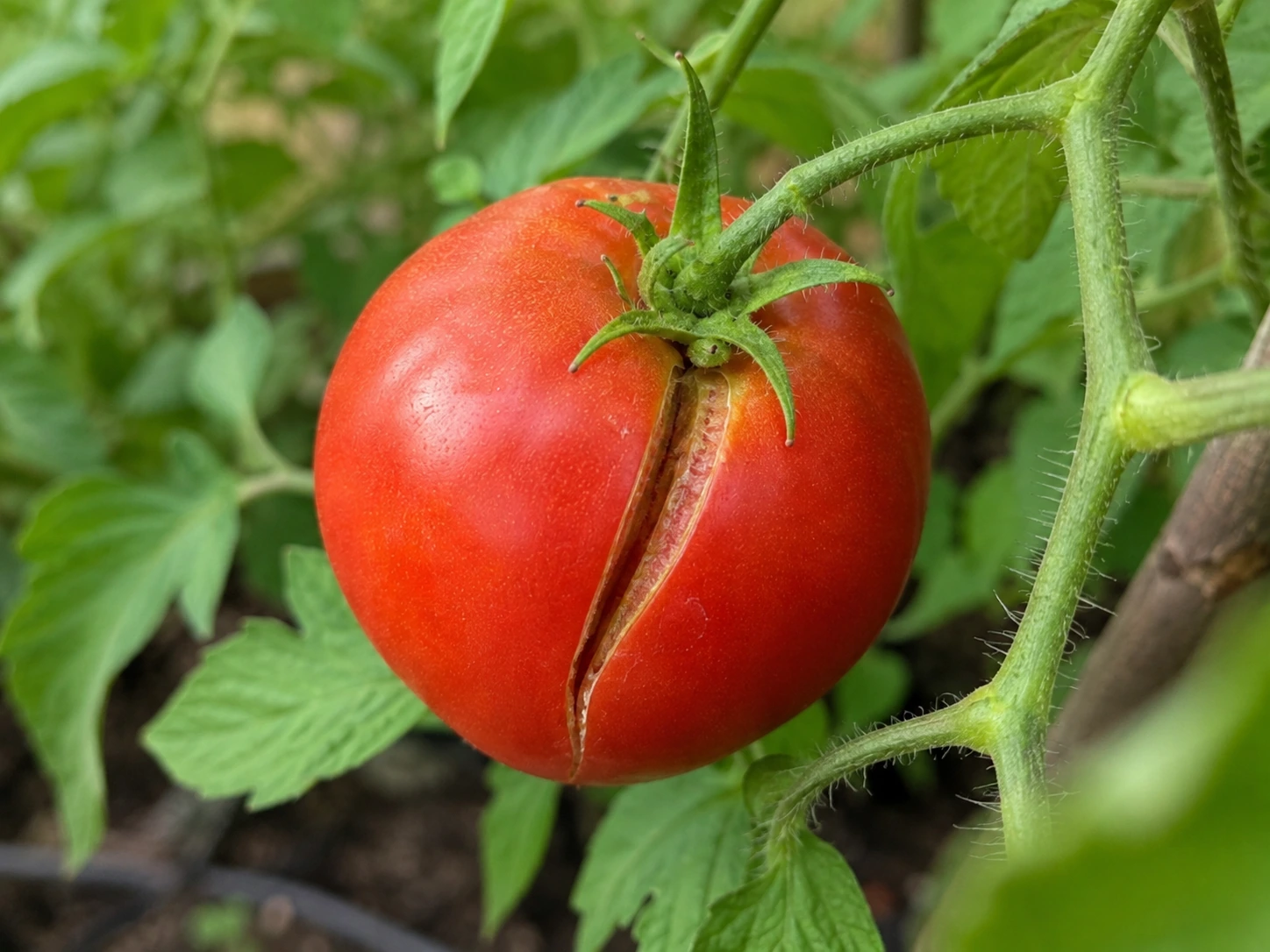
These are usually the most serious cracks because they can be deep enough to expose the flesh. Open radial cracks allow rainwater, insects and decay organisms to enter the fruit.
A fresh, shallow radial split may still be usable, but a deep or older split can rot quickly.
Concentric cracking
Concentric cracks form in rings or semicircles around the shoulders of the tomato near the stem.
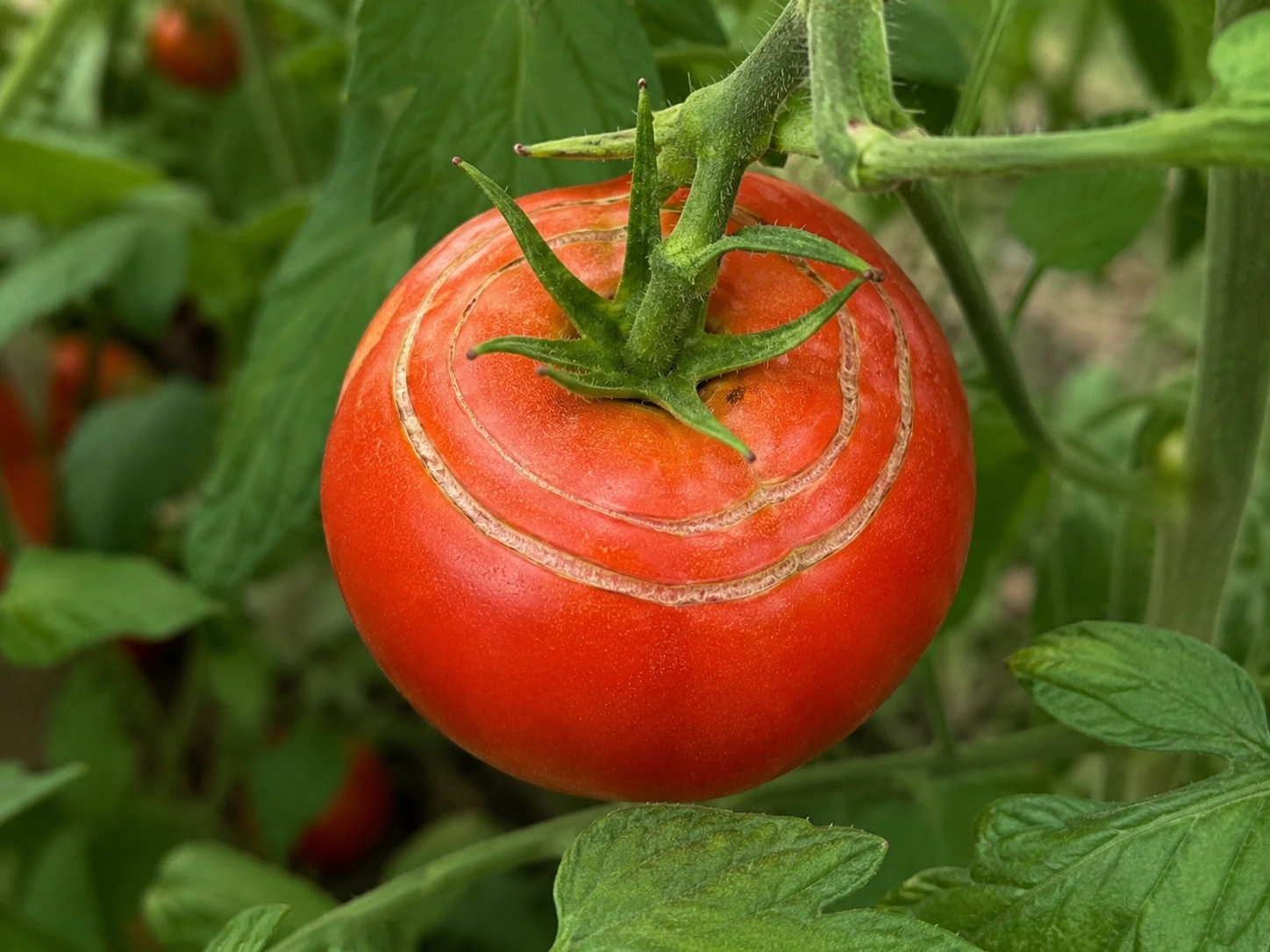
They are often shallower than radial cracks and may dry into rough, corky scars. A tomato with a dry, healed concentric crack may continue developing without the flesh becoming exposed.
Tiny surface cracks or rain checking
Some tomatoes develop many fine cracks across the surface, particularly around the shoulders. These shallow marks are sometimes called rain checking.
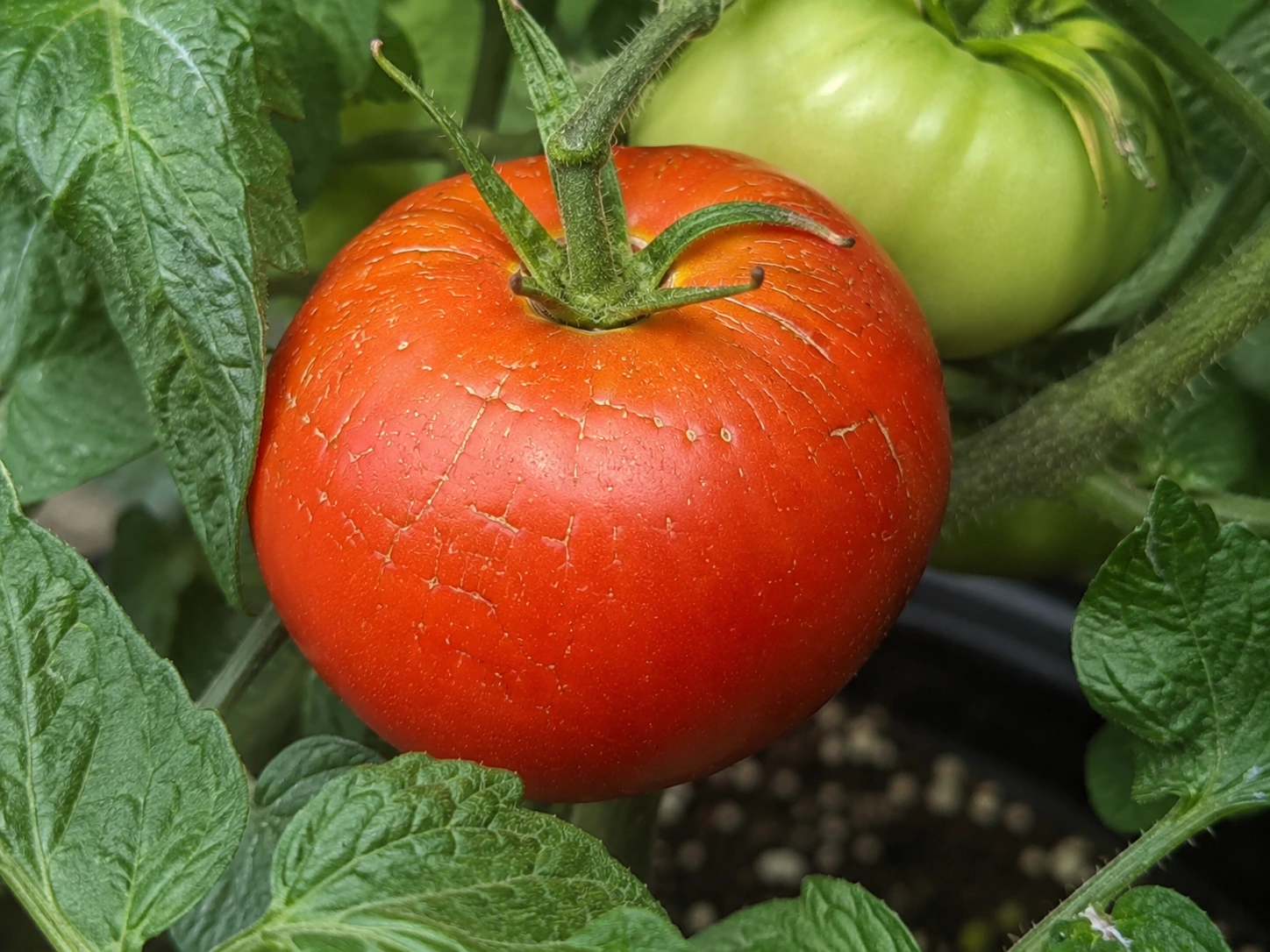
They are associated with wet conditions, high humidity and moisture sitting on the fruit surface. They usually affect appearance more than the deeper tissue, although damaged skin can still shorten storage life.
What causes tomatoes to split?
Uneven moisture is the leading cause, but several conditions can increase the risk.
1. Heavy rain after dry weather
This is the classic cause of split tomatoes.
When dry soil is suddenly soaked by a summer storm, the plant absorbs water rapidly. Tomatoes that are already full-sized or beginning to ripen may not be able to expand gradually enough, so their skin breaks.
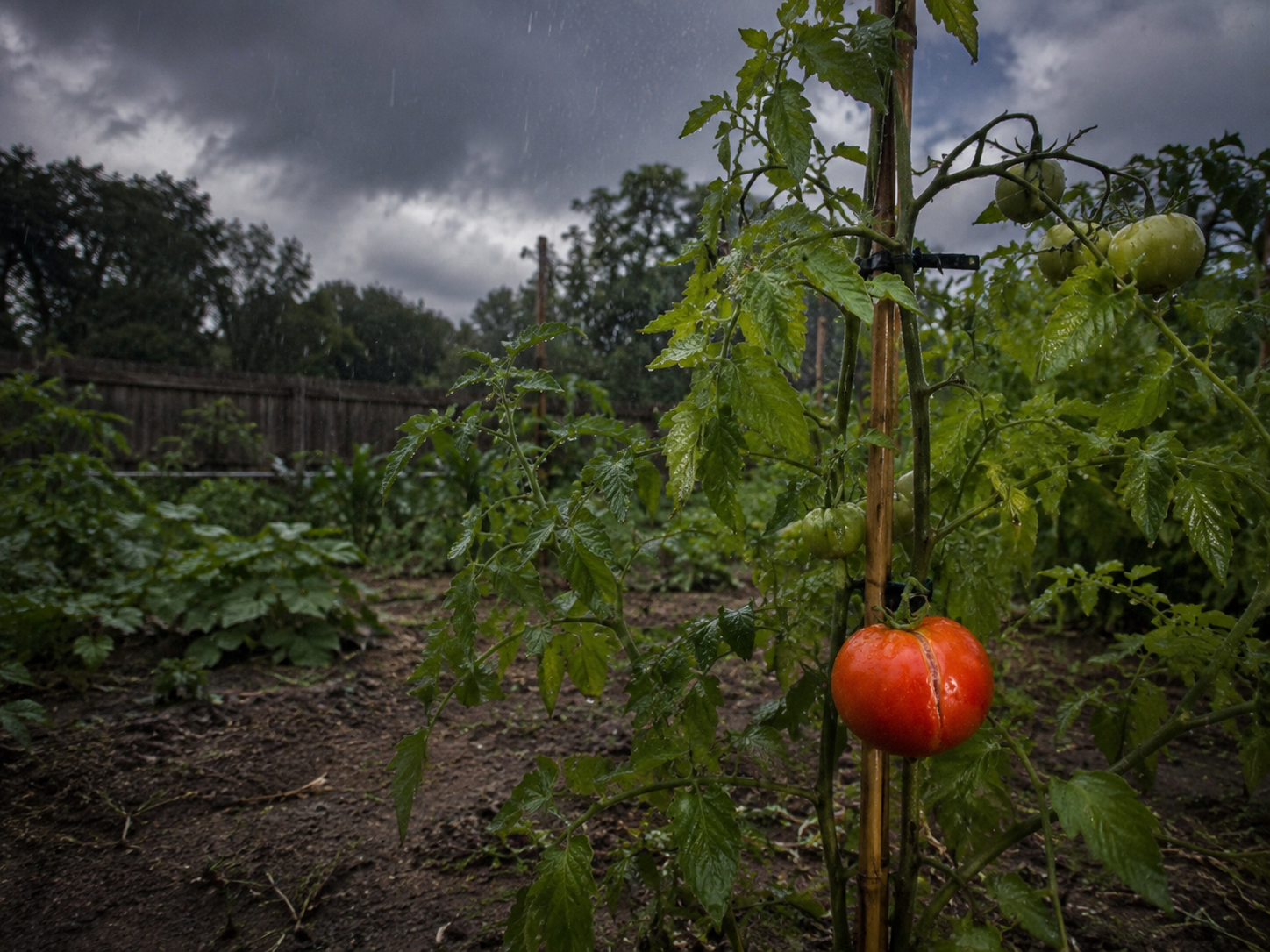
One heavy downpour can cause more splitting than several days of steady, moderate rain because the change in moisture is so sudden.
2. Inconsistent watering
The same problem can happen without rain.
Allowing the plant to wilt or the root area to dry severely, then trying to compensate with a very large watering, creates a dry-to-wet swing. This is sometimes described as a “feast and famine” watering pattern.
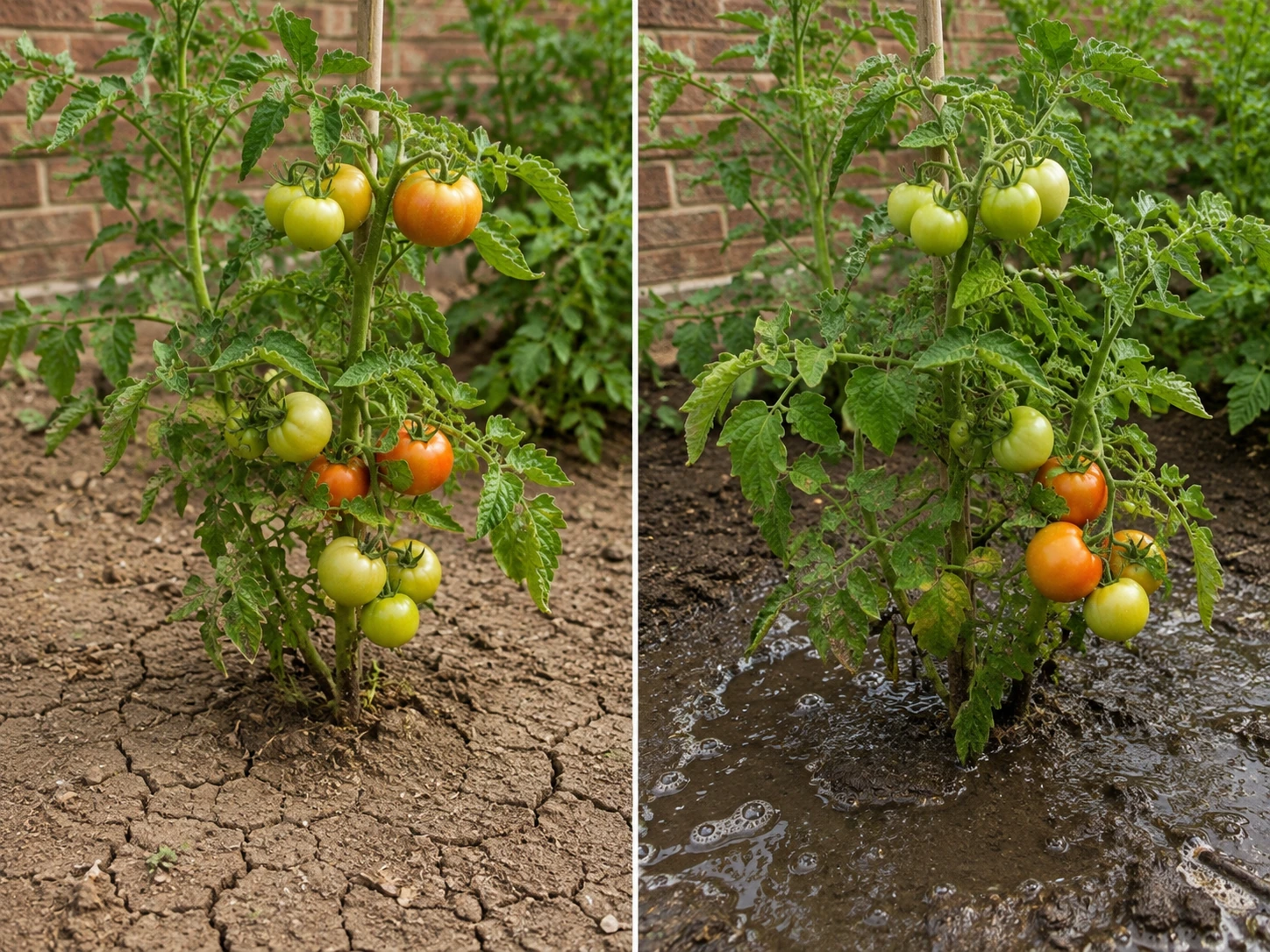
Tomatoes do not need identical amounts of water every day, but they grow best when the root zone remains reasonably and consistently moist.
For container-grown plants, see our detailed guide to how often to water tomatoes in pots.
3. Overwatering after the soil has dried out
Too much water can contribute to splitting, but the sudden change is usually more important than the water alone.
For example, a large soaking after several dry days is more likely to cause cracking than regular watering that keeps the soil evenly moist. Constantly waterlogged soil can also damage roots, but that is a separate problem and should not be used as a way to prevent dry conditions.
The aim is neither dry soil nor saturated soil. The aim is steady moisture with good drainage.
4. Rapid growth during warm, humid weather
Warm temperatures, abundant moisture and active growth can cause tomato fruit to enlarge quickly. If the inner tissues expand faster than the skin, cracking becomes more likely.
Changes in temperature can add further stress, particularly when hot days are followed by much cooler conditions.
5. The variety and fruit size
Some varieties are naturally more prone to cracking than others.
Large beefsteak tomatoes and some heirloom varieties are often susceptible because of their fruit size, skin characteristics and growth pattern. That does not mean every large or heirloom tomato will split, but variety makes a noticeable difference.
Cherry tomatoes can split too. Some remain perfect after rain, while others seem to burst as soon as they are fully ripe. Again, the individual variety and watering pattern matter more than size alone.
6. Tomatoes left fully ripe on the vine
The longer a ripe tomato remains on the plant, the more time it has to experience rain, heat, moisture changes and skin weakening.
Fully ripe fruit is also softer than green fruit. A sudden intake of water can therefore split a tomato that looked perfect the day before.
7. Too much leaf removal
Removing a few lower or unhealthy leaves can improve airflow, but aggressive pruning may expose fruit to stronger sunlight and temperature changes.
Keep enough healthy foliage to shade developing tomatoes, especially during very hot weather. Avoid stripping a plant simply to make the fruit ripen faster.
8. Excessive feeding
Too much high-nitrogen feed can encourage lush, rapid growth. Although uneven moisture and variety are usually more important causes of cracking, excessive feeding can make growth less balanced.
Follow the product instructions and avoid repeatedly adding extra feed in the hope of producing larger tomatoes.
Is tomato splitting caused by calcium deficiency?
Usually, no.
A calcium-uptake problem is associated more closely with blossom end rot, which causes a dark, sunken patch at the bottom of the fruit. Splitting normally appears around the stem or across the skin and is driven mainly by rapid growth and changes in moisture.
Both problems can be made worse by inconsistent watering, which is why they sometimes appear at the same time. Learn how to tell them apart in our guide to blossom end rot on tomatoes.
Adding calcium will not repair a tomato that has already split, and it is unlikely to solve cracking when the real problem is irregular watering.
How to prevent tomatoes from splitting
You may not be able to stop every crack, especially during prolonged wet weather, but the following steps can reduce the risk considerably.
Keep soil moisture as even as possible
Check the soil regularly instead of watering only by the calendar.
Push a finger a few centimetres into the soil. If it feels dry at root level, water thoroughly. If it still feels moist, check again later rather than automatically adding more.
The correct frequency depends on:
- Whether the plant is in the ground, a raised bed, grow bag or pot
- The size and material of the container
- The weather
- The stage of plant growth
- The drainage and water-holding ability of the soil or compost
During hot weather, container plants may need checking every day. Plants growing in open ground normally dry more slowly.
Water slowly and thoroughly
Apply water to the soil around the plant rather than spraying the leaves and fruit.
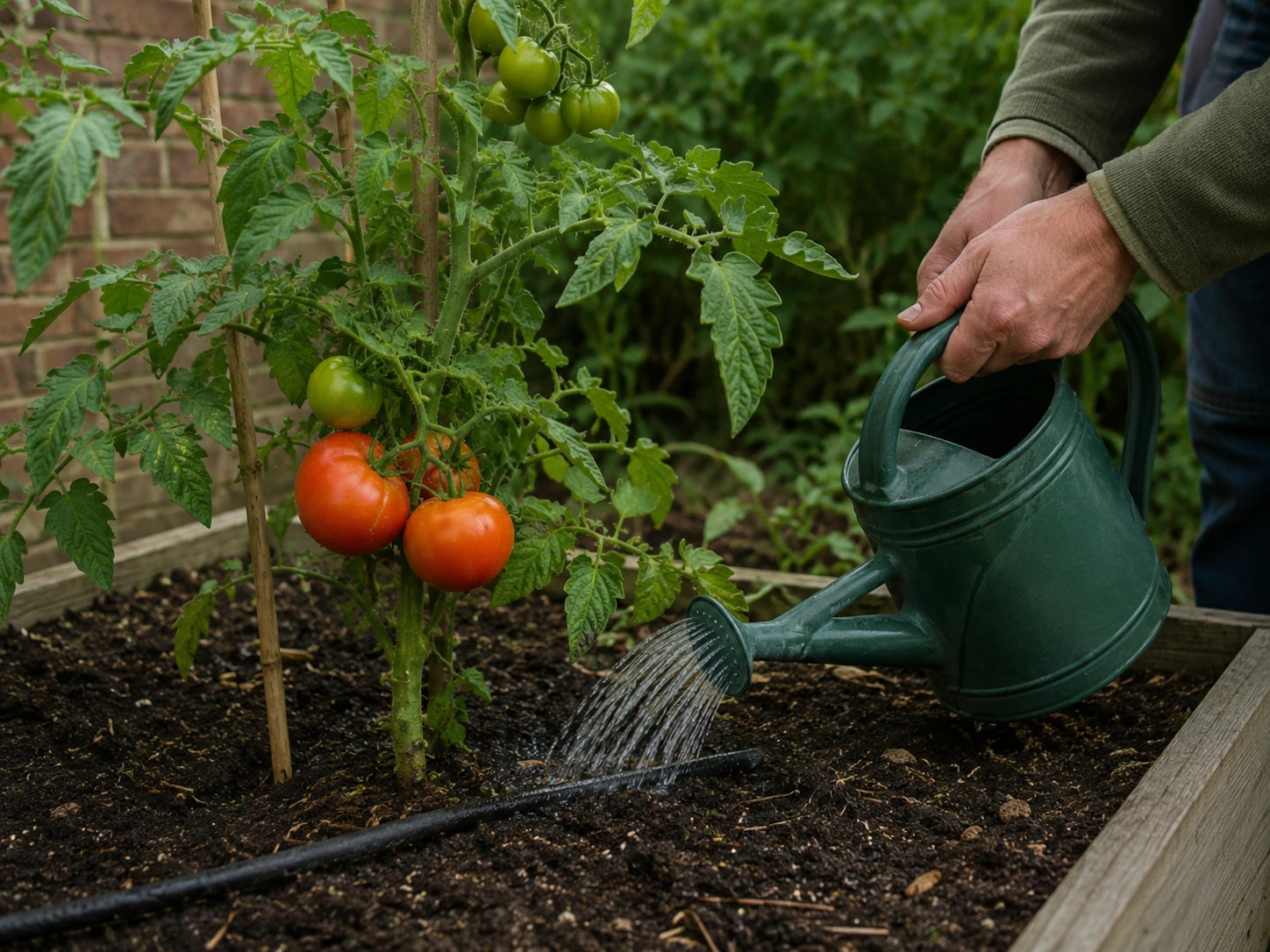
A slow watering allows moisture to soak into the root zone instead of running across the surface. Drip irrigation or a soaker hose can help deliver water steadily, but a watering can or hose is also effective when used carefully.
Avoid giving only a light surface sprinkle. Shallow watering encourages roots to remain near the top of the soil, where moisture changes quickly.
Do not flood a severely dry plant
If the root ball has become extremely dry, rewet it gradually.
A very dry potting mix may initially repel water, allowing it to run down the sides of the container. Add a moderate amount, allow it to soak in, then water again. This moistens the root ball more evenly without creating one sudden flood.
Add mulch
Spread a layer of organic mulch around the plant to slow evaporation and reduce sudden changes in soil temperature and moisture.
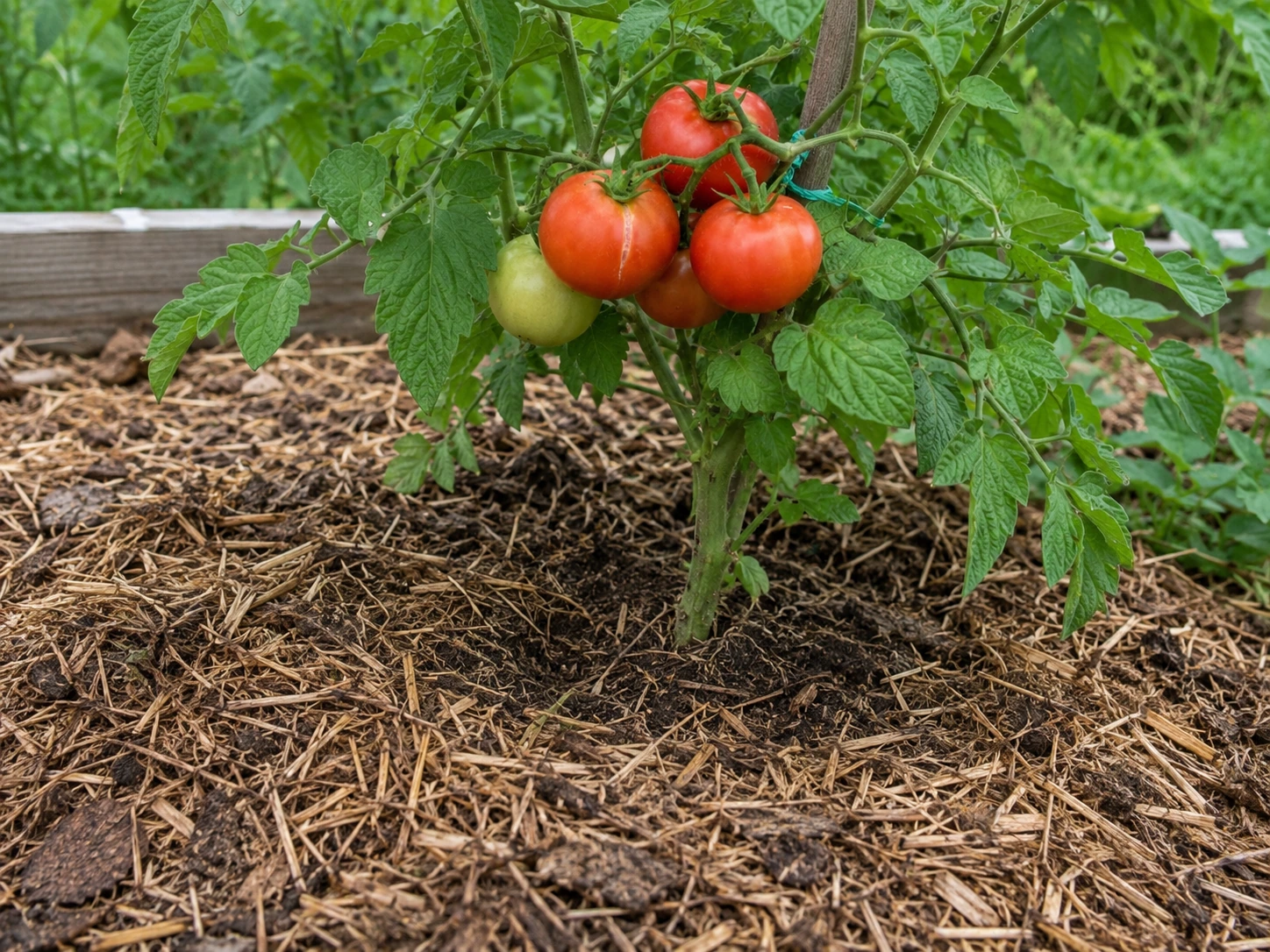
Suitable materials include:
- Clean straw
- Shredded leaves
- Well-rotted compost
- Untreated grass clippings applied in thin layers
- Other mulch suitable for edible gardens
Keep mulch slightly away from the main stem rather than piling it directly against the plant.
A layer around 5–8 cm deep is usually enough to protect the soil while still allowing water to reach it.
Make sure the soil drains well
Good drainage does not mean allowing the plant to dry out. It means that excess water can move away while the soil retains enough moisture for the roots.
Heavy, compacted ground can remain saturated after rain, while very sandy soil may switch rapidly between wet and dry. Improving the soil with organic matter can make moisture levels more stable.
For container plants, use a suitable potting mix and make sure drainage holes are open. Our guide to growing tomatoes in pots explains the full setup.
Protect the leaf canopy
Do not remove large amounts of healthy foliage around ripening fruit. Leaves help shade tomatoes and reduce sudden heating.
Remove diseased leaves when necessary, but prune selectively rather than leaving clusters of fruit completely exposed.
Harvest ripe fruit promptly
Check plants frequently during the ripening season. A ripe tomato does not become better indefinitely by remaining on the vine.
Pick fruit once it has developed good colour and feels ready for eating. This reduces the chance of it being caught by the next storm or sudden watering change.
Watch the weather forecast
When heavy rain is expected after a dry spell, inspect the plants beforehand.
Harvest tomatoes that are already starting to change colour. Full-sized fruit at the first-colour or “breaker” stage can finish ripening indoors.
This simple habit is often the most effective way to save a crop when you cannot control the amount of rain.
How to stop tomatoes splitting in pots
Tomatoes in pots are particularly vulnerable because containers can dry out much faster than garden soil.
A pot may feel moist in the morning and become very dry by late afternoon during hot or windy weather. When it is then watered heavily, the fruit experiences the same sudden moisture change that occurs after a storm.
To reduce splitting in containers:
- Use a large enough pot for the variety.
- Fill it with a moisture-retentive but free-draining potting mix.
- Check moisture regularly during warm weather.
- Water before the plant becomes badly wilted.
- Apply mulch to the surface of the pot.
- Make sure drainage holes are not blocked.
- Avoid leaving the container standing permanently in deep water.
- Pick ripening fruit before forecast downpours.
Small containers are harder to manage because they contain less compost and have little reserve moisture. Moving a plant into a larger container early in the season can make watering much more consistent.
Should you pick tomatoes before rain?
Yes, when heavy rain is forecast after dry weather, it is sensible to pick tomatoes that have already started to ripen.
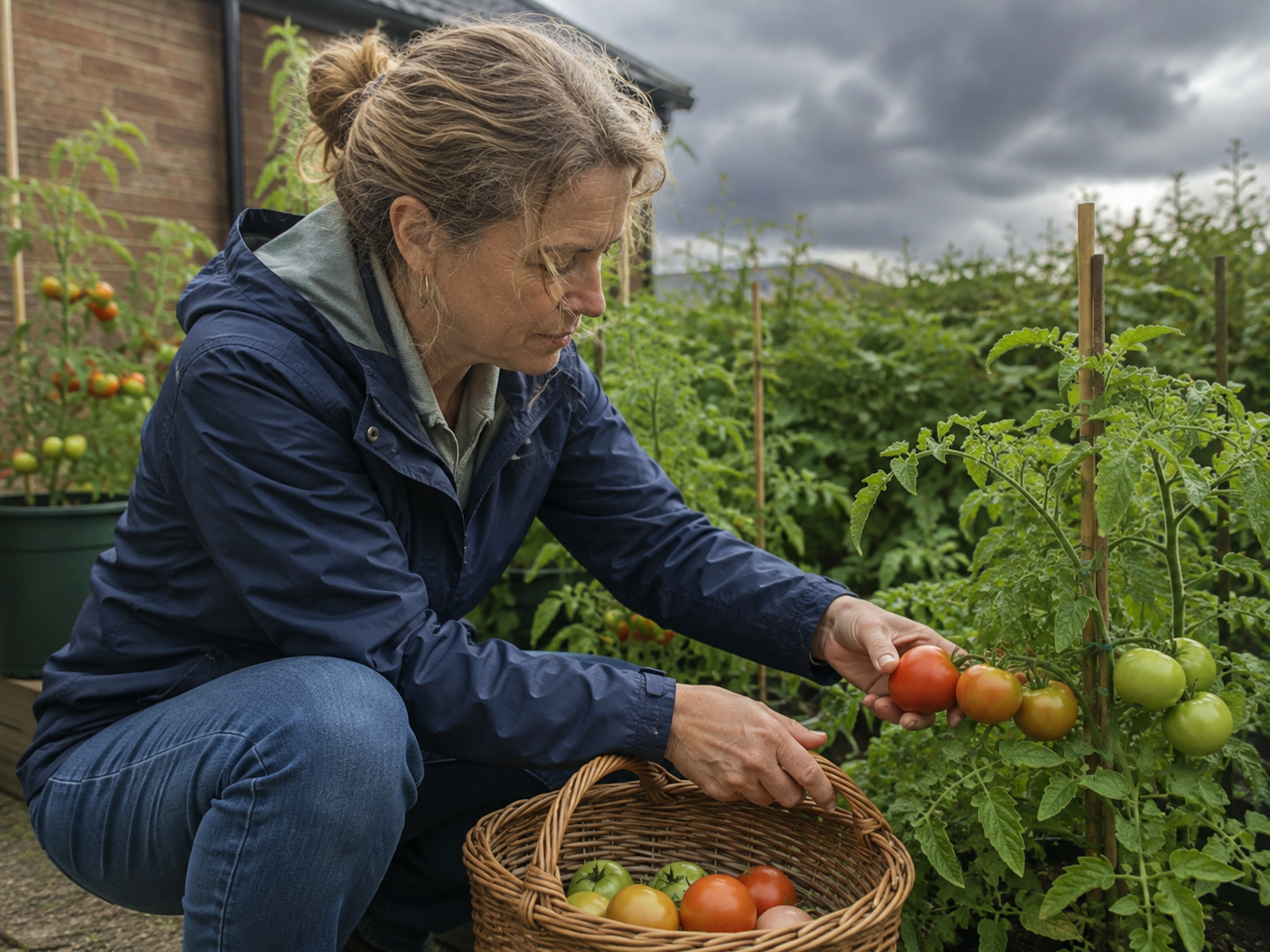
Look for fruit that:
- Has reached its mature size
- Has changed from hard green to a paler mature green
- Is showing its first blush of red, orange, yellow or its expected mature colour
- Has begun to soften slightly
Place picked tomatoes in a single layer at room temperature, away from strong direct sunlight. There is no need to put them in a dark cupboard. Check them daily and use them as they ripen.
Do not pick very small, immature green tomatoes unless severe weather or the end of the season leaves no alternative. Fruit that has reached the mature-green or first-colour stage will ripen more reliably indoors.
Are some tomato varieties less likely to split?
Yes. Cracking resistance varies between varieties, although no tomato is completely crack-proof.
When choosing seed or young plants, look for descriptions such as:
- Crack resistant
- Good skin elasticity
- Holds well on the vine
- Suitable for wet or humid conditions
Jet Star is one commonly cited crack-resistant slicing tomato, while varieties from the Mountain series are often selected for reliable fruit quality. Local results can vary, so varieties that perform well for gardeners in your climate are usually the best choice.
If cracking happens every year, grow two or three varieties side by side and keep notes. You may find that one splits badly while another remains nearly perfect under the same watering and weather conditions.
Do not assume that every heirloom or cherry tomato will crack. Susceptibility varies greatly between individual varieties.
Can you eat split tomatoes?
A freshly split tomato may still be edible, but inspect it carefully and use it promptly.
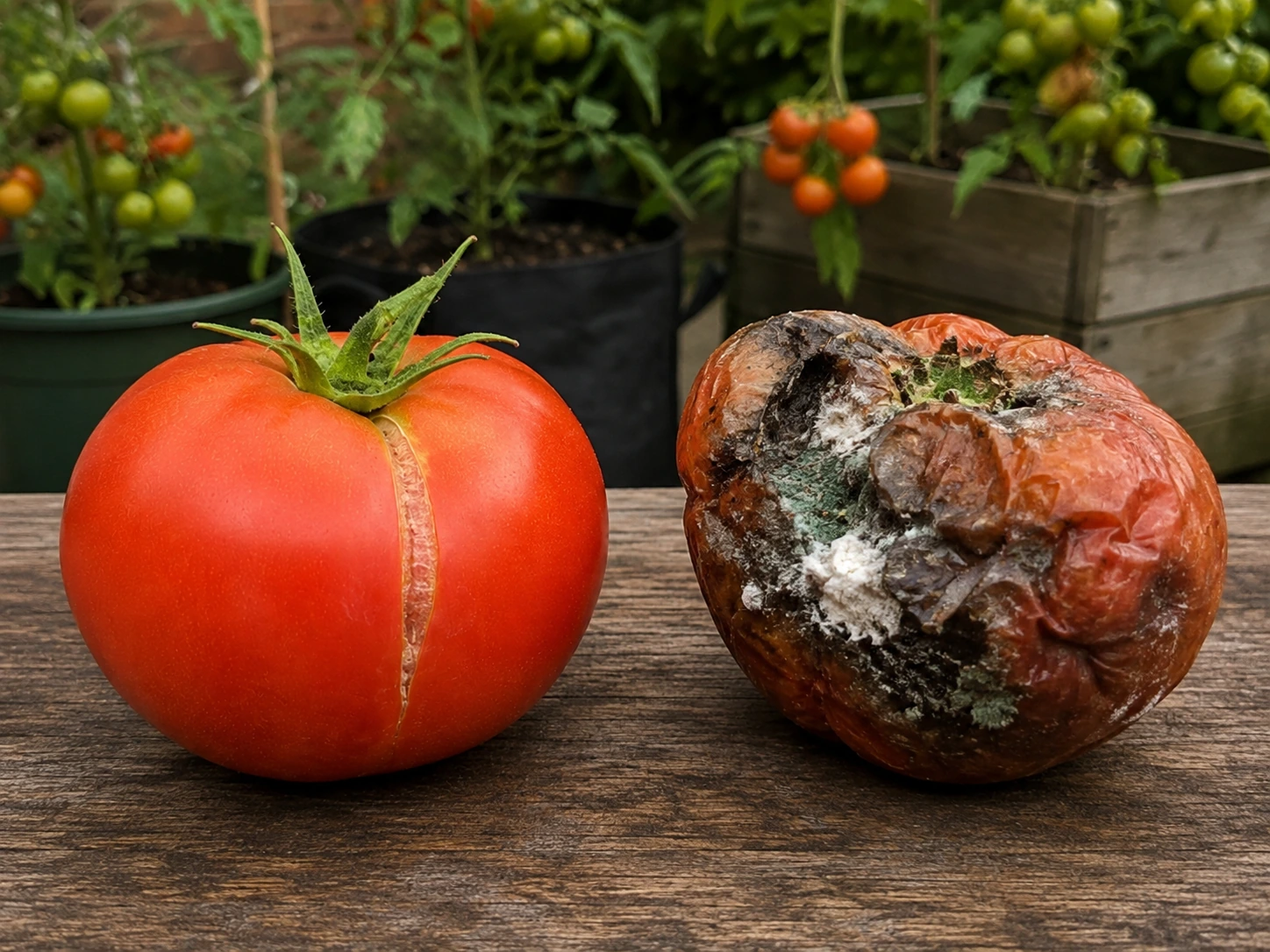
You can normally use a tomato when:
- The crack is fresh
- The fruit is otherwise firm and fresh
- There is no mould
- There is no sour or unpleasant smell
- There are no insects or larvae inside
- The flesh around the split is not slimy or rotting
Wash the tomato, cut away the cracked and damaged section, and use the sound portion immediately. Fresh split tomatoes are useful for cooked sauces, soups or meals where appearance does not matter.
Discard the tomato when:
- The crack has been open for some time
- The flesh is soft, leaking or discoloured
- Mould is visible
- Insects have entered the fruit
- It smells fermented, sour or rotten
- You are uncertain how long it has been damaged
Do not leave split fruit on the plant. It can attract insects and decay organisms and may quickly deteriorate.
Do not use cracked tomatoes for home canning
Damaged and cracked tomatoes are not recommended for home canning. Cracks can provide entry points for microorganisms, and damaged fruit may not have the same safety characteristics as sound tomatoes.
Use firm, undamaged tomatoes and a current, laboratory-tested canning recipe. A freshly cracked tomato that passes the checks above is better used immediately in a cooked meal rather than placed in a shelf-stable canned product.
Frequently asked questions
Why are my tomatoes splitting before they turn red?
Green or partly ripe tomatoes can split when they suddenly absorb water and grow rapidly. Ripening fruit is more vulnerable, but cracking can occur before the final colour develops, especially after heavy rain or irregular watering.
Why do tomatoes split after watering?
The soil may have been drier than it appeared. When a large amount of water reaches the roots, the fruit swells rapidly and the skin cannot stretch quickly enough.
This does not mean you should stop watering. Instead, prevent the soil from becoming extremely dry and water steadily before the plant is severely stressed.
Why do tomatoes split after rain?
Rain can create a sudden jump in soil moisture. The roots absorb the newly available water, the fruit expands and the skin cracks. This is especially common when rain follows a prolonged dry or hot period.
Why are my cherry tomatoes splitting?
Some cherry tomato varieties are naturally prone to splitting, especially when they are fully ripe. Uneven watering and rain can cause them to swell and burst.
Pick ripe cherry tomatoes frequently and harvest those that have begun to colour before heavy rain.
Can a split tomato heal itself?
A shallow surface crack may dry and form a corky scar. A deep split that exposes the flesh will not return to an intact tomato and should be harvested promptly.
Should I reduce watering when tomatoes begin to ripen?
Do not suddenly withhold water. Allowing plants to become very dry can make splitting worse when water eventually returns.
Continue supplying consistent moisture, but avoid unnecessary flooding. Harvest ripe fruit promptly and pick colouring tomatoes before heavy rainfall.
Does tomato splitting spread from plant to plant?
No. Splitting itself is not contagious because it is not an infectious disease.
However, open cracks can be colonised by fungi and bacteria. Remove damaged or rotting fruit and keep the growing area clean.
Are split tomatoes a sign that the plant is dying?
Not usually. A healthy plant can produce split tomatoes after an abrupt weather or watering change.
Check the rest of the plant for wilting, yellow leaves, stem damage or disease, but do not assume that cracked fruit means the entire plant is failing.
Final takeaway
Tomatoes split when the fruit expands faster than its skin can stretch. The most common trigger is a sudden supply of water after the soil has become dry.
The best prevention is straightforward:
- Keep the root zone consistently moist
- Water slowly and thoroughly
- Add mulch
- Use adequately sized containers with good drainage
- Avoid excessive pruning
- Pick ripening fruit before heavy rain
- Choose less crack-prone varieties when splitting is a repeated problem
You may still lose an occasional tomato during unpredictable weather, but steady watering and timely harvesting can protect most of the crop.