Why Are My Tomatoes Not Ripening? Causes and How to Help Them Turn Red
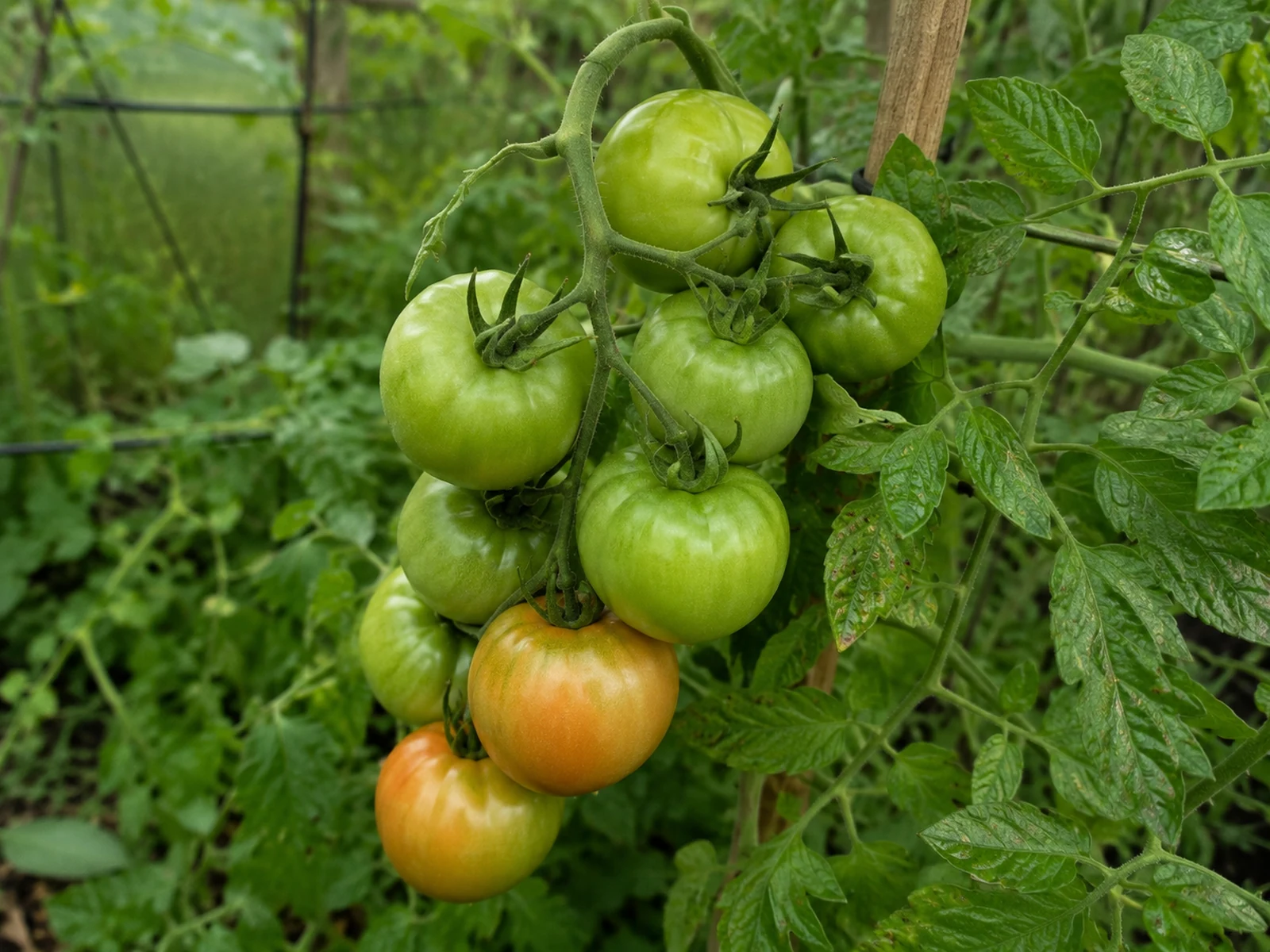
You have watered, fed and supported your tomato plants for months. The fruits are large, healthy and full-sized—but they are still stubbornly green.
It is easy to assume that something has gone badly wrong. In many cases, however, the plant is healthy and the tomatoes simply need the right combination of maturity and temperature before ripening can begin.
Tomatoes do not turn red because they receive direct sunlight. Once a fruit reaches the mature-green stage, it produces ethylene and begins breaking down green chlorophyll while developing the pigments associated with its mature colour. Very hot weather, cool conditions, an immature fruit, excessive leafy growth and some nutritional problems can all delay or disrupt that process.
Quick answer: Tomatoes most often stay green because the weather is too hot or too cool, the fruit has not yet reached full maturity, or the variety naturally takes longer to ripen. Be patient, avoid excessive nitrogen, keep the plant healthy and pick tomatoes at the first sign of colour if you need them to finish ripening indoors.
In this guide
- How long do tomatoes take to ripen?
- How tomato ripening works
- Why are my tomatoes staying green?
- Do tomatoes need sunlight to ripen?
- How to encourage tomatoes to ripen
- When should you pick tomatoes?
- How to ripen green tomatoes indoors
- Uneven ripening, green shoulders and yellow patches
- Frequently asked questions
How long do tomatoes take to ripen?
After a flower has been pollinated and a small fruit has formed, a tomato commonly needs several more weeks to reach full size and develop its final colour. Under favourable conditions, many fruits take roughly 45–55 days from fruit set to full ripeness, although the exact timing varies considerably.
Several factors affect the waiting time:
- The tomato variety
- The size of the fruit
- Day and night temperatures
- Whether the plant is growing outdoors or under cover
- The health of the leaves
- Water and nutrient availability
- How many fruits the plant is supporting
Cherry tomatoes usually ripen sooner than large beefsteak tomatoes. An early variety may start producing ripe fruit weeks before a late-season heirloom growing beside it.
The “days to maturity” printed on a seed packet is an estimate, not a promise. Cool summers, heatwaves and slow early growth can all extend the expected schedule.
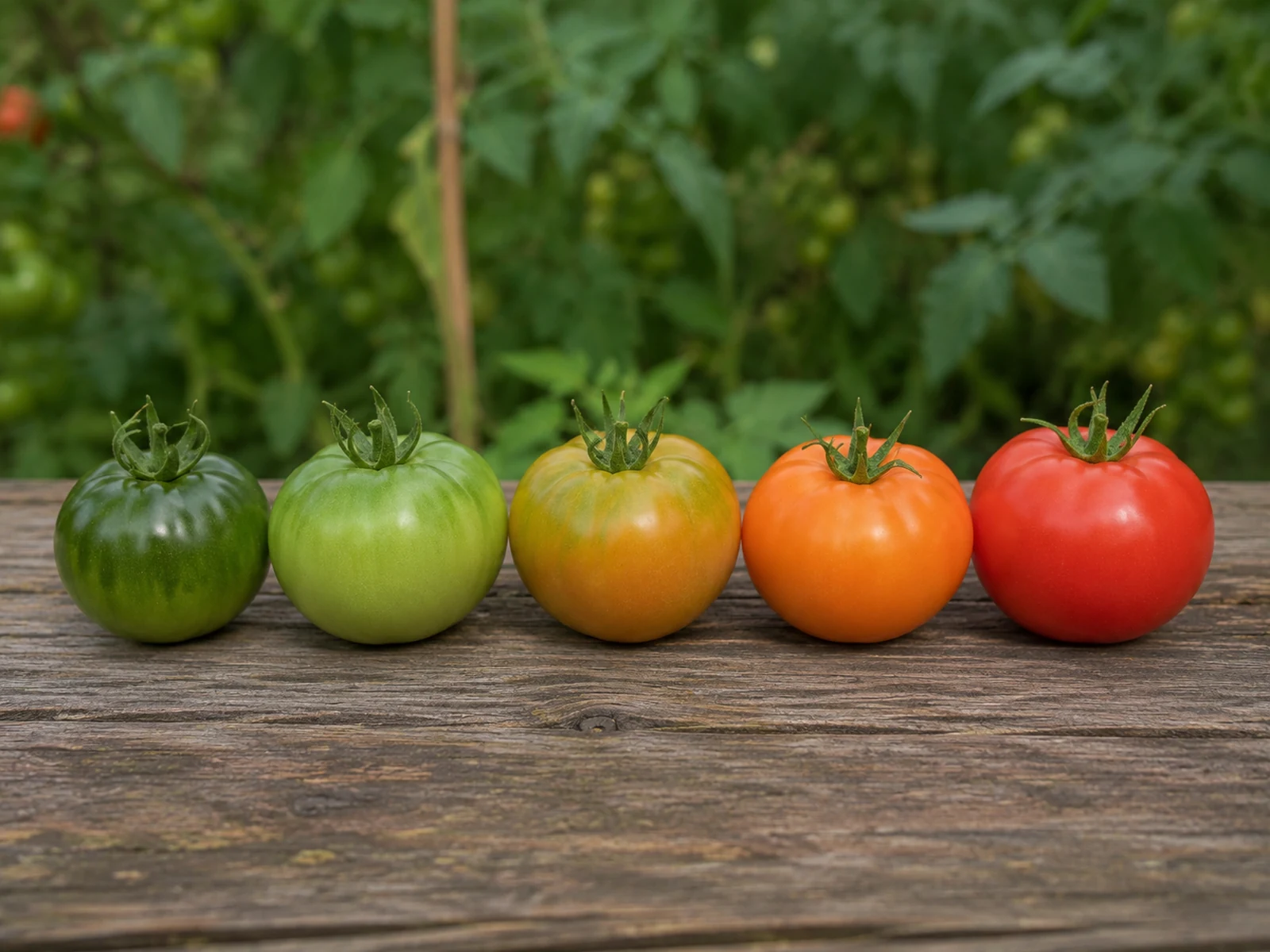
If the tomatoes are still increasing in size, they are probably not ready to change colour yet. A full-sized green tomato may also spend several days appearing to do nothing before the first pale, yellow, orange or pink tint becomes visible.
How tomato ripening works
A tomato must reach a suitable stage of development before it can ripen properly.
Once the fruit becomes mature green, it begins producing more ethylene, a natural plant hormone involved in ripening. This triggers several changes:
- Green chlorophyll begins to break down
- The fruit gradually softens
- Acidity decreases
- Sugars and aromas develop
- New pigments produce the variety’s mature colour
Red tomatoes develop pigments including lycopene and carotenoids. Other varieties may ripen to yellow, orange, pink, purple, brown or remain partly green.
This is important because not every green tomato is ready to ripen. A small, dark-green, immature fruit may remain hard or deteriorate after picking. A mature-green tomato has a much better chance of ripening successfully indoors.
Why are my tomatoes staying green?
The following are the most common reasons tomatoes stop or slow down before changing colour.
1. The weather is too hot
Tomatoes enjoy warm conditions, but extreme heat can delay ripening.
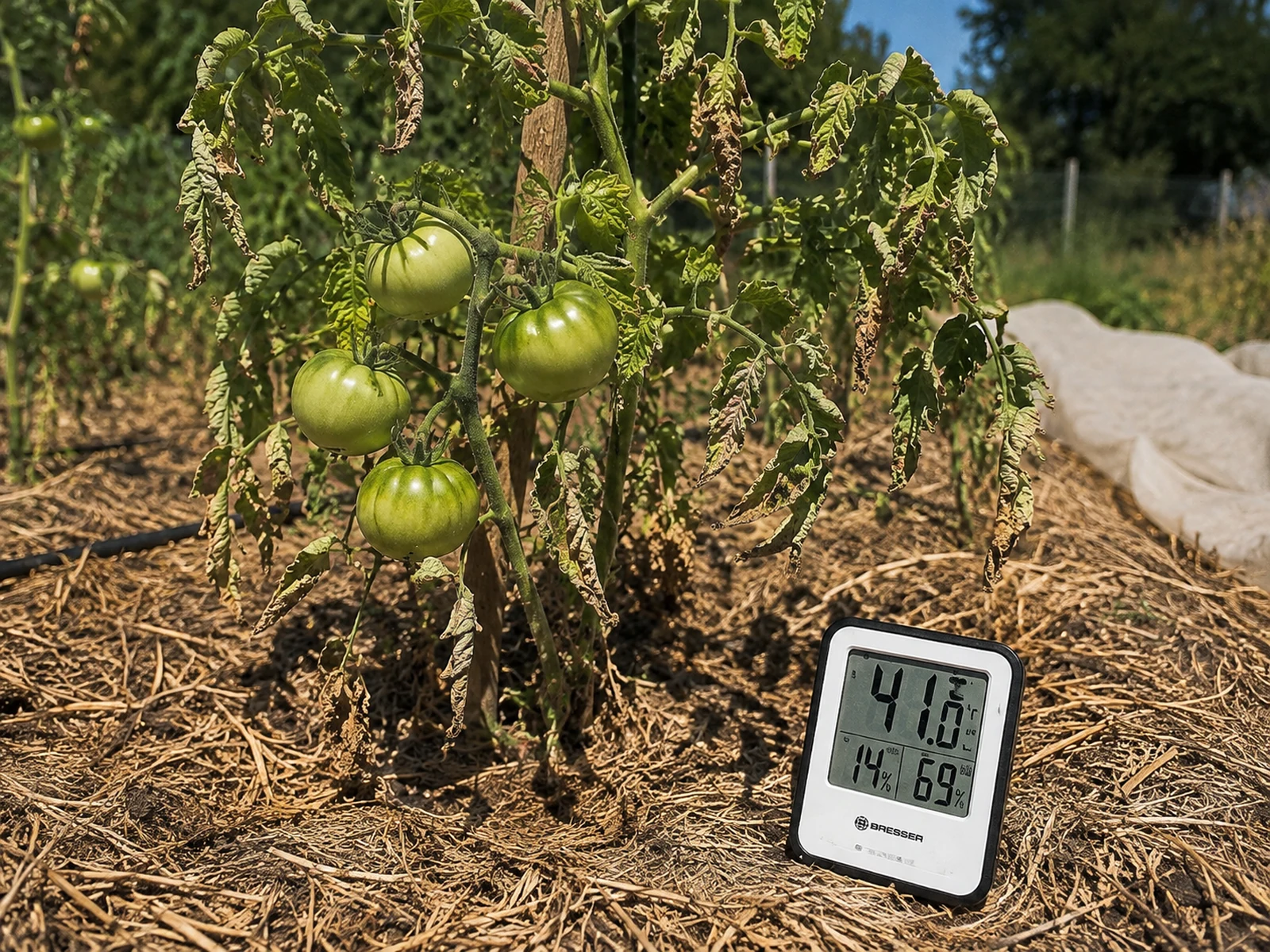
When temperatures remain above approximately 29°C (85°F), development of the pigments that give many tomatoes their red, orange or yellow colour can slow significantly. During a prolonged heatwave, full-sized fruit may remain green or pale for days.
The plant may look vigorous and continue producing leaves, yet the tomatoes appear stuck. This is usually a temporary response rather than a sign that the fruit will never ripen.
Once temperatures moderate, the process often resumes.
What to do during hot weather
- Keep the root area evenly moist
- Add mulch to slow water loss and reduce soil-temperature swings
- Ventilate greenhouses and polytunnels
- Use appropriate greenhouse shading during intense heat
- Preserve enough healthy foliage to shade the fruit
- Harvest tomatoes once they show their first colour and finish them indoors
Do not strip leaves away in an attempt to expose green tomatoes to more sunshine. This can make the fruit hotter and increase the risk of sunscald.
2. The weather is too cool
Cool conditions also slow tomato development.
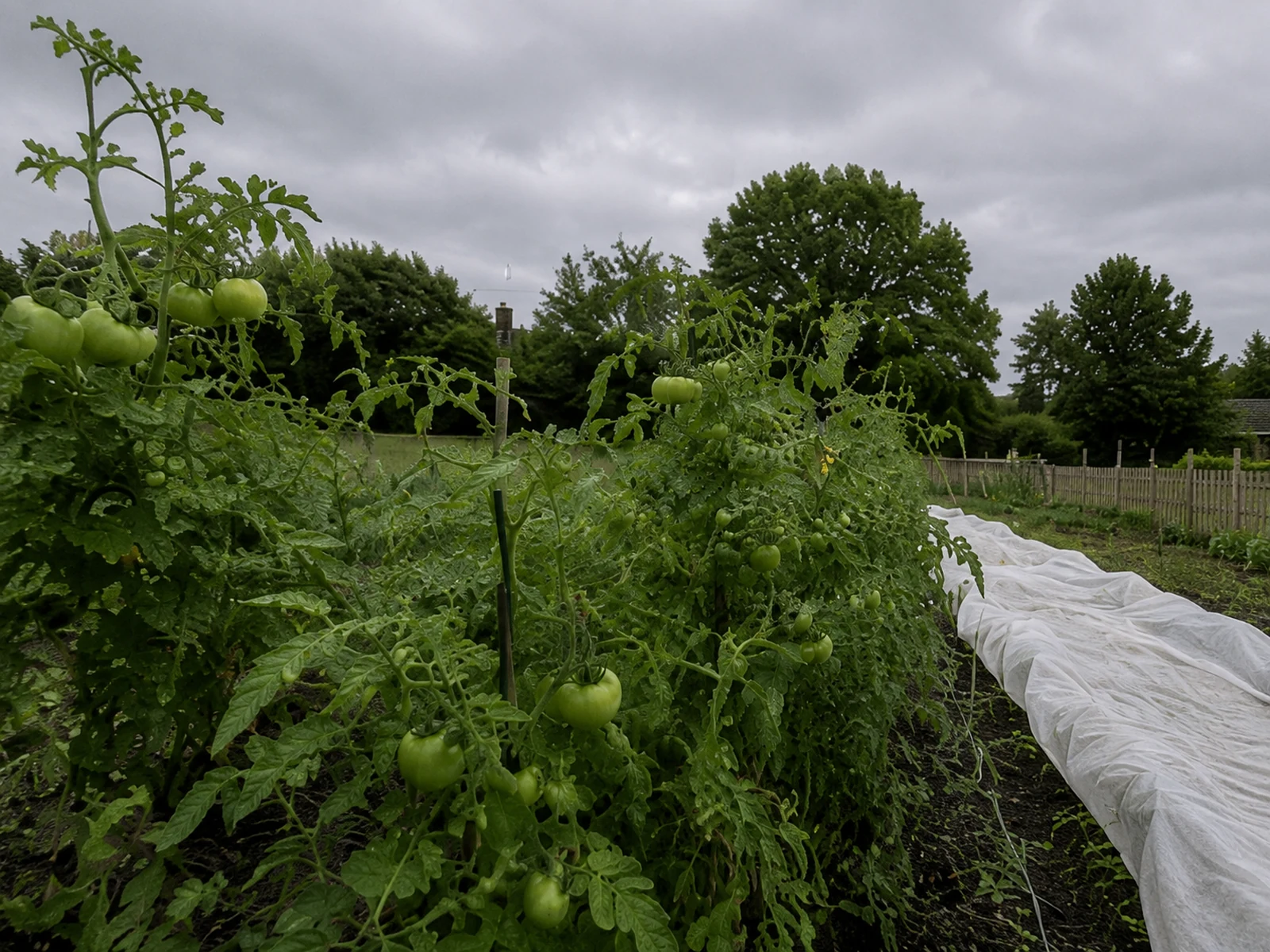
When daytime temperatures remain low and nights become chilly, the plant’s growth and the fruit’s ripening process both slow down. This is common during a cool UK summer and near the end of the growing season.
A tomato that might ripen quickly during warm, settled weather can need an extra week or longer in cooler conditions.
Outdoor plants are usually affected more than tomatoes inside a greenhouse. If autumn is approaching, do not wait until frost damages the vines. Harvest mature fruit and allow it to ripen indoors.
3. The tomatoes are not mature yet
A tomato can look large while still being physiologically immature.
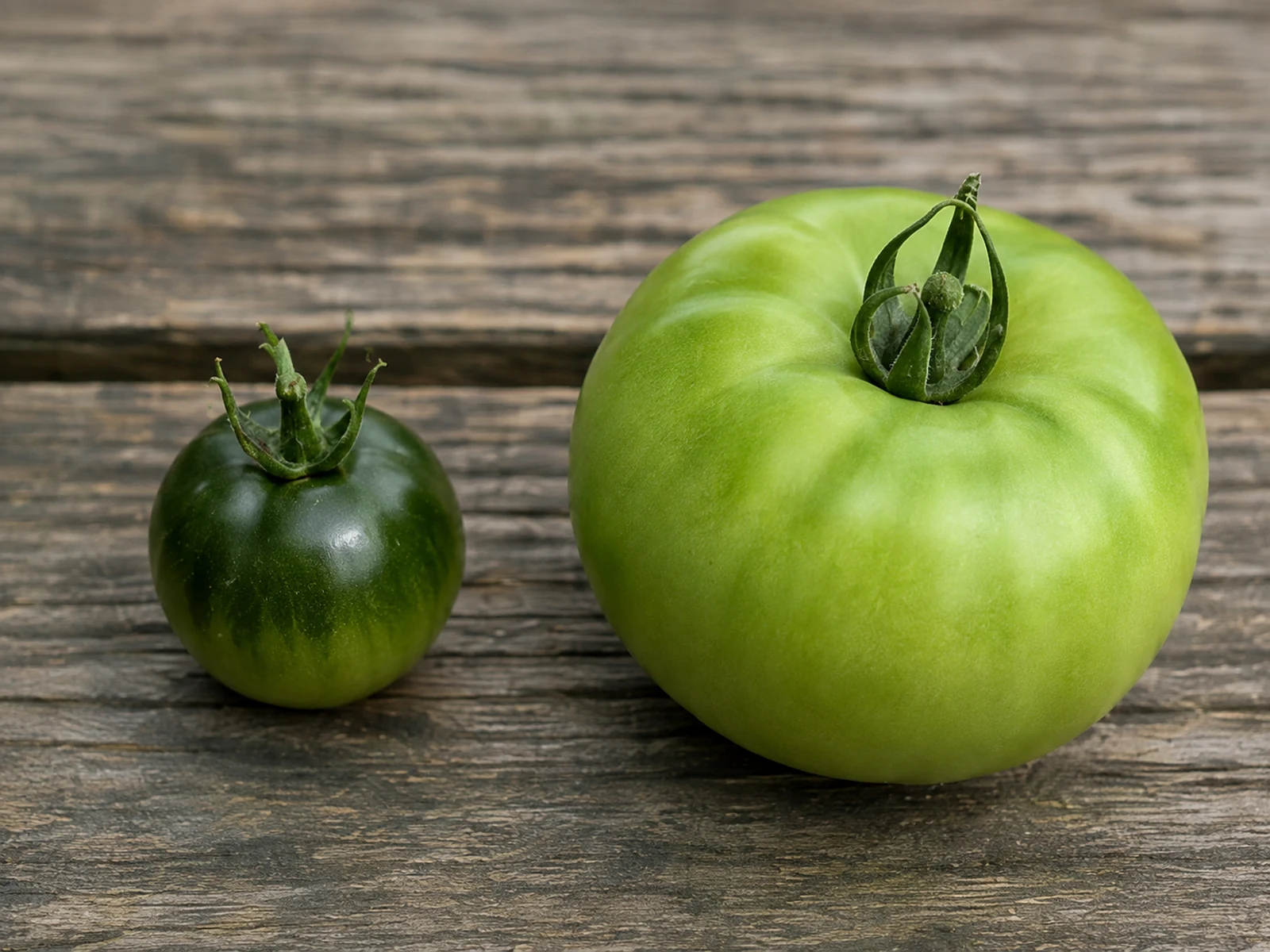
Large varieties need more time to complete their internal development than small-fruited varieties. The fruit may remain firm and uniformly dark green even though it appears close to its final size.
Signs that a green tomato is approaching maturity include:
- It has reached the expected size for the variety
- Its skin looks smooth and slightly glossy
- The dark green colour becomes paler
- A pale or whitish star may appear at the blossom end
- The fruit changes from rock-hard to firm with a very slight give
- A faint blush appears at the blossom end
If the fruit is still small, dull and very dark green, patience is usually the best solution.
4. You are growing a late or large-fruited variety
Not all tomato plants follow the same timetable.
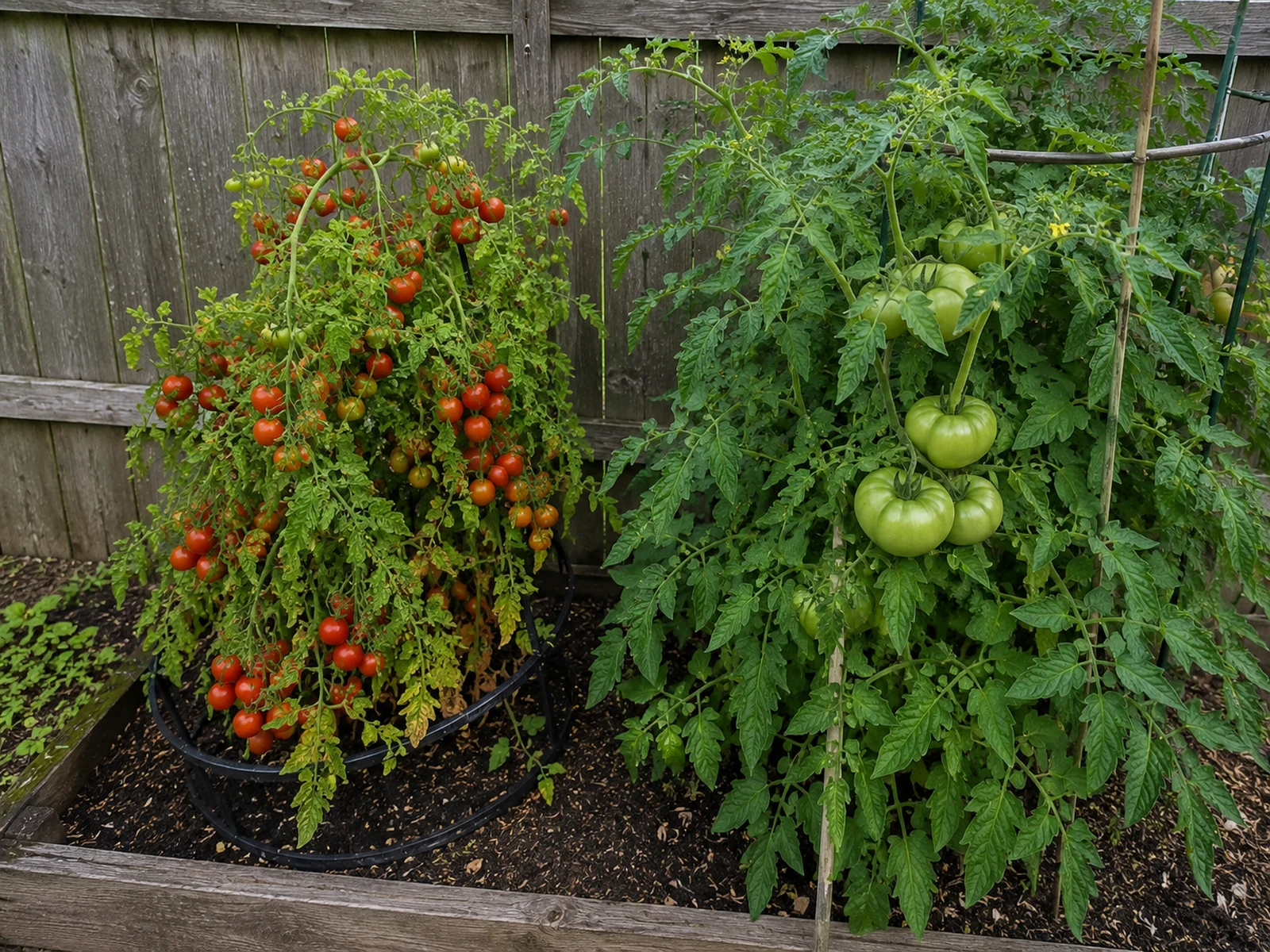
Large beefsteak and many heirloom varieties naturally take longer to mature than cherry, plum and early-season tomatoes. A plant can carry big green fruit for what feels like an unreasonable amount of time before the first one finally begins to colour.
The plant’s growth habit matters too:
- Determinate tomatoes tend to produce and ripen much of their crop within a relatively concentrated period.
- Indeterminate tomatoes continue growing, flowering and ripening fruit over a longer season.
Check the variety name and expected mature colour. Some varieties are ripe when yellow, orange, striped, dark purple or greenish rather than bright red.
5. The plant has received too much nitrogen
Nitrogen supports healthy stems and leaves, but excessive nitrogen can produce a large, leafy plant with delayed flowering and fruit development.
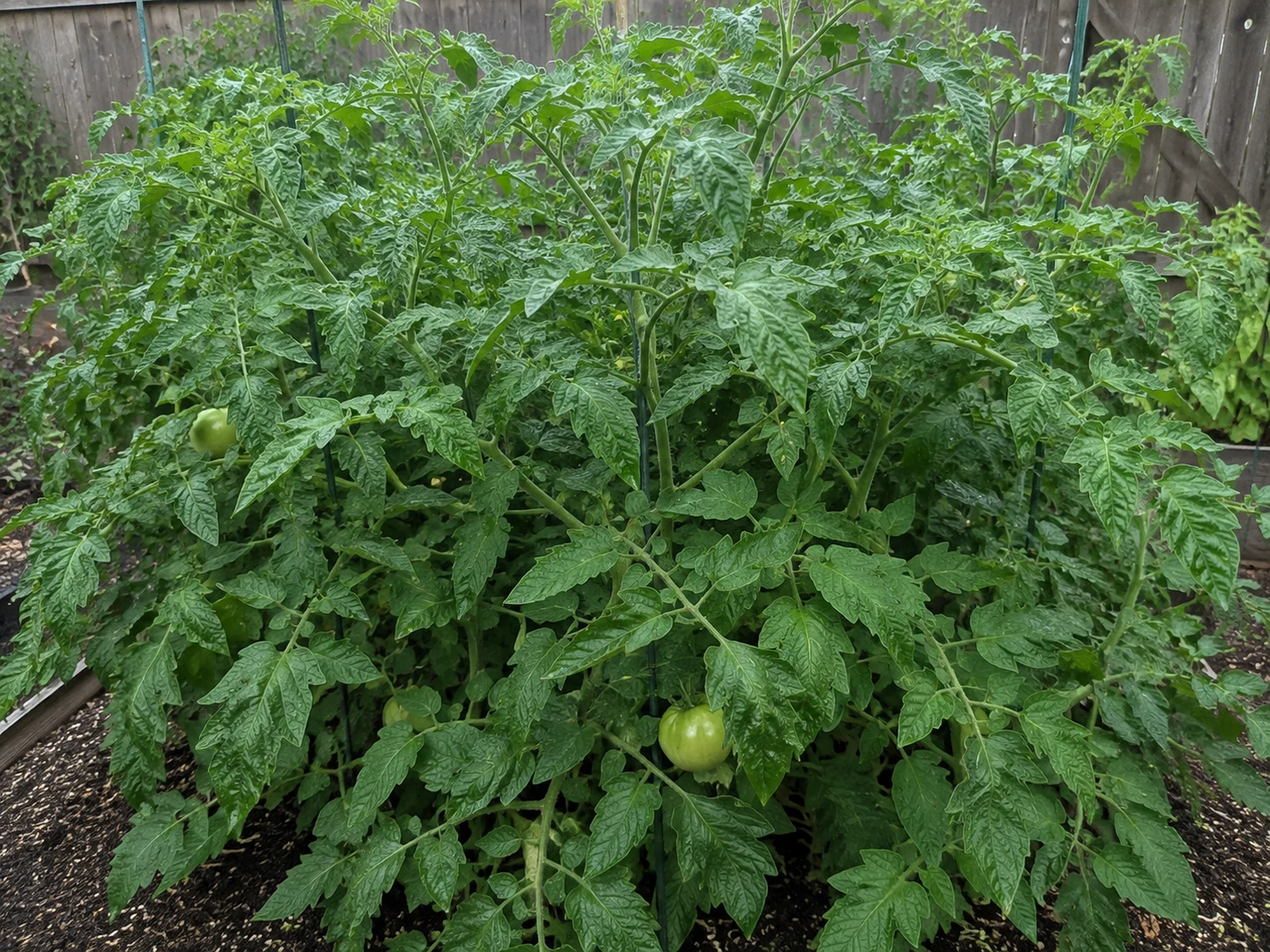
Possible signs include:
- Very dark green foliage
- Long, soft growth
- Many leaves but relatively few flowers or fruits
- Continued production of new shoots late in the season
Do not try to correct this by adding large amounts of phosphorus or potassium without knowing what the soil or potting mix needs. Stop applying nitrogen-heavy feeds and use a tomato fertiliser according to its label rather than increasing the dose.
If the plant is in fresh, nutrient-rich compost, it may not need as much additional feed as you expect.
6. The plant is supporting too much growth
An indeterminate tomato can continue producing new stems, flowers and young fruit while older tomatoes are waiting to ripen.
A healthy plant usually manages this balance on its own, so aggressive pruning is not necessary. However, late in the season, flowers and tiny fruit may have little chance of reaching maturity before cold weather arrives.
At that stage, removing new flowers and the smallest undeveloped fruits can help you concentrate care on the crop that is already close to maturity. You can also pinch out the main growing tip of an indeterminate plant once there is no longer enough season left for new trusses to ripen.
Avoid severe pruning during hot weather. Healthy leaves manufacture energy and protect fruit from excessive sun.
7. The plant is stressed or losing leaves
A tomato plant needs healthy foliage to continue supplying the developing fruit.
Disease, severe pest damage, root problems, drought or prolonged waterlogging can reduce the plant’s ability to support ripening. A few ageing lower leaves are normal, but widespread yellowing, spotting, wilting or defoliation deserves investigation.
Our guide to why tomato leaves turn yellow explains the common causes and how to tell normal leaf ageing from a more serious problem.
Keep the plant watered consistently, remove badly diseased material and address the underlying problem rather than feeding heavily in an attempt to force the fruit to change colour.
8. Watering has been irregular
Uneven watering is more strongly associated with fruit cracking and blossom end rot than with a complete ripening halt, but severe moisture stress can weaken the plant and reduce fruit quality.
Allowing the soil to become extremely dry and then flooding it creates another problem: full-sized tomatoes may swell rapidly and split.
If green tomatoes begin cracking as they colour, see our guide to why tomatoes split.
For container plants, check moisture frequently during warm weather. Our guide to how often to water tomatoes in pots covers the finger test, watering depth and signs that a pot is drying too quickly.
Quick diagnosis
| What you notice | Likely explanation | Best next step |
|---|---|---|
| Full-sized green fruit during a heatwave | High temperatures are slowing colour development | Maintain even moisture, provide appropriate shade and wait for cooler weather |
| Green fruit late in a cool season | Low temperatures and reduced daylight are slowing the plant | Pick mature fruit before frost and ripen it indoors |
| Very large leafy plant with few ripening fruits | Too much nitrogen or excessive vegetative growth | Stop nitrogen-heavy feeding and follow a balanced tomato-feed schedule |
| Large beefsteaks are green while cherry tomatoes are ripe | Normal difference in variety and fruit size | Give the larger fruit more time |
| Fruit is small, dark green and very hard | It is still immature | Leave it on the plant if weather permits |
| Fruit has begun turning pink, yellow or orange | It has reached the breaker stage | Leave it to ripen or pick it and finish indoors |
| Top of fruit stays hard and green while the bottom ripens | Greenback or uneven ripening | Protect from extreme heat and avoid over-pruning |
| Plant is losing many leaves | Disease, pests or severe stress may be reducing energy | Diagnose and treat the plant problem |
Do tomatoes need sunlight to ripen?
The fruit itself does not need direct sunlight to turn red once it has reached the right stage of maturity.
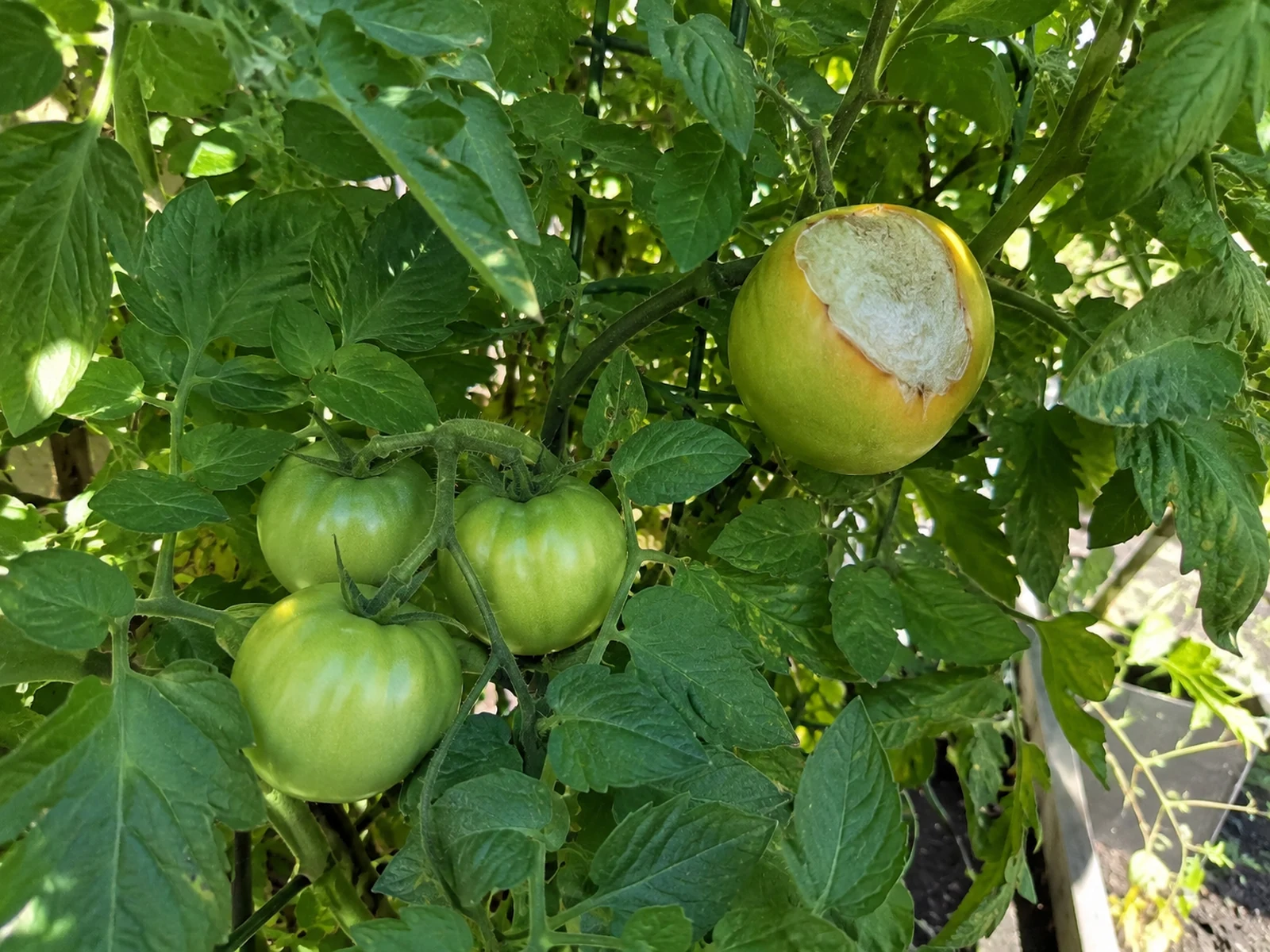
Tomato leaves need light for photosynthesis, and a healthy plant needs adequate overall sunlight. However, exposing each fruit directly to the sun is unnecessary.
Removing too many leaves can cause:
- Sunscald
- Excessive fruit temperatures
- Uneven ripening
- Reduced photosynthetic area
- Greater water stress
In a greenhouse, strong direct sunlight and high temperatures can contribute to greenback and blotchy ripening. Use ventilation and suitable shading rather than removing the leaf canopy.
Tomatoes picked at the breaker or mature-green stage can ripen in a box, paper bag or on a counter away from direct sunlight. Warmth and maturity matter more than placing them on a sunny windowsill.
How to encourage tomatoes to ripen
There is no instant trick that turns an immature tomato red. The goal is to keep the plant healthy and remove the conditions that are delaying ripening.
1. Check the temperature
During a heatwave, focus on preventing overheating rather than adding more feed.
Ventilate protected growing spaces, water consistently and use suitable shade material when necessary. Outdoor plants usually have to wait for the weather to moderate.
When temperatures are cool, close greenhouse doors and vents in time to retain some warmth overnight, while still ventilating appropriately during the day. Outdoor plants can be protected with horticultural fleece when chilly nights are forecast, but mature fruit should be harvested before frost.
2. Keep watering consistent
Water the root zone thoroughly, then allow excess water to drain.
Do not leave the plant bone dry for several days and then compensate with a flood. Mulch can help keep open ground and raised beds more stable.
Container plants may need checking every day during warm or windy weather because a small volume of compost can change from moist to dry very quickly.
3. Feed sensibly
Use a tomato feed according to the manufacturer’s directions once flowering and fruiting are underway.
More fertiliser is not always better. Excess nutrients can damage roots or create imbalances, and too much nitrogen encourages leaves at the expense of balanced fruiting.
If growth is healthy and fruit is developing normally, weather and maturity are more likely explanations than a severe deficiency.
4. Preserve healthy leaves
Remove leaves that are badly diseased or touching the soil, but avoid stripping the plant bare.
Healthy foliage helps power fruit development and shades tomatoes from damaging heat. In a greenhouse, improve airflow by spacing plants, tying in stems and removing only what is necessary.
5. Harvest at the first sign of colour
You do not have to wait until a tomato is fully coloured before picking it.
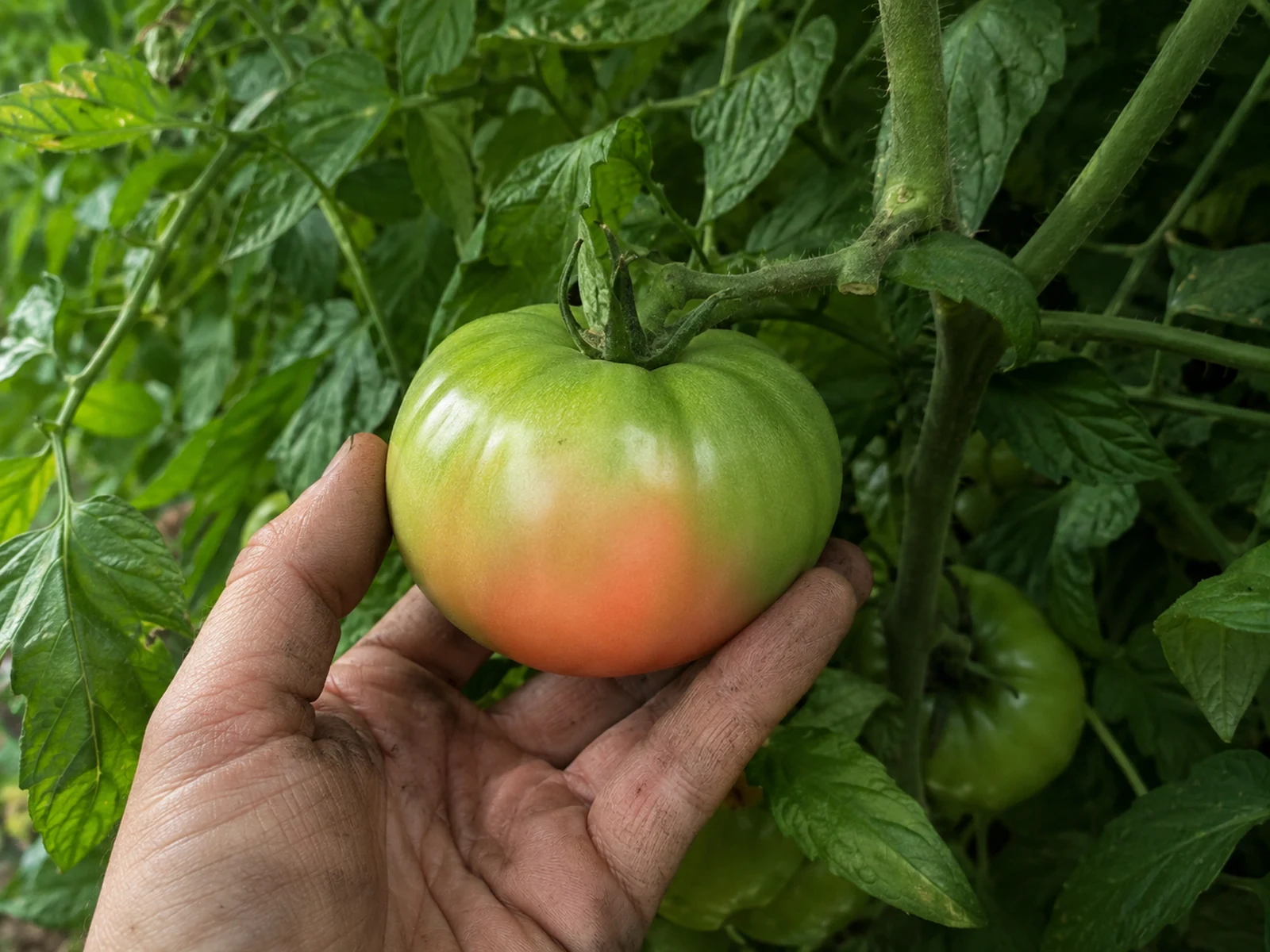
Once a fruit enters the breaker stage—when the first pink, red, yellow or orange colour appears—it can finish ripening indoors. Picking at this stage can protect the crop from:
- Splitting after heavy rain
- Slugs, birds and other pests
- Sunscald
- Sudden cold weather
- Fruit becoming overripe before you notice it
Leave the fruit at room temperature and check it daily.
6. Adjust the plant near the end of the season
When the growing season is nearly over, stop encouraging new leafy growth.
For indeterminate plants, remove new flowers and very small fruits that clearly have no time to mature. Pinching out the growing tip can also stop the plant becoming taller.
Do not damage the roots or deliberately make the plant wilt. Severe stress can reduce fruit quality, damage the plant or cause the remaining crop to be lost.
When should you pick tomatoes?
The best harvest stage depends on the weather, pest pressure and how soon you plan to eat the fruit.
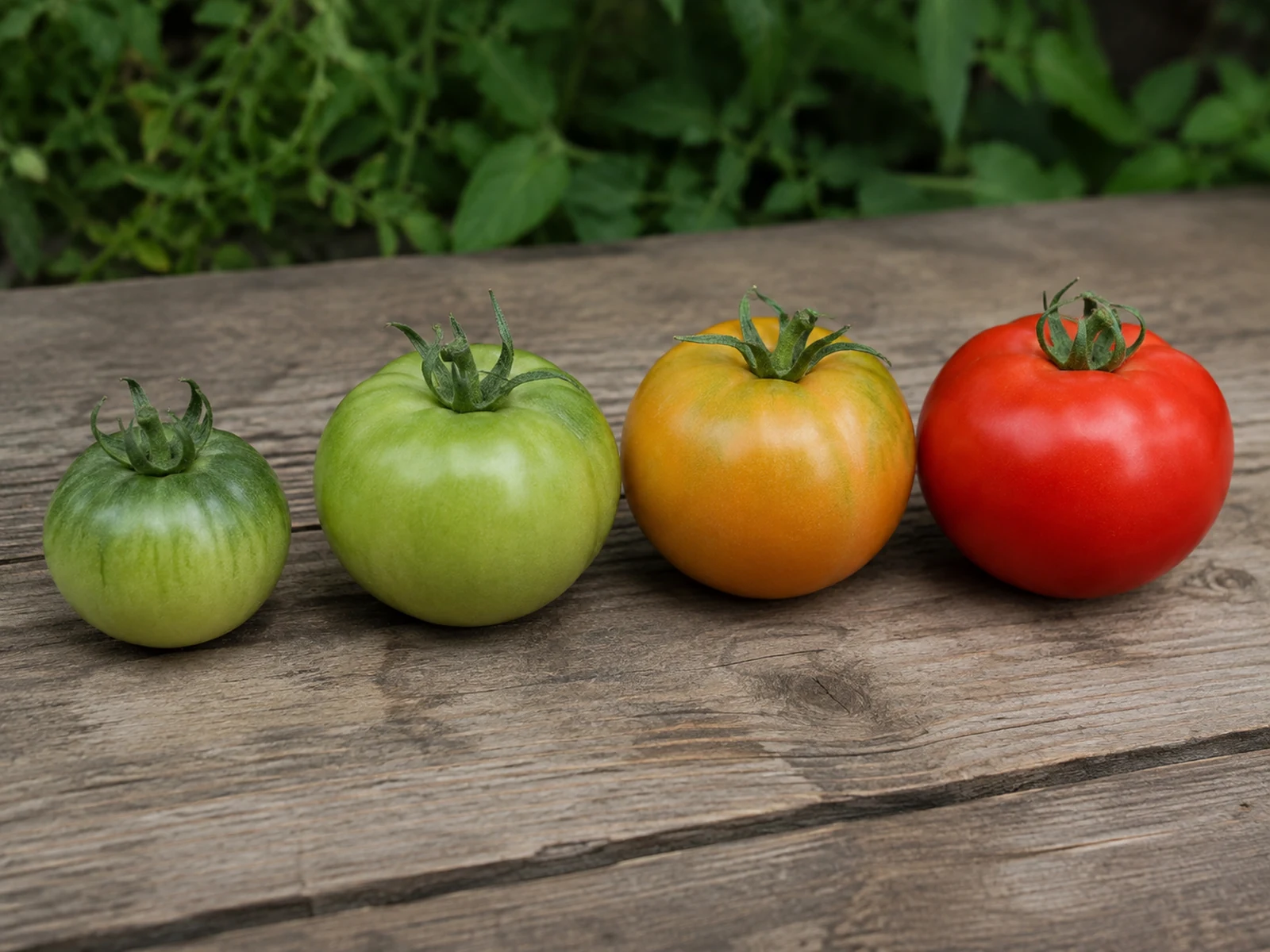
Fully ripe
Pick fully coloured tomatoes for immediate use when conditions are stable and pest damage is not a problem.
Breaker stage
The breaker stage begins when the first small area of mature colour appears. A breaker-stage tomato is reliable for indoor ripening and is less vulnerable to cracking or being eaten on the plant.
Mature green
A mature-green tomato has reached full size and is beginning to lighten, even though no obvious final colour is visible. It can often ripen indoors, particularly at the end of the season, but its final flavour may not be as developed as fruit picked after colour has started.
Immature green
A small, dull, uniformly dark-green fruit is unlikely to ripen well off the vine. Leave it attached if the plant and weather are still suitable. At the end of the season, use sound immature fruit in an appropriate green-tomato recipe instead.
How to ripen green tomatoes indoors
Indoor ripening is useful during heatwaves, before heavy rain and at the end of the season.
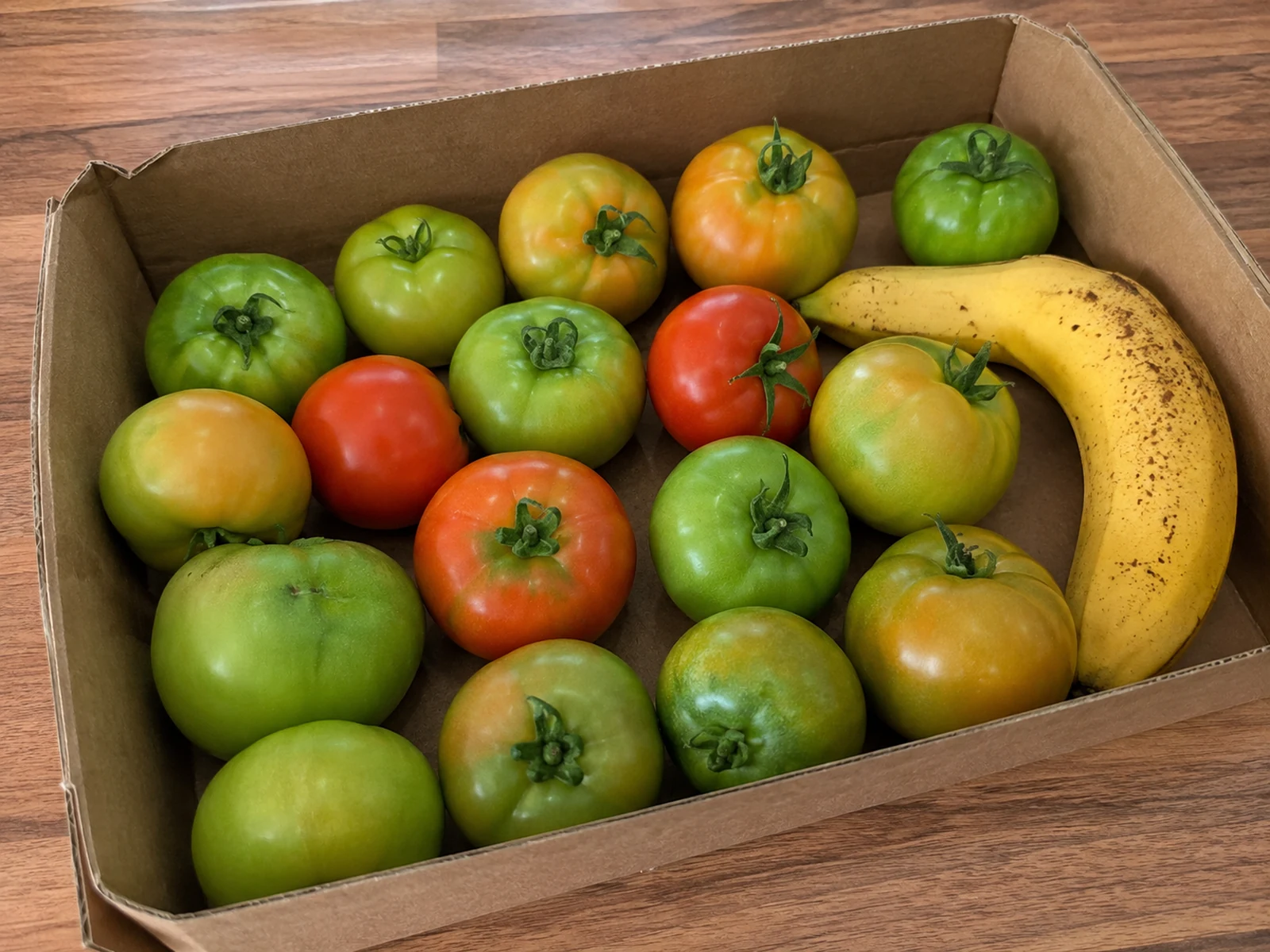
Step 1: Select suitable tomatoes
Choose fruit that is:
- Full-sized or close to full size
- Firm
- Free from deep cracks, mould and insect damage
- Mature green or already showing its first colour
Remove badly damaged fruit because rot can spread during storage.
Step 2: Clean and dry them
Gently remove dirt and allow the tomatoes to dry completely. Wet fruit is more likely to develop mould.
Remove stems if they may puncture neighbouring tomatoes.
Step 3: Keep them at room temperature
Place tomatoes in a single layer on a counter, tray or shallow box away from strong direct sunlight.
A loosely closed paper bag or covered cardboard box can hold some of the ethylene around the fruit. Do not seal tomatoes in an airtight container.
Check them every day or two and remove any fruit that is leaking, mouldy or beginning to rot.
Step 4: Add a ripe fruit to speed things up
A ripe banana, apple or tomato releases ethylene and can accelerate ripening when placed in the same bag or box.
This is optional. Mature fruit will produce ethylene and ripen without it, but the added fruit may shorten the wait.
Step 5: Avoid chilling unripe tomatoes
Unripe tomatoes ripen best at moderate room temperatures. Very cool storage slows the process and can reduce flavour and texture.
Do not place green tomatoes in the refrigerator to make them last longer. Let them ripen first, then use them promptly.
Uneven ripening, green shoulders and yellow patches
Sometimes the tomato is changing colour, but part of it remains green, yellow, pale or hard.
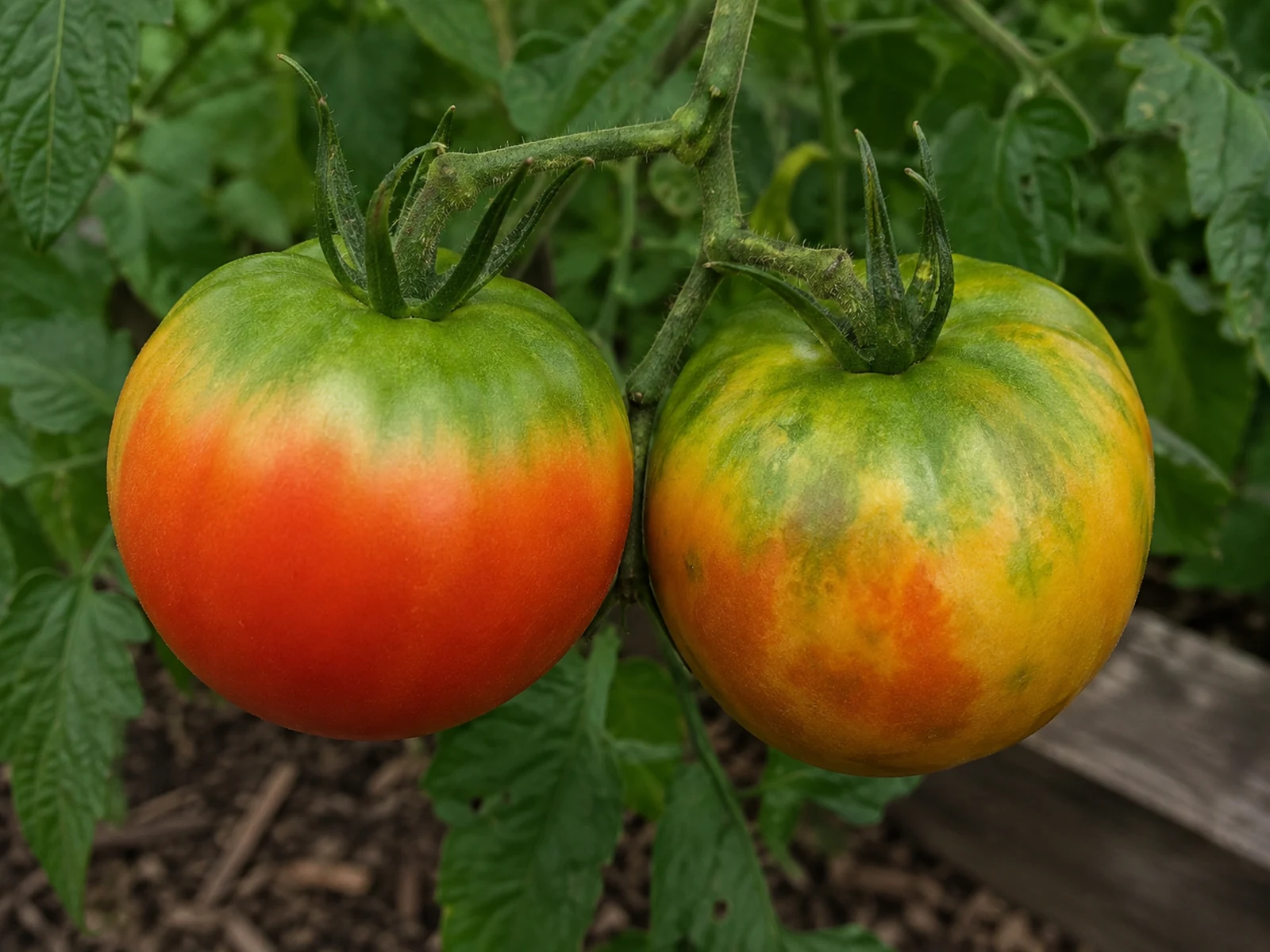
Greenback or green shoulders
With greenback, the area around the stem remains firm and green while the rest of the tomato ripens.
It is associated with a combination of:
- High temperatures
- Strong light on exposed fruit
- Variety susceptibility
- Nutritional imbalance, including inadequate potassium availability
Keep foliage around the fruit, ventilate and shade greenhouses during extreme heat, and apply tomato feed only as directed. The hard green section may remain unpleasant and can be cut away before eating the sound part of the fruit.
Blotchy ripening
Blotchy ripening produces irregular green, yellow, orange or pale areas instead of an even mature colour. The flesh inside may contain hard, pale tissue sometimes called whitewall.
Variable water or nutrient supply, extreme heat and excess light can all contribute. The problem is often more noticeable on greenhouse fruit because temperatures and sunlight can become intense under glass.
Sunscald
Sunscald begins as a pale or whitish area on the side exposed to intense sunlight. The patch may later become dry, sunken or vulnerable to rot.
It commonly appears when fruits lose their leaf cover because of over-pruning or disease. Protect the foliage where possible and avoid suddenly exposing previously shaded fruit.
These are physiological disorders caused by growing conditions, not infections that spread from tomato to tomato.
Frequently asked questions
Why are my tomatoes big but still green?
They may have reached nearly full size without reaching the mature-green stage internally. Large varieties also need more time than cherry tomatoes. If the weather is very hot or cool, ripening may be temporarily delayed even after the fruit matures.
Why are my tomatoes not turning red in hot weather?
Sustained temperatures above about 29°C (85°F) can slow the development of red and orange pigments. Keep the plant evenly watered, avoid removing protective foliage and wait for temperatures to fall.
Will green tomatoes eventually turn red?
Mature-green tomatoes usually can ripen, either on the plant or indoors. Small, hard, dark-green immature tomatoes are much less likely to develop good colour and flavour after picking.
Should I remove leaves so sunlight reaches the tomatoes?
No. The fruit does not require direct sunlight to ripen. Removing too many leaves can expose it to sunscald and excessive heat while reducing the plant’s ability to photosynthesise.
Remove only diseased, damaged or genuinely obstructive foliage.
Does watering tomatoes make them ripen faster?
Water does not directly trigger colour change. Consistent moisture keeps the plant functioning normally, while drought and flooding create stress and may cause cracking.
Do not overwater in an attempt to force ripening.
Should I stop watering when tomatoes are green?
No. Deliberately drying the plant severely can lead to wilting, blossom end rot, small fruit and splitting when water returns.
Near the end of the season, plants may use less water as temperatures fall, so check the soil and adjust rather than stopping completely.
Can I ripen tomatoes on a sunny windowsill?
They may ripen there, but direct sunlight is unnecessary and can overheat or soften the fruit unevenly. A counter, shelf, paper bag or shallow box at room temperature is usually more reliable.
How long do tomatoes take to ripen indoors?
Breaker-stage tomatoes may colour within several days, while mature-green fruit can take a few weeks. Warmer room temperatures speed the process; cooler conditions slow it.
Can I refrigerate green tomatoes?
It is better not to refrigerate tomatoes before they are ripe. Cold storage can slow or disrupt ripening and reduce flavour and texture.
Why is only the bottom of my tomato turning red?
This can be a normal first stage of ripening. If the area near the stem remains hard and green after the rest of the fruit ripens, the tomato may have greenback.
Are tomatoes with green shoulders safe to eat?
The ripe, sound portion is generally usable, but the hard green or yellow shoulder may have poor flavour and texture. Cut away the affected section, and discard the fruit if it is mouldy, leaking or rotten.
Final takeaway
Tomatoes that refuse to ripen are usually responding to temperature, maturity or variety, not waiting for more direct sunlight.
Start by asking three questions:
- Is the weather extremely hot or unusually cool?
- Has the fruit actually reached the mature-green stage?
- Is the plant producing excessive leafy growth or showing signs of stress?
Keep watering consistent, feed according to directions, preserve healthy leaves and give large or late varieties enough time. When a tomato shows its first colour, you can confidently pick it and let it finish ripening indoors.
If cold weather is approaching, harvest full-sized mature-green fruit before frost. Store it at room temperature, check it regularly and remove any fruit that begins to decay.