When to Harvest Tomatoes: Don’t Pick Them Too Early
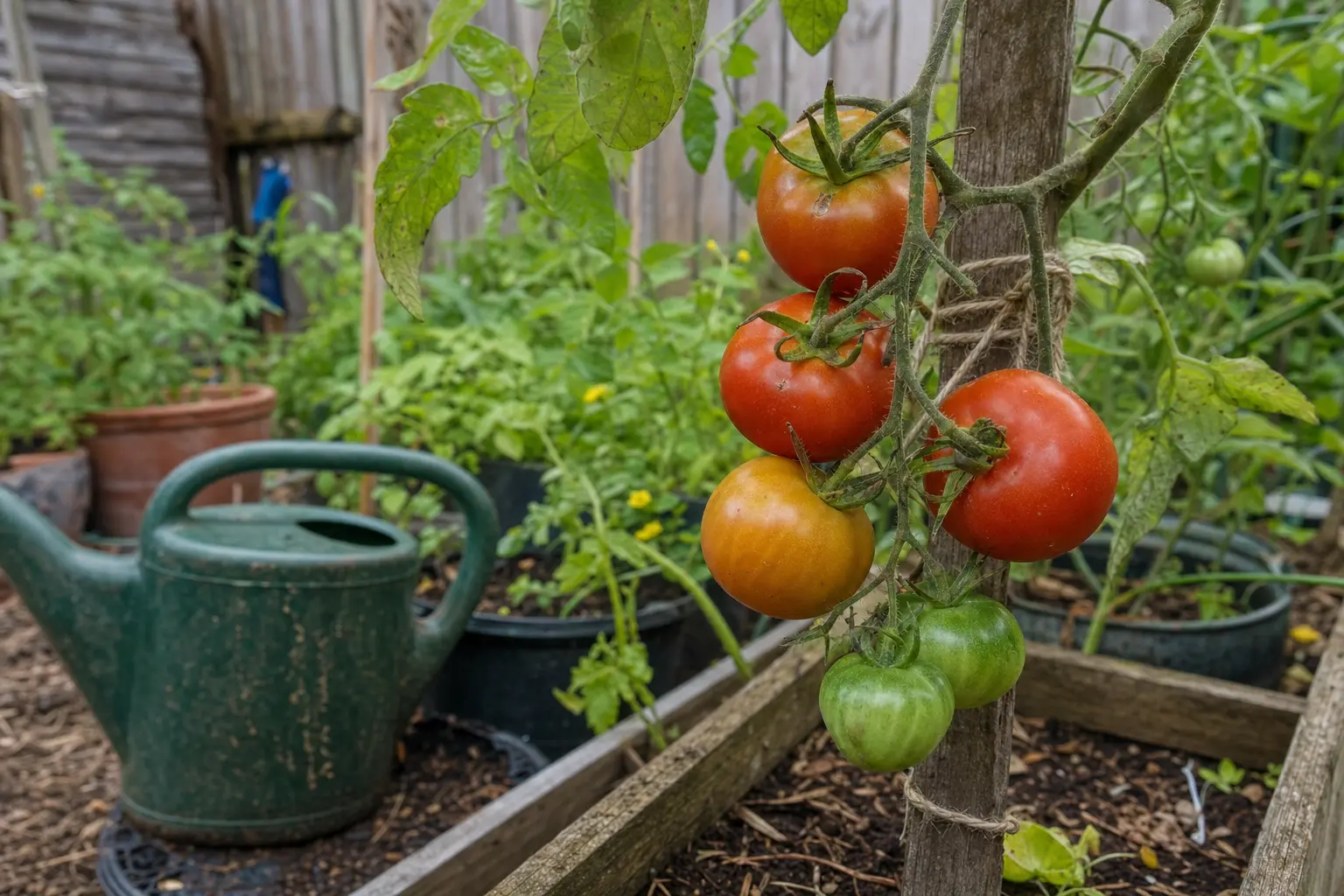
Picking tomatoes at the right moment is one of the simplest ways to improve their flavour, texture and shelf life. The short answer is this: for the best fresh eating, harvest tomatoes when they have reached their mature colour, feel firm but not hard, and give very slightly under gentle pressure.
That does not always mean leaving every tomato on the plant until it is completely red. In good, moderate weather, a healthy vine-ripened tomato is hard to beat. But if the weather is very hot, frost is coming, fruits are cracking, pests are circling, or the plant is declining, it is often better to pick tomatoes once they have started to colour and let them finish ripening indoors.
The key is knowing the difference between a tomato that is too immature and one that is mature enough to ripen properly off the vine.
Contents
- The perfect time to harvest tomatoes
- How to tell if a tomato is ripe
- Tomato ripeness stages explained
- When picking early is actually the right choice
- How to pick tomatoes without damaging the plant
- How to ripen tomatoes indoors
- What to do with green tomatoes at the end of the season
- Problems that can make ripe tomatoes look unripe
- Common mistakes to avoid
- FAQ
The perfect time to harvest tomatoes
The perfect time to harvest tomatoes depends on what you want from them and what conditions they are growing in.
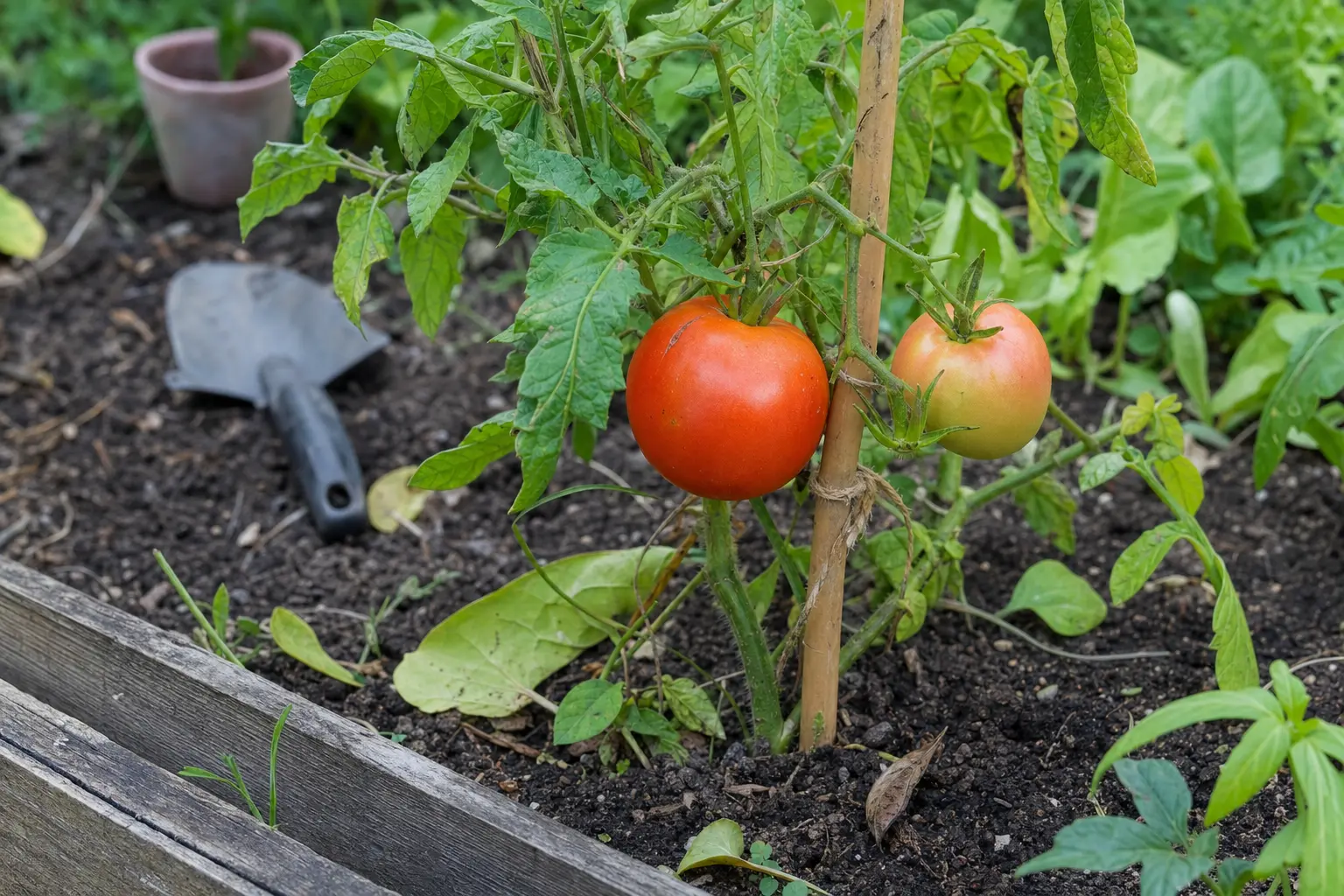
For immediate eating, pick when the fruit is fully coloured for its variety and still firm. Red tomatoes should usually be red all over, yellow varieties should be a rich yellow or golden colour, and purple, orange, striped or green-when-ripe varieties should match the mature colour described on the seed packet or plant label.
For safer harvesting in difficult conditions, pick once the tomato has reached the breaker stage. This is the point where the first visible blush of colour appears. From this stage onwards, tomatoes can continue ripening indoors because the fruit has already started its internal ripening process.
As a beginner, use this simple rule:
- Best flavour in settled weather: leave tomatoes on the plant until fully coloured and slightly yielding.
- Best protection from losses: pick at first blush if fruit is at risk from heat, cracking, pests, disease, storms or frost.
- Do not pick too early: very hard, dull green tomatoes often fail to ripen well indoors.
If your plants are in containers, your harvest timing can also be affected by watering. Irregular moisture can lead to splitting just as fruit begins to ripen. If that has been a problem, see our guide to how often to water tomatoes in pots for practical container-watering advice.
How to tell if a tomato is ripe
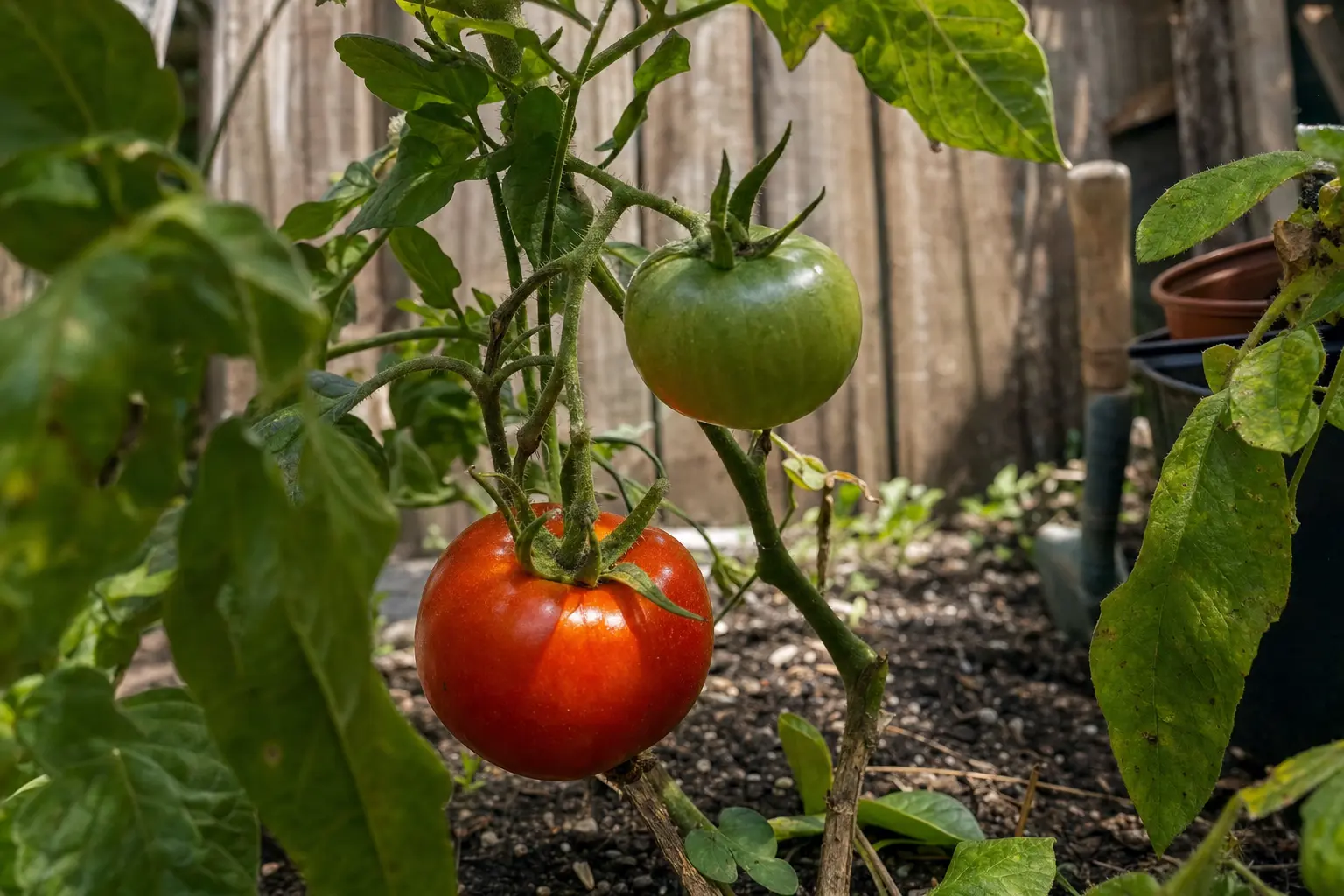
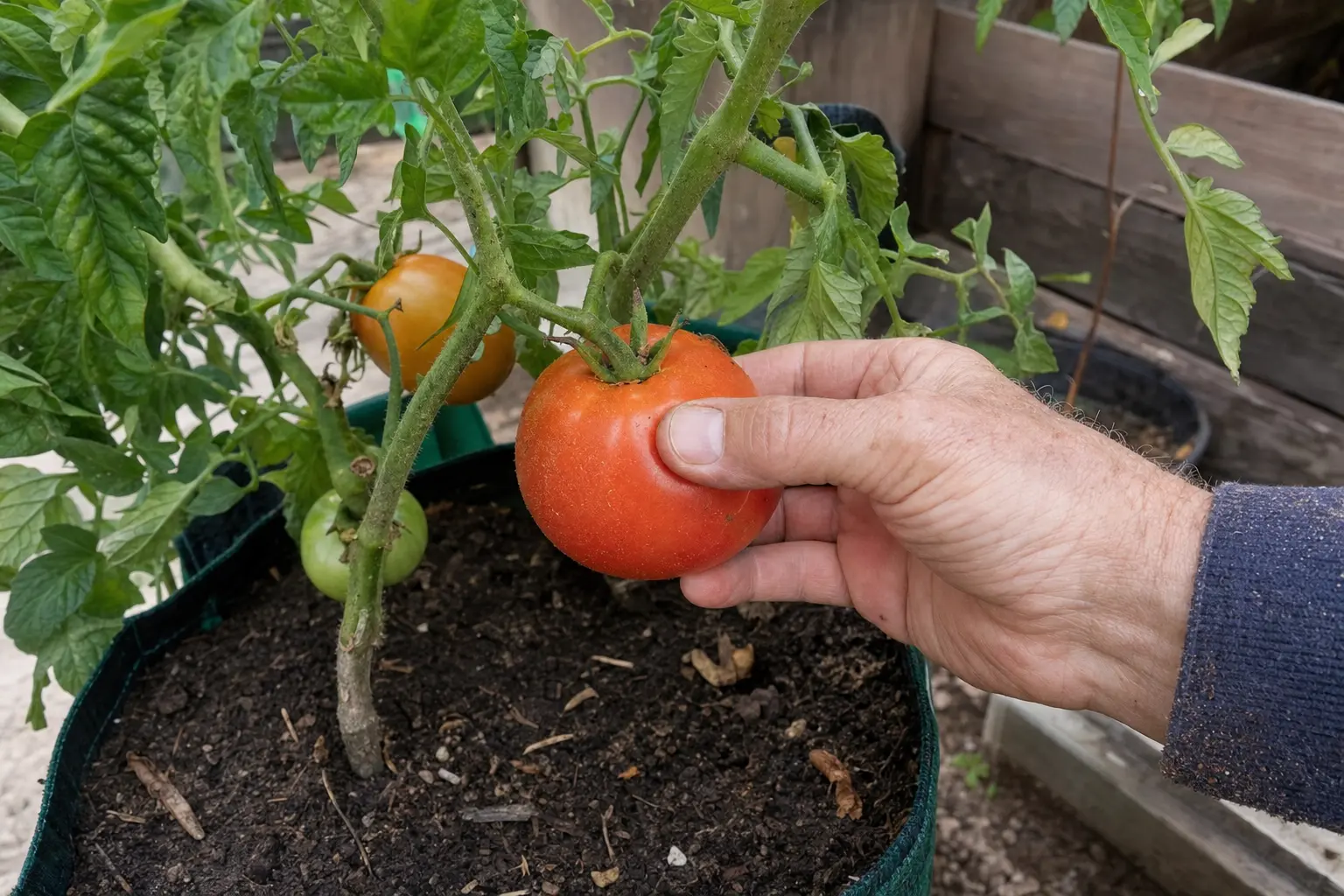
A ripe tomato gives you several clues at once. Do not rely on colour alone, especially during heatwaves or with unusual varieties.
1. Check the colour
A ripe tomato should have reached the mature colour expected for that variety. Most tomato varieties ripen red, but not all of them do. Some are yellow, orange, pink, brown-purple, striped, white, or green when ripe.
If you are growing a variety for the first time, keep the seed packet or label so you know what colour to expect. A green-when-ripe variety may become softer and slightly golden or translucent rather than turning red.
2. Feel for gentle firmness
A ripe tomato should feel firm but not rock hard. When you press it very gently with a thumb or finger, it should yield slightly without feeling mushy.
Avoid squeezing hard. Tomatoes bruise easily, and bruised fruit spoils faster.
3. Look for a full, glossy appearance
A mature tomato usually looks full-sized for its variety, with a glossy skin. Immature green fruit often looks duller and may feel very hard. On some mature green tomatoes, the blossom end may show a pale star-shaped area or a lightening of colour.
4. Watch the shoulder and blossom end
Tomatoes often ripen from the blossom end upwards towards the stem end. The shoulders — the top area near the stem — may be the last part to colour.
A slight delay in shoulder colouring is normal. However, if the bottom and sides are ripe but the shoulder remains stubbornly green and hard, you may be dealing with green shoulders rather than simple underripeness. More on that below.
5. Taste one as a test
If several tomatoes on a plant look similar, pick one and taste it. This is particularly useful for cherry tomatoes and unfamiliar heirloom varieties. Once you learn how that variety looks and feels at its best, the rest of the harvest becomes much easier.
Tomato ripeness stages explained
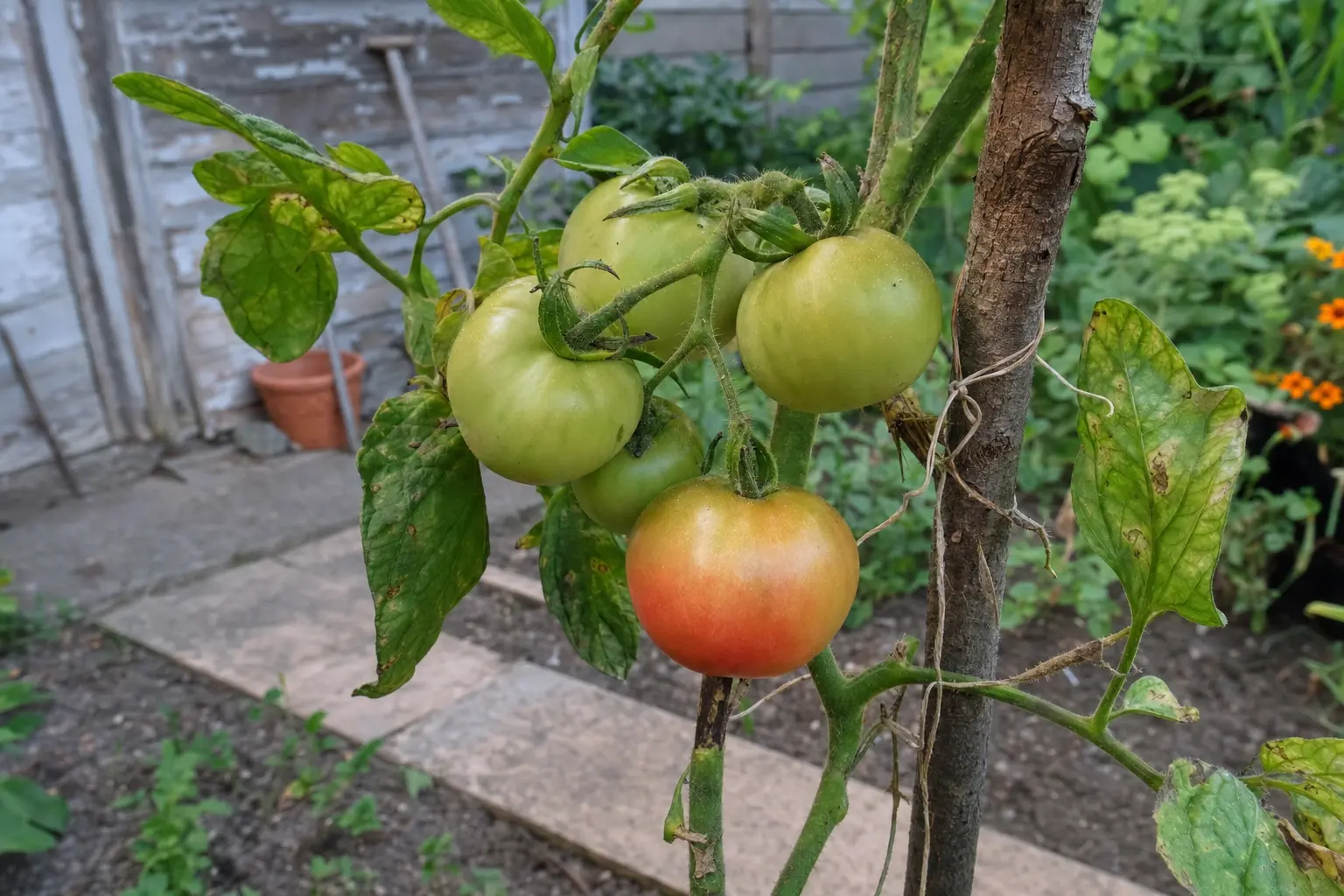
Tomatoes do not go from green to ripe all at once. Understanding the stages helps you avoid picking too early while still giving yourself flexibility.
| Stage | What it looks like | Should you pick it? | Best use |
|---|---|---|---|
| Immature green | Dull green, hard, no lightening at the blossom end | Usually no | Leave on the plant, or use for green tomato recipes if the season is ending |
| Mature green | Full-sized, glossy green, sometimes with a pale star at the blossom end | Only if necessary | Can ripen indoors, but flavour may be less developed than later-picked fruit |
| Breaker / blush | First visible pink, red, yellow or orange colour | Yes, especially if fruit is at risk | Ripen indoors at room temperature |
| Turning / pink | Noticeable colour over much of the fruit, still firm | Yes | Good balance of flavour and protection from losses |
| Fully ripe | Mature colour all over, firm with slight give | Yes | Best for fresh eating |
| Overripe | Very soft, leaking, splitting or dull-skinned | Pick immediately | Cook, sauce or compost if spoiled |
The most important stage for beginners is the breaker stage. A tomato at breaker stage is not fully ripe, but it is not too early either. It has begun to change colour and can finish ripening away from the plant.
This is why advice about harvest timing can seem contradictory. Some gardening sources recommend leaving tomatoes to ripen fully on the plant for the best flavour. Others recommend harvesting when colour first appears to avoid losses. Both can be correct. The better choice depends on your weather, pest pressure, plant health and how soon you plan to eat the tomatoes.
When picking early is actually the right choice
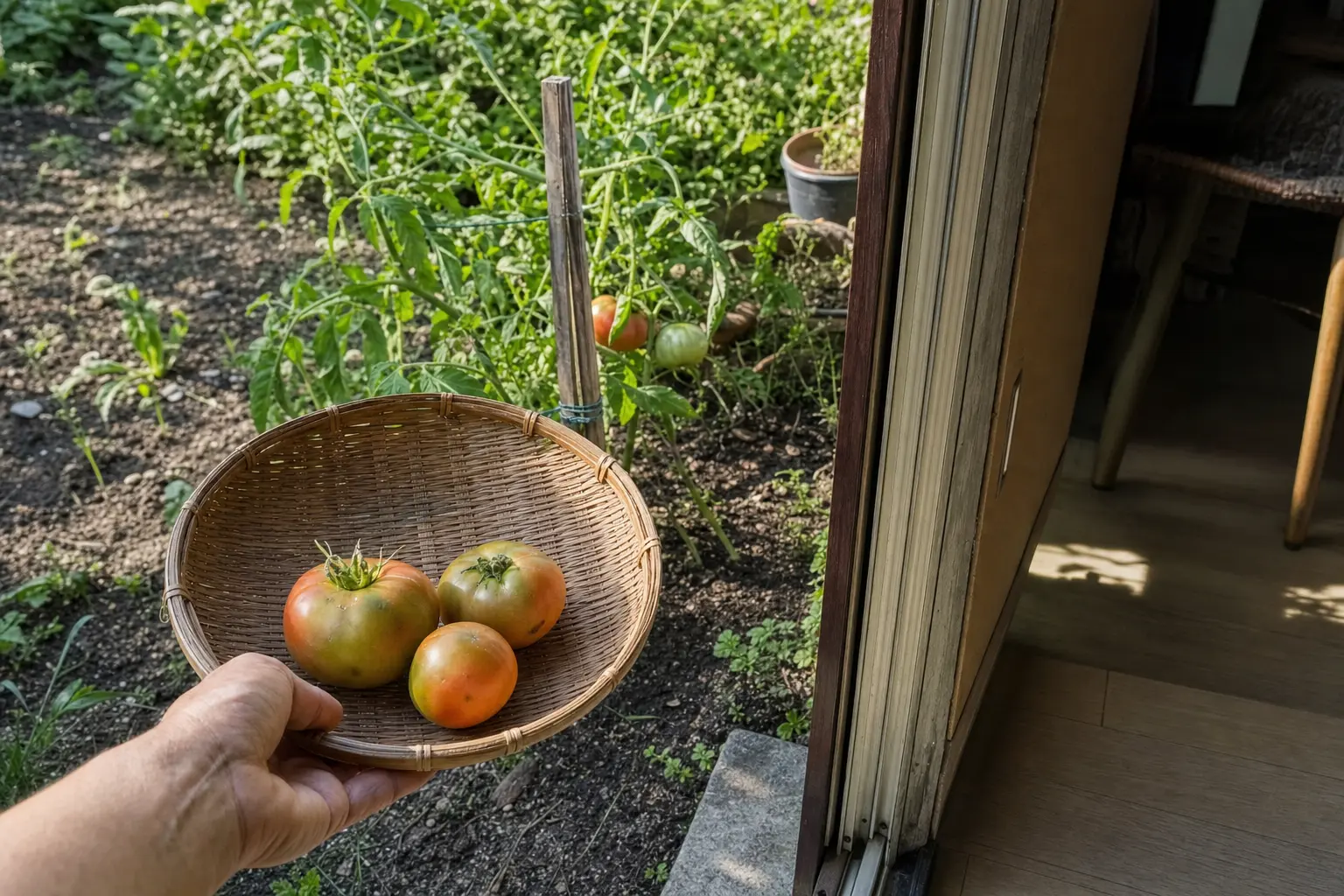
It is easy to think that every tomato should stay on the vine until it is perfectly ripe. In calm, mild conditions, that works well. But in real gardens, there are several times when earlier picking is sensible.
During very hot weather
When temperatures are high, tomatoes may soften faster while red colour develops more slowly. Red-fruited tomatoes can look orange or yellowish instead of deep red in hot spells, and fruit left too long may become soft before it colours properly.
If your garden is going through a heatwave, harvest tomatoes once they begin to colour and finish ripening them indoors in a cooler room. This helps protect texture and reduces the chance of fruit spoiling on the plant.
When heavy rain is forecast
A near-ripe tomato can split after sudden heavy rain, especially if the soil has been dry and then becomes wet quickly. Cracked tomatoes are still often usable if picked promptly, but they spoil faster and attract pests.
If several fruits are already showing colour and heavy rain is due, pick the most advanced ones before the downpour.
If pests or wildlife are getting there first
Birds, rodents, slugs, insects and other garden visitors often notice ripening tomatoes before you do. If you repeatedly lose fruit just before it ripens, pick at blush stage and ripen the tomatoes indoors.
You may still leave a few protected fruits to ripen fully outside, but do not feel you have failed if indoor ripening saves more of the crop.
When frost is coming
Tomato plants are tender and frost can ruin both foliage and fruit. Before a killing frost, pick all usable tomatoes. Fully coloured and blush-stage fruit are the most reliable for indoor ripening. Mature green fruit may also ripen if it is full-sized and glossy.
Very immature green tomatoes are unlikely to develop good flavour, but they can still be used for chutney, relish or cooked green tomato recipes.
If the plant is diseased or declining
If a plant is collapsing from disease, severe pest damage or end-of-season cold, do not wait for perfect vine ripeness. Pick healthy fruits that are mature enough to ripen indoors. Discard any fruit that is rotting, badly damaged or showing suspicious soft patches.
Good airflow, support and sensible pruning help reduce some plant-health problems before harvest. If you are growing tall cordon or indeterminate tomatoes, our guide to how to prune tomatoes explains the basics.
How to pick tomatoes without damaging the plant
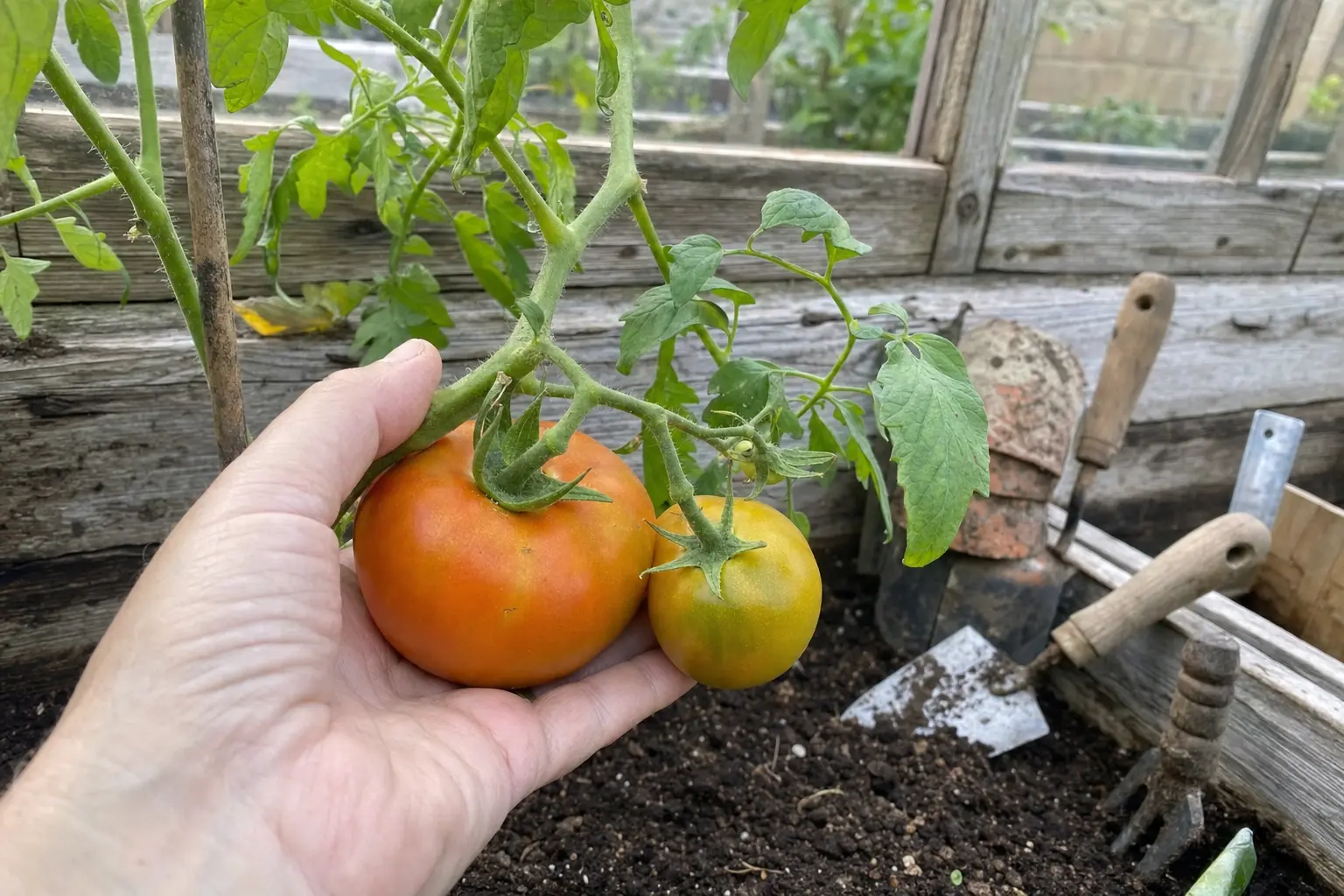
Once tomatoes start ripening, check plants at least every two or three days. In warm weather, daily checks are even better. Cherry tomatoes can go from perfect to overripe quickly.
Use this simple method:
- Choose ripe or blush-stage fruit. Start with tomatoes showing the most colour.
- Support the truss with one hand. This avoids pulling or snapping stems.
- Twist gently or snip with clean scissors. Some tomatoes detach easily when ripe; others are better cut.
- Keep the calyx attached if possible. The green leafy cap can help protect the top of the fruit during short storage.
- Handle gently. Do not drop tomatoes into a bucket. Place them in a shallow container instead.
- Separate damaged fruit. Use cracked or bruised tomatoes first.
If you grow tomatoes in a greenhouse, harvest checks are especially important because warm protected conditions can speed ripening. For more seasonal greenhouse advice, see how to grow tomatoes in a greenhouse.
How to ripen tomatoes indoors
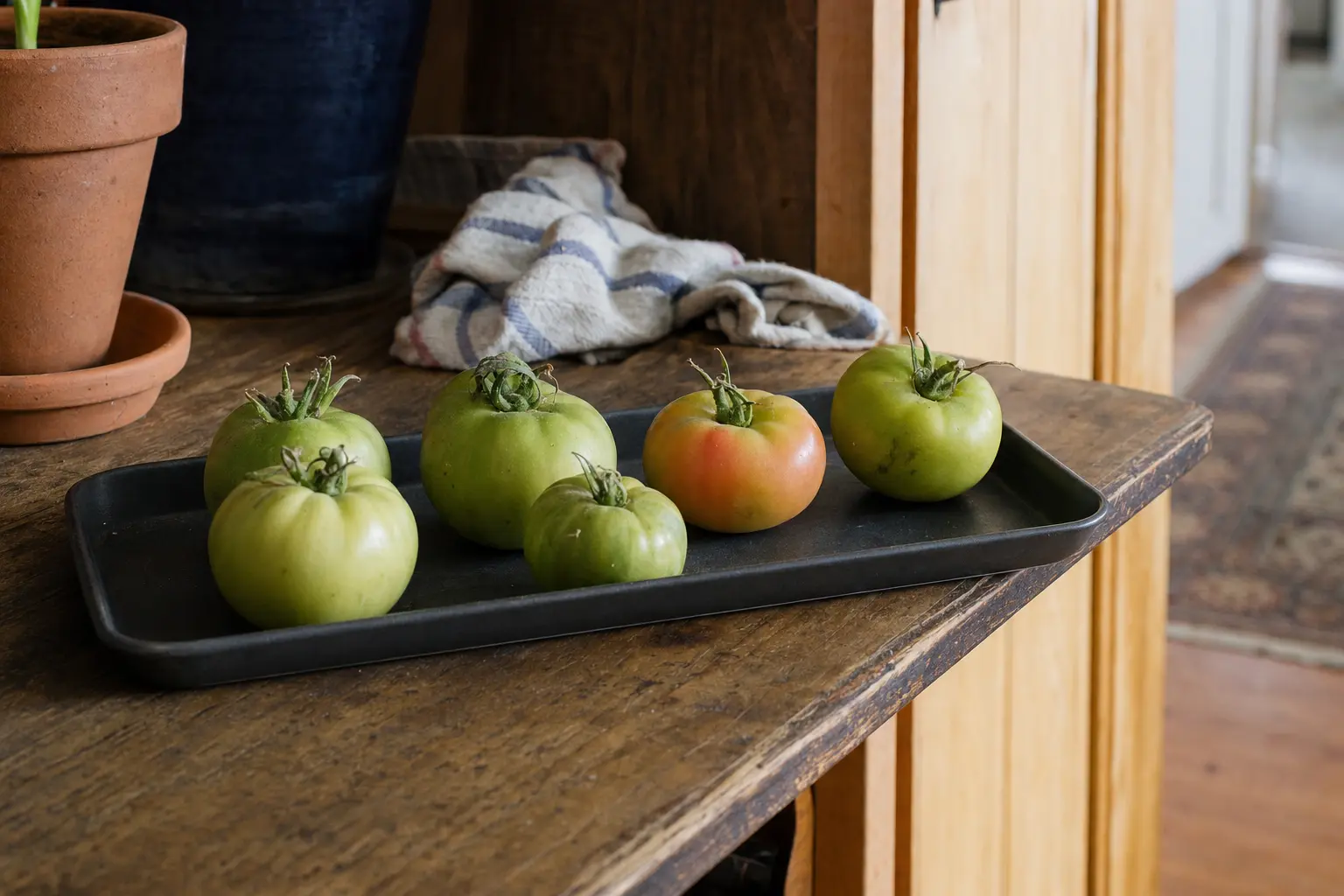
Indoor ripening is not complicated, but temperature and fruit maturity matter.
For most home gardeners, the easiest method is:
- Pick tomatoes that are at breaker stage or later.
- Bring them indoors and keep them at room temperature.
- Place them in a single layer, not piled deeply in a bowl.
- Keep them out of direct sunlight.
- Check every day or two and remove ripe or spoiled fruit.
A temperature around 18–21°C (65–70°F) is ideal for steady ripening and good flavour. Slightly cooler conditions slow ripening, which can be useful at the end of the season if you want tomatoes to last longer. Very cool conditions can lead to poor flavour, slow colouring and texture problems.
Should tomatoes ripen on a sunny windowsill?
They do not need to. Light is not required for ripening once the fruit is mature. A sunny windowsill can overheat tomatoes on bright days, causing softening or uneven ripening. A kitchen counter, shelf or shallow box is usually better.
Should you put tomatoes in a paper bag?
You can, but it is not essential. A bag or box can help concentrate ethylene, the natural ripening gas produced by fruit. Adding a ripe banana or ripe tomato can speed the process. However, closed containers can also trap moisture, so check regularly for mould or soft fruit.
Should you refrigerate tomatoes?
Avoid refrigerating unripe tomatoes. Cold temperatures interfere with ripening and can damage flavour and texture. Fully ripe tomatoes can be chilled briefly if you need to slow spoilage, but for best eating quality, use them promptly and let chilled fruit come back towards room temperature before serving.
What to do with green tomatoes at the end of the season
At the end of the growing season, you may be left with many green tomatoes. Sort them before storing.
Keep for ripening
Choose tomatoes that are:
- full-sized for their variety
- glossy rather than dull
- firm, not hard and tiny
- free from rot, cracks or pest holes
- beginning to lighten, whiten or blush if possible
Place them in a single layer in a tray or shallow box. Keep them somewhere cool to room temperature, depending on how quickly you want them to ripen. Check often and remove any that spoil.
Use for cooking
Very green, immature tomatoes may never ripen properly. Rather than waiting for disappointing flavour, use them in cooked recipes such as chutney, relish, salsa or fried green tomatoes.
Compost only if healthy
Healthy, unused green tomatoes can be composted. Avoid composting diseased fruit if your compost heap does not get hot enough to break down plant pathogens reliably.
Problems that can make ripe tomatoes look unripe
Sometimes the issue is not that you picked too early. The tomato may have a ripening disorder, heat stress or damage.
| Problem | Symptoms | Likely cause | What to do |
|---|---|---|---|
| Green shoulders | Top of the tomato stays green or yellow-green while the rest ripens | Variety genetics, high heat, strong direct sun | Pick when the rest is ripe; cut away hard green parts if needed |
| Uneven ripening | Patchy colour, some areas ripe and others pale | Heat, low foliage cover, plant stress or variety tendency | Improve watering consistency and leaf cover; ripen indoors if weather is hot |
| Sunscald | Pale, whitish or papery patch on exposed fruit | Strong sun on fruit with little leaf cover | Pick usable fruit; maintain healthy foliage and avoid excessive pruning |
| Cracking or splitting | Rings or splits in the skin, often near ripeness | Irregular watering or sudden rain | Pick promptly; keep soil moisture steadier with watering and mulch |
| Blossom end rot | Brown or black sunken patch at the blossom end | Calcium movement problem linked to uneven watering and stress | Remove badly affected fruit; water consistently; avoid overfeeding with nitrogen |
| Pest damage | Holes, chewed patches, soft rotting areas | Insects, slugs, birds or animals | Pick sound fruit earlier; improve protection and remove damaged tomatoes |
If fruit is badly rotten, mouldy, leaking or smells unpleasant, do not try to ripen or store it with healthy tomatoes.
Common mistakes to avoid
Picking hard green tomatoes too early
This is the biggest mistake. A tomato that is still immature may change colour indoors, but it often fails to develop good flavour and texture. Wait until the fruit is full-sized and ideally showing at least the first blush of colour.
Waiting too long in risky weather
Leaving tomatoes to ripen fully on the plant is lovely when conditions are stable. It is less wise when storms, frost, pests or extreme heat are likely. Picking at the breaker stage is a practical compromise, not a failure.
Judging every variety by red tomato rules
Not all tomatoes turn red. Learn the ripe colour of each variety you grow. This is especially important for yellow, orange, black, striped and green-when-ripe tomatoes.
Squeezing fruit too hard
A gentle touch is enough. Hard squeezing bruises tomatoes and shortens storage life.
Storing ripening tomatoes in the fridge
Cold storage can spoil the flavour and texture of tomatoes that have not fully ripened. Keep ripening tomatoes at room temperature and out of direct sun.
Leaving cracked tomatoes on the vine
Cracks invite pests and decay. Pick cracked tomatoes as soon as you see them. Use them quickly if the flesh is clean and sound.
Piling harvested tomatoes too deeply
Deep bowls and buckets cause bruising. Use shallow trays or baskets, especially for large slicing tomatoes.
FAQ
When is the best time of day to pick tomatoes?
Pick tomatoes when they are dry, ideally in the morning after dew has evaporated or later in the day before evening damp settles. Dry fruit is cleaner and stores better. Avoid harvesting during rain unless you are rescuing fruit from splitting or frost.
Are tomatoes sweeter if they ripen on the vine?
In good conditions, fully vine-ripened tomatoes often have excellent flavour. However, tomatoes picked after the breaker stage can still ripen well indoors. The biggest flavour loss tends to happen when fruit is picked too immature, stored too cold, or ripened under poor conditions.
Can I pick tomatoes when they first turn orange?
Yes, if the variety is red-fruited and the tomato has started to change colour, it is mature enough to finish ripening indoors. This is a good option during hot weather or when pests are damaging ripe fruit.
Why are my tomatoes orange instead of red?
High temperatures can interfere with red pigment development, so red varieties may look more orange or yellow-orange in very hot weather. If the fruit is firm with slight give and tastes ripe, it can still be harvested and eaten.
Will green tomatoes ripen indoors?
Some will. Full-sized, glossy mature green tomatoes may ripen indoors, especially if they are beginning to lighten or show a blush. Small, dull, hard green tomatoes are usually too immature and are better used for green tomato recipes.
Do cherry tomatoes ripen faster than large tomatoes?
Usually, yes. Smaller-fruited tomatoes often ripen earlier and need picking more frequently. Check cherry and grape tomatoes daily in warm weather.
Should I remove tomatoes with green shoulders?
If the rest of the tomato is ripe, pick it. The green shoulder may stay hard and less pleasant to eat, so cut that part away if necessary. Leaving the fruit longer does not always solve the problem.
How do I know if I waited too long?
A tomato is overripe if it is very soft, leaking, collapsing, fermenting, mouldy or badly split. Use sound overripe tomatoes quickly for sauces or cooking. Compost spoiled fruit rather than storing it with healthy tomatoes.
Final advice: do not pick too early, but do not wait blindly
The best tomato harvest comes from watching the fruit, not the calendar. In settled conditions, let tomatoes reach full mature colour on the plant and pick them while they are still firm. That gives you the classic fresh-picked flavour most growers are hoping for.
But if trouble is likely, pick once the first blush of colour appears. A breaker-stage tomato is mature enough to ripen indoors, and harvesting then can save fruit from cracking, pests, heat damage or frost.
So, do not pick hard, dull green tomatoes too early — but do not sacrifice a good harvest by waiting for perfection when conditions are against you. The perfect time to harvest tomatoes is the point where flavour, ripeness and common sense meet.